
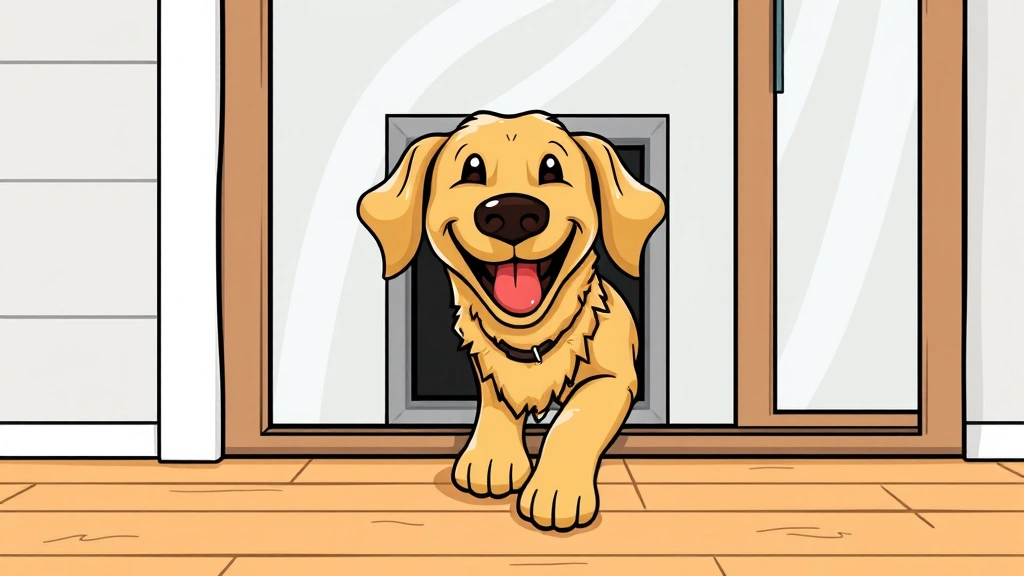
Your dog’s been staring at the backyard for the last ten minutes, and you’re tired of being the door butler. A dog door for sliding glass door might sound like a luxury, but honestly? It’s one of the smartest investments for your sanity and your dog’s independence. The good news: installing one isn’t as complicated as it sounds, and you’ve got solid options that won’t wreck your door or your wallet.
In this guide, I’ll walk you through the best dog door for sliding glass door solutions, installation tips, and the real-world trade-offs so you can pick what actually works for your life.
Why a Dog Door for Sliding Glass Door Matters
Let’s be real: constantly opening and closing the door for your dog drains your energy. You’re not lazy—you’re managing a living creature’s bathroom schedule, exercise needs, and desire to chase squirrels. A dog door for sliding glass door gives your dog autonomy while freeing up your hands (and your sanity).
Beyond convenience, there’s a behavioral angle. Dogs with outdoor access on their own terms tend to have fewer behavioral issues—less pent-up energy, fewer accidents inside, and reduced anxiety. According to the American Kennel Club’s guidance on dog exercise, regular outdoor access supports healthy development and mental stimulation.
Here’s what changes when you install one:
- Your dog can regulate their own bathroom breaks (fewer accidents)
- They get independent exercise without you as the gatekeeper
- You reclaim mental bandwidth that was spent on door duty
- Your dog’s anxiety often drops because they’re not trapped inside
- Potty training becomes easier and faster
The catch? You need to pick the right type for your sliding glass door setup, and you need to train your dog to use it properly. Let’s dig in.
Types of Dog Doors for Sliding Glass Doors
There are roughly four main approaches to installing a dog door for sliding glass door setups, and each has trade-offs.
1. Sliding Glass Door Insert (Non-Permanent)
This is the renter’s dream. A sliding glass door insert replaces your sliding glass panel with a frame that includes a built-in dog door. You slide it into the track just like your regular door panel.
Pros:
- No drilling or permanent modifications
- Reversible—take it with you when you move
- Usually $150–$400
- Works with most standard sliding doors
Cons:
- Slightly less weatherproof than permanent installations
- Can feel flimsy if not anchored properly
- Limited size options for very large dogs
- Requires exact measurements
Brands like PetSafe and Ideal Pet make solid versions. Just measure your door frame carefully before ordering.
2. Permanent Frame Replacement (Hardest but Best Seal)
This involves removing your sliding glass door entirely and replacing it with a new frame that has an integrated dog door. You’re essentially swapping out the whole unit.
Pros:
- Best weatherproofing and insulation
- Looks seamless
- Most durable long-term
Cons:
- $800–$2,500+ (expensive)
- Requires professional installation
- Permanent—you can’t take it if you move
- Disruption to your home during installation
This is the “do it once, do it right” option, but it’s a commitment.
3. Sliding Door Panel with Built-In Dog Door
Similar to the insert but designed to slide in alongside your existing door. One panel becomes the dog door; the other stays as a regular sliding panel.
Pros:
- Non-permanent
- Good weatherproofing
- Flexible sizing
- $300–$600
Cons:
- Slightly narrower opening for humans (one less panel)
- Still requires precise measurement
This is a solid middle ground if you want non-permanent but more robust than a basic insert.
4. Add-On Dog Door (Attached to Existing Door)
You keep your sliding glass door as-is and attach a separate dog door frame to it. Think of it as mounting a dog door directly to your sliding door panel.
Pros:
- Cheapest option ($100–$250)
- Quick to install
- Easy to remove
Cons:
- Can affect how your door slides
- Less weatherproof
- Looks more like an afterthought
- May not work if your door frame is aluminum (hard to drill)
This works if you’re testing the waters or have a temporary setup.
Installation: DIY vs. Professional
Here’s the real talk: most non-permanent dog door for sliding glass door installations are DIY-friendly. Permanent frame replacements? That’s professional territory.
DIY Installation (Inserts and Panels)
What you’ll need:
- Measuring tape (measure twice, order once)
- Screwdriver or drill (depending on the model)
- Weatherstripping tape (comes with most kits)
- Level (optional but smart)
Basic steps:
- Measure your sliding glass door opening from the inside—width, height, and the depth of your door frame. Write these down.
- Order the right size. Most manufacturers have sizing charts. Order one size up if you’re between sizes.
- Remove your existing sliding door panel (or just the bottom panel if you’re doing a side-by-side setup).
- Slide the new panel with the dog door into the track. It should glide smoothly.
- Secure it with brackets (usually provided). These prevent it from lifting out of the track.
- Apply weatherstripping around the edges to seal gaps.
- Test the flap to make sure it swings freely and doesn’t stick.
Time investment: 30–60 minutes. Skill level: beginner to intermediate.
Professional Installation (Permanent Frames)
If you’re doing a full frame replacement, hire someone who specializes in sliding glass door installation. They’ll handle:
- Removal of your existing door without breaking it
- Proper frame installation and leveling
- Sealing and weatherproofing
- Disposal of the old door
Cost: $200–$500 in labor on top of the door cost. Worth it.
Measuring and Sizing Your Dog Door
This is where people mess up. Get the measurement wrong, and you’re stuck with a door your dog can’t use or one that’s too big for the opening.
Measuring the Opening
Step 1: Measure the width of your sliding glass door track. Use a measuring tape and go from the inside edge of one side to the inside edge of the other. Write it down in inches.
Step 2: Measure the height of your sliding glass door. From the bottom of the track to the top of the frame. Again, inside measurement.
Step 3: Measure the depth of your door frame. Some panels are thicker than others. This matters for fit.
Step 4: Measure your dog. Width at the shoulders and height at the withers (top of the shoulder). Add 2–3 inches to each measurement. Your dog needs clearance to walk through comfortably.
Sizing the Dog Door Flap
The flap itself should be:
- Width: At least as wide as your dog’s shoulders, ideally 2 inches wider
- Height: Your dog’s chest height or slightly higher, so they don’t have to crouch
A dog door that’s too small forces your dog to squeeze through (uncomfortable and stressful). One that’s too large lets in drafts and bugs. Goldilocks zone is key.
Common Sizes
- Small (6–8 inches): Chihuahuas, toy breeds
- Medium (8–12 inches): Beagles, Corgis, Cocker Spaniels
- Large (12–15 inches): Labs, Golden Retrievers, German Shepherds
- Extra Large (15–20 inches): Great Danes, Mastiffs, Saint Bernards
When in doubt, go up a size. A slightly loose flap is better than a door your dog refuses to use.
Training Your Dog to Use the Door
Here’s something a lot of people skip: actually teaching their dog to use the door. Without training, your dog might just stare at it confused.
Step-by-Step Training
Phase 1: Introduce the flap (days 1–3)
- Hold the flap open and toss a treat through it. Let your dog follow the treat.
- Repeat 5–10 times daily. Make it fun, not forced.
- Gradually hold the flap less open, so your dog pushes it slightly.
Phase 2: Encourage independent pushing (days 4–7)
- Stand on the other side of the door with a treat or toy.
- Call your dog through. They’ll push the flap to get to you.
- Reward heavily. Praise, treats, play—go big.
- Repeat 3–5 times daily.
Phase 3: Build confidence (week 2+)
- Practice from both directions (inside to outside, outside to inside).
- Gradually increase the distance you stand away from the door.
- Use a command like “outside” or “go out” paired with the action.
- Never force your dog through. Let them decide.
Common Training Mistakes
- Going too fast: Some dogs need 2–3 weeks to feel confident. That’s normal.
- Forcing the issue: Pushing your dog through the flap creates anxiety and teaches them to avoid it.
- Inconsistent rewards: Every successful use should get praise or a treat for the first few weeks.
- Not supervising early use: Watch for the first few outdoor trips. Make sure they’re safe and they come back.
Patience pays off. A dog that confidently uses their door is a dog (and an owner) that’s actually happy.
Security and Safety Considerations
An open door to your backyard is convenient, but it comes with real security and safety questions.
Security Concerns
Burglary risk: A dog door is a potential entry point for humans. If you’re worried about this:
- Install a locking dog door (flap locks from inside when you’re away)
- Add a security camera pointing at the door
- Ensure your yard is fenced and locked
- Use a dog door with a microchip-activated flap (only your dog can enter)
Microchip doors cost more ($200–$400) but eliminate the risk of other animals entering.
Wildlife and Unwanted Visitors
An unlocked dog door is an open invitation to raccoons, possums, coyotes, and other wildlife. This is especially true at night.
Mitigation:
- Close the dog door flap at night or when you’re away
- Remove food bowls from outside (no reason to invite critters)
- Keep your yard clear of brush and hiding spots
- Use motion-activated lights near the door
- Consider a microchip door so only your dog can use it
If you live in an area with coyotes or large predators, a microchip door isn’t optional—it’s essential. The Humane Society has solid guidance on coyote safety.
Weather and Temperature
Your dog can now go outside whenever they want, which is great until it’s 95°F or -10°F outside.
- Hot weather: Make sure your dog has access to shade and water. Some dogs don’t have good heat regulation and will overheat without realizing it.
- Cold weather: Provide a warm shelter (dog house or covered area). Short-haired breeds may need a coat.
- Storms: Many dogs get anxious in storms. You might want to close the flap during severe weather so they don’t bolt.
Basically: a dog door doesn’t replace your responsibility to keep your dog safe. You’re just automating the door opening, not the supervision.
Maintenance and Troubleshooting
A dog door for sliding glass door is low-maintenance, but a few things can go wrong.
Common Issues and Fixes
Flap sticks or doesn’t swing freely
- Cause: Dirt, debris, or moisture buildup
- Fix: Clean the flap and hinges with a damp cloth. Dry thoroughly. Apply silicone lubricant if needed (not WD-40—it attracts dirt).
Door slides hard or gets stuck
- Cause: Debris in the track or misalignment
- Fix: Vacuum out the track. Use a brush to remove stubborn dirt. Apply a silicone-based track lubricant.
Flap doesn’t close all the way
- Cause: Flap is warped or hinges are loose
- Fix: Tighten hinge screws. If the flap is warped, you may need to replace it (usually $50–$150).
Dog won’t use the door (after training)
- Cause: Fear, confusion, or the flap is too stiff
- Fix: Re-train from scratch using higher-value treats. Check that the flap swings easily. Some dogs just take longer.
Drafts or water leaks around the frame
- Cause: Poor weatherstripping or frame gaps
- Fix: Add additional weatherstripping around the frame. Caulk any visible gaps (use paintable caulk so it blends).
Seasonal Maintenance
Once a season (spring, summer, fall, winter), do a quick check:
- Clean the flap and hinges
- Vacuum the track
- Check weatherstripping for cracks or gaps
- Test that the flap swings smoothly in both directions
Five minutes of maintenance prevents most problems.
Cost Breakdown
Let’s talk money, because this is a real factor in your decision.
Budget Option: Add-On Dog Door
- Cost: $100–$250
- Installation: DIY, 30 minutes
- Durability: 3–5 years
- Best for: Renters, temporary setups, testing the concept
Mid-Range: Sliding Door Insert or Panel
- Cost: $250–$600
- Installation: DIY, 45–60 minutes
- Durability: 5–10 years
- Best for: Homeowners who want flexibility, good weatherproofing
Premium: Permanent Frame Replacement
- Cost: $1,200–$2,500+
- Installation: Professional, 1–2 days
- Durability: 15–20 years
- Best for: Long-term homeowners, maximum weatherproofing and aesthetics
Add-Ons That Increase Cost
- Microchip-activated flap: +$100–$200 (worth it if wildlife is a concern)
- Locking flap: +$50–$100
- Professional installation (DIY-friendly models): +$200–$400
- Custom sizing: +$100–$300
The sweet spot for most people is a mid-range insert or panel. You get reliability without the permanent commitment or huge expense.
Frequently Asked Questions
Will a dog door make my house colder or hotter?
– It will have some impact, especially if you don’t weatherstrip properly. A well-sealed dog door for sliding glass door adds maybe 5–10% to your heating/cooling costs. That’s roughly $5–$15 a month for most homes. Premium models with insulated flaps minimize this. The convenience usually outweighs the cost for most owners.
Can I install a dog door on a rental sliding glass door?
– Yes, if you choose a non-permanent option like an insert or panel. Never drill into a rental property without permission. Talk to your landlord first. Many are fine with it if you remove it when you leave. Some will even cover the cost since it adds value.
What size dog door do I need?
– Measure your dog’s shoulder width and add 2–3 inches. That’s your flap width. For height, measure from the ground to your dog’s chest and add 2 inches. When in doubt, size up. A slightly loose flap is better than one your dog refuses to use.
Can my dog get stuck in the door?
– Unlikely if you size it correctly. A dog door that’s too small is uncomfortable but not dangerous. Dogs are pretty good at backing up if they realize they’re stuck. That said, training helps. A confident dog that knows how to use the door won’t panic.
What if my dog is scared of the door?
– Some dogs take longer to trust the door. Use high-value treats (cheese, chicken, hot dog) and go slow. Never force them through. Some dogs need 3–4 weeks of gradual exposure. If your dog has severe anxiety, talk to a trainer. It’s usually fixable with patience.
Can I use a dog door if I have cats?
– Yes, but your cats can also use it. If that’s a problem, a microchip-activated door is the answer. It only opens for your dog’s microchip. Costs more but solves the issue completely.
Do I need to close the dog door at night?
– That depends on your area and your comfort level. If you have wildlife concerns, absolutely close it at night. If you’re in a safe suburban area with a fenced yard, many owners leave it open. Just make sure your dog has shelter outside (covered area, dog house) in case they go out.
Will a dog door affect my sliding glass door’s ability to lock?
– Depends on the type. Insert panels and full frame replacements don’t affect the lock. Add-on doors might interfere slightly. Check the product specs before buying. Most modern dog doors are designed to work with standard locks.

How do I keep bugs and weather out?
– Weatherstripping is your friend. Most dog doors come with it. Apply it around the entire frame. For bugs, a flap that closes tightly helps. Some people add a second barrier (like a screen door) outside the dog door, but that’s overkill for most situations.
Can I install a dog door on a sliding glass door with a doggy daycare schedule?
– Absolutely. In fact, it’s perfect. Your dog can go out and come back in as needed. Just make sure someone is home or you have a secure, covered yard. If you’re using daycare, the dog door gives your dog independence on days they’re home.





