
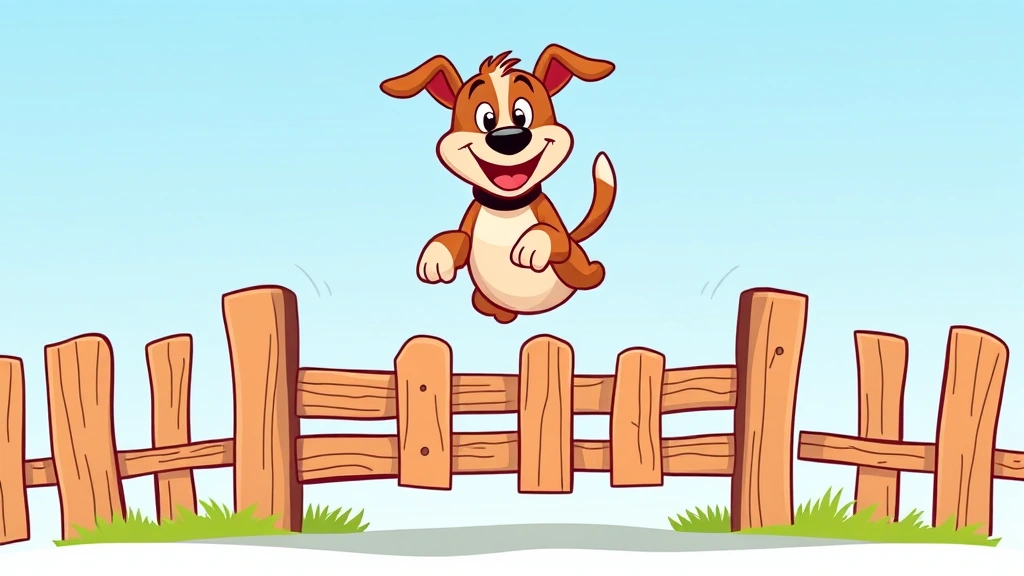
Here’s the thing: even the lazy dog jumps over the fence when properly motivated. That’s not magic—it’s training. Whether your pup is a couch potato or a bundle of energy, the principles of effective dog training remain the same. After years working with dogs in the vet clinic and at home, I’ve learned that most training failures aren’t about the dog. They’re about the human on the other end of the leash not knowing where to start.
The lazy dog jumps over the obstacle when you understand what drives him. The same applies to your dog. In this guide, I’m breaking down seven essential training tips that actually work—no complicated jargon, no false promises. These are strategies I use with my own dogs and recommend to clients every single day.
Start With Motivation: Find Your Dog’s Currency
The lazy dog jumps over the fence because something on the other side matters more than staying put. Training works exactly the same way. Before you teach anything, you need to figure out what your dog actually cares about.
Most people assume all dogs want treats. Wrong. Some dogs are toy-driven. Others respond to praise or play. A few are motivated purely by access to sniffing or running. I once worked with a Golden Retriever who would ignore premium steak but lose his mind for a tennis ball. His owner had been using treats for six months with minimal progress.
Here’s how to find your dog’s motivation:
- Observe what he chooses freely. Does he grab toys? Chase the ball? Seek your attention? That’s his currency.
- Test different rewards. Try high-value treats, toys, praise, play sessions. Watch his reaction intensity.
- Use the best reward for the hardest task. Save the top-tier motivation for behaviors you’re building, not ones he already knows.
- Rotate rewards to prevent boredom. The same treat loses appeal after 50 repetitions.
Once you nail this, training becomes exponentially easier. A motivated dog is a cooperative dog. It’s not about forcing compliance—it’s about making the right choice irresistible to him.
According to the American Kennel Club’s guide on positive reinforcement, understanding what motivates your individual dog is foundational to any training program. Every dog is unique, and what works for your neighbor’s Labrador might completely miss the mark for your Chihuahua.
Consistency Beats Intensity Every Time
I see owners do intense two-hour training sessions on weekends, then nothing all week. That’s backward. The lazy dog jumps over the fence consistently because the fence is always there, not because it suddenly appears on Saturdays.
Training is a habit-building exercise. Your dog’s brain works like muscle memory. Five minutes of daily practice beats a two-hour marathon session once a week. This is neurologically proven. Short, frequent repetitions create stronger neural pathways than occasional, lengthy sessions.
Here’s why consistency matters:
- Dogs learn through repetition. The more times they practice a behavior in context, the more automatic it becomes.
- Inconsistent rules confuse dogs. If “sit” sometimes gets him on the couch and sometimes doesn’t, he’ll be puzzled.
- Family members need to enforce the same rules. If mom rewards jumping but dad doesn’t, your dog learns to jump around mom.
- Training needs to happen in different environments. A dog who sits perfectly at home might ignore you at the park because the context is different.
My recommendation: Train for 5-10 minutes, three to five times daily. That’s it. Morning walk, midday play session, evening wind-down. You’ll see faster progress than someone doing 90-minute sessions twice a month.
Pro Tip: Set phone reminders for training times. Treat them like appointments. Consistency is hard because life is chaotic, but 5 minutes is manageable even on busy days.
Timing Is Everything in Dog Training
Timing is the difference between a dog who understands what you want and a confused pup. When you mark a behavior, you need to do it within one to two seconds of it happening. Any longer, and your dog’s brain doesn’t connect the reward to the action.
This is why clicker training is so effective. The click happens instantly when the dog does the right thing. Then the treat follows. It’s a clear, unambiguous signal: “That exact thing you just did? That’s what I want.”
Without precise timing, you end up rewarding the wrong behavior. For example:
- Dog sits. You say “good boy!” while reaching for a treat. Dog stands up to take the treat. You’ve now rewarded standing, not sitting.
- Dog barks. You say “quiet” and give a treat. Dog thinks barking gets treats.
- Dog jumps. You push him away (attention). Dog learns jumping gets attention—which is a reward for him.
The solution: Mark the exact moment the behavior happens. Use a clicker, a word like “yes,” or a finger snap—anything consistent and immediate. Then deliver the reward within a second.
Practice this with something simple first. Have your dog sit. The instant his rear touches the ground, click (or say “yes”). Then treat. Do this 20 times. You’ll see the light bulb moment when he realizes sitting = reward.
Break It Down Into Bite-Sized Steps
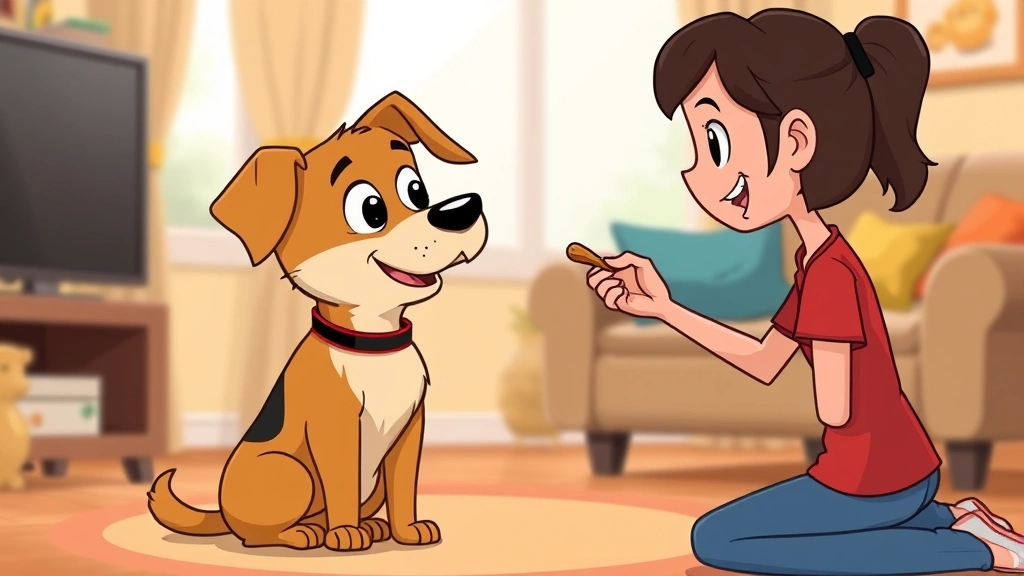
Nobody expects a kid to read Shakespeare on day one. Same with dogs. The lazy dog jumps over the fence because he’s been running toward it for months. You can’t teach “come when called from 100 yards away” on day one. You build toward it.
This is called “shaping.” You reward small steps toward the final behavior.
Let’s say you want to teach “stay.” Most people say “stay” and expect the dog to hold position for 30 seconds. The dog fails. You get frustrated. He gets confused.
Better approach:
- Dog sits. Reward immediately (1 second hold).
- Dog sits. Wait 2 seconds. Reward.
- Dog sits. Wait 5 seconds. Reward.
- Dog sits. Take one step back. Reward.
- Dog sits. Take one step back, wait 3 seconds. Reward.
- Gradually increase distance, duration, and distractions.
Each step is so small your dog almost can’t fail. Failure means you moved too fast. Back up. The goal isn’t to be “advanced”—it’s to build reliable behavior.
According to PetMD’s training resources, breaking complex behaviors into smaller, manageable steps is one of the most effective training methodologies. Dogs learn through incremental success, not through being thrown into the deep end.
Understand Your Dog’s Body Language
Your dog is talking to you constantly. Most owners aren’t listening. This is why training stalls.
When a dog looks away, his ears go back, or he yawns during training, he’s stressed or overwhelmed. That’s not stubbornness. That’s him saying “I don’t understand” or “This is too much.” If you push harder, you’ll damage his confidence and make training slower, not faster.
Learn to read these signals:
- Soft eyes, relaxed mouth, forward ears: Engaged and ready to learn.
- Stiff body, whale eye (white showing), ears pinned back: Stressed or fearful. Stop and reassess.
- Yawning, lip licking, looking away: Overwhelmed or confused. The task is too hard.
- Tail tucked, crouching: Fearful. This is a sign to back way off.
- Play bow, loose wiggly body: Happy and engaged.
Your dog’s body language tells you whether to move forward, stay put, or go back a step. Ignore it, and you’ll train a dog who’s anxious about training sessions. Respect it, and you’ll build a dog who loves learning.
I had a client with a anxious Rescue dog who was making zero progress in training. When I watched them work together, the dog was showing stress signals constantly—the owner just didn’t see it. We slowed everything down, made tasks easier, and suddenly the dog started improving. Same dog, same owner, different approach.
Manage the Environment, Not Just the Dog
Here’s a hard truth: your dog isn’t being “bad.” He’s responding to his environment. The lazy dog jumps over the fence because something triggered the behavior. If you remove the trigger, you remove the problem.
This is called “management,” and it’s criminally underrated. Most people try to train their way out of problems that would be solved by managing the environment.
Examples:
- Dog jumps on guests: Instead of training “no jump” while guests are arriving, manage it. Put him in another room until guests are settled. Then bring him out when he’s calm.
- Dog steals food from counters: Instead of training “leave it” while food sits on the counter, manage it. Put food away. Problem solved.
- Dog pulls on leash: Instead of fighting him for a mile, manage it. Use a front-clip harness that redirects his forward motion. Walk in quieter areas while building leash skills.
- Dog barks at the window: Manage it. Close the blinds. Move his bed away from the window.
Management isn’t “cheating.” It’s smart. It removes the temptation while you build the skill. Your dog can’t practice bad behavior if he doesn’t have the opportunity.
The best training programs combine both management and training. You manage the environment to prevent bad habits from forming while you train the behavior you want.
Patience Over Punishment: Why It Matters
Punishment-based training creates dogs who avoid the behavior when you’re watching, not dogs who understand what you want. It also damages your relationship and can create anxiety or aggression.
When your dog has an accident in the house, yelling or rubbing his nose in it doesn’t teach him to go outside. It teaches him to hide when he pees. He’ll sneak behind the couch instead of doing it in front of you. The behavior doesn’t change—it just goes underground.
Positive reinforcement works differently. You’re showing your dog the right choice and rewarding it. Over time, he chooses it because it works for him, not because he’s afraid of punishment.
Here’s the science: research from the American Animal Hospital Association shows that aversive training methods increase stress and fear in dogs, while positive reinforcement builds confidence and faster learning.
This doesn’t mean no boundaries. It means being clear about what you want and rewarding it generously. When your dog makes a mistake, you either:
- Prevent the mistake by managing the environment.
- Redirect to the right behavior and reward it.
- Simply don’t reward the wrong behavior.
That’s it. No yelling, no physical corrections, no shame. Just clarity and patience.
I understand this is harder than it sounds. Training is frustrating sometimes. But your dog isn’t trying to ruin your life. He’s just being a dog. Patience teaches him what you want. Punishment teaches him to fear you.
Safety Warning: If your dog shows signs of aggression (growling, snapping, biting), consult a certified professional trainer or behaviorist immediately. This is beyond DIY training territory.
Now let’s talk about common questions I get asked constantly about dog training and behavior.
Frequently Asked Questions
How long does it take to train a dog?
– It depends on the behavior, the dog, and your consistency. Simple behaviors like “sit” can take 3-5 days of daily practice. Complex behaviors like “stay” or “come” reliably can take weeks or months. Behavioral issues (jumping, pulling, aggression) can take much longer because they’re often self-rewarding. The lazy dog jumps over the fence because he’s been practicing that for months—you won’t undo it in a week. Expect 6-12 weeks of consistent work for significant behavior change. And remember, training never really ends. You maintain behaviors throughout your dog’s life.
Can you train an older dog?
– Absolutely. The saying “you can’t teach an old dog new tricks” is false. Older dogs can learn, though they may learn at a different pace. Senior dogs sometimes have less energy for training sessions, so keep them shorter. They may also have health issues that affect their ability to perform certain behaviors (a dog with arthritis can’t jump as easily). Work with your vet if your older dog has physical limitations. The advantage of older dogs is they’re often calmer and less distractible than puppies, which can actually make training easier in some ways.
What’s the difference between a trainer and a behaviorist?
– A trainer teaches behaviors and obedience. A behaviorist addresses behavioral issues like aggression, anxiety, or fear. Most trainers focus on teaching commands and basic manners. Behaviorists have specialized training (usually a degree or certification) in animal behavior and psychology. For basic obedience, a trainer is fine. For serious behavioral problems, see a certified behaviorist. Look for credentials like IAABC (International Association of Animal Behavior Consultants) or ACVB (American College of Veterinary Behaviorists).
Is punishment ever necessary in dog training?
– No. Punishment might suppress behavior temporarily, but it doesn’t teach your dog what you want. It also creates anxiety, fear, and can lead to aggression. Modern training science has moved away from punishment-based methods because they’re less effective and more harmful. There’s always a better way than punishment. That way might involve more patience or creativity, but it exists. The ASPCA recommends positive reinforcement as the gold standard for dog training.
Why does my dog listen at home but not at the park?
– Context matters enormously. Your dog isn’t being stubborn—he’s distracted. The park has new smells, other dogs, and exciting stimuli everywhere. Your home is boring and predictable by comparison. Your dog’s training is too new to compete with that level of distraction. Build reliability gradually: train in your home, then your yard, then a quiet street, then busier areas. Don’t expect park-level obedience until he’s rock solid at home. Also, make sure your rewards are better at the park than the distractions. A boring treat won’t compete with squirrels. Use high-value rewards in high-distraction environments.
How do I know if my dog is learning or just getting lucky?
– If your dog does the behavior 8 out of 10 times consistently over multiple days, he’s learning. If it’s hit-or-miss, he doesn’t fully understand yet. Go back a step and make the task easier. Also, test in different contexts. If your dog sits in your kitchen but not your living room, he doesn’t truly know “sit” yet—he’s learned “sit in the kitchen.” That’s why training in multiple environments is important. The lazy dog jumps over the fence consistently because he’s practiced it everywhere. That’s true learning.

What if my dog knows a command but “chooses” not to listen?
– He’s not choosing defiance. Something in the environment is more rewarding than your command. Either the distraction is too strong, your reward isn’t good enough, or he hasn’t learned the command reliably enough yet. Go back to easier contexts and rebuild. Also, make sure you’re not asking him to do something he physically can’t do (a senior dog with hip dysplasia can’t jump as high). And never punish him for not responding—that makes him less likely to try next time. Instead, set him up for success by managing the environment and using better rewards.
Is clicker training better than verbal markers?
– Clicker training is very effective because the click is consistent and distinct. But verbal markers like “yes” work too if you’re consistent. The key is having a clear, immediate marker that tells your dog exactly when he did the right thing. Some people prefer clickers because they’re harder to accidentally use inconsistently. Others prefer verbal markers because they always have their voice but not always a clicker. Pick one and stick with it. The consistency matters more than which tool you choose.





