
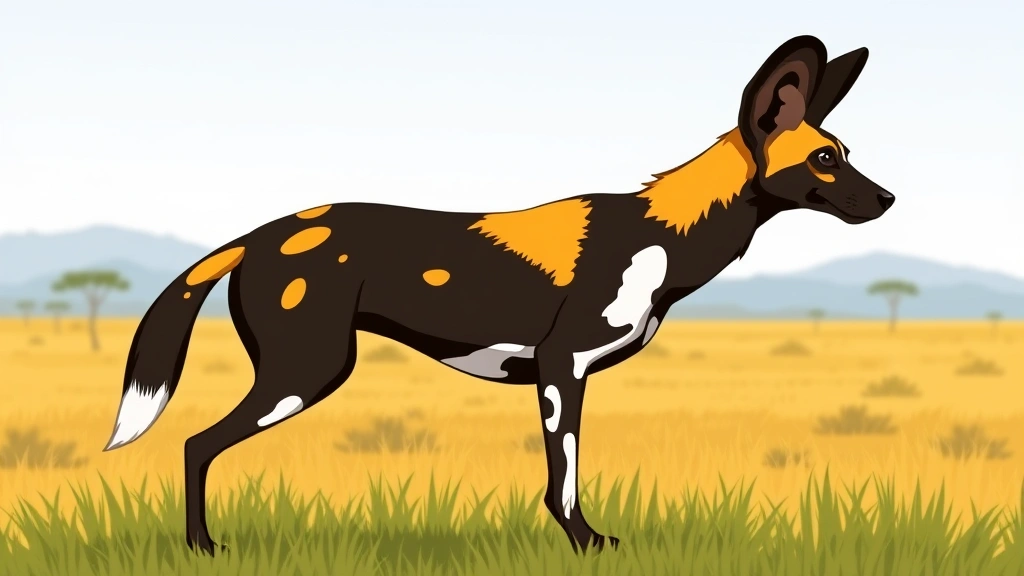
Let’s be real: when you first see an African painted dog, you might do a double-take. These aren’t your typical backyard companions. With their mottled coats that look like someone splashed paint across their fur, massive ears, and lean athletic builds, African painted dogs are some of the most striking canines on Earth. But here’s what most people don’t realize—these wild animals are nothing like the dogs in your home, and that’s exactly why they fascinate us.
If you’ve ever wondered whether an African painted dog could be a pet, or you’re just curious about these incredible creatures, you’re in the right place. We’re going to break down everything you need to know about African painted dogs, from their wild behavior to why they’re so important to conservation efforts.
What Are African Painted Dogs?
The African painted dog, scientifically known as Lycaon pictus, is a wild canid native to sub-Saharan Africa. They’re not domesticated, not even close. Think of them as the polar opposite of your golden retriever. These are apex predators with a hunting success rate that would make most carnivores jealous.
Here’s what makes them different from domestic dogs: African painted dogs have evolved over thousands of years to hunt in coordinated packs across African savannas and woodlands. They’re built for endurance, not sprinting. Their long legs, lean bodies, and incredible cardiovascular systems let them chase prey for miles without stopping. According to research from the National Geographic Society, these animals have a hunting success rate of up to 80%—far higher than lions or hyenas.
The name “painted dog” comes directly from their coat. Each African painted dog has a unique pattern of patches in black, yellow, brown, and white. No two are identical. It’s like nature’s way of giving each one a personalized ID card.
Wondering what type of dog you might be? Check out our What Type of Dog Am I Quiz to explore different dog personalities—though rest assured, you won’t get “African painted dog” as a result!
Appearance and That Unforgettable Coat
If you saw an African painted dog in person, you’d never forget it. These animals are medium-to-large sized, weighing between 40 to 80 pounds, with a build that screams athleticism. Their legs are long and slender, their chests are deep, and their bodies are lean. They look like they were designed by engineers specifically for running long distances.
The most striking feature? Those ears. African painted dogs have enormous, rounded ears that stand upright on their heads. These aren’t just for show—they’re incredibly sensitive and help them communicate with pack members across long distances. The ears also help with heat dissipation in the hot African climate.
Now, the coat. This is where the “painted” part of their name makes perfect sense. Each African painted dog displays a patchwork pattern of colors: black, yellow, rust, brown, and white. The pattern is completely random and individual. Some have more black, others more yellow. Some have symmetrical patches, while others look like someone threw paint at them during a windstorm. This unique coloration actually serves a purpose—it helps with pack recognition and individual identification.
Their teeth are another notable feature. African painted dogs have powerful jaws and carnassial teeth designed for tearing meat. These animals are built from the ground up to be hunters, not companions.
Where African Painted Dogs Live
African painted dogs are found exclusively in sub-Saharan Africa, but their range is fragmented and shrinking. Historically, they roamed across the entire continent south of the Sahara. Today, their populations are scattered across countries like Botswana, Zimbabwe, Tanzania, Zambia, and a few other nations.
These animals prefer open habitats: savannas, grasslands, and open woodlands. They need space to hunt, and they need it in abundance. A single pack of African painted dogs might patrol a territory spanning 400 to 1,500 square kilometers. That’s enormous. For context, a pack of wolves in North America typically has a territory of 50 to 150 square kilometers.
The habitat requirements of African painted dogs are one of the biggest reasons they can’t adapt to human-dominated landscapes. They’re not like some wild animals that can slip into human settlements and find food in garbage. African painted dogs need pristine, undisturbed wilderness to survive.
According to the IUCN Red List, habitat loss is the primary threat to these animals. As human populations expand and agricultural development pushes into wild areas, African painted dogs lose their homes.
Pack Behavior and Social Structure
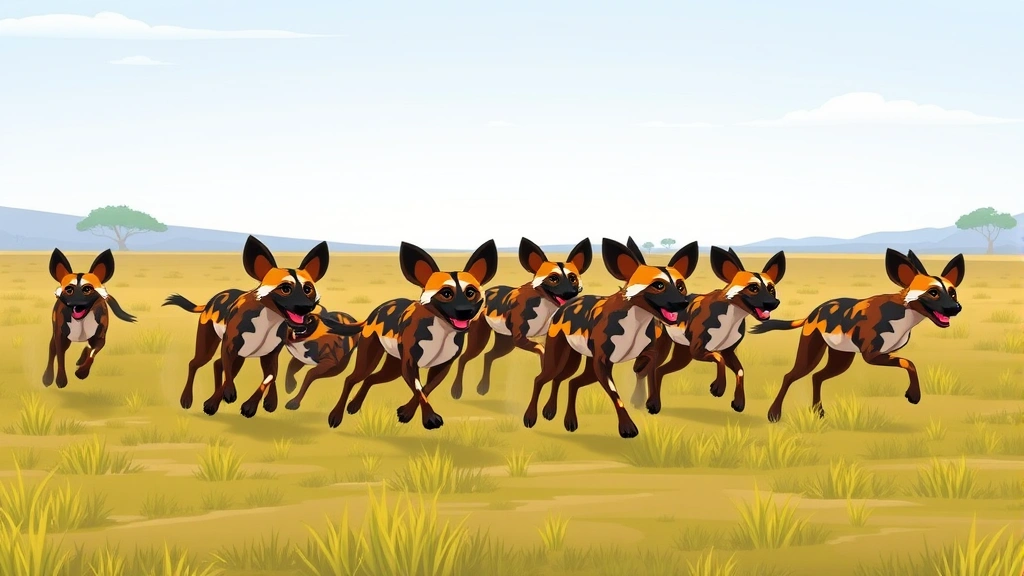
African painted dogs are intensely social animals. They live in packs that typically range from 5 to 30 individuals, though larger packs have been documented. Unlike wolf packs, which are usually led by a dominant breeding pair, African painted dog packs have a more complex social hierarchy.
Here’s what’s fascinating: in African painted dog packs, the breeding female (the alpha, if you will) is often the most dominant individual, not the male. She leads hunts, makes decisions about where the pack travels, and determines pack movement. The males are generally more submissive and cooperative. This is pretty different from domestic dog behavior, where dominance hierarchies are far less rigid.
Pack members communicate constantly. They use vocalizations—yelps, barks, and whining sounds—along with body language and scent marking. When a pack reunites after a hunt, they engage in greeting ceremonies that look almost ceremonial. They nuzzle each other, wag their tails, and make high-pitched contact calls. It’s genuinely heartwarming to watch, even though these are apex predators.
One of the most remarkable aspects of African painted dog pack behavior is their level of cooperation. When hunting, they work together with almost military precision. Some individuals chase prey while others cut off escape routes. They take turns at the front of the chase, rotating positions to maintain speed. If an individual is injured or sick, other pack members will regurgitate food for them. This level of care is rare in the animal kingdom.
Pups are raised communally. All pack members participate in feeding, protecting, and teaching young African painted dogs. This is completely different from domestic dogs, where typically only the mother provides intensive parental care.
Hunting and Diet
Here’s where African painted dogs really stand out: their hunting ability is legendary. These animals are carnivores, pure and simple. They hunt medium-sized ungulates—impalas, gazelles, wildebeest, and warthogs. Occasionally, they’ll take larger prey like zebras if they’re working as a large pack.
The hunting strategy of African painted dogs is a masterclass in cooperation. A pack will identify prey, then begin a chase that can last anywhere from 20 minutes to over an hour. They don’t rely on a quick kill like lions do. Instead, they wear their prey down through relentless pursuit. Their incredible endurance means they can maintain a chase longer than almost any other predator.
Once prey is exhausted, the pack moves in for the kill. It’s efficient and brutal. The entire process, from identification to consumption, is orchestrated with remarkable coordination. This is nothing like the somewhat chaotic hunting behavior of domestic dogs chasing squirrels in backyards.
The diet of an African painted dog is 100% meat. They don’t eat vegetation, fruits, or anything else. In the wild, they consume their entire kill—organs, bones, everything. This is important to understand if you’re thinking about the nutritional needs of wild canids versus domestic dogs. If you’re curious about what domestic dogs eat, you might wonder why do dogs like peanut butter—but African painted dogs would have zero interest in such treats.
Hunting success rates for African painted dog packs are remarkably high. Research suggests they succeed in killing prey in 70-80% of their hunts. Lions, by comparison, succeed in only about 25% of their attempts. This efficiency is why African painted dogs are considered one of Africa’s most successful predators.
Conservation Status and Threats
Here’s the tough reality: African painted dogs are endangered. The IUCN classifies them as Endangered, and their population is declining. There are fewer than 6,600 African painted dogs left in the wild. That number is sobering.
The threats are numerous and interconnected:
- Habitat loss: As human populations expand and agricultural development increases, African painted dogs lose the vast territories they need to survive.
- Human-wildlife conflict: Farmers and herders view African painted dogs as threats to livestock. Retaliatory killings are common.
- Disease: African painted dogs can contract rabies and other diseases from domestic dogs. In some areas, disease outbreaks have decimated entire packs.
- Road mortality: As roads cut through wildlife areas, African painted dogs are increasingly hit by vehicles.
- Competition with larger predators: Lions and hyenas sometimes kill African painted dogs, particularly pups.
Conservation organizations are working hard to protect African painted dogs. Programs focus on habitat protection, disease management, and community education. Some areas have established protected corridors that allow African painted dog packs to move between fragmented habitats. These efforts are critical, but they require ongoing funding and political will.
If you’re interested in wildlife conservation, understanding the differences between wild animals and domestic pets is essential. That’s why resources like our What Type of Dog Am I Quiz exist—to help people appreciate the diversity of canines without confusing wild predators with companion animals.
Can You Own an African Painted Dog as a Pet?
Let’s get straight to the point: No, you cannot own an African painted dog as a pet. Full stop.
Here’s why this matters. African painted dogs are wild animals. They’re not domesticated, and they can’t be domesticated. Domestication isn’t something that happens to an individual animal—it’s a genetic change that occurs over many generations of selective breeding. Dogs were domesticated from wolves over thousands of years. African painted dogs have no such history with humans.
In most countries, it’s illegal to own an African painted dog. They’re protected under international law, including CITES (Convention on International Trade in Endangered Species). Even if it were legal, here’s what you’d be dealing with:
- Extreme prey drive: African painted dogs have an instinctive drive to hunt. Your cat, your neighbor’s small dog, even your child’s toys would trigger predatory behavior. This isn’t a behavior problem—it’s hardwired into their DNA.
- Pack aggression: Without the complex social structure of a wild pack, a captive African painted dog would likely develop serious behavioral problems. They’re not solitary animals. They need pack dynamics to be psychologically healthy.
- Size and strength: An African painted dog weighing 60 pounds with the muscle mass of an endurance predator is not something you can control with a leash and treats.
- Dietary needs: These animals need whole prey or raw meat diets that are challenging and expensive to provide. Regular dog food won’t cut it.
- Space requirements: A single African painted dog pack needs hundreds of square kilometers. Your backyard won’t work.
If you’re drawn to the idea of owning an exotic animal, that’s understandable—African painted dogs are captivating. But the ethical and practical reality is that wild animals belong in the wild or in accredited facilities where their complex needs can be met. If you’re looking for a dog companion, there are thousands of domestic dogs waiting in shelters. If you’re interested in dog breeds with interesting characteristics, our Girl Dog Names guide can help you explore naming options for a domestic companion.
That said, you can support African painted dog conservation. Donate to organizations working to protect them, support habitat conservation efforts, and educate others about why these animals matter.
Pro Tip: If you’re passionate about wild animals, consider supporting organizations like the African Wildlife Foundation or species-specific conservation groups. Your donations directly fund habitat protection and anti-poaching efforts that keep African painted dogs alive in the wild.
Frequently Asked Questions
Are African painted dogs related to domestic dogs?
– Yes, distantly. Both African painted dogs and domestic dogs are canids, meaning they share a common ancestor. However, African painted dogs diverged from that ancestral line millions of years ago. They’re about as related to your golden retriever as you are to a chimpanzee—technically cousins, but with vastly different evolutionary paths. African painted dogs are actually more closely related to wolves and jackals than to domestic dogs.
How fast can an African painted dog run?
– African painted dogs can reach speeds of up to 66 kilometers per hour (about 41 miles per hour) in short bursts. However, their real superpower isn’t sprinting—it’s endurance. They can maintain speeds of 50+ kilometers per hour for extended periods, which is why they’re such successful hunters. This endurance comes from their lean build, efficient cardiovascular systems, and long legs that cover tremendous ground with each stride.
What is the lifespan of an African painted dog in the wild?
– In the wild, African painted dogs typically live 10-11 years. In captivity, where they’re protected from disease, predation, and hunting accidents, they can live into their mid-teens. However, captive African painted dogs often develop behavioral and psychological problems due to their complex social and territorial needs.
Do African painted dogs make any sounds?
– Absolutely. African painted dogs are quite vocal. They use a variety of sounds to communicate with their pack: high-pitched yelps for contact calls, barks for alarm, whining for submission, and chirping sounds for greeting. They also use body language extensively—ear positions, tail movements, and facial expressions all convey meaning. If you’ve ever wondered about dog communication, African painted dogs take it to another level entirely.
How many African painted dogs are left in the world?
– Current estimates suggest there are fewer than 6,600 African painted dogs remaining in the wild. This represents a significant decline from historical populations. The main driver of this decline is habitat loss, followed by human-wildlife conflict and disease. Conservation efforts are ongoing, but the situation remains critical.
Can African painted dogs interbreed with domestic dogs?
– Technically, African painted dogs and domestic dogs are different enough genetically that breeding between them is extremely unlikely and would be unsuccessful. Even if hybridization were possible, it would be disastrous for conservation efforts. Genetic pollution from domestic dogs is actually a threat to African painted dog populations in some areas, as domestic dogs can transmit diseases like rabies and distemper.
What do conservation efforts for African painted dogs look like?
– Conservation programs focus on several key areas: habitat protection and corridor creation to connect fragmented populations, disease management programs (especially rabies vaccination), community education to reduce human-wildlife conflict, and anti-poaching efforts. Some organizations work with local communities to develop compensation programs for livestock losses, reducing the incentive for retaliatory killings. Research into African painted dog behavior and ecology also informs conservation strategies.
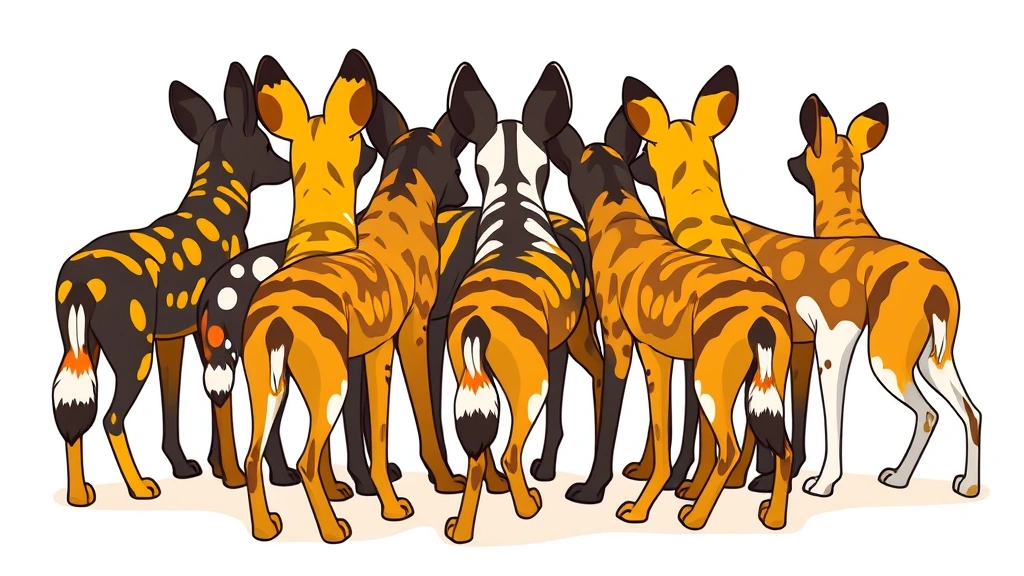
Why are African painted dogs called painted dogs?
– The name comes directly from their coat pattern. Each African painted dog has a unique patchwork of black, yellow, brown, and white patches that look like someone painted them on. No two African painted dogs have identical patterns, making the coat pattern useful for individual identification. The scientific name, Lycaon pictus, literally means “painted wolf.”
Keep your own canine companion healthy: If you have a domestic dog at home, understanding their needs is crucial. Learn about common health issues like how dogs get fleas and prevention strategies. Different breeds have different care requirements—for example, if you own a larger breed, you might wonder do Bernese Mountain dogs shed and what grooming commitments come with that breed.





