
Getting dog food measurement right is one of those things that sounds simple until you’re standing in your kitchen at 6 AM wondering if your pup is getting too chunky or if you’re starving the poor guy. Here’s the thing: most dog owners eyeball their portions like they’re making pasta for dinner, and then they’re shocked when their vet mentions their dog needs to drop a few pounds.
Table of Contents
- Why Dog Food Measurement Actually Matters
- The Measuring Cup Method: Your New Best Friend
- Reading Those Confusing Feeding Charts
- The Scale Method: For the Obsessive (And That’s Okay!)
- Adjusting for Life Stages and Activity Levels
- Treats Don’t Count as Free Food (Unfortunately)
- Wet Food vs. Dry Food Measurement Confusion
- The Body Condition Score Method
- Common Dog Food Measurement Mistakes to Avoid
- When to Adjust Your Dog’s Portions
- Tools That Make Dog Food Measurement Easier
- Frequently Asked Questions
Why Dog Food Measurement Actually Matters
Listen, I get it. Your dog gives you those puppy dog eyes, and you want to dump the entire bag into their bowl. But proper canine portion control isn’t just about keeping your dog from becoming a furry beach ball—it’s about their health, lifespan, and quality of life. Obesity in dogs leads to joint problems, diabetes, heart disease, and a whole host of issues that’ll make your vet richer and your dog sadder.
According to the Association of American Feed Control Officials (AAFCO), proper nutrition starts with accurate measurement. Your vet can tell you the ideal weight for your dog’s breed, but you’re the one holding the measuring cup, so the responsibility falls on you.
The Measuring Cup Method: Your New Best Friend
Let’s start with the basics. Most dog food bags include a little chart on the back (you know, the part you’ve probably never read). That chart tells you how many cups your dog needs based on their weight. The key word here? Cups. Not handfuls. Not “a little bit more than yesterday.” Actual measuring cups.
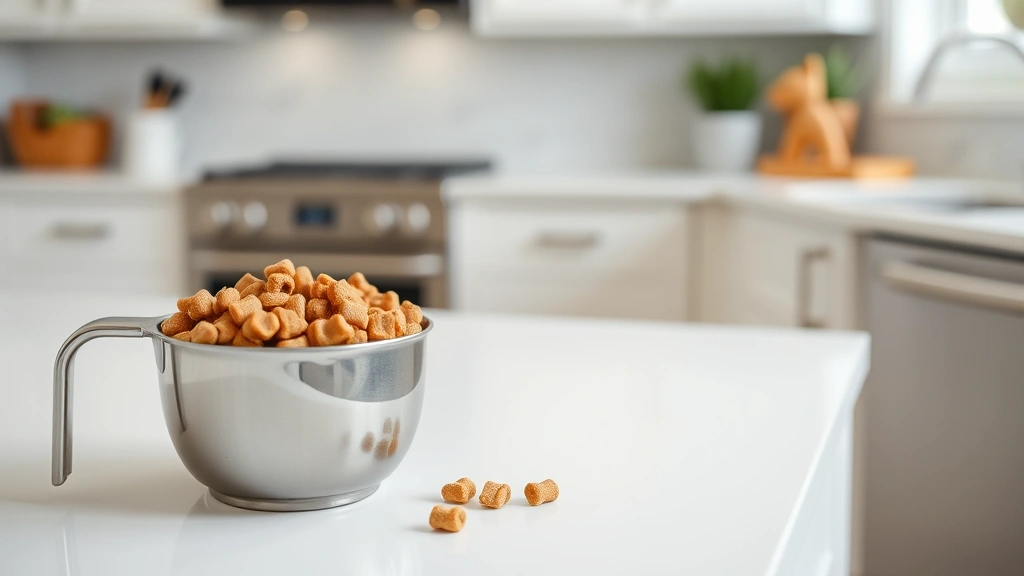
Get yourself a proper measuring cup—the kind you’d use for baking. Fill it level with the top. Don’t pack it down like you’re angry at the kibble. This is where most people mess up. They think they’re being generous by overstuffing the cup, but they’re actually doubling the portion.
Pro tip: Keep your measuring cup right next to the dog food bag. This removes the excuse of “I forgot how much I’m supposed to feed them.” Make it convenient, and you’ll actually do it.
Reading Those Confusing Feeding Charts
Okay, so you’ve found the feeding chart on the back of your dog’s food bag. Now you need to decode it like you’re breaking the Enigma machine. These charts typically show weight ranges and corresponding daily portions, often split into two meals.
Here’s where it gets tricky: these charts are guidelines, not gospel. They assume your dog is at a healthy weight and has normal activity levels. If your dog is a couch potato who thinks exercise is rolling over, you might need to reduce portions by 10-15%. If your dog is a Border Collie who herds your other pets for fun, you might need to add a bit more.
The PetMD Dog Nutrition Guide recommends adjusting portions based on your individual dog’s metabolism, age, and activity level. Your vet can help you nail down the exact amount during check-ups, and you can reference pet health monitoring tools to track changes over time.
The Scale Method: For the Obsessive (And That’s Okay!)
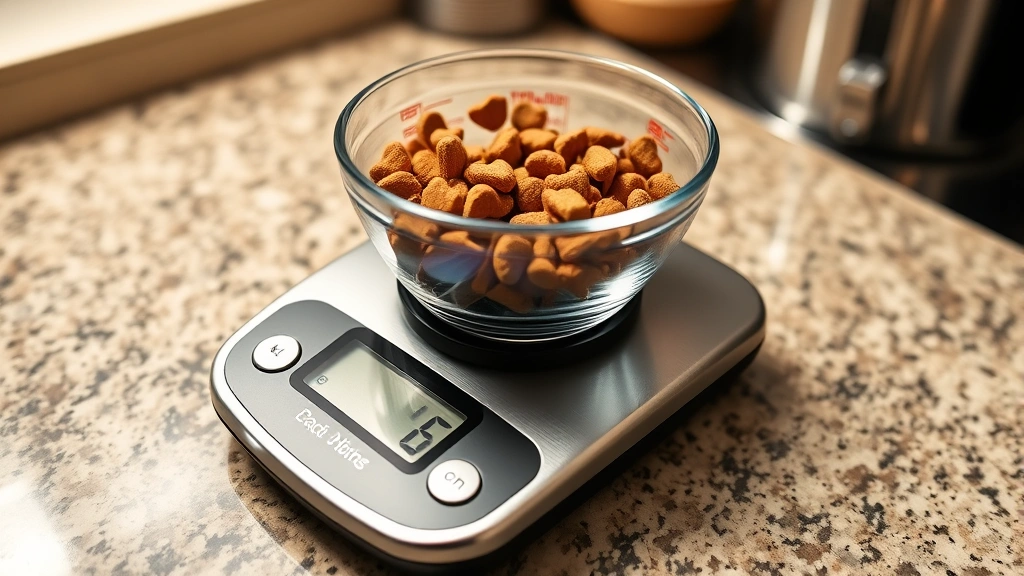
If measuring cups feel too imprecise for you, welcome to the kitchen scale club. This is the nuclear option for dog portion sizing accuracy. A digital kitchen scale lets you measure your dog’s food down to the gram, which is especially useful if you’re mixing different types of food or dealing with a dog that needs very precise calorie control.
Most dog food bags include nutritional information that tells you grams per cup, so you can calculate exactly how many grams your dog should get. It takes an extra 30 seconds, but if your dog has health issues or you’re trying to manage their weight carefully, this method is worth it.

Adjusting for Life Stages and Activity Levels
Your dog’s nutritional requirements change throughout their life, and dog food measurement needs to adapt accordingly. A growing puppy needs more calories per pound of body weight than an adult dog. A senior dog might need fewer calories but more nutrients to support joint health.
Activity level is another huge factor. A dog that spends all day on the couch needs significantly fewer calories than a dog that runs five miles a day. If you’re unsure where your dog falls, think honestly about their daily routine. Does your dog actually get a walk, or does a walk mean stepping outside for three minutes?
Seasonal changes matter too. Dogs often need slightly more food in winter to maintain body heat, and less in summer. It’s not a dramatic difference, but it’s something to keep in mind.
Treats Don’t Count as Free Food (Unfortunately)
This is where most dog owners lose the plot. They measure out the perfect amount of kibble, then spend the day handing out treats like they’re at a Vegas buffet. Here’s the math: treats should make up no more than 10% of your dog’s daily calorie intake. The other 90% should come from their regular food.
If your dog gets 1,000 calories per day, that means only 100 calories should come from treats. One peanut butter biscuit might be 50-100 calories, depending on the size. Suddenly, that “quick treat” you gave them at lunch has already eaten up their treat budget for the day.
Start tracking treats mentally, or write them down if you’re serious about it. Your dog will still love you even if you’re not constantly shoving snacks in their mouth, I promise.
Wet Food vs. Dry Food Measurement Confusion
Here’s where things get weird: wet food and dry food have completely different calorie densities. A cup of wet food has way fewer calories than a cup of dry kibble because, well, it’s mostly water. If you switch from dry to wet food, you can’t just use the same measurement.
The solution? Check the feeding guide on your specific dog food brand. They’ll tell you how much wet food equals how much dry food. Usually, it’s something like one 13-ounce can of wet food equals about one cup of dry kibble, but this varies by brand and formula.
If you’re mixing wet and dry food (which some people do for palatability or to help with hydration), measure each component separately and adjust the total accordingly. This is where pet supplement dosage guidance becomes relevant too—if you’re adding supplements or mixing foods, precision matters.
The Body Condition Score Method
Want to know if your dog food measurement is actually working? Use the body condition score (BCS) method. This is what vets use to determine if a dog is at a healthy weight.

Here’s how it works: feel your dog’s ribs. You should be able to feel them easily without pressing hard, but you shouldn’t see them prominently sticking out. Your dog should have a visible waist when you look from above, and their belly shouldn’t hang or sag. If you can’t feel the ribs at all, your portions are too big. If the ribs are very prominent and your dog looks like a skeleton, your portions are too small.
Check your dog’s body condition every month or so. If they’re gaining weight, reduce portions by 10-15%. If they’re losing weight, increase portions slightly. This real-world feedback is way more useful than any chart.
Common Dog Food Measurement Mistakes to Avoid
Let me list out the greatest hits of portion mistakes I see:
Mistake #1: Not accounting for different kibble sizes. A cup of small kibble has more pieces than a cup of large kibble, so the calorie content can vary. If you switch brands, double-check the feeding guide.
Mistake #2: Feeding based on the dog’s age instead of weight. A three-year-old Great Dane needs way more food than a three-year-old Chihuahua. Age is just one factor.

Mistake #3: Assuming all dogs of the same breed need the same amount. Individual metabolism varies wildly. Your friend’s Labrador might thrive on three cups a day while yours does better on two and a half.
Mistake #4: Never adjusting portions as your dog ages. That amount you fed your dog as a young adult might be too much once they hit their senior years and slow down.
Mistake #5: Ignoring the feeding guide entirely and just “winging it.” I see this one constantly, and it’s the reason so many dogs are overweight.
When to Adjust Your Dog’s Portions
Life happens, and your dog’s needs change. You should recalibrate your dog food measurement in these situations:
After a vet visit where they mention weight concerns. If your vet says your dog needs to lose weight, ask for a specific daily calorie target and adjust accordingly. After a major life change like getting a second dog or moving to a new home. After seasonal changes. Winter might require slightly more calories; summer might require less. After your dog ages into a new life stage. Puppies need more, seniors often need less. After starting or stopping medications that affect appetite. Some medications make dogs hungrier or less interested in food.
Tools That Make Dog Food Measurement Easier
If you want to level up your portion game, these tools help:
Automatic feeders: Portion-controlled feeders dispense the exact amount you set. Great for consistency, especially if you have multiple people feeding your dog.
Kitchen scale: For precision measurement down to the gram.
Measuring cups: Get a good one and keep it dedicated to dog food. Your baking doesn’t need kibble dust.
Feeding journal: Track what you feed, when, and any changes you notice. Sounds obsessive, but it’s incredibly useful.
Body condition tracker: Take monthly photos of your dog from above and the side. You’ll notice weight changes before anyone else does.
You might also want to explore additional pet supplement dosage guidance if you’re adding supplements to your dog’s diet, and check out professional grade pet supplements if you want to enhance their nutrition beyond just kibble.
Frequently Asked Questions
How do I know if I’m feeding my dog the right amount?
Your dog should maintain a healthy weight, have visible ribs you can feel but not see prominently, have a visible waist when viewed from above, and have energy for normal activity. Your vet can confirm if the amount is right during check-ups.
Can I feed my dog once a day instead of twice?
Most adult dogs do well with two meals a day, which helps with digestion and energy levels. Large breed dogs especially benefit from two meals to reduce bloat risk. Puppies need three to four meals. Ask your vet about what’s best for your specific dog.
What if my dog seems hungry after their measured portion?
Dogs are excellent manipulators and will act hungry even when they’re not. If your dog is at a healthy weight according to the body condition score, they’re getting enough food. Their hunger is usually boredom or habit, not actual need. Increase exercise or enrichment activities instead of food.

Should I measure treats separately from meals?
Yes, absolutely. Treats should be no more than 10% of daily calories. If you’re not tracking them, you’re probably overfeeding without realizing it.
How often should I reassess my dog’s portions?
Check monthly using the body condition score method. Have a full discussion with your vet annually during wellness visits. Make adjustments seasonally if you notice changes in your dog’s activity level.
Is there a difference between cup measurements for different dog food brands?
Yes. Different brands have different kibble densities, so a cup of Brand A might have different calories than a cup of Brand B. Always follow the specific feeding guide on the bag you’re using.
Summary: Dog food measurement doesn’t have to be complicated, but it does require consistency and attention. Use a proper measuring cup, follow the feeding guide on your dog’s food bag, adjust for your individual dog’s activity level and age, keep treats to 10% of daily calories, and monitor your dog’s body condition monthly. If you’re ever unsure, ask your vet for specific guidance. Your dog’s health and longevity depend on getting this right, and it’s one of the easiest things you can control as a pet owner.





