
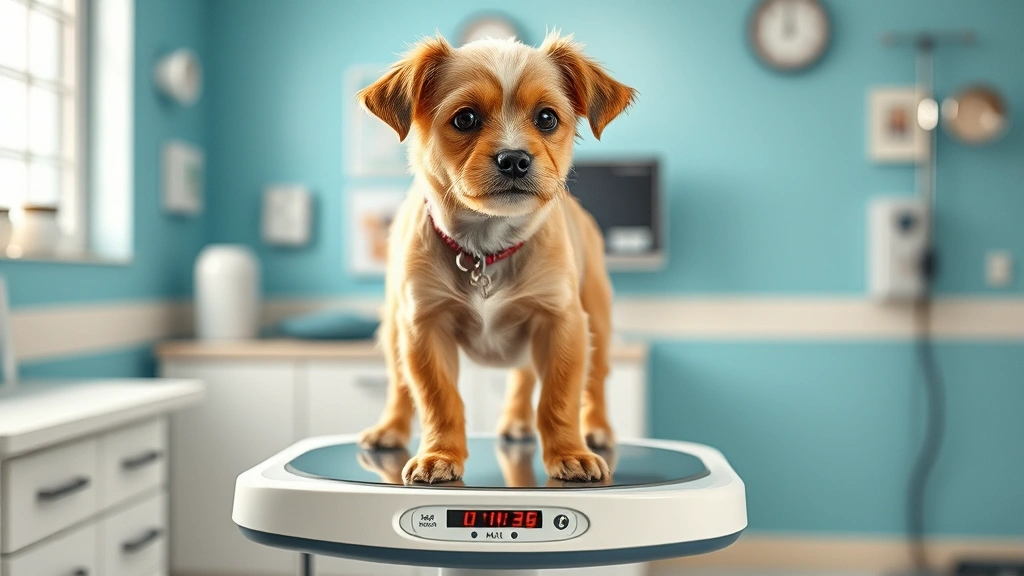
Size-based portion control is absolutely crucial for keeping your furry friends at a healthy weight, and honestly, it’s way easier than most pet parents think. Whether you’ve got a tiny Chihuahua or a massive Great Dane, getting the portions right can mean the difference between a thriving pet and one dealing with obesity-related health issues. Let’s dive into everything you need to know about feeding your pet the right amount based on their size.
Table of Contents
- Why Size-Based Portion Control Matters for Your Pet
- Understanding Your Pet’s Ideal Body Condition Score
- Calculating Calories Based on Pet Size and Weight
- Small Breed Portion Control: Tiny Bodies, Big Appetites
- Large and Giant Breed Portion Control: Managing the Big Boys
- Meal Frequency: How Often Should You Feed Your Pet?
- Adjusting Portions for Activity Level and Age
- Reading Pet Food Labels Like a Pro
- Treats and Snacks: The Hidden Calorie Culprits
- Common Portion Control Mistakes to Avoid
- Frequently Asked Questions
- Summary: Mastering Size-Based Portion Control
Why Size-Based Portion Control Matters for Your Pet
Here’s the thing: pet obesity is a real epidemic. According to the Association for Pet Obesity Prevention, nearly 60% of cats and 56% of dogs in the United States are classified as overweight or obese. That’s a lot of chubby pets! Size-based portion control is your first line of defense against this problem. When you feed your pet the right amount for their body size, you’re not just preventing weight gain—you’re investing in their overall health, longevity, and quality of life.
Small breeds have lightning-fast metabolisms compared to large breeds. A 5-pound Pomeranian needs completely different calorie amounts than a 90-pound Labrador. This is where understanding size-based feeding becomes essential. Your vet can help you determine the exact caloric needs, and resources like AAFCO guidelines provide standardized recommendations.
Understanding Your Pet’s Ideal Body Condition Score
Before you can nail down portion sizes, you need to know what a healthy weight actually looks like for your specific pet. The body condition score (BCS) is a 1-9 scale that helps you assess whether your pet is at a healthy weight. A score of 4-5 is ideal, where you can feel your pet’s ribs without pressing hard, and they have a visible waist when viewed from above.
This assessment is crucial because two dogs of the same size might need different portions based on their individual metabolism, age, and activity level. A senior dog naturally needs fewer calories than a young, active pup of the same size. That’s why personalized size-based portion control beats one-size-fits-all feeding charts every time.
Calculating Calories Based on Pet Size and Weight
The basic formula for calculating your pet’s daily caloric needs involves their resting energy expenditure (REE) multiplied by an activity factor. For most pets, the calculation is roughly 30 calories per pound of body weight for maintenance, though this varies significantly. A 20-pound dog might need around 600 calories daily, while a 60-pound dog might need 1,200-1,400 calories.
But here’s where it gets tricky: not all calories are created equal. High-quality proteins and fats are more satiating than cheap fillers, so premium foods often require smaller portions. This is why checking your pet food’s calorie content per cup is non-negotiable. Most quality pet foods list this information on the bag, and your vet can help you interpret it.
For specific guidance on supplements that support metabolism and digestion, check out our Pet Supplement Dosage Guidance article for how to incorporate supplements into your feeding plan.
Small Breed Portion Control: Tiny Bodies, Big Appetites
Small breeds (under 20 pounds) are notorious for being food-motivated little monsters. A Chihuahua might think they need to eat like a Great Dane, but their tiny bodies simply can’t handle those portions. Small dogs typically need about 40 calories per pound of body weight, which means a 5-pound dog needs roughly 200 calories daily.
The challenge with small breeds is that they’re prone to hypoglycemia and can become overweight quickly if overfed. Portion control for small dogs means measuring carefully—those cute little faces begging for more aren’t accurate indicators of actual hunger. Use a kitchen scale or measuring cup, not your eyeballs. Many small-breed formulas come in smaller kibble sizes too, which helps with portion accuracy.
Our Tasty Pet Supplements collection includes options specifically formulated for small breeds, ensuring you’re not overdoing it with treat-based supplements.
Large and Giant Breed Portion Control: Managing the Big Boys
Large breed dogs (50+ pounds) need different portion control strategies than their tiny counterparts. While they require more total calories, they actually need fewer calories per pound of body weight—typically around 25-30 calories per pound. A 70-pound dog might only need 1,400-1,750 calories daily, which seems like a lot until you realize that’s spread across multiple meals.
Giant breed puppies require especially careful portion control because growing too quickly can cause joint and bone problems. These massive pups should eat slower-growth formulas and have their portions carefully measured to prevent developmental orthopedic disease. Adult giant breeds do better with two or three smaller meals rather than one large feeding to prevent bloat.
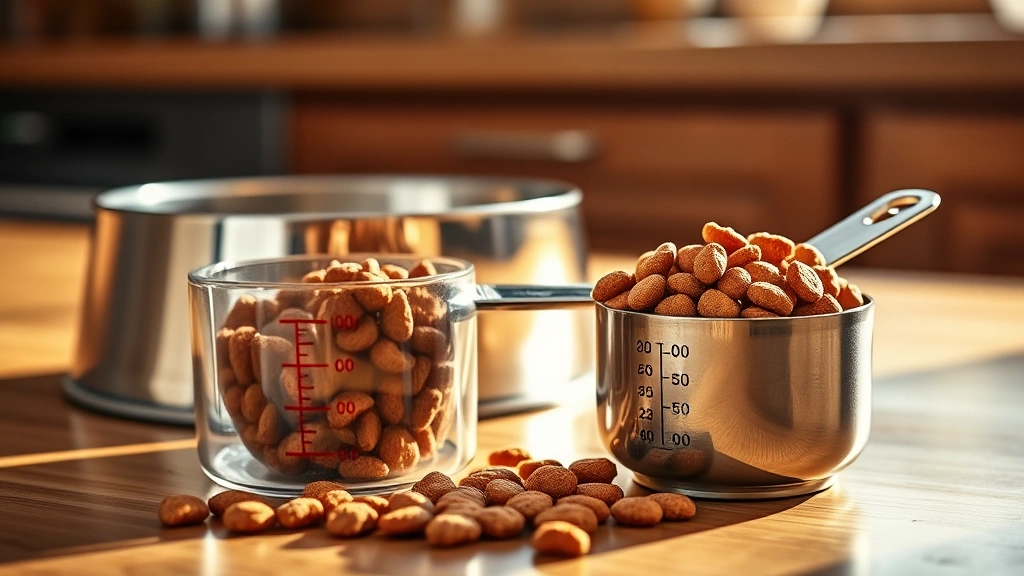
Size-based portion control for large breeds also means being mindful of treat intake. A single dog biscuit might be 5 calories for a Chihuahua but only 10 calories for a Great Dane—but treats should never exceed 10% of daily caloric intake regardless of size.
Meal Frequency: How Often Should You Feed Your Pet?
Portion control isn’t just about how much you feed—it’s also about how often. Puppies typically need 3-4 meals daily because their small stomachs can’t hold enough food at once. Adult dogs do well with one or two meals daily, while senior dogs often benefit from two smaller meals to aid digestion and prevent bloating.
Cats are natural grazers and often do best with multiple small meals throughout the day, though some cats thrive on twice-daily feeding. The key is consistency: feeding at the same times each day helps regulate your pet’s metabolism and makes house-training easier for puppies.
When implementing a size-based portion control plan, consider using our Pet Supplement Starter Kits to ensure your pet gets complete nutrition alongside their properly portioned meals.
Adjusting Portions for Activity Level and Age
A working Border Collie needs significantly more calories than a couch-potato Bulldog of the same size. Activity level is a massive factor in portion control that many pet parents overlook. Highly active dogs might need 1.5-2 times their resting caloric needs, while low-activity pets might need 20% less.
Age also dramatically affects caloric needs. Puppies and kittens need roughly double the calories of adults because they’re growing. Senior pets (7+ years for small breeds, 5+ for large breeds) often need 25-30% fewer calories due to slower metabolism, though they sometimes need more protein to maintain muscle mass.
Pregnant or nursing females need 25-50% more calories depending on litter size. Neutered/spayed pets need about 25% fewer calories than intact animals of the same size. These variables make personalized size-based portion control far superior to generic feeding guidelines.
Reading Pet Food Labels Like a Pro
Pet food labels can be confusing, but they’re essential for accurate portion control. The guaranteed analysis shows protein, fat, and fiber percentages, but what really matters for portions is the calorie content per cup or per serving. Look for this information on the back of the bag or the manufacturer’s website.
A premium food with 400+ calories per cup requires smaller portions than a budget food with 250 calories per cup. This is why comparing portion sizes between brands is meaningless—you have to compare calories. Always choose foods with named meat proteins (chicken, beef, fish) rather than meat by-products, as they’re more digestible and satisfying.
For comprehensive health monitoring alongside proper nutrition, explore our Pet Health Monitoring resources to track your pet’s progress.
Treats and Snacks: The Hidden Calorie Culprits
Here’s where size-based portion control goes wrong for most pet parents: treats. That handful of treats you give throughout the day? It adds up fast. Treats should comprise no more than 10% of your pet’s daily caloric intake, which means a 50-pound dog eating 1,500 calories daily should get no more than 150 calories from treats.
A single peanut butter treat might be 50 calories—that’s a third of a small dog’s treat allowance right there. Many pet parents unknowingly overfeed by 20-30% just through treats, table scraps, and training rewards. Start measuring treats the same way you measure kibble, and factor them into your daily portion calculations.

When you need to give treats or supplements, our Pet Supplement Combination Packs offer controlled portions that won’t derail your size-based portion control plan.
Common Portion Control Mistakes to Avoid
The biggest mistake pet parents make is free-feeding—leaving food out all day. This completely eliminates portion control and makes it impossible to monitor intake. Measure portions, feed at set times, and pick up uneaten food after 15-20 minutes.
Another huge error is feeding based on appetite rather than actual caloric needs. Your pet will always act hungry (especially food-motivated breeds), but that doesn’t mean they need more food. Portion control requires discipline and ignoring those puppy dog eyes.
Many people also forget to adjust portions as their pet ages or their activity level changes. A dog that was active as a young adult might become a couch potato at age 8, requiring significant portion reduction. Regular weight checks (monthly for weight-loss plans) help catch portion problems early.
Frequently Asked Questions
How do I know if my pet is getting the right portions?
Your pet should maintain a healthy body condition score of 4-5 on a 9-point scale. You should be able to feel their ribs without pressing hard, see a visible waist from above, and notice a tucked abdomen from the side. If your pet is gaining weight despite stable portions, consult your vet about metabolic issues or hidden calorie sources like treats.
Can I free-feed my pet with portion control?
Absolutely not. Free-feeding eliminates any possibility of accurate portion control. Measure portions, feed at set times, and remove uneaten food. This approach also helps with house-training, prevents overeating, and allows you to monitor your pet’s appetite for health changes.
What’s the best way to transition to proper portions?
If your pet is currently overfed, reduce portions gradually over 2-3 weeks to avoid hunger-related behavioral issues. Increase meal frequency if needed—feeding smaller portions more often can help your pet feel satisfied. Increase exercise simultaneously to boost calorie burn and prevent frustration.
How often should I adjust my pet’s portions?
Reassess portions every 4-6 weeks or whenever your pet’s circumstances change (age, activity level, health status). Weigh your pet monthly to track progress. Senior pets should be reassessed annually as their metabolism changes significantly with age.
Are prescription diet foods different for portion control?
Yes. Prescription diets for weight loss, kidney disease, or digestive issues have specific caloric profiles and portion requirements. Always follow your vet’s recommendations exactly with prescription foods, as deviating from prescribed portions can compromise the therapeutic benefit.
Should I measure portions by weight or volume?
Weight is more accurate, but volume (measuring cups) works fine if you’re consistent. The issue with volume is that kibble density varies between foods, so a cup of one brand might contain more calories than a cup of another. If using volume, weigh out your pet’s daily portion once to verify accuracy.
Summary: Mastering Size-Based Portion Control
Size-based portion control is the foundation of pet nutrition and obesity prevention. Whether you’re feeding a 3-pound Teacup Poodle or a 150-pound Great Dane, the principles remain the same: calculate caloric needs based on size, age, and activity level; measure portions carefully; monitor treats; and reassess regularly as your pet’s circumstances change.
The good news? Once you establish a proper portion control routine, it becomes second nature. Your pet will maintain a healthy weight, live longer, and enjoy better overall health. That’s worth the effort of measuring kibble and resisting those adorable begging faces. Your future self (and your pet) will thank you for taking size-based portion control seriously today.





