
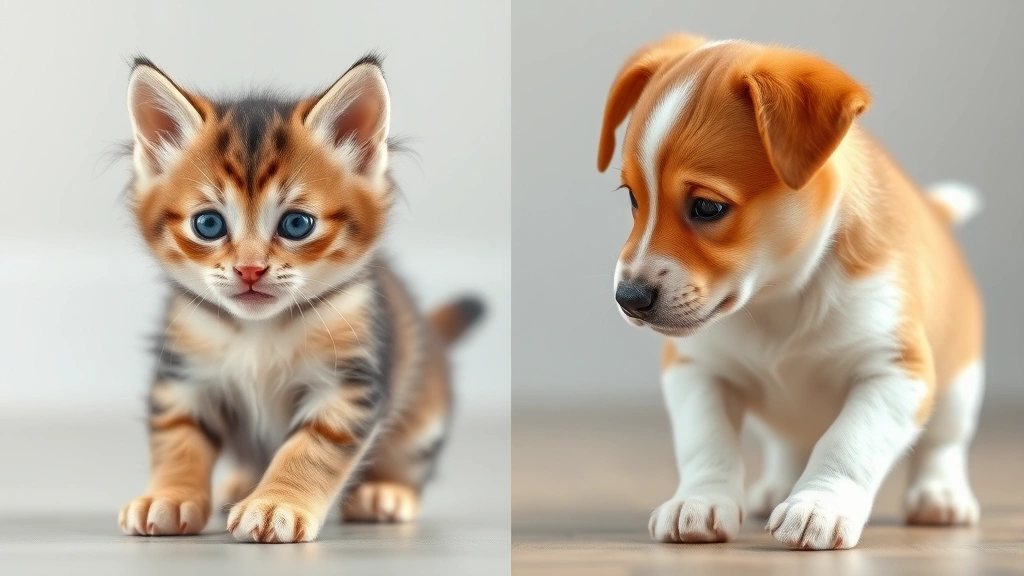
Do cats age like dogs? Nope—and honestly, it’s way more complicated than most pet parents realize. While we’ve all heard the “one cat year equals seven human years” thing, the truth is that cats and dogs age on completely different timelines, and understanding these differences could literally add years to your furry friend’s life.
Table of Contents
- The Myth of the Seven-Year Rule
- How Cats Actually Age: The Real Timeline
- How Dogs Age: A Different Beast Entirely
- Lifespan Differences: Cats Win This Round
- Biological Aging: Metabolism and Cellular Differences
- Breed-Specific Aging Patterns in Dogs
- Cats Don’t Have This Problem (Mostly)
- Environmental Factors: The Great Equalizer
- Senior Years: When the Differences Really Show
- Health Screening: Different Needs for Different Species
- The Bottom Line: They’re Just Different
- Frequently Asked Questions
The Myth of the Seven-Year Rule
Let’s bust this myth right now: the idea that one animal year equals seven human years is pure fiction. This oversimplification has been floating around for decades, and it’s done more harm than good. Neither cats nor dogs follow this neat mathematical formula. In reality, cats age much faster in their early years than dogs do, but then they slow down significantly in their senior years. It’s like they’re racing to adulthood and then decide to chill for the rest of their lives.
The confusion likely stems from the fact that both species mature quickly compared to humans, but the comparison ends there. Dogs and cats have entirely different biological clocks, growth patterns, and lifespans.
How Cats Actually Age: The Real Timeline
Here’s where things get interesting. A one-year-old cat is roughly equivalent to a 15-year-old human in terms of physical development. By age two, your cat is about 24 in human years. After that, each additional cat year equals about four human years. So a five-year-old cat is around 36 in human years, and a 10-year-old cat is approximately 56.
This means cats hit their stride pretty fast. They’re basically teenagers by their first birthday and full adults by their second. This rapid maturation is why kittens can go from adorable furballs to independent hunters in what feels like five minutes. Check out our guide on kitten safe human foods to make sure you’re feeding your rapidly growing youngster right.
How Dogs Age: A Different Beast Entirely
Dogs don’t follow the same aging pattern as cats, and this is where the confusion really sets in. A one-year-old dog is equivalent to about 15 human years, similar to cats at that age. But here’s the kicker: larger dog breeds age faster than smaller ones. A Great Dane reaches maturity much quicker than a Chihuahua, and they also have shorter lifespans overall.
For medium-sized dogs, the second year adds about nine human years, so a two-year-old dog is around 24 in human years—same as cats. But after that, the trajectories diverge significantly. Dogs continue aging at a faster rate than cats throughout their middle years, which is why your dog might be showing signs of aging while your cat still acts like a kitten.
Lifespan Differences: Cats Win This Round
Here’s something that might surprise you: cats typically live longer than dogs. The average cat lives 12-18 years, with many reaching their 20s if they’re well cared for. Dogs, on average, live 10-13 years, though larger breeds often have shorter lifespans (7-10 years) and smaller breeds can live 15+ years.
This longevity advantage means your cat could potentially outlive your dog by several years. It’s not uncommon for a cat to be around when a dog has already passed. This is why senior cat care and pet nutrition advice become increasingly important as your feline ages.
Biological Aging: Metabolism and Cellular Differences
The real reason cats and dogs age differently comes down to biology. Cats have slower metabolic rates than dogs, which means their bodies don’t burn through resources as quickly. This slower metabolism contributes to their longer lifespans. Dogs, especially larger breeds, have faster metabolisms and higher energy demands, which can accelerate aging at the cellular level.
Additionally, cats are obligate carnivores with different nutritional needs than dogs, which are omnivores. This dietary difference affects how their bodies process nutrients and maintain cellular health over time. Knowing what your cat can safely eat is crucial—check out our article on safe vegetables for cats to ensure you’re not accidentally contributing to aging-related health issues.

Breed-Specific Aging Patterns in Dogs
If you’re wondering why your dog seems to age faster than your friend’s dog, breed matters enormously. Small dog breeds like Dachshunds, Toy Poodles, and Chihuahuas often live 15-20 years. Medium breeds live 10-13 years on average. Large breeds like Labrador Retrievers live 10-12 years. Giant breeds like Great Danes and Saint Bernards often only make it to 7-10 years.
This isn’t random—it’s related to size, metabolism, and how quickly their organs wear out. Larger dogs have larger hearts that must work harder, and their cells divide more frequently, which increases the risk of mutations and disease. It’s one of nature’s cruel ironies that the biggest, most impressive dogs often have the shortest lives.
Cats Don’t Have This Problem (Mostly)
The good news for cat owners is that breed doesn’t affect lifespan nearly as dramatically. Whether you have a Maine Coon (one of the largest cat breeds) or a tiny Singapura, they’ll likely live within a similar age range of 12-18 years. Indoor cats consistently live longer than outdoor cats, but this is due to environmental factors rather than breed-specific genetics.
This is another way cats and dogs age differently. A purebred dog’s size and breed can dramatically impact how long they’ll live, but cats have evolved to age more uniformly across breeds. It’s just another example of how these two species tick differently.
Environmental Factors: The Great Equalizer
While biology sets the baseline, environmental factors play a huge role in how fast both cats and dogs age. Indoor vs. outdoor living, diet quality, exercise levels, stress, and access to veterinary care all influence aging speed.
An indoor cat living in a stress-free environment with excellent nutrition will age differently than an outdoor cat facing predators, disease, and harsh weather. Similarly, a well-exercised dog with regular vet checkups will age more gracefully than a sedentary dog with untreated health issues. This is why preventative care matters so much—you can actually slow down the aging process through smart lifestyle choices.
Senior Years: When the Differences Really Show
Once cats and dogs reach their senior years (around 7-10 for dogs, 11-14 for cats), the aging process accelerates for both. But they experience different age-related issues. Dogs are more prone to joint problems, arthritis, and cognitive decline. Cats tend to develop kidney disease, hyperthyroidism, and dental problems.
A senior dog might struggle with mobility and need joint supplements or medication. A senior cat might develop kidney issues that require dietary adjustments and medication. Understanding these species-specific health challenges helps you provide better care during their golden years.
Health Screening: Different Needs for Different Species
Because cats and dogs age differently and develop different diseases, their health screening needs differ. Dogs need regular joint assessments, especially large breeds. Cats need kidney function monitoring, particularly as they age. Dogs benefit from dental cleanings to prevent heart disease. Cats need thyroid screening to catch hyperthyroidism early.
Your veterinarian should tailor their preventative care recommendations based on your pet’s species, breed (if applicable), and individual health history. One-size-fits-all aging advice is exactly why so many pet parents miss early signs of disease in their aging companions.

The Bottom Line: They’re Just Different
So do cats age like dogs? Absolutely not. Cats age faster in their early years, slower in their middle years, and tend to live longer overall. Dogs’ aging speed varies dramatically by breed size, and they experience different age-related health issues. Understanding these differences isn’t just trivia—it’s essential for providing appropriate care at every life stage.
Whether you’re raising a kitten or puppy, caring for an adult pet, or navigating the senior years, recognizing that cats and dogs have different aging timelines helps you make better decisions about nutrition, exercise, veterinary care, and quality of life. Your cat and dog might share your home, but they’re aging on completely different schedules.
Frequently Asked Questions
At what age is a cat considered senior?
Cats are typically considered senior around age 11-14, though some veterinarians use age 10 as the threshold. At this point, they should have more frequent vet checkups (twice yearly instead of annually) to catch age-related diseases early.
Is a 10-year-old cat old?
A 10-year-old cat is entering their senior years but isn’t necessarily “old” in terms of behavior or health. In human years, that’s roughly 56 years old. Many cats remain active and healthy well into their teens.
Why do small dogs live longer than large dogs?
Small dogs live longer because they have slower metabolic rates and their organs don’t work as hard. Large dogs’ bigger hearts must pump harder, their cells divide more frequently (increasing disease risk), and their bodies simply wear out faster at the cellular level.
Can cats and dogs live the same length of time?
In rare cases, yes. A small dog breed might live 18+ years, overlapping with a long-lived cat’s lifespan. However, on average, cats live 2-5 years longer than dogs, making them the longer-lived companion animal in most households.
How often should I take my aging cat to the vet?
Senior cats (11+ years) should see a veterinarian at least twice yearly, with some vets recommending three times yearly for cats over 15. This increases the chances of catching kidney disease, hyperthyroidism, and other age-related conditions early.
For more information about keeping your pets healthy at every age, explore our breed-specific care guides and check out authoritative resources like the American Kennel Club, PetMD, and your local veterinary college for evidence-based aging information.





