
Yes, do dogs have night vision—and it’s way better than yours, friend. While your pooch can’t see in complete darkness like some sci-fi superhero, their night vision abilities are genuinely impressive and rooted in some fascinating biology. Let’s dig into what makes canine eyes so special when the sun goes down.
Table of Contents
- How Canine Night Vision Actually Works
- Rods vs. Cones: The Night Vision Advantage
- The Pupil Dilation Factor
- Motion Detection: A Canine Superpower
- What Dogs Can’t See in Complete Darkness
- Breed Differences in Night Vision
- Age and Night Vision Decline
- Why Night Vision Matters for Your Dog’s Safety
- Common Myths About Dog Night Vision
- Frequently Asked Questions
- Conclusion: Your Dog’s Nocturnal Superpowers
How Canine Night Vision Actually Works
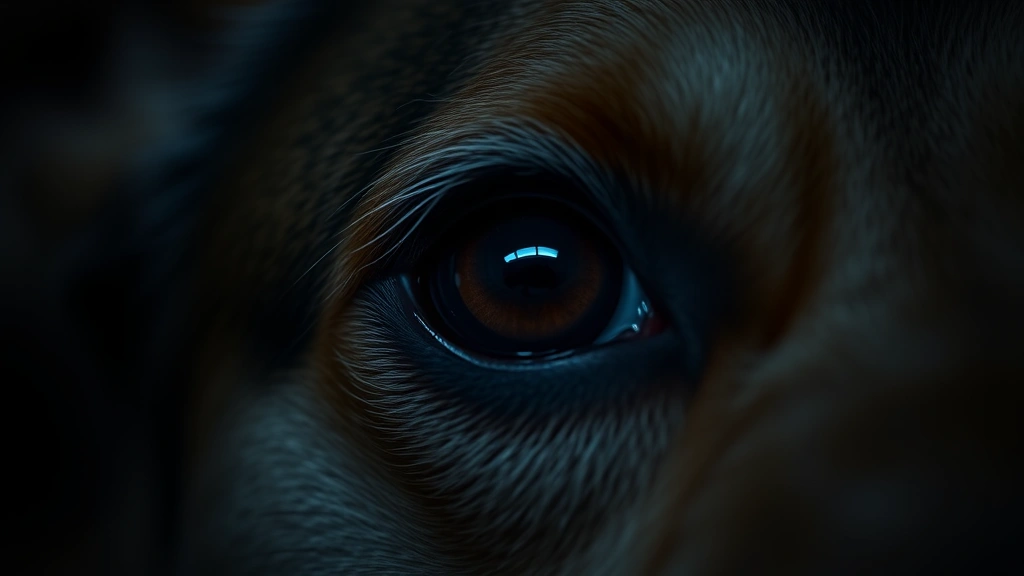
Dogs aren’t equipped with thermal imaging or infrared superpowers, but they’ve got something almost as good: a specialized eye structure that’s evolved over thousands of years. The key player here is the tapetum lucidum, a reflective layer behind the retina that acts like a biological mirror. When light enters a dog’s eye, this layer bounces it back through the photoreceptors, essentially giving them a second chance to catch every photon. That’s why your dog’s eyes glow eerily in car headlights or flashlight beams—that’s the tapetum lucidum at work.
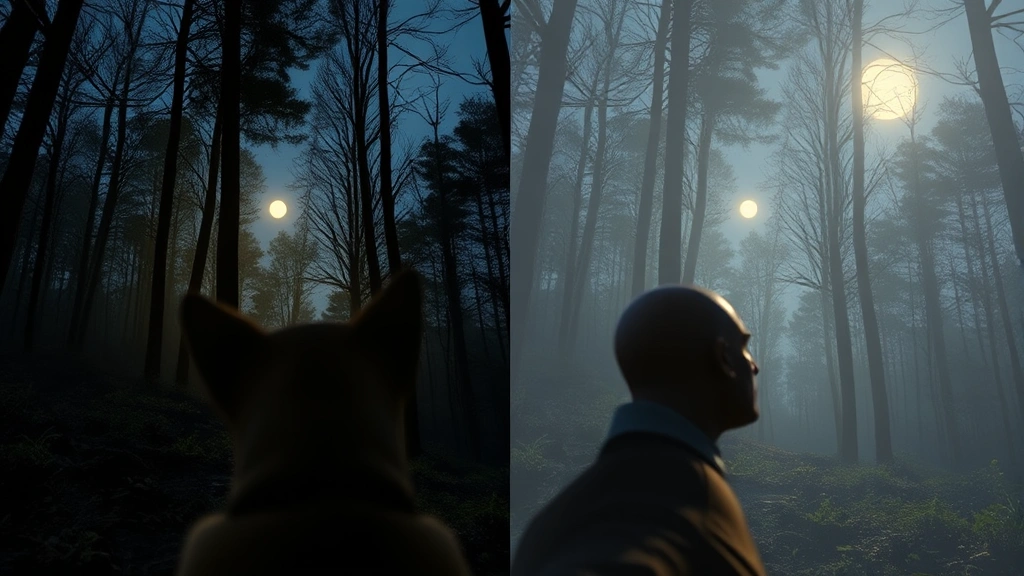
This reflective layer is so efficient that dogs can see in light levels six times lower than what humans need. Imagine being able to navigate your house with just the glow from your phone charger. That’s closer to a dog’s reality.
Rods vs. Cones: The Night Vision Advantage
Your dog’s retina contains way more rod cells than yours does. Rods are the photoreceptors responsible for low-light vision and motion detection, while cones handle color and detail in bright conditions. Dogs have roughly 250 million rod cells compared to our measly 90 million. They’re basically the night shift workers of the eye world.
The trade-off? Dogs see fewer colors than humans. While we enjoy the full rainbow, dogs see the world in shades of blue and yellow, with red and green appearing as variations of brown or gray. It’s not a disadvantage for nighttime navigation, though—color doesn’t matter much when you’re hunting in the dark.
The Pupil Dilation Factor
Dogs have larger pupils than humans, which means more light can flood into their eyes. Combined with the tapetum lucidum and all those rod cells, this creates a perfect storm of night vision efficiency. When your dog’s pupils dilate at night, they’re not just being cute—they’re optimizing their visual system for low-light conditions.
This is why your pup can navigate around the house at 3 a.m. without tripping over the coffee table while you’re stumbling around like a newborn giraffe.
Motion Detection: A Canine Superpower
Here’s where things get really interesting. Dogs don’t just see better in low light—they’re exceptionally good at detecting movement. Their eyes are positioned slightly more to the sides of their head than ours, giving them a wider field of view (up to 250 degrees compared to our 190 degrees). This peripheral vision, combined with their rod-heavy retinas, makes them motion-detection machines.
In low-light conditions, a rabbit darting across a field at night isn’t invisible to your dog—it’s a flashing neon sign. This ability traces back to their wolf ancestors, who hunted primarily during dawn and dusk when light was limited.
What Dogs Can’t See in Complete Darkness
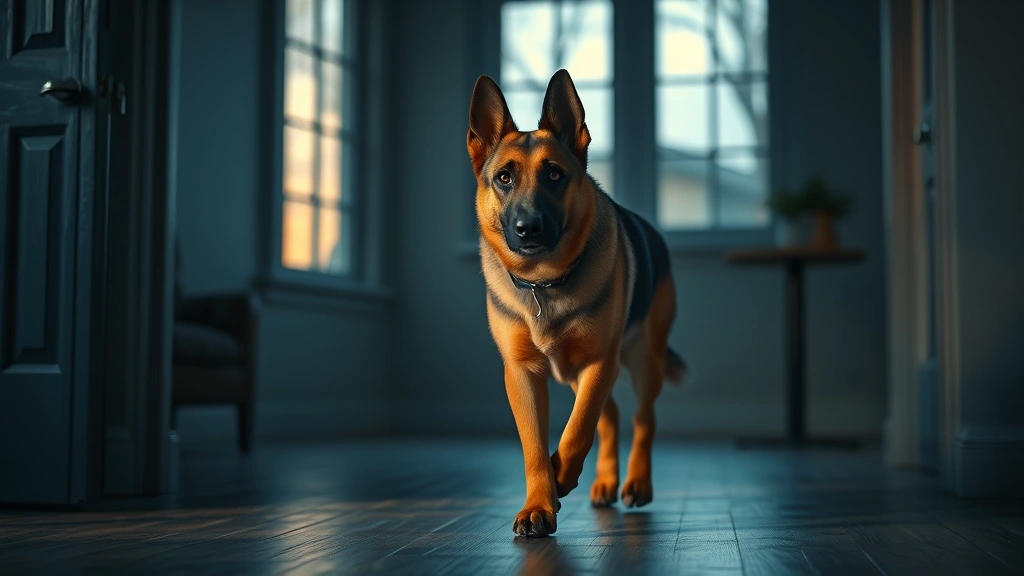
Let’s pump the brakes here and be realistic. Despite their impressive abilities, dogs cannot see in total darkness. They still need some light—even moonlight or starlight—to function visually. If you turn off every light in your house and close the curtains, your dog is just as blind as you are. The difference is that dogs rely more heavily on their other senses (smell and hearing) to compensate, while humans panic and reach for a flashlight.
If you’re concerned about your dog’s vision health, Pet Telehealth services can connect you with a veterinary ophthalmologist for professional guidance on eye conditions.
Breed Differences in Night Vision
Not all dogs have equally impressive night vision. Breeds with larger eyes and more prominent tapetum lucidum—like German Shepherds, Huskies, and Labradors—tend to have better low-light vision than breeds with flatter faces or smaller eyes, such as Bulldogs or Pugs. Brachycephalic breeds (flat-faced dogs) have compromised eye structures that affect their overall vision quality.
This is something to consider if you have a breed prone to eye issues. Regular vet check-ups are essential for maintaining your dog’s visual health and catching problems early.
Age and Night Vision Decline
Just like humans, dogs experience vision changes as they age. Senior dogs may develop cataracts, which cloud the lens and reduce light transmission. The tapetum lucidum can also become less reflective with age. If your older dog suddenly seems hesitant in low-light situations or bumps into furniture more often, it might be time to consult your vet about vision changes.
Nutritional support can help maintain eye health. Antioxidants like lutein and zeaxanthin, along with omega-3 fatty acids, support retinal function. Some dogs benefit from supplements, though you should always consult your veterinarian before adding anything to your dog’s diet. Speaking of nutrition, certain foods like sweet potatoes contain nutrients that support eye health.
Why Night Vision Matters for Your Dog’s Safety
Understanding your dog’s night vision capabilities helps you keep them safe. While they can see better than you in low light, they’re not invincible. They can still miss hazards like open holes, sharp objects, or traffic. Never assume your dog can navigate a dark environment safely without supervision.
If you have a dog that loves nighttime adventures, consider using reflective collars or leashes to keep them visible to humans (cars, other people) even if your dog can see just fine. Their night vision is impressive, but it doesn’t make them invisible to danger.
Common Myths About Dog Night Vision
Myth: Dogs can see in complete darkness. False. They need at least some ambient light.
Myth: All dogs have the same night vision ability. False. Breed, age, and individual genetics play huge roles.
Myth: Dogs see in black and white. Partially false. They see in blue and yellow, not pure black and white.
Myth: The tapetum lucidum is present in all dogs. True, but its effectiveness varies by breed and individual.
Frequently Asked Questions
Can dogs see in complete darkness?
No, dogs cannot see in total darkness. They need at least some ambient light—moonlight, starlight, or artificial light—to see. However, they require significantly less light than humans to navigate effectively.
Why do dogs’ eyes glow in the dark?
The glow you see is the tapetum lucidum reflecting light back out of the eye. This reflective layer is what gives dogs their superior night vision by bouncing light back through the photoreceptors.
Do all dog breeds have the same night vision?
No. Breeds with larger eyes and more prominent tapetum lucidum have better night vision. Flat-faced breeds like Bulldogs may have compromised night vision due to their facial structure.
How much better is a dog’s night vision compared to humans?
Dogs can see in light levels approximately six times lower than what humans require. They also have a wider field of view and superior motion detection abilities.
Does a dog’s night vision improve with age?
No, it typically declines with age. Senior dogs may develop cataracts or other age-related eye conditions that reduce their night vision capabilities.
Can I improve my dog’s night vision with supplements?
While certain supplements containing antioxidants and omega-3s support eye health, they won’t dramatically improve night vision. Always consult your veterinarian before adding supplements to your dog’s diet.
Conclusion: Your Dog’s Nocturnal Superpowers
So, do dogs have night vision? Absolutely. While they can’t see in pitch-black darkness or view the infrared spectrum, their combination of specialized eye structures—the tapetum lucidum, abundance of rod cells, larger pupils, and superior motion detection—makes them genuinely impressive in low-light conditions. They can navigate environments in light levels six times dimmer than what we need, giving them a real advantage during dawn, dusk, and nighttime hours.
This adaptation is a legacy of their wolf ancestors and makes perfect sense for animals that hunt and explore during low-light periods. As a dog owner, understanding these capabilities helps you better appreciate your pup’s abilities while also recognizing their limitations. Your dog might see better than you at night, but they still need your help staying safe in hazardous environments.
Next time your dog confidently trots through a dark room while you’re fumbling for a light switch, remember: they’re not being brave or mysterious. They’re just using millions of years of evolution to do what comes naturally. Pretty cool, right?





