
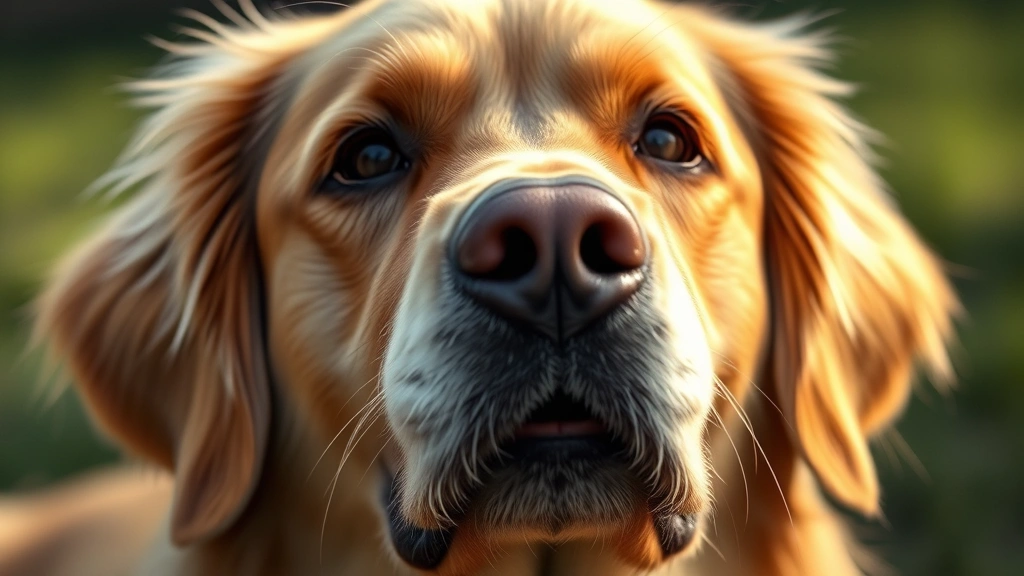
A dog sketch is one of the most rewarding ways to immortalize your furry best friend, whether you’re a seasoned artist or someone who can barely draw a stick figure. There’s something magical about capturing those adorable expressions, floppy ears, and goofy grins on paper that makes your heart melt every single time you look at it. If you’ve ever wanted to create a portrait of your pup but weren’t sure where to start, you’re in the right place—we’re about to break down everything you need to know about sketching dogs and the tools that’ll make you look like a pro.
Table of Contents
- Why Sketching Your Dog Is Actually Awesome
- Pencil Sketching: The Foundation of Dog Drawing
- Digital Drawing Tools: The Modern Dog Portrait
- Colored Pencils: Adding Personality to Your Pup’s Portrait
- Charcoal and Graphite Sticks: Drama and Depth
- Ink and Fine-Liner Pens: Bold Lines and High Contrast
- Blending Tools and Techniques That Make Your Dog Sketch Pop
- Choosing the Right Paper for Your Dog Sketch
- Getting References Right: The Foundation of Every Great Dog Sketch
- Practice Exercises to Level Up Your Dog Sketching Skills
- Displaying and Preserving Your Dog Sketch Masterpiece
- Frequently Asked Questions
- Conclusion: Your Dog Deserves a Masterpiece
Why Sketching Your Dog Is Actually Awesome
Let’s be real: your dog is the cutest thing on the planet (at least to you, and that’s what matters). Creating a dog sketch immortalizes those precious moments that’ll be gone way too soon. Unlike photos, a hand-drawn sketch has personality and soul. It’s a tangible piece of art that shows effort, love, and creativity. Plus, it makes an incredible gift for dog-loving friends and family members who’ll treasure it forever. Whether you want a realistic portrait or a stylized cartoon version, sketching lets you capture your pup’s unique character in ways photography sometimes can’t.
Pencil Sketching: The Foundation of Dog Drawing
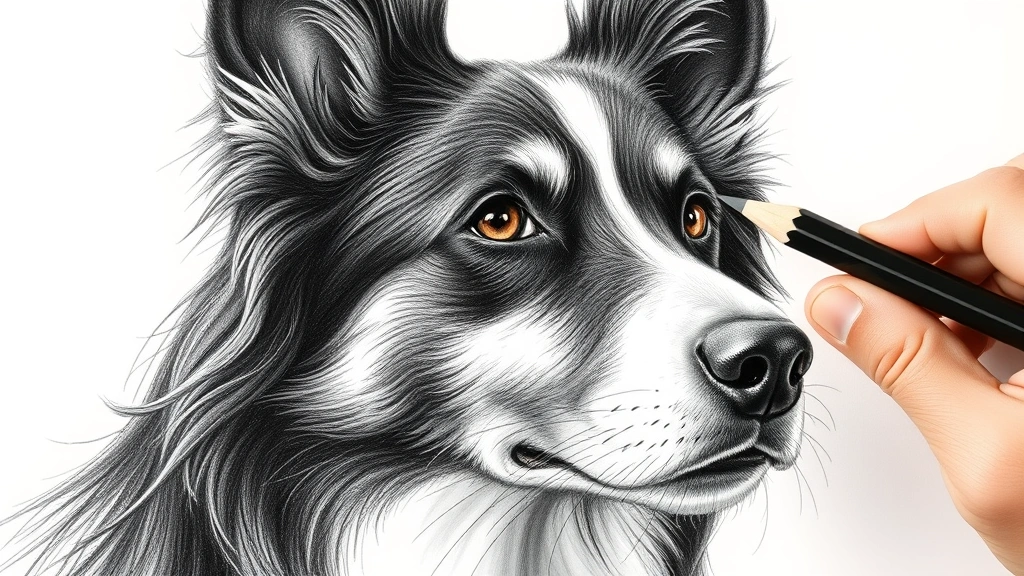
The classic pencil sketch remains the gold standard for capturing canine features. Start with graphite pencils in various grades—HB for general sketching, 2B for shading, and 4B or 6B for deeper tones. The beauty of pencil work is that you can erase mistakes and build up layers gradually. When sketching your dog’s portrait, focus on the eyes first; they’re the windows to your pup’s soul and getting them right makes the whole drawing come alive. Pay attention to proportions—measure twice, sketch once, as they say. For detailed guidance on dog anatomy and features, check out resources from the American Kennel Club, which provides breed-specific characteristics that help with accuracy.
Digital Drawing Tools: The Modern Dog Portrait
If you’re tech-savvy, digital tools offer incredible flexibility for creating a dog sketch. Tablets like iPad Pro with Apple Pencil or Wacom tablets paired with software like Procreate, Clip Studio Paint, or Adobe Fresco let you work non-destructively and undo mistakes endlessly. The pressure sensitivity in modern styluses mimics real pencils beautifully. Digital sketching also means you can easily adjust colors, add filters, or create multiple versions of your pup without wasting paper. The learning curve is steeper than traditional methods, but once you get the hang of it, you’ll wonder how you ever lived without it.
Colored Pencils: Adding Personality to Your Pup’s Portrait
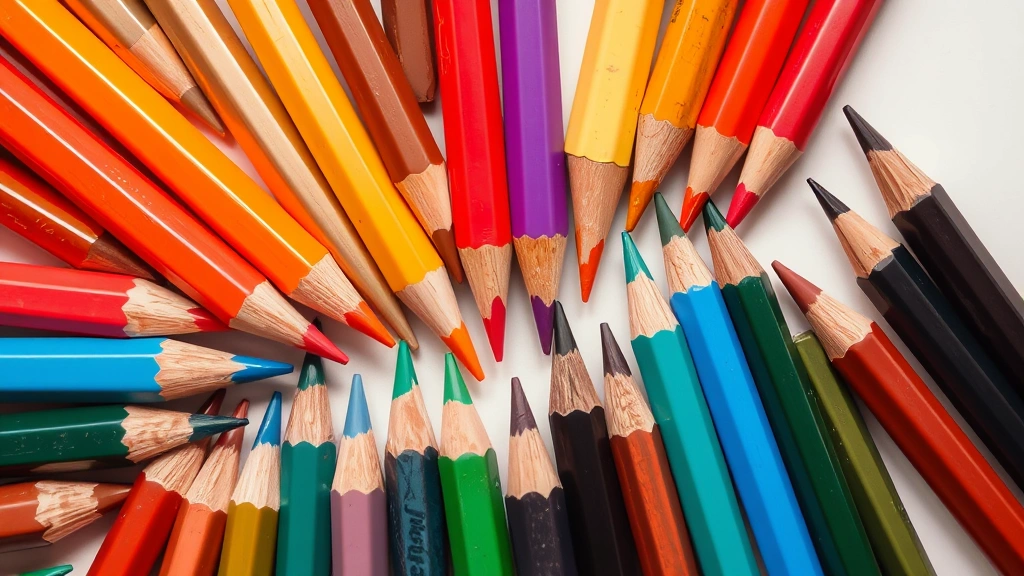
Want to take your dog sketch beyond black and white? Colored pencils are your answer. Brands like Prismacolor, Caran d’Ache, and Faber-Castell offer buttery-smooth application and vibrant colors. The advantage here is that you maintain the precision of pencil work while adding dimension through color. A golden retriever suddenly glows with warmth, a husky’s eyes pop with icy blue intensity, and a chocolate lab becomes rich and inviting. Layering colors creates depth—start light and build up gradually. The texture of colored pencil work also gives your dog sketch a unique, handmade quality that digital art sometimes lacks.

Charcoal and Graphite Sticks: Drama and Depth
For those wanting to create dramatic, high-contrast dog sketches, charcoal and graphite sticks are game-changers. Charcoal produces bold blacks and smooth gradations perfect for capturing fur texture. Graphite sticks offer similar benefits to pencils but cover larger areas faster. The downside? They’re messy and require fixative spray to prevent smudging. But if you don’t mind the chaos, the results are stunning. Charcoal sketches of dogs have an almost painterly quality that really showcases emotion and personality. Just keep a kneaded eraser handy for highlights—it’s your secret weapon for bringing out those bright eyes and nose details.
Ink and Fine-Liner Pens: Bold Lines and High Contrast
If you prefer clean, defined lines, ink pens and fine-liners create striking dog sketches with high contrast. Micron pens, Staedtler fineliners, or even traditional dip pens with India ink give you precise control. This method works especially well for stylized or cartoon-style dog portraits. You can combine ink outlines with light watercolor washes for added dimension. The permanence of ink also means your dog sketch is archival-quality—it’ll last for generations without fading. This approach requires confidence since you can’t erase, but the bold results are incredibly satisfying.
Blending Tools and Techniques That Make Your Dog Sketch Pop
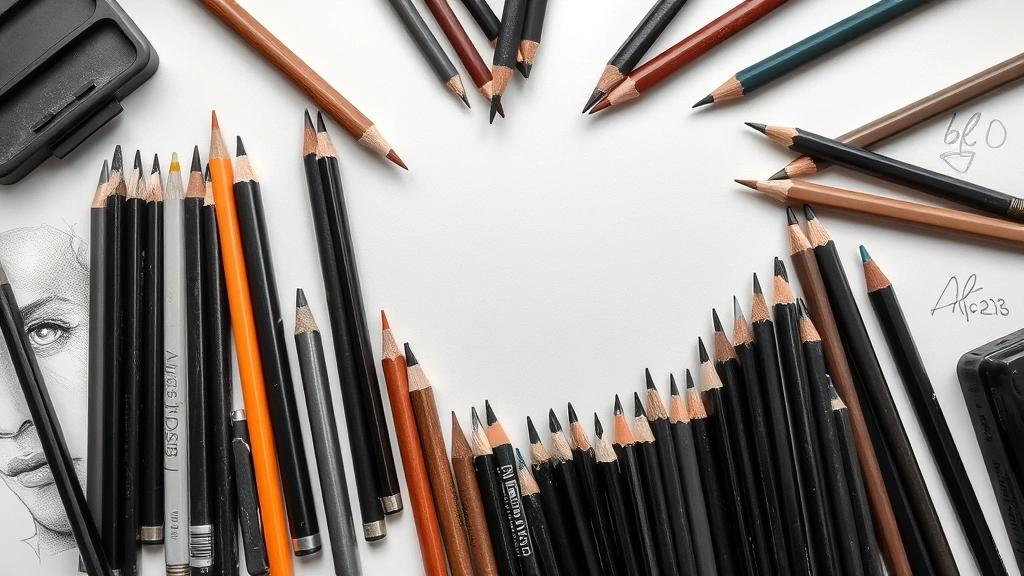
Regardless of your medium, blending tools elevate your dog sketch from amateur to impressive. Blending stumps (tortillons), tissue, cotton swabs, and even your finger help create smooth transitions in fur texture. For a realistic dog sketch, you’ll want to spend time understanding how light hits different parts of your pup’s face and body. Highlights in the eyes are crucial—leave white paper or use white gel pens for that crucial sparkle. The nose should have dimension; shadows underneath create depth. Fur direction matters too; sketch directional lines that follow how your dog’s coat actually grows. PetMD has excellent resources on dog anatomy that can help you understand the structure beneath the fur.
Choosing the Right Paper for Your Dog Sketch
Your paper choice matters more than most beginners realize. Smooth paper (like regular printer paper) works fine for quick sketches, but for serious work, invest in quality sketch paper or mixed-media paper. Cold-pressed watercolor paper has enough tooth to hold graphite beautifully. Hot-pressed paper is smoother and better for detailed ink work. For colored pencils, you’ll want paper with slight texture. Heavier weight paper (140 lb or higher) prevents buckling when you’re layering or using wet media. Archival paper ensures your dog sketch won’t yellow over time. Brands like Strathmore, Canson, and Sennelier offer excellent options at various price points.
Getting References Right: The Foundation of Every Great Dog Sketch
You can’t create a good dog sketch without solid reference material. Take multiple photos of your pup from different angles and lighting conditions. Capture those quirky expressions and characteristic poses that make them unique. If you’re sketching someone else’s dog, ask for high-resolution photos. Professional pet photographers often have images specifically designed for portrait work. Look for references where the lighting clearly defines features and shadows. Avoid harsh overhead lighting that creates unflattering shadows. Side lighting often works best for capturing the contours of your dog’s face and body. Use a grid method if you’re struggling with proportions—divide your reference photo and your paper into equal squares, then sketch square by square.
Practice Exercises to Level Up Your Dog Sketching Skills
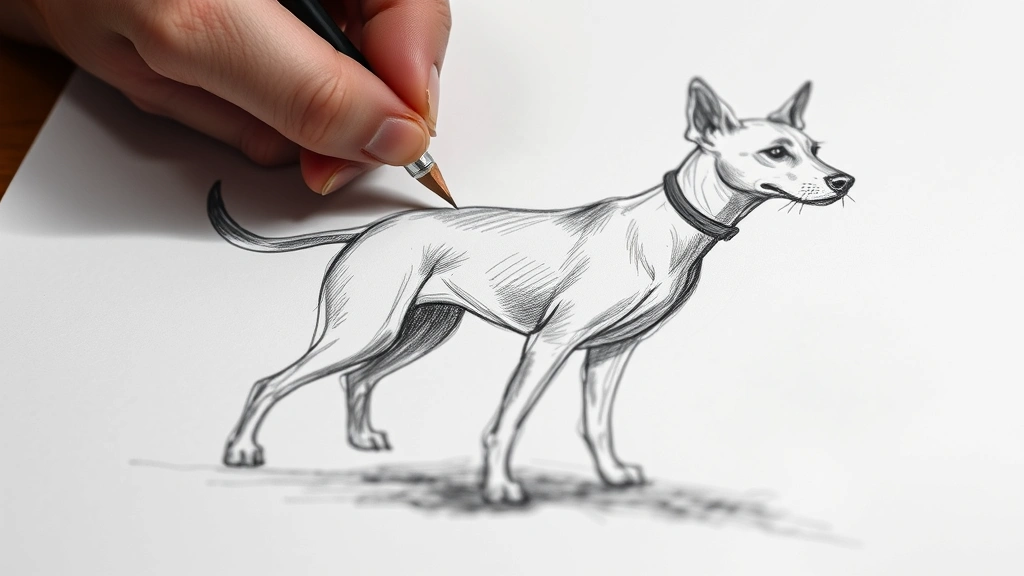
Like any skill, dog sketching improves with practice. Start by sketching just eyes—get comfortable with that crucial sparkle and depth. Move on to noses, then ears, then full faces. Sketch quick gesture drawings to understand your dog’s typical postures and movements. Try sketching the same subject in different styles—realistic, cartoon, abstract. Join online communities like r/dogsketch or DeviantArt where you can share work and get feedback. Follow tutorials on YouTube; there are thousands of excellent artists sharing their techniques. Consider taking a local art class focused on animal portraiture. The more you sketch, the more confident you’ll become, and your dog sketch abilities will improve exponentially. Check out educational resources from universities with fine arts programs for structured learning approaches.
Displaying and Preserving Your Dog Sketch Masterpiece
Once you’ve created an amazing dog sketch, you’ll want to display it properly. Frame it with UV-protective glass to prevent fading, especially if it’s in a sunny room. Acid-free matting and backing preserve the artwork long-term. Consider creating a series of sketches—maybe one for each dog you’ve had, or different poses of the same pup. Digital versions can be printed on canvas for a modern look or shared on social media to inspire other dog lovers. Some people create custom dog sketch commissions as a side business—if you’re good, people will pay for portraits of their beloved pets. Your work could even inspire others to try their hand at capturing their own furry friends.
Frequently Asked Questions
What’s the easiest medium for beginners to create a dog sketch?
Graphite pencils are the most forgiving medium for beginners. They allow you to erase mistakes, build up gradually, and don’t require special equipment beyond pencils and paper. Start with HB and 2B pencils on regular sketch paper, focus on basic shapes, and progress from there.
How long does it take to complete a realistic dog sketch?
A detailed, realistic dog sketch typically takes 5-15 hours depending on size, complexity, and your skill level. Quick sketches might take 30 minutes to an hour, while commission-quality portraits can take 20+ hours. Don’t rush the process—quality takes time.
Can I create a good dog sketch without professional training?
Absolutely! Many self-taught artists create stunning dog sketches using online tutorials, practice, and determination. While formal training helps, passion and consistent practice matter more. Start simple and gradually tackle more challenging subjects.
What’s the best way to capture my dog’s personality in a sketch?
Focus on characteristic features and expressions. Capture their typical ear position, the way they tilt their head, their unique markings, and especially their eyes. Include elements of their environment or favorite toys to add personality. The goal is capturing their essence, not just their appearance.
Should I use references when sketching my dog?
Yes, always use references, even as you improve. References ensure accuracy and help you understand anatomy, lighting, and proportions. Working from memory or imagination comes later, after you’ve mastered the fundamentals using reference materials.
Conclusion: Your Dog Deserves a Masterpiece
Creating a dog sketch is more than just putting pencil to paper—it’s a love letter to your furry companion. Whether you choose traditional pencils, digital tools, colored pencils, charcoal, or ink, the most important thing is starting. Your first dog sketch might not be gallery-worthy, but every sketch teaches you something new. As you practice, you’ll develop your unique style and technique. The tools and materials we’ve covered give you everything you need to capture your pup’s unique personality and beauty. So grab your supplies, snap some reference photos, and start sketching. Your dog is waiting to become immortalized in art, and honestly, they deserve nothing less than your best effort. Happy sketching!





