
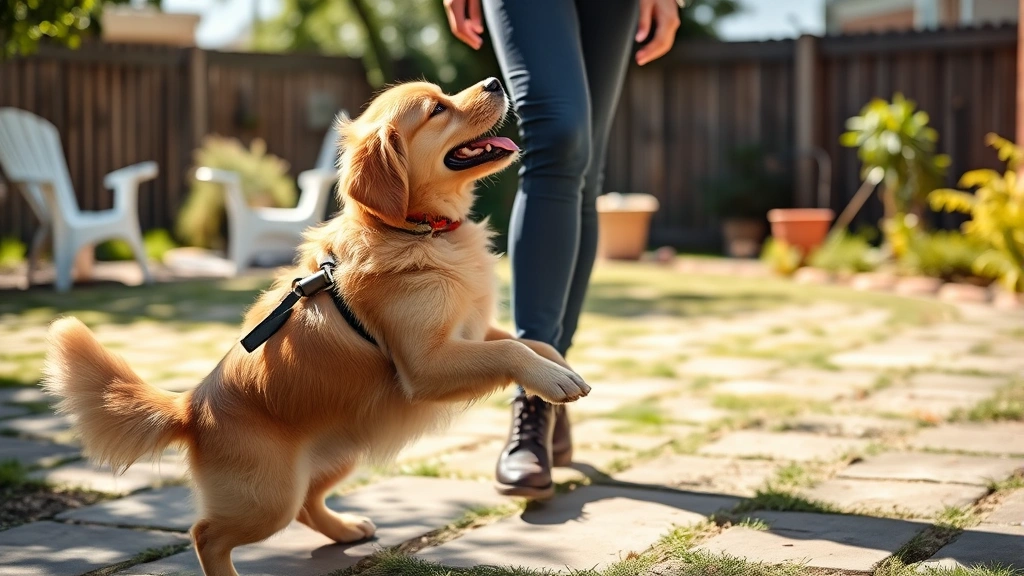
If you’re asking yourself “why does my dog hump me,” you’re definitely not alone—and no, your pup isn’t trying to be inappropriate on purpose. Dog humping is one of those awkward behaviors that makes owners blush in front of guests, but it’s actually a normal (if inconvenient) part of canine communication. Whether your golden retriever is doing it during playtime or your anxious chihuahua won’t stop when you sit down, understanding the root cause is the first step to addressing it.
Table of Contents
- 1. Sexual Maturity & Hormonal Drive (The Most Obvious Reason)
- 2. Dominance & Social Hierarchy (It’s Not What You Think)
- 3. Stress, Anxiety & Overstimulation (The Nervous Humper)
- 4. Medical Issues & Health Problems (Don’t Ignore This)
- 5. Attention-Seeking & Learned Behavior (Your Reaction Matters)
- How to Stop Your Dog From Humping You: Practical Strategies
- When Should You Be Concerned?
- The Bottom Line on Dog Humping
- Frequently Asked Questions
The truth? Dogs hump for way more reasons than just the obvious one. Let’s dig into the science behind this quirky behavior and figure out what your furry friend is actually trying to tell you.
1. Sexual Maturity & Hormonal Drive (The Most Obvious Reason)
Let’s start with the elephant in the room: yes, sometimes dogs hump because they’re, well, feeling frisky. This is especially common in intact (non-neutered) males and females in heat. When a dog reaches sexual maturity—usually between 6-12 months old—hormones kick in, and humping becomes a way to express that biological urge.
Even after spaying or neutering, some dogs continue the behavior out of habit or because they’ve learned it gets a reaction. The good news? Spaying and neutering reduces this drive significantly in most dogs. According to the American Kennel Club, fixing your dog before sexual maturity develops can prevent many unwanted behaviors from forming in the first place.
2. Dominance & Social Hierarchy (It’s Not What You Think)
Here’s where things get interesting: humping isn’t always about dominance, despite what dog trainers used to say. Modern behaviorists have largely debunked the “alpha dog” myth. That said, some dogs do hump as a way of asserting confidence or testing boundaries, especially during play sessions with other dogs or their owners.
If your dog is humping you specifically, they might be trying to establish that they’re comfortable with you or testing how you’ll react. It’s their way of saying, “Hey, I’m confident here.” This is different from aggression—it’s more about social communication and figuring out where they fit in your household.
3. Stress, Anxiety & Overstimulation (The Nervous Humper)
Not all humping is about confidence. Some anxious dogs hump as a self-soothing behavior, similar to how humans might fidget or bite their nails. If your pup humps you when there are guests over, during thunderstorms, or when you’re about to leave for work, anxiety might be the culprit.
Overstimulation during play is another huge trigger. Your dog gets excited, play escalates, and suddenly they’re humping your leg because they’ve hit their emotional ceiling and don’t know how to process all that energy. PetMD notes that dogs with separation anxiety or generalized anxiety disorder are more prone to repetitive behaviors like excessive humping.
4. Medical Issues & Health Problems (Don’t Ignore This)
Sometimes humping isn’t behavioral at all—it’s physical. Dogs experiencing urinary tract infections, skin irritation, anal gland problems, or other discomfort might hump as a way to relieve pressure or itch in that area. If the humping is sudden, obsessive, or accompanied by other symptoms like excessive licking, discharge, or changes in bathroom habits, it’s time for a vet visit.
Cornell University’s College of Veterinary Medicine recommends ruling out medical causes before assuming the behavior is purely behavioral. Conditions like false pregnancy in dogs can also trigger unusual behaviors including humping.
5. Attention-Seeking & Learned Behavior (Your Reaction Matters)
Here’s the uncomfortable truth: if you’ve ever reacted dramatically to your dog humping you—even negatively—you might’ve accidentally rewarded the behavior. Dogs don’t distinguish between negative and positive attention; they just know they got a reaction.
If every time your dog humps you, you laugh, push them away, scold them, or pick them up, you’re reinforcing that humping = interaction time. Some dogs will absolutely keep doing it because it works. This is why consistent, calm redirection is so important.
How to Stop Your Dog From Humping You: Practical Strategies
Now that we’ve covered the “why,” let’s talk solutions. Here’s what actually works:
1. Redirect & Redirect Again
When your dog starts humping, calmly redirect their attention to something else—a toy, a puzzle feeder, or a training command like “sit” or “down.” Reward the new behavior heavily. This teaches them that other actions get better results than humping.
2. Manage Their Environment
If your dog humps during specific situations (guests arriving, playtime getting too rough), manage those triggers. Take breaks during play, keep exciting toys out of reach during high-stress times, and create a calm space where your dog can decompress.
3. Exercise & Mental Stimulation
A tired dog is a well-behaved dog. Increase daily exercise and provide puzzle toys, sniff games, and training sessions. Dogs with outlets for their physical and mental energy are less likely to engage in unwanted behaviors.
4. Spay or Neuter (If Not Already Done)
If your dog is intact, this is the single most effective way to reduce hormonal-driven humping. Even if some humping behavior persists afterward, it’s usually much less frequent and intense.
5. Consider Professional Help
If humping is severe, obsessive, or accompanied by other behavioral issues, consult a certified dog trainer or veterinary behaviorist. They can assess your specific situation and create a tailored plan.
6. Stay Consistent & Patient
Behavior change takes time. Everyone in your household needs to respond the same way every single time. If one person laughs and another person scolds, your dog gets confused signals, and progress stalls.

When Should You Be Concerned?
Most dog humping is harmless and manageable, but watch for red flags. If your dog is humping obsessively (like, non-stop for hours), seems to be in pain, or is humping other dogs aggressively, talk to your vet. These could indicate medical issues, severe anxiety, or behavioral problems that need professional intervention.
The Bottom Line on Dog Humping
Why does your dog hump you? It could be hormones, anxiety, attention-seeking, medical issues, or just plain excitement. The key is figuring out which one applies to your pup and addressing it accordingly. Most of the time, a combination of redirection, exercise, consistency, and patience will solve the problem. And if it doesn’t? That’s what vets and professional trainers are for.
In the meantime, try not to take it personally. Your dog isn’t trying to embarrass you in front of your in-laws—they’re just being a dog. With some effort and understanding, you can absolutely train this behavior out of your furry friend.
Frequently Asked Questions
Is it normal for dogs to hump their owners?
Yes, it’s completely normal. Dogs hump for many reasons—hormones, excitement, anxiety, or attention-seeking. While it’s not ideal behavior in a living situation, it’s not abnormal or a sign that something is seriously wrong with your dog.
Can female dogs hump?
Absolutely. Female dogs hump just as much as males, though it’s sometimes less noticeable because people expect it more from males. Spayed females still hump occasionally, especially during play or when anxious.
Does neutering stop humping completely?
Neutering significantly reduces hormonal-driven humping, but it doesn’t always eliminate it entirely. If the behavior has become habitual or is rooted in anxiety or attention-seeking, some humping may persist even after surgery. However, it’s usually much less frequent and intense.
Is humping a sign of aggression?
Not necessarily. While humping can sometimes be associated with dominance displays, it’s more often just excitement, anxiety, or learned behavior. True aggression usually comes with other signs like stiff body posture, growling, or snapping.
How long does it take to stop a dog from humping?
It depends on the cause and consistency of training. With dedicated redirection and management, many dogs show improvement within 2-4 weeks. However, deeply ingrained habits or anxiety-related humping might take longer—sometimes 2-3 months or more.
Should I punish my dog for humping?
Punishment is generally ineffective and can backfire. It may increase anxiety (which makes humping worse) or teach your dog to hide the behavior rather than stop it. Positive redirection and reward-based training work much better.





