

Have you ever wondered what the world looks like through your dog’s eyes? While humans marvel at vibrant orange sunsets, autumn leaves, and colorful toys, our canine companions experience these hues quite differently. Understanding how dogs perceive color, particularly the color orange, opens up a fascinating window into their unique sensory world and can help us better understand our beloved pets.
The question of whether dogs can see orange has intrigued pet owners and researchers for decades. Unlike the rich, vibrant orange that catches our human eyes, dogs experience this color through their own specialized visual system. This difference in color perception stems from fundamental biological variations in eye structure and photoreceptor cells between humans and dogs.
Understanding Canine Color Vision
Dogs possess dichromatic vision, meaning they have two types of color-detecting photoreceptor cells called cones in their retinas. This is fundamentally different from humans, who have trichromatic vision with three types of cones. The American Kennel Club explains that this difference significantly impacts how dogs perceive the entire color spectrum.
The two types of cones in dogs’ eyes are most sensitive to blue and yellow wavelengths of light. This means dogs can distinguish between shades of blue and yellow quite well, but they struggle with colors that fall outside this range. Their visual world is similar to what a human with red-green color blindness would experience.
Interestingly, dogs compensate for their limited color vision with other enhanced visual abilities. They have superior night vision compared to humans, thanks to a higher concentration of rod cells in their retinas and a reflective layer called the tapetum lucidum. They also excel at detecting motion and have a wider field of view, making them excellent hunters and companions.
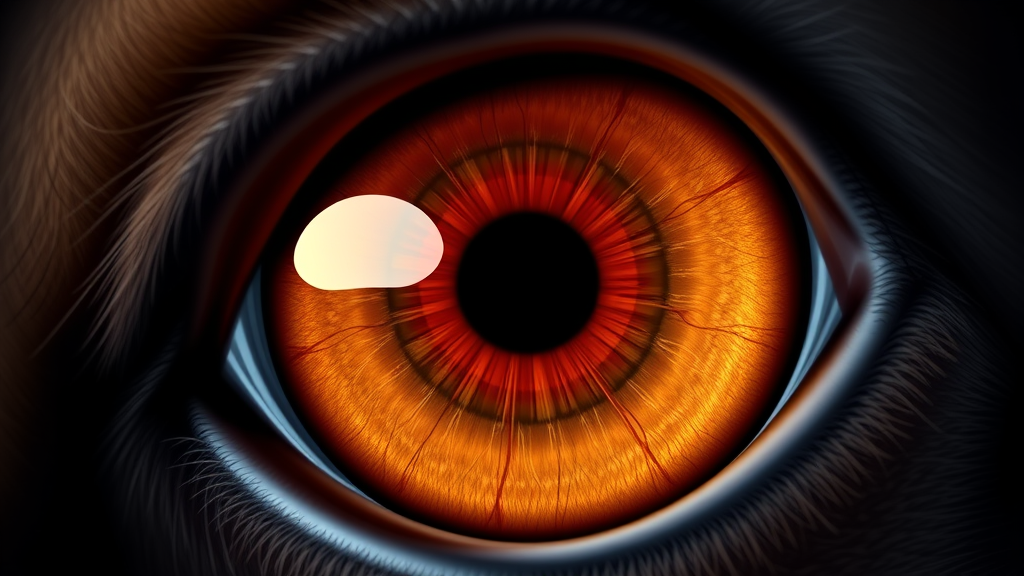
How Dogs Actually See Orange
When dogs look at something orange, they don’t see the vibrant, warm hue that humans perceive. Instead, orange appears as a yellowish or brownish color to dogs. The specific shade depends on the exact wavelength and intensity of the orange object. Research conducted by veterinary ophthalmologists has shown that dogs perceive orange wavelengths (around 590-620 nanometers) as variations of yellow.
This perception has practical implications for dog owners. If you’re choosing toys for your pet, an orange ball might not stand out as dramatically to your dog as you might expect. However, this doesn’t mean dogs can’t enjoy orange objects. They can still distinguish them from other colors in their visible spectrum and may appreciate them for other qualities like texture, scent, or movement.
The intensity and saturation of orange also play a role in how dogs perceive it. A bright, vivid orange might appear as a more distinct yellowish color, while a muted or pale orange could blend more with other earth tones in their visual field. Understanding this can help pet owners make informed decisions about their dog’s environment and accessories.
The Science Behind Color Perception Differences
The fundamental difference in color perception between humans and dogs lies in the structure and function of photoreceptor cells. Humans have three types of cone cells: L-cones (sensitive to long wavelengths/red light), M-cones (sensitive to medium wavelengths/green light), and S-cones (sensitive to short wavelengths/blue light). Dogs only have L-cones and S-cones, lacking the M-cone that helps humans distinguish green and red.
According to research published by the National Institutes of Health, dogs’ L-cones are actually shifted toward shorter wavelengths compared to human L-cones. This means they’re more sensitive to yellow light than red light, which explains why orange appears yellowish to them rather than maintaining its distinct orange appearance.
The evolutionary aspect of canine vision is equally fascinating. Dogs evolved from wolves, who were primarily crepuscular hunters (active during dawn and dusk). This lifestyle favored the development of enhanced night vision and motion detection over color discrimination. The dichromatic vision of dogs is actually quite common among mammals and serves their survival needs effectively.

Practical Implications for Dog Owners
Understanding how dogs perceive orange has several practical applications for pet care and training. When selecting toys, consider that while an orange toy might not appear as vibrant to your dog, it can still be distinguishable from blue or purple objects. The American Veterinary Medical Association recommends choosing toys based on multiple factors beyond just color visibility.
For training purposes, using color contrast effectively can improve your dog’s performance. Instead of relying solely on orange markers or equipment, combine color with other visual cues like shape, size, or movement. Many professional dog trainers now incorporate knowledge of canine color vision into their programs.
When it comes to nutrition, you might wonder about citrus fruits and whether can dog eat orange safely. While the color perception doesn’t directly relate to nutritional value, understanding your dog’s visual experience can help you present food in appealing ways.
Common Myths About Dog Vision
One of the most persistent myths is that dogs are completely colorblind and see only in black and white. This misconception has been thoroughly debunked by modern research. Dogs do see colors, just a more limited range than humans. The Humane Society provides excellent resources about canine sensory capabilities.
Another common misconception is that dogs can’t distinguish between any warm colors. While it’s true that red and orange may appear similar to dogs, they can still differentiate between various shades within their visible spectrum. The key is understanding that their color categories are different from ours, not absent entirely.
Some people also believe that dogs prefer certain colors based on human preferences. However, a dog’s attraction to an object depends more on movement, scent, texture, and personal association rather than color alone. When considering treats like whether can dogs eat orange peels, the appeal comes from aroma and taste rather than visual appearance.
Enhancing Your Dog’s Visual Experience
Knowing how dogs perceive orange and other colors can help you create a more enriching environment for your pet. Consider using blue and yellow objects for training and play, as these colors are most distinct in your dog’s visual field. However, don’t completely avoid orange items – they can still provide variety and interest.
Lighting also plays a crucial role in your dog’s visual experience. Dogs see better in dim light than humans, but they benefit from good contrast. When setting up play areas or training spaces, consider how different colors will appear under various lighting conditions.
For dogs with vision problems or senior pets experiencing declining eyesight, understanding color perception becomes even more important. You can help compensate by using high-contrast items and incorporating other sensory elements. Questions about citrus fruits like can dogs eat mandarin oranges or whether can dogs have mandarin oranges often arise when considering colorful, appealing treats for pets with changing dietary needs.
Creating a sensory-rich environment involves more than just visual elements. Consider incorporating different textures, sounds, and safe scents. This holistic approach acknowledges that while vision is important, dogs rely heavily on their other enhanced senses. The question of do dogs have taste buds relates to how they experience their world through multiple sensory channels.
When introducing new foods or treats, remember that dogs may be more interested in citrus fruits like clementines or tangerines for their scent and texture rather than their orange color. If you’re curious about can dogs have clementines or can dogs have tangerines, the visual appeal to humans differs significantly from what attracts dogs to these foods.
Frequently Asked Questions
Can dogs see the color orange at all?
Yes, dogs can see orange, but not as the vibrant orange color that humans perceive. To dogs, orange appears as a yellowish or brownish hue due to their dichromatic vision. They have only two types of color-detecting cone cells compared to humans’ three, which limits their ability to distinguish certain colors in the red-orange spectrum.
What colors can dogs see best?
Dogs see blue and yellow colors most clearly. Their dichromatic vision is optimized for these wavelengths, making blue and yellow objects stand out distinctly in their visual field. Purple may also be visible to some degree, while red, orange, and green all appear as variations of yellow or brown.
How does a dog’s color vision compare to human color blindness?
Dog vision is very similar to red-green color blindness in humans, also known as deuteranopia. Both conditions result from having only two functional types of cone cells instead of three. However, dogs have some advantages over humans with color blindness, including superior night vision and better motion detection.
Do dogs prefer certain colored toys based on their vision?
Dogs don’t necessarily prefer toys based on color alone. While blue and yellow toys may be more visually distinct to them, dogs are more motivated by factors like movement, texture, scent, and previous positive associations with specific objects. An orange toy might be just as appealing if it squeaks, bounces well, or smells interesting.
Can dogs be trained using color-based commands?
Dogs can be trained using color cues, but it’s most effective when using colors they can distinguish clearly, such as blue and yellow. However, successful training typically combines color with other visual cues like shape, size, position, or handler gestures. Relying solely on color distinctions that are difficult for dogs to perceive may lead to training challenges.
Does age affect how dogs see colors like orange?
As dogs age, their overall vision may decline, which can affect how they perceive all colors, including orange. Senior dogs may develop cataracts, glaucoma, or other eye conditions that further limit their color perception. However, the fundamental dichromatic nature of their vision remains the same throughout their lives.
Should I avoid orange-colored items for my dog?
There’s no need to avoid orange items for your dog. While they may not see orange as distinctly as humans do, dogs can still interact with and enjoy orange objects. The color doesn’t affect the safety, functionality, or appeal of toys, accessories, or other items. Focus on choosing products based on safety, quality, and your dog’s individual preferences rather than color considerations alone.





