
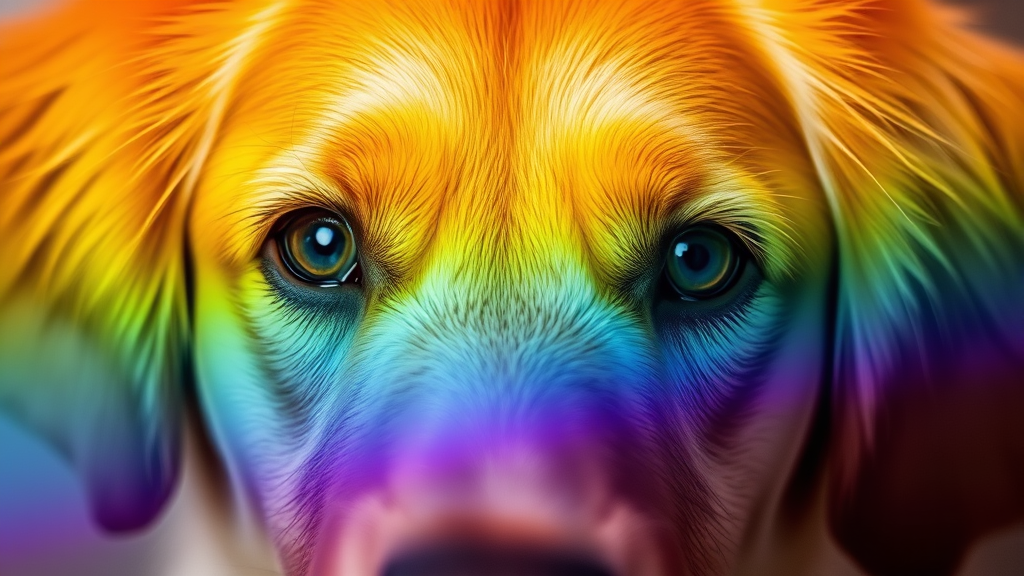
The question of whether dogs can see the color pink has fascinated pet owners and scientists alike for decades. As we gaze into our beloved canine companion’s eyes, we often wonder what world of colors they perceive around them. The answer to this colorful mystery lies deep within the anatomy of a dog’s eye and the fascinating science of canine vision.
Understanding how dogs perceive color requires us to delve into the complex world of photoreceptors, light wavelengths, and evolutionary adaptations. While humans take their rich, vibrant color vision for granted, dogs experience a completely different visual spectrum that has evolved to serve their unique needs as hunters, companions, and survivors in the wild.
The Anatomy of Canine Vision
To understand whether dogs can see pink, we must first examine the structure of a dog’s eye. Like humans, dogs have photoreceptor cells called cones and rods in their retinas. However, the distribution and types of these cells differ significantly from our own. Dogs possess only two types of cone cells, compared to the three types found in human eyes.
The canine retina contains approximately 20% cone cells and 80% rod cells, a distribution that heavily favors low-light vision over color discrimination. This anatomical difference is crucial to understanding why dogs perceive colors differently than humans. The two types of cone cells in dogs are sensitive to different wavelengths of light, creating a limited but functional color vision system.
Research conducted by the American Kennel Club has shown that dogs’ eyes are optimized for detecting movement and seeing in dim lighting conditions rather than distinguishing between subtle color variations. This adaptation reflects their evolutionary history as hunters who needed to track prey during dawn and dusk hours.

The Science Behind Color Perception
Color perception occurs when light waves of different lengths stimulate cone cells in the retina. Humans have three types of cone cells that respond to short (blue), medium (green), and long (red) wavelengths. This trichromatic vision allows us to see millions of color combinations and subtle variations within the visible spectrum.
Dogs, however, have dichromatic vision, meaning they possess only two types of cone cells. These cone cells are most sensitive to blue and yellow wavelengths, similar to humans with red-green color blindness. The National Center for Biotechnology Information has published extensive research showing that dogs can distinguish between blues and yellows but struggle with reds and greens.
The wavelength of pink light falls between red and white on the spectrum, typically ranging from 620-750 nanometers. Since dogs lack the cone cells necessary to detect red wavelengths effectively, their perception of pink is significantly altered. Understanding can dogs see orange helps us comprehend similar limitations with pink perception.
Can Dogs Actually See Pink?
The short answer is that dogs cannot see pink the way humans do. When a dog looks at a pink object, they likely perceive it as a shade of yellow, brown, or gray, depending on the specific hue and lighting conditions. This occurs because pink contains red wavelengths that dogs cannot properly detect with their limited cone cell types.
Studies using behavioral tests have demonstrated that dogs cannot reliably distinguish between pink and white objects when other visual cues are removed. The American Veterinary Medical Association notes that while dogs can detect some color differences, their ability is severely limited compared to human color vision.
However, it’s important to note that dogs might still be able to distinguish pink objects from their surroundings through other visual cues such as brightness, contrast, and texture. Their superior motion detection and night vision capabilities often compensate for their limited color perception in practical situations.
Understanding Dichromatic Vision in Dogs
Dichromatic vision in dogs creates a world that appears quite different from our own colorful experience. Instead of the rich spectrum humans enjoy, dogs see the world primarily in shades of blue, yellow, and various neutral tones. This simplified color palette doesn’t mean dogs see a dull world – they simply experience it differently.
The blue-yellow color spectrum that dogs can perceive allows them to distinguish between sky and ground, water and land, and many natural elements that were crucial for their survival. Research published by PLOS ONE demonstrates that dogs can effectively use their limited color vision for navigation and object recognition in their environment.
When considering whether dogs see pink, we must understand that their dichromatic vision processes this color as something entirely different. Pink flowers in a garden might appear as yellowish or grayish objects to a dog, while bright pink toys could look yellow or tan depending on their specific shade and the lighting conditions.

Why Dogs Evolved This Way
The evolution of dichromatic vision in dogs wasn’t a limitation but rather an adaptation that served their ancestral needs perfectly. Wild canines were primarily crepuscular hunters, meaning they were most active during twilight hours when prey animals were vulnerable. During these times, the ability to detect movement and see in low light was far more valuable than distinguishing between subtle color variations.
The high proportion of rod cells in dogs’ eyes enhances their ability to detect motion and see in darkness, skills that were essential for hunting and survival. The Smithsonian Institution explains that this evolutionary trade-off between color vision and night vision has been observed in many nocturnal and crepuscular mammals.
Additionally, the social structure of pack animals meant that visual communication often relied more on body language, movement, and contrast than on color recognition. This evolutionary pressure shaped the development of canine vision to prioritize these survival-critical visual skills over color discrimination. Interestingly, this relates to broader questions about animal intelligence, such as comparing cognitive abilities between different species.
Practical Implications for Dog Owners
Understanding that dogs cannot see pink has several practical implications for dog owners. When selecting toys, training equipment, or safety gear for your pet, choosing colors that dogs can actually distinguish will improve their effectiveness. Blue and yellow toys are more visible to dogs than pink, red, or green alternatives.
For training purposes, using blue or yellow markers, cones, or flags will be more effective than pink ones. The Humane Society recommends considering your dog’s color vision when designing training exercises or creating safe environments for play.
This knowledge also helps explain why some dogs might not respond to certain visual cues or why they might seem to ignore objects of particular colors. Their sensory experience extends beyond vision, incorporating taste, smell, and hearing to create a complete understanding of their environment.
How Dog Vision Compares to Other Animals
When comparing canine vision to other animals, dogs fall somewhere in the middle of the spectrum. Many mammals, including cats, have similar dichromatic vision, while birds and some reptiles possess tetrachromatic vision, allowing them to see ultraviolet light and an even broader range of colors than humans.
Interestingly, some health conditions can affect how dogs see colors and light. Issues such as eye redness or other ocular problems can further impact their already limited color perception. Regular eye examinations by veterinarians can help maintain optimal vision health in dogs.
Marine mammals like seals and whales have evolved monochromatic vision, seeing the world in shades of blue and green that match their aquatic environment. This comparison highlights how evolution shapes vision to match environmental needs rather than creating a universal “best” type of sight.
Frequently Asked Questions
What colors can dogs see best?
Dogs can see blue and yellow colors most clearly. These colors appear vibrant and distinct to dogs, while reds appear more like yellow or brown, and greens look yellowish or gray. Blue and yellow toys or training equipment will be most visible to your dog.
Do all dog breeds see colors the same way?
Yes, all dog breeds have the same basic dichromatic vision system with two types of cone cells. However, individual dogs may have slight variations in color sensitivity, just as humans do. Breed-specific differences in eye shape or size don’t significantly affect color perception.
Can dogs see pink flowers in a garden?
Dogs cannot see pink flowers as pink. Instead, they likely perceive them as yellowish, brownish, or grayish objects depending on the specific shade and lighting conditions. However, they can still distinguish the flowers from green foliage through contrast and brightness differences.
Is it true that dogs are completely colorblind?
No, dogs are not completely colorblind. This is a common misconception. Dogs have dichromatic vision, meaning they can see some colors (primarily blues and yellows) but not the full spectrum that humans see. Complete colorblindness (monochromatic vision) is extremely rare in dogs.
Should I avoid buying pink toys for my dog?
While dogs can’t see pink as we do, pink toys aren’t harmful. However, blue or yellow toys will be more visually stimulating and easier for your dog to locate during play. Consider your dog’s other senses – texture, smell, and sound are often more important than color for toy appeal.
Can dogs see better than humans in any way?
Yes, dogs have superior night vision, motion detection, and peripheral vision compared to humans. They can see moving objects more clearly and have better vision in low-light conditions due to their higher proportion of rod cells and a reflective layer behind their retinas called the tapetum lucidum.
How do scientists test color vision in dogs?
Scientists use behavioral experiments where dogs are trained to choose between different colored objects for rewards. By systematically testing different color combinations and controlling for brightness and other factors, researchers can determine which colors dogs can actually distinguish from one another.





