
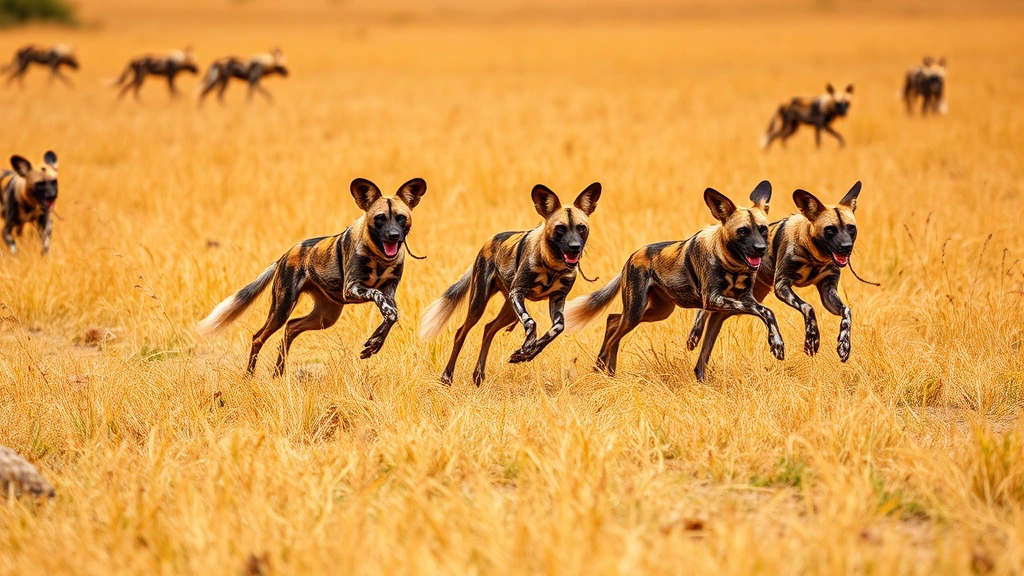
Do African Wild Dogs Protect Each Other? Insights & Facts
When we think about canine loyalty and pack dynamics, most of us picture our beloved domestic dogs or perhaps wolves prowling through forests. But there’s a fascinating wild relative that embodies teamwork and mutual protection on a scale that would make any dog lover’s heart race: the African wild dog. These magnificent creatures, scientifically known as Lycaon pictus, represent one of nature’s most compelling examples of cooperative behavior in the animal kingdom.
African wild dogs aren’t your typical canines, and their approach to pack life is genuinely remarkable. Unlike their domestic counterparts, these social hunters have evolved intricate systems of protection, care, and mutual support that keep their packs functioning like well-oiled machines. The question “do African wild dogs protect each other?” isn’t just a simple yes or no—it’s a gateway into understanding one of the most sophisticated social structures in the dog world.
Whether you’re a wildlife enthusiast, a dog behavior researcher, or simply curious about how our canine cousins operate in the wild, this deep dive will reveal the extraordinary ways African wild dogs watch out for one another, support their vulnerable members, and work together for the pack’s survival.
Pack Structure and Social Hierarchy
African wild dogs live in highly organized packs that typically range from 6 to 20 individuals, though larger packs have been documented in areas with abundant prey. Unlike domestic dogs, which have been shaped by thousands of years of human interaction, African wild dogs maintain a natural social order that’s both rigid and surprisingly egalitarian in certain respects.
The pack is led by a dominant breeding pair—the alpha male and female—who are responsible for producing offspring. This isn’t a tyrannical dictatorship; rather, it’s a structured system where the breeding female holds particular authority over pack decisions. What makes this hierarchy unique is that subordinate members don’t constantly challenge leadership through aggressive confrontations. Instead, they accept their role and work collaboratively for the collective good.
Each pack member has a defined role, and this specialization is crucial to their mutual protection strategy. Some individuals are natural hunters, others excel at babysitting pups, and certain members become the pack’s most vigilant sentries. This division of labor means that dogs know their responsibilities to their pack, much like understanding how deep bonds form between animals.
The beauty of this structure is that every dog contributes to the pack’s safety net. A dog injured during a hunt knows that others will cover for them. A nursing mother understands that the pack will bring her food. This interdependence creates a powerful motivation for mutual protection that transcends simple instinct.
How African Wild Dogs Protect Each Other
The protective mechanisms within an African wild dog pack operate on multiple levels, from the physical to the psychological. Understanding these systems reveals just how sophisticated their social structure truly is.
Physical Defense and Territory Protection
African wild dogs are fiercely territorial, and they defend their territory as a unified force. When rival packs approach pack boundaries, the dogs don’t send out a single defender—they mobilize as a group. This collective defense strategy means that even a smaller pack can successfully protect its territory against larger rivals. The presence of multiple defenders creates a deterrent effect that’s far more powerful than individual strength.
During territorial disputes, pack members position themselves strategically, with experienced fighters taking the front lines while younger or smaller members support from secondary positions. This isn’t random chaos; it’s coordinated defense. Dogs position themselves strategically for protection, a behavior that echoes their wild cousins’ tactical awareness.
Injury Response and Medical Support
Perhaps one of the most touching aspects of African wild dog behavior is how they respond to injured pack members. When a dog suffers a serious injury that prevents hunting, the pack doesn’t abandon them. Instead, healthy members bring food to the injured dog, sometimes regurgitating meat directly into their mouth. This behavior, called allofeeding, ensures that injured dogs receive adequate nutrition during recovery.
The pack also provides psychological support through proximity and grooming. Injured dogs remain close to the pack’s center, where they’re physically protected from predators. Other pack members groom the injured dog, which both provides comfort and helps prevent infection.
Vigilance and Predator Detection
African wild dogs employ a sophisticated early warning system to protect against threats. At any given time, certain pack members maintain elevated vigilance, scanning the environment for danger. Lions, hyenas, and other predators pose significant threats, but through coordinated watchfulness, the pack minimizes surprise attacks.
When a threat is detected, the alert dog communicates through vocalizations and body language, triggering an immediate pack response. This collective vigilance means that even while sleeping or resting, the pack maintains protection through designated sentries who rotate their duties.
Cooperative Hunting and Group Defense
The hunting strategies of African wild dogs showcase perhaps the most impressive example of mutual protection in action. These dogs are apex predators with a hunting success rate of around 80%—significantly higher than lions’ 25% success rate. This extraordinary efficiency stems directly from their cooperative approach.
During a hunt, pack members assume specific roles based on their individual strengths and experience. Some dogs are designated as chasers, others as blockers, and certain individuals serve as strikers who attempt the kill. This role specialization requires incredible trust and coordination. Each dog must know that others will execute their part of the plan, and each dog must be willing to take on dangerous responsibilities.
The protection aspect becomes clear when you consider the risks involved. Chasing prey toward prepared blockers means the chasers might encounter dangerous prey like buffalo or wildebeest. Yet they perform this role knowing that their pack mates have their backs. If a chaser is injured or cornered, other pack members rush to assist.
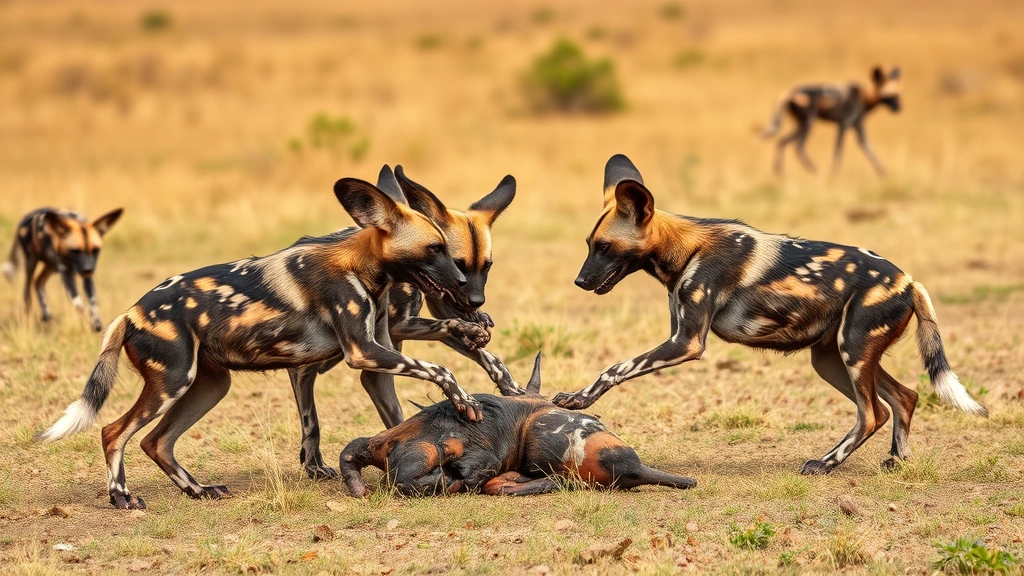
After a successful hunt, the pack protects their kill from scavengers and competitors. They work together to defend the carcass, ensuring that all pack members get adequate nutrition. This group feeding system means that even subordinate members receive sufficient calories, which keeps them healthy and capable of contributing to future hunts.
Research from the American Animal Feeds Control Officials and studies on canine nutrition demonstrate that wild dogs’ cooperative feeding ensures optimal pack health compared to solitary hunters.
Caring for Vulnerable Pack Members
One of the most heartwarming aspects of African wild dog society is how they care for their most vulnerable members: pups and nursing mothers.
Puppy Protection and Education
African wild dog pups are born in dens and remain there for the first 10 weeks of life. During this critical period, the entire pack works to protect them. Designated babysitters—often subordinate females—remain at the den while other pack members hunt. These caregivers aren’t just watching for danger; they’re also teaching pups crucial survival skills.
When pups emerge from the den, the protection intensifies. The pack forms a protective perimeter around young dogs during movement, with strong adults positioned on the periphery. If a predator approaches, pack members create a living barrier between the threat and the pups.
Interestingly, this protective behavior extends to education. Older pack members deliberately bring injured or partially killed prey to pups, essentially providing hunting lessons. This mentorship ensures that young dogs develop the skills necessary to eventually contribute to the pack’s survival.
Support for Nursing Mothers
Pregnant and nursing females receive exceptional care and protection from their pack. As pregnancy progresses, other pack members seem to recognize the female’s vulnerability and adjust their behavior accordingly. The pregnant dog is given priority access to food, and hunting assignments are modified to keep her safer.
After giving birth, the nursing mother receives continuous support. Pack members bring her food directly to the den, eliminating the need for her to leave her vulnerable pups unattended. This protection system means that nursing females can focus entirely on their offspring’s health and development.
The relationship between pack protection and pup survival is direct and measurable. Packs with stronger social bonds and more effective protective systems have significantly higher pup survival rates than packs with weaker social structures.
Communication and Bonding
Mutual protection in African wild dog packs is reinforced through sophisticated communication systems that keep pack members informed, coordinated, and emotionally bonded.
Vocalizations and Pack Cohesion
African wild dogs use a complex repertoire of vocalizations to maintain pack unity and coordinate protection. High-pitched chirps keep pack members in contact during hunts, allowing coordinated movement without visual contact. Barks serve as alarm calls, alerting the pack to danger. Growls and snarls establish dominance and resolve conflicts without escalating to dangerous physical fights.
The famous “laughing” call of African wild dogs—a sound that resembles hysterical laughter—serves multiple functions. It strengthens social bonds, coordinates group activities, and provides comfort during stressful situations. Hearing the calls of pack mates provides psychological reassurance, reducing stress and anxiety.
Research from the ASPCA on canine communication emphasizes how vocalizations are essential for maintaining social cohesion in group-living species.
Physical Affection and Grooming
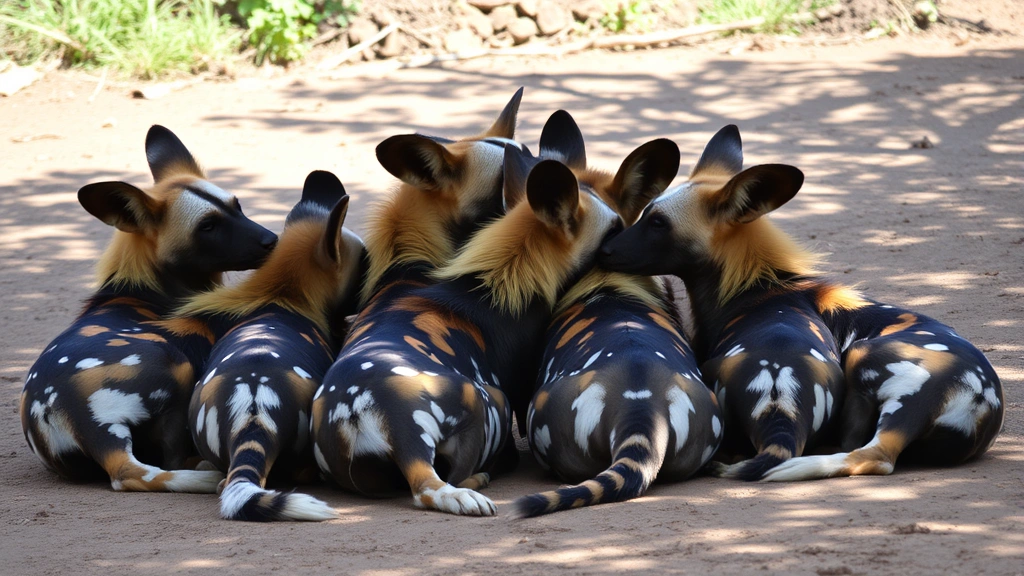
Beyond vocalizations, African wild dogs engage in extensive physical contact. They greet each other with ritualized behaviors that include sniffing, nuzzling, and full-body contact. These greetings serve dual purposes: they reinforce social bonds and allow pack members to assess each other’s health and emotional state.
Grooming is particularly important for pack bonding. Pack members spend considerable time grooming each other, removing parasites, cleaning wounds, and providing tactile comfort. This behavior is especially intense between the alpha pair and between mothers and offspring. If you’ve ever wondered about similar behaviors in domestic dogs, you might find it interesting to explore why dogs like belly rubs, which serves similar bonding functions.
The mutual grooming system also provides medical benefits. Pack members can identify injuries, infections, or parasites on each other’s bodies and respond appropriately. This collective health monitoring system helps prevent the spread of disease and ensures early treatment of injuries.
Threats to Pack Survival and Protection
While African wild dogs have evolved sophisticated protective mechanisms, they face significant external threats that challenge their survival strategies.
Predator Threats
Lions and hyenas represent the primary predator threats to African wild dog packs. A single wild dog is no match for a lion, but a coordinated pack can successfully defend itself and drive away predators. However, this requires unity and courage from all pack members. Dogs that fail to participate in collective defense put the entire pack at risk.
Hyenas, in particular, pose ongoing threats to pups and can challenge adult dogs for kills. The pack’s protective mechanisms have evolved specifically to counter these threats through coordinated group defense.
Disease and Parasites
Internal and external parasites can devastate wild dog populations. The pack’s collective grooming and health monitoring help minimize disease transmission, but they cannot prevent outbreaks entirely. African wild dogs are susceptible to rabies, distemper, and other infectious diseases that can spread rapidly through a pack.
The American Animal Feeds Control Officials and veterinary organizations have documented how social structure influences disease transmission in canine populations.
Human-Related Threats
Habitat loss, human persecution, and vehicular accidents represent growing threats to wild dog populations. Packs that lose members to human activities face reduced hunting efficiency and compromised protection systems. The loss of key members—particularly the alpha female—can destabilize the entire pack structure.
Despite these threats, African wild dogs continue to demonstrate remarkable resilience through their protective behaviors and social cohesion. Pack members support each other through crises, and the collective strength of the group often determines survival outcomes.
For more information on wild dog conservation and behavior, the American Kennel Club provides resources on canine biology and conservation.
Frequently Asked Questions
Do African wild dogs really have an alpha pair?
Yes, African wild dog packs are led by a dominant breeding pair. However, the concept of an aggressive, constantly-fighting alpha is largely a myth. The alpha pair maintains leadership through established social hierarchies rather than constant aggression. Interestingly, if you’re curious about dominance in domestic dogs, you might explore how dogs like being pet, which relates to their comfort with established social structures.
How do African wild dogs communicate danger to their pack?
African wild dogs use a combination of vocalizations, body language, and visual signals to communicate threats. High-pitched alarm barks alert the pack to specific dangers, while body postures indicate the type and severity of threat. The entire pack can mobilize within seconds of receiving an alert.
What happens if an African wild dog is severely injured?
Severely injured dogs receive support from their pack, including food brought to them and protection from predators. However, if an injury is so severe that the dog cannot eventually contribute to hunts, the pack may eventually abandon them. This isn’t cruelty; it’s a survival mechanism that ensures pack resources go to dogs who can contribute.
Do African wild dogs grieve their dead?
There’s limited scientific documentation of grief-like behaviors in African wild dogs, though they do display behavioral changes when pack members die. This raises interesting questions about animal emotions—if you’re curious about this topic, you might explore whether dogs understand death.
How does pack size affect protection capabilities?
Larger packs generally have better hunting success rates and stronger territorial defense capabilities. However, larger packs also require more food, which can create resource competition. The optimal pack size appears to be between 10-15 individuals, balancing protection benefits with resource availability.
Can African wild dogs survive alone?
African wild dogs are obligate pack animals, meaning they cannot survive long-term as solitary individuals. A lone wild dog faces extreme vulnerability to predators, cannot hunt effectively, and lacks the social structure necessary for psychological health. Pack membership is essential for survival.
How do young wild dogs learn protective behaviors?
Young wild dogs learn through observation and participation. They watch older pack members during territorial disputes and hunts, gradually understanding their role. Through play and guided experience, pups develop the skills and instincts necessary for pack defense.
The protective behaviors of African wild dogs represent one of nature’s most compelling examples of cooperation, loyalty, and mutual support. These remarkable creatures demonstrate that strength in numbers isn’t just about physical power—it’s about trust, communication, and genuine commitment to the collective good. Understanding their protective systems not only fascinates us with insights into wild canine behavior but also illuminates the deep social nature that all dogs, from wild African packs to your family pet, share at their core.





