
Do African Wild Dogs Protect Each Other? Insights Here
African wild dogs are among nature’s most fascinating canines, and their social dynamics are nothing short of remarkable. Unlike their domesticated cousins, these endangered carnivores have evolved intricate systems of cooperation and mutual protection that would make any pack mentality textbook blush. The question of whether African wild dogs protect each other isn’t just a simple yes or no—it’s a window into one of the animal kingdom’s most sophisticated examples of familial loyalty and coordinated teamwork.
When we talk about protection in the context of African wild dogs, we’re discussing a multi-layered phenomenon that encompasses everything from defensive strategies against rival packs to caring for injured pack members and raising pups collectively. These remarkable animals have developed what scientists call “alloparental care,” meaning that pack members who aren’t biological parents still actively participate in raising and protecting the young. This level of commitment to one another is genuinely awe-inspiring and reveals just how deeply social bonds run in these wild canines.
Understanding African wild dog behavior gives us incredible insights into pack dynamics, social hierarchies, and the evolutionary advantages of cooperation. Whether you’re a wildlife enthusiast, a dog lover curious about your pet’s wild ancestors, or simply someone fascinated by animal behavior, this comprehensive guide will explore the protective mechanisms these remarkable creatures have developed over millennia.
Pack Structure and Social Hierarchy
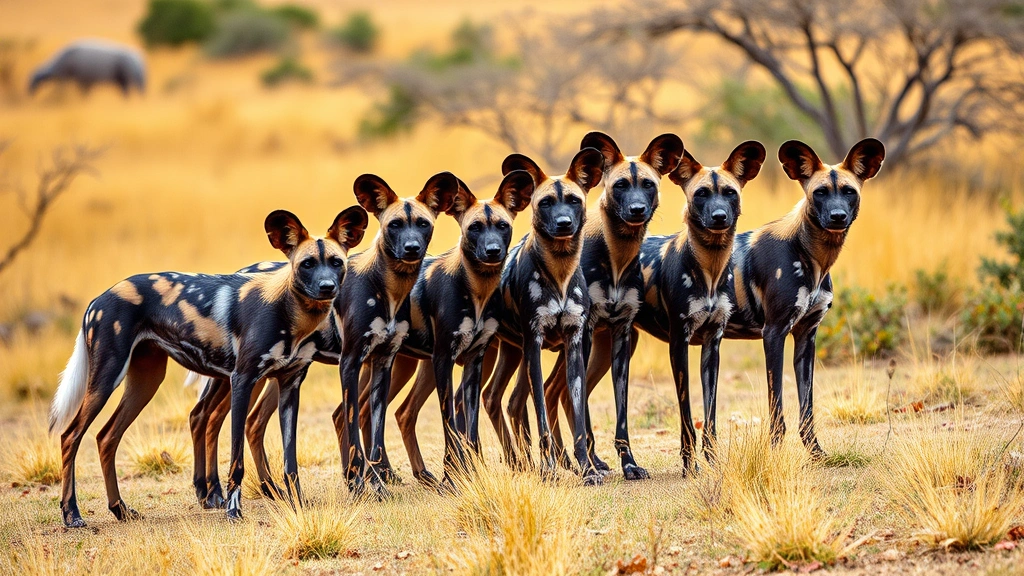
African wild dogs live in highly organized packs that typically consist of 5 to 30 individuals, though packs as large as 40 have been documented. Unlike many other canine species, African wild dog packs are matriarchal, with a dominant female and dominant male leading the group. This leadership structure isn’t maintained through constant aggression but rather through a sophisticated understanding of roles and responsibilities that each pack member respects.
The alpha pair—the breeding female and male—hold significant authority, but their leadership is fundamentally different from the outdated “alpha wolf” model that many people mistakenly apply to all canines. In African wild dog packs, the alpha female earns her position through natural dominance and respect, and the rest of the pack willingly follows her lead. This cooperation isn’t forced; it’s mutually beneficial. The protection that pack members offer each other stems directly from this stable hierarchical structure.
Subordinate dogs within the pack have clearly defined roles. Some become excellent hunters, others develop strong nurturing instincts, and still others become protectors of the young. This specialization actually enhances the pack’s ability to protect its members because each individual can focus on what they do best. When you understand that why dogs lick each other’s ears involves bonding and social cohesion, you begin to appreciate how these small gestures reinforce the pack’s protective network.
Protection Mechanisms in Wild Dog Packs
African wild dogs employ several sophisticated protection strategies that demonstrate their commitment to each other’s safety. One of the most striking behaviors is their willingness to defend pack members against larger predators, including lions and hyenas. Unlike solitary hunters, wild dogs understand that their strength lies in numbers, and they actively use coordinated group defense to protect vulnerable members.
When a pack member is injured or becomes vulnerable, the entire pack rallies around them. This isn’t sentimental—it’s strategic. An injured dog might still contribute to hunts or defend territory, and even if they can’t, the pack recognizes that today’s injured member could be tomorrow’s savior. This reciprocal altruism creates a culture of protection that permeates every aspect of pack life. Research from the USDA Animal and Plant Health Inspection Service has documented numerous instances of wild dogs protecting wounded pack mates during hunts.
The protective behavior extends to food sharing, which might seem like a simple gesture but carries profound implications. When a kill is made, the pack doesn’t engage in chaotic fighting over the carcass. Instead, there’s a structured sharing system where even subordinate members and nursing mothers receive adequate portions. This ensures that all pack members remain healthy and strong, which in turn strengthens the entire pack’s ability to defend itself against threats.
Another critical protection mechanism is the sentinel system. While the pack hunts or rests, certain individuals take turns standing guard, watching for threats from rival packs, predators, or other dangers. This rotation ensures that the pack is never caught completely off-guard. The sentries aren’t forced into this role—they appear to understand its importance and take pride in their watchful responsibilities. It’s a beautiful example of how individual sacrifice contributes to collective safety.
Collective Care of Pups and Vulnerable Members
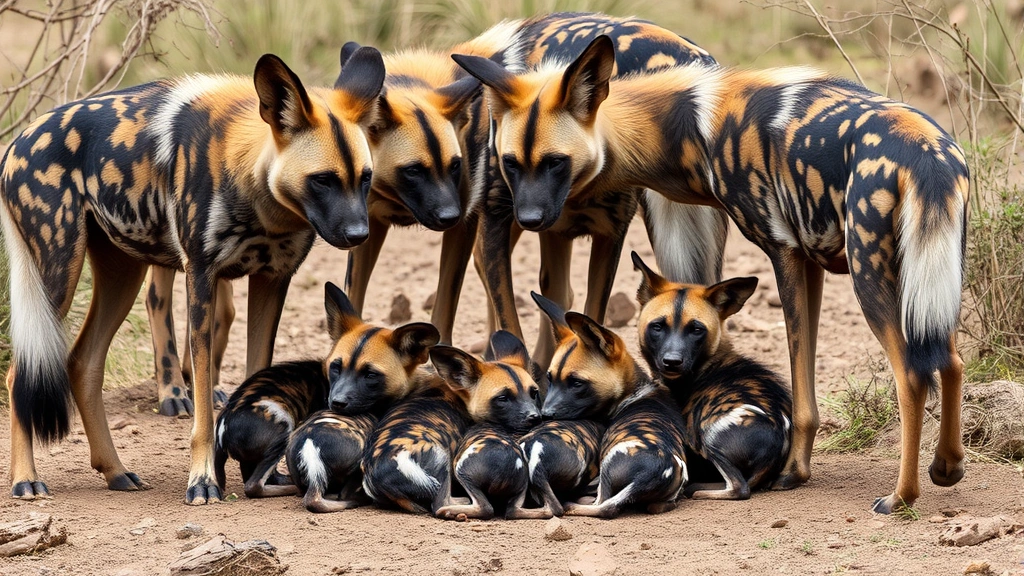
Perhaps the most touching example of African wild dog protection involves their treatment of pups. The entire pack participates in raising young dogs, regardless of whether they’re biological parents. This communal child-rearing approach creates an environment where pups are protected by dozens of eyes and defended by dozens of teeth.
Nursing mothers receive special protection and priority access to food. Non-breeding females often produce milk to help feed pups, a phenomenon called “lactational helpers.” This extraordinary adaptation means that pups have multiple sources of nutrition and care, significantly increasing their chances of survival. The pack literally surrounds vulnerable pups with protection, teaching them survival skills while keeping them safe from predators and rival packs.
When pups are very young and vulnerable, the entire pack exhibits heightened vigilance. Hunts are planned with consideration for nursing mothers who need to stay behind. When the hunters return with a kill, they regurgitate meat for the pups and nursing females—a behavior that shows remarkable foresight and protection. This isn’t instinctive behavior that happens automatically; it requires conscious participation and coordination from multiple pack members.
Interestingly, this protective behavior extends beyond biological offspring. If a pup becomes orphaned, the pack will collectively care for it without hesitation. Similarly, if an adult dog becomes too old or injured to hunt effectively, the pack continues to share food with them and protect them from external threats. This level of care suggests that African wild dogs recognize individual members not just as competitors for resources but as valued members of their family unit.
Territorial Defense and Pack Loyalty
African wild dogs maintain defined territories that can range from 400 to 1,500 square kilometers, depending on prey availability. These territories represent the pack’s collective resource base, and defending them is a matter of survival. When rival packs encroach on their territory, wild dogs mount aggressive, coordinated defensive campaigns that showcase their loyalty to each other and their shared homeland.
Territorial disputes can be intense and dangerous, with serious injuries common. Yet despite these risks, pack members consistently stand together against invaders. This isn’t about individual bravery—it’s about understanding that the pack’s survival depends on maintaining territorial integrity. Each dog that fights to defend the territory is ultimately fighting to protect the food resources that keep everyone alive, including the pups and elderly members who depend on the hunters.
The loyalty demonstrated during territorial defense is absolute. A dog will not abandon pack mates even when facing a numerically superior rival pack. This commitment to stand together, even against overwhelming odds, is one of the most compelling examples of how deeply pack protection runs in African wild dog culture. Research from the ASPCA highlights how such pack cohesion differs significantly from domestic dog behavior, even though both share common ancestry.
Interestingly, the bonds formed during territorial defense strengthen the pack’s overall protective capacity. Dogs that have fought together develop enhanced communication and trust, making them more effective at protecting each other during hunts and while caring for pups. It’s a cycle where protection breeds unity, and unity breeds better protection.
Communication and Coordination
African wild dogs are incredibly vocal animals, using a complex system of sounds to communicate with each other. These vocalizations serve protective functions by allowing pack members to stay connected, warn of dangers, and coordinate group activities. The distinctive high-pitched yelps, growls, and whines that characterize wild dog communication create an invisible safety net that keeps the pack informed and coordinated.
The pack uses specific alarm calls to alert members to different types of threats. A call indicating a rival pack’s approach differs from one signaling a large predator. This sophisticated communication system means that when danger appears, the entire pack can respond appropriately and quickly. Each member knows exactly what the threat is and can take their assigned defensive position. This level of coordination would be impossible without clear, effective communication, and it directly enhances each individual’s protection.
Beyond vocalizations, African wild dogs use body language extensively. Tail positions, ear orientations, and facial expressions communicate mood, intent, and threat levels. A pack member displaying stress signals will receive calming responses from others, demonstrating emotional awareness and mutual support. This emotional intelligence translates into better protection because pack members can identify when someone is frightened, injured, or vulnerable and respond appropriately.
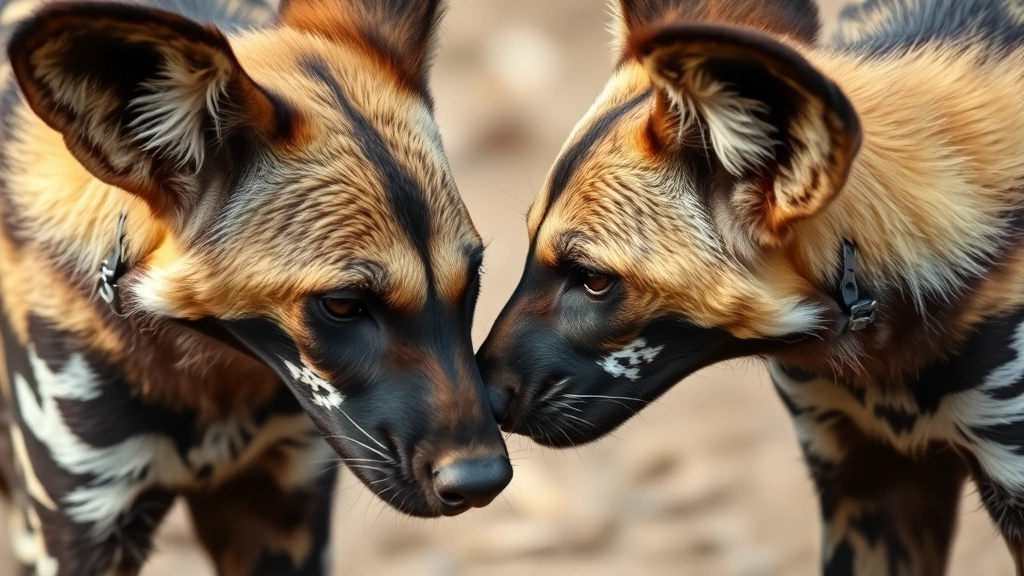
The greeting ceremonies that occur when pack members reunite after separation are particularly revealing. These aren’t just casual hellos—they’re reaffirmations of pack bonds and status checks. During these interactions, pack members can assess each other’s health and emotional state, ensuring that anyone with problems receives attention and support. It’s a built-in system for identifying who needs protection and how the pack can provide it.
How They Compare to Domestic Dogs
Understanding African wild dog protection mechanisms offers fascinating insights into how your dog knows you love them and what protective instincts remain in domestic dogs. While domestic dogs have been bred away from many of the rigid pack structures wild dogs maintain, they retain core protective instincts that evolved in these ancient pack systems.
Your pet dog’s desire to protect you, their tendency to alert you to dangers, and their loyalty all trace back to the same evolutionary roots that make African wild dogs so protective of each other. However, domestic dogs have redirected these protective impulses toward their human families rather than toward a canine pack. This redirection doesn’t mean domestic dogs lack protective instincts—it means those instincts have been refined and redirected through thousands of years of selective breeding.
Interestingly, the protective behaviors of domestic dogs toward each other still mirror wild dog patterns in many ways. Multi-dog households often develop hierarchies similar to wild dog packs, with clear leaders and followers. Food sharing, play-fighting that establishes bonds, and collective alertness to threats all reflect the protective mechanisms that wild dogs have perfected over millennia.
One significant difference is that domestic dogs lack the evolutionary pressure that makes wild dog protection so intense. Wild dogs protect each other because failure to do so means starvation or predation. Domestic dogs live in relative safety, so their protective behaviors are more relaxed and flexible. Yet the fundamental drive to protect pack mates remains strong, which is why dogs are such loyal companions and why dogs sleep by your feet—they’re maintaining pack awareness and protecting their family unit even in sleep.
Conservation Implications
African wild dogs are critically endangered, with fewer than 6,600 individuals remaining in the wild. Understanding their protective behaviors and pack dynamics is crucial for conservation efforts. These animals’ dependence on pack structure means that fragmented populations struggle to survive because they can’t maintain viable pack sizes.
Conservation programs increasingly focus on protecting entire packs rather than individual animals. This approach recognizes that a lone wild dog, no matter how healthy, has virtually no chance of survival. By maintaining pack integrity and protecting territories, conservationists can preserve the protective mechanisms that have allowed these animals to thrive for millennia. The American Kennel Club and various wildlife organizations support research into wild dog behavior specifically because understanding their social needs improves conservation strategies.
Habitat protection is another critical component of wild dog conservation. These animals need vast territories to maintain healthy packs and protect themselves from threats. When habitat is fragmented, packs become isolated, preventing genetic diversity and making the species more vulnerable to extinction. Protecting large, connected territories allows packs to maintain their protective systems and continue their crucial role as apex predators in African ecosystems.
The loss of African wild dogs would represent an incalculable loss to biodiversity and our understanding of canine evolution and behavior. Every pack we protect preserves not just individual animals but an entire system of social relationships and protective mechanisms that have evolved over millions of years. Conservation efforts that focus on maintaining pack structure and territorial integrity directly support the protective behaviors that make these animals so remarkable.
Frequently Asked Questions
Do African wild dogs actually protect injured pack members?
Absolutely. African wild dogs demonstrate remarkable dedication to injured pack members. They continue to share food with injured dogs, defend them from threats, and allow them to remain with the pack even if they can’t contribute to hunts. This behavior is well-documented by wildlife researchers and represents a significant evolutionary advantage for the species.
What happens if a wild dog leaves its pack?
A wild dog separated from its pack faces nearly certain death. Without pack protection, they can’t defend themselves against predators or rival packs, and they lack the cooperative hunting strategy necessary to catch large prey. This is why pack loyalty is so absolute—individual survival literally depends on remaining with the group.
How do African wild dogs decide who leads the pack?
The alpha pair typically emerges through natural dominance and mutual respect rather than through constant fighting. The dominant female usually leads the pack, with the dominant male as her partner. Other pack members respect this hierarchy because it’s stable and beneficial for everyone. Leadership positions aren’t constantly contested because the system works well for the entire pack.
Can African wild dogs from different packs work together?
Wild dogs from different packs are generally hostile to each other and will fight viciously. Pack identity is so strong that dogs view members of other packs as threats rather than potential allies. However, when packs merge (which occasionally happens due to population dynamics), the dogs eventually establish a new hierarchy and begin protecting each other as a unified group.
How does African wild dog protection compare to lion pride protection?
While both are highly social carnivores, African wild dogs and lions employ different protection strategies. Lions rely on physical strength and size, while wild dogs rely on coordination, communication, and numbers. Wild dogs are often more effective at protecting each other because their system is more egalitarian and flexible than lion pride hierarchies. Research from Nature journals has compared these different approaches extensively.
Do wild dogs ever abandon weak pack members?
While wild dogs occasionally abandon very old or severely injured members who can’t keep up with the pack, this is relatively rare. Most documented cases show wild dogs maintaining loyalty to vulnerable members and continuing to share resources with them. The pack’s collective strength means they can afford to support weaker members, and doing so maintains pack cohesion.
How many pups typically survive in a wild dog pack?
Pup survival rates in African wild dog packs are significantly higher than in solitary canine mothers’ litters, thanks to collective protection and care. In a healthy pack, 60-80% of pups typically survive to independence, compared to much lower rates for solitary mothers. This dramatic difference demonstrates the protective value of pack living.
What role does play-fighting have in developing protection behaviors?
Play-fighting among young wild dogs serves multiple purposes, including developing combat skills and establishing social bonds. Through play, young dogs learn how to interact with pack mates, understand their place in the hierarchy, and develop the physical coordination needed for hunting and defense. These play sessions strengthen the protective bonds that will sustain them throughout their lives.





