
How to Remove Dog Urine Smell: Expert Tips for a Fresh-Smelling Home
Let’s be honest—there’s nothing quite like the pungent aroma of dog urine to remind you that your furry friend isn’t perfect. Whether your pup had an accident on the carpet, your couch has become their favorite bathroom spot, or that mysterious smell just won’t go away, you’re not alone in this struggle. Dog urine odor is one of the most common complaints pet owners face, and it can be absolutely stubborn to eliminate.
The challenge with dog urine isn’t just the initial smell—it’s that sneaky ammonia compound that seeps deep into fabrics, padding, and even subflooring, making a comeback every time humidity increases or your nose gets particularly sensitive. But don’t worry! We’ve gathered expert-backed strategies to help you banish that odor for good and restore your home to its fresh, welcoming state.
Whether you’re dealing with a one-time accident or a chronic issue, understanding the science behind dog urine smell and the most effective removal techniques will transform your cleaning game. Let’s dive into the solutions that actually work.
Why Dog Urine Smells So Strongly
Before we tackle the removal methods, it’s worth understanding why dog urine is such a powerful odor offender. Dog urine contains urea, urochrome, and uric acid—compounds that break down into ammonia over time. This is why fresh accidents smell different from older ones; the ammonia smell intensifies as the urine ages and bacteria begin to colonize the spot.
According to the ASPCA, the strength of the odor also depends on your dog’s diet, hydration level, and overall health. Dogs that are dehydrated tend to have more concentrated urine, which smells stronger. Additionally, if your dog has a urinary tract infection or other health issues, the smell can be even more pungent and persistent.
The real problem is that urine doesn’t just sit on the surface—it soaks into materials and can reach substructures. This is why that lingering smell keeps coming back, especially during humid weather when moisture reactivates the odor compounds.
Immediate Cleanup: The First 24 Hours
The moment you discover an accident, time is your ally. Acting quickly can prevent the urine from setting in permanently and make the cleaning process exponentially easier.
For fresh accidents on hard floors:
- Blot up as much urine as possible with paper towels or old towels (don’t rub—blotting is key)
- Spray the area with a 1:1 mixture of white vinegar and water
- Let it sit for 5-10 minutes
- Blot again thoroughly
- Sprinkle baking soda over the spot and let it sit for several hours or overnight
- Vacuum up the baking soda completely
For carpets and upholstered surfaces:
- Blot the area with absorbent materials—use as much pressure as you can without damaging the fabric
- Don’t use hot water initially, as heat can set the stain and odor
- Apply a solution of equal parts white vinegar and water, then blot again
- For stubborn spots, cover with baking soda and let sit overnight before vacuuming
This initial response prevents the urine from bonding too deeply with the material, giving you a much better chance of complete elimination.
The Power of Enzymatic Cleaners
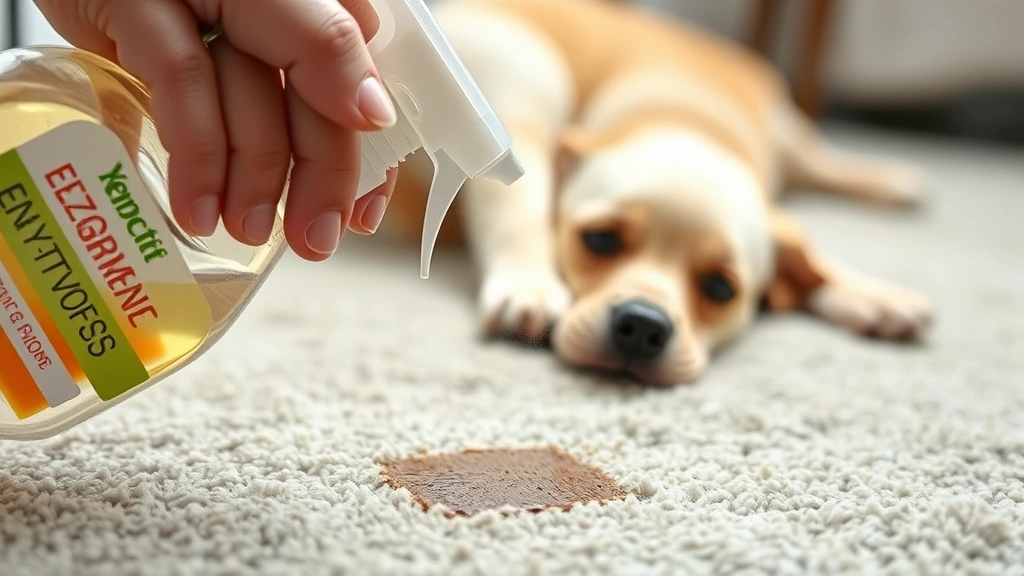
Here’s where the real magic happens. Enzymatic cleaners are your secret weapon against dog urine odor, and they work on a biological level that regular cleaners simply can’t match.
Enzymatic cleaners contain specialized proteins that break down the uric acid crystals in dog urine—the very compounds responsible for that persistent smell. Unlike ammonia-based cleaners that can actually intensify dog urine odors, enzymes literally digest the odor-causing molecules, eliminating them entirely rather than just masking the smell.
How to use enzymatic cleaners effectively:
- Choose a product specifically designed for pet urine (brands like Nature’s Miracle, Rocco & Roxie, and Enzymatic Digest are highly recommended)
- Follow the product instructions precisely—don’t dilute more than recommended
- Apply generously to the affected area and surrounding spots
- Allow the cleaner to work for the full recommended time (usually 12-24 hours for best results)
- Keep the area moist during this period—the enzymes work best in damp conditions
- Avoid using heat or fans during the process, as drying the area prematurely can reduce effectiveness
The American Kennel Club recommends enzymatic cleaners as the gold standard for pet accident cleanup, and for good reason—they actually solve the problem rather than temporarily masking it.
Removing Urine Smell from Specific Surfaces
Different materials require different approaches. Let’s break down the best strategies for common problem areas.
Carpets and Area Rugs
Carpeting is often the biggest casualty of dog accidents because urine soaks through the fibers and into the padding beneath. If you’re dealing with how to clean dog poop out of carpet, you’re likely facing similar challenges with urine as well.
For carpet, the enzymatic cleaner approach is essential. Apply your chosen enzymatic cleaner liberally, then cover the area with plastic sheeting to keep it moist. If the smell persists after one treatment, repeat the process. For severe cases, you may need to remove the carpet padding or replace the carpet entirely—sometimes the damage is simply too extensive.
Hardwood and Tile Floors
Hard surfaces seem easier to clean, but urine can seep into grout lines and wood grain. Use the vinegar-and-water solution first, then apply an enzymatic cleaner. For wood floors, be cautious about moisture—you want to clean thoroughly without saturating the wood, which can cause warping.
Mattresses and Bedding
If your dog has claimed your bed as their personal bathroom, check out our detailed guide on how to get dog pee out of mattress. The key here is getting the enzymatic cleaner deep into the mattress layers where the urine has penetrated. Spray generously, allow maximum time for the enzymes to work, and consider using a wet/dry vacuum to remove excess moisture.
Couches and Upholstered Furniture
Upholstered furniture presents unique challenges because you need to be careful not to damage the fabric. Our comprehensive article on how to get dog pee smell out of couch provides detailed techniques for different fabric types. Always test any cleaning solution on a hidden area first, and avoid over-saturating delicate fabrics.
Prevention Strategies to Avoid Future Accidents
The best way to deal with dog urine smell is to prevent accidents from happening in the first place. This requires understanding why your dog is having accidents.
Medical causes: If your dog is suddenly having more accidents than usual, a health issue might be responsible. How to treat dog UTI at home is an important consideration, as urinary tract infections are a common culprit. Additionally, how to stop dog diarrhea might be relevant if digestive issues are contributing to accidents. Always consult your veterinarian if accident frequency increases.
Behavioral causes: If your pup is deliberately marking territory or having trouble with house training, addressing the root cause is essential. Our guide on how do I stop dog peeing in house covers comprehensive behavioral strategies and training techniques.
Environmental management:
- Establish a consistent bathroom schedule—take your dog out first thing in the morning, after meals, before bedtime, and at regular intervals throughout the day
- Use enzymatic cleaner on all previous accident spots to remove scent markers that encourage re-soiling
- Restrict access to problem areas until the behavior is resolved
- Use puppy pads or designated bathroom areas for young dogs or those still in training
- Ensure your dog has adequate opportunities to urinate throughout the day
Odor management:
- Keep your home well-ventilated to prevent odor buildup
- Use air purifiers with HEPA filters to capture odor particles
- Place activated charcoal or baking soda in areas where accidents are likely
- Consider enzymatic air fresheners designed specifically for pet odors
When to Seek Professional Help
Sometimes, despite your best efforts, the smell just won’t go away. This is when professional intervention becomes worthwhile.
Professional cleaning services: Professional pet odor removal companies have industrial-grade enzymatic cleaners and equipment that can penetrate deep into materials. They often use specialized equipment like blacklight detection to find all affected areas and can treat substructures like subflooring.
Veterinary consultation: If your dog continues having accidents despite proper house training, consult your veterinarian. Conditions like urinary issues, incontinence, or metabolic disorders may require medical treatment.
When replacement is necessary: If you’ve treated an area multiple times and the smell returns with humidity or temperature changes, the material may be permanently saturated. Replacing carpet padding, subflooring, or furniture might be the only permanent solution. While it’s an investment, it’s often more cost-effective than endless cleaning attempts.
Frequently Asked Questions
Why does my dog keep peeing in the same spot?
Dogs are drawn back to spots where they’ve previously urinated because they can smell residual odor markers. This is why complete enzymatic cleaning is crucial—if you don’t remove the scent entirely, your dog will keep returning to that location. Even after cleaning, if the smell reactivates with humidity, your dog will smell it and be drawn back.
Is baking soda alone enough to remove dog urine smell?
Baking soda is excellent for absorbing odors and can be helpful as part of your cleaning routine, but it’s not sufficient on its own for established urine stains. Baking soda neutralizes odors temporarily but doesn’t break down the uric acid crystals that cause the smell to return. Always combine baking soda with enzymatic cleaners for best results.
Can I use ammonia-based cleaners on dog urine?
Absolutely not! This is a common mistake. Ammonia-based cleaners can actually intensify dog urine odors because ammonia is one of the breakdown products of urine itself. Your dog may even be more attracted to areas cleaned with ammonia, thinking it’s a perfect bathroom spot. Stick with vinegar solutions and enzymatic cleaners instead.
How long does it take for enzymatic cleaners to work?
Most enzymatic cleaners work best when given 12-24 hours to break down the urine compounds. Some products claim faster results, but allowing maximum time ensures the enzymes can fully digest the odor-causing molecules. The area needs to stay moist during this period for optimal enzyme activity.
What if the smell is coming from under the house?
If you suspect urine has soaked through to subflooring or crawl spaces, this is a job for professionals. They have specialized equipment to detect and treat these hard-to-reach areas. In some cases, the affected subflooring may need to be replaced.
Are there any natural alternatives to commercial enzymatic cleaners?
While vinegar and baking soda can help with fresh accidents, they’re not as effective as commercial enzymatic cleaners for established stains. Some pet owners have had success with products containing natural enzymes, but the commercial options are generally more reliable. You can find eco-friendly enzymatic cleaners that use natural ingredients if that’s a priority for you.
Can I prevent my dog from smelling other dogs’ urine in my home?
This is extremely difficult. Dogs have an incredible sense of smell—roughly 10,000 to 100,000 times more sensitive than humans. Even after thorough cleaning, your dog may detect faint traces of urine. This is why consistent enzymatic cleaning is so important; it actually breaks down the urine rather than just masking the smell.





