

What Do Dog Mites Look Like? A Complete Identification Guide
If you’ve noticed your furry best friend scratching more than usual, you might be wondering what’s causing all that itching. Dog mites are one of the most common culprits behind excessive scratching, ear infections, and skin irritation in our canine companions. But here’s the thing—most dog mites are practically invisible to the naked eye, which makes identifying them a real challenge for pet parents.
The frustrating reality is that you won’t be able to see most mites without a microscope, but that doesn’t mean you’re helpless. By understanding what different types of dog mites look like under magnification and recognizing the telltale signs they leave behind, you’ll be well-equipped to spot a potential mite problem and get your pup the help they need.
In this comprehensive guide, we’re breaking down everything you need to know about dog mites—from their appearance to how to identify them and when to call your veterinarian. Let’s dig into this itchy topic together!
Types of Mites That Affect Dogs
Before we talk about what dog mites look like, it’s important to understand that not all mites are created equal. Different species of mites cause different problems, and knowing which type your dog might have is crucial for proper treatment.
Demodex mites are naturally occurring parasites that live in the hair follicles and skin glands of most dogs. While they’re normally harmless, they can cause serious problems when a dog’s immune system becomes compromised. This condition is called demodectic mange, and it can range from mild to severe.
Sarcoptic mites are the troublemakers of the mite world. These parasites burrow into your dog’s skin and cause intense itching and irritation. Sarcoptic mange is highly contagious between dogs and can even affect humans temporarily, though they can’t survive on human skin long-term.
Otodectes cynotis, commonly known as ear mites, are specialized parasites that thrive in the ear canal. If you’re wondering what ear mites look like in dogs’ ears, you’ll find they’re one of the most visible mite types because of the debris they create.
Cheyletiella mites live on the surface of the skin and are sometimes called “walking dandruff” because of their appearance. These mites are slightly more visible than others and can sometimes be seen moving through your dog’s fur.
It’s worth noting that understanding the difference between mites and other parasites matters too. If you’re unsure whether your dog has mites or what fleas look like on dogs, the visual differences can help guide your next steps.
What Do Dog Mites Look Like?
Here’s the honest truth: most dog mites are nearly impossible to see without magnification. We’re talking about creatures so tiny that they measure between 0.2 and 0.5 millimeters in length. To put that in perspective, a human hair is about 0.07 millimeters thick—so mites are roughly three to seven times wider than a hair strand, yet still invisible to the average person’s eyesight.
However, when viewed under a microscope at 40x magnification or higher, mites reveal their creepy-crawly nature. Demodex mites have an elongated, worm-like appearance with eight stubby legs positioned toward the front of their bodies. They’re pale in color, almost translucent, and move relatively slowly. If you’ve ever seen pictures of mites under a microscope, Demodex are the ones that look like tiny worms with legs.
Sarcoptic mites, on the other hand, have a more rounded, tortoise-shell-like appearance. They’re also pale and have eight legs, but their body shape is distinctly different from Demodex. These mites are burrowers, and this affects not only how they look but how they behave and the symptoms they cause.
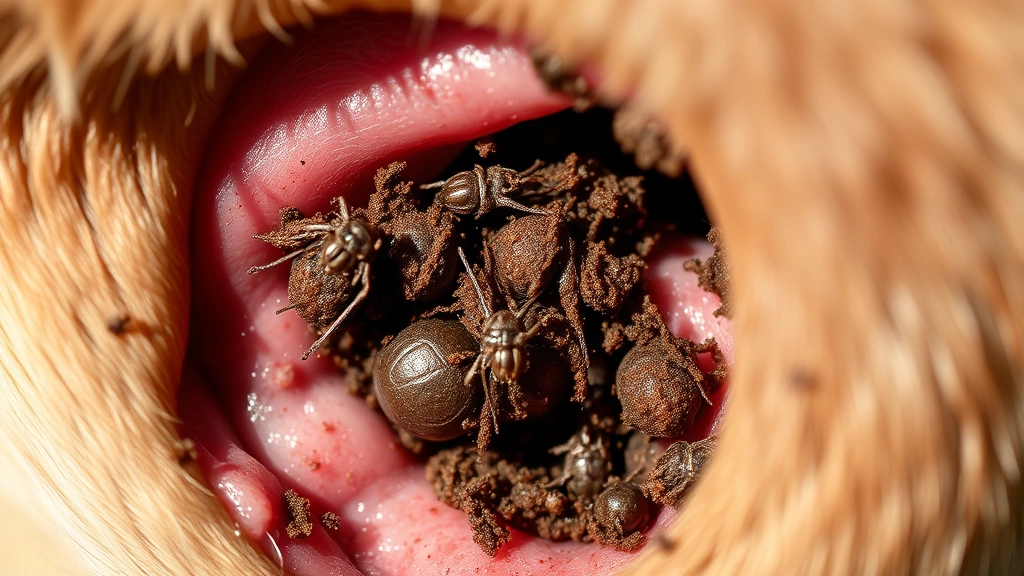
Ear mites are among the more visible mites, though you still won’t spot them clearly without a microscope. Under magnification, they appear as tiny, cream-colored creatures with eight legs. More importantly, they leave behind distinctive debris that looks like dark, crusty material in the ear canal—this debris is actually a combination of the mites, their waste, and dead skin cells.
Cheyletiella mites are slightly larger than other mite species and have a distinctive appearance with prominent hooks on their legs. Under magnification, they look like tiny crabs with their characteristic leg arrangement. Some people have actually reported seeing these mites move across their dog’s skin, which is why they earned the nickname “walking dandruff.”
How to Identify Mites on Your Dog
Since you can’t actually see most mites without professional equipment, your detective work needs to focus on the signs and symptoms they leave behind. These indicators are often more telling than the mites themselves.
Excessive scratching and itching is the most obvious red flag. If your dog is scratching more than usual, especially in specific areas like the ears, face, or legs, mites could be the culprit. Some dogs will scratch so intensely that they create open sores and scabs.
Skin irritation and redness often accompanies mite infestations. You might notice your dog’s skin looks inflamed, bumpy, or unusually red. In severe cases, the skin can become thickened and develop a crusty appearance.
Hair loss and bald patches are common in mange cases. When dogs scratch excessively due to mites, they can pull out their fur, leading to noticeable bald spots. Demodectic mange often starts on the face and front legs, while sarcoptic mange typically affects the ears, elbows, and hocks first.
Odor issues can develop when mite infestations lead to secondary bacterial or yeast infections. Your dog might develop a musty or unpleasant smell, especially if the skin becomes infected.
Behavioral changes shouldn’t be overlooked either. Dogs with mite infestations often become restless, anxious, or irritable due to constant discomfort. Some dogs may have difficulty sleeping because the itching keeps them awake.
The location of symptoms can help narrow down which type of mite might be involved. If the problem is concentrated in the ears, you’re likely dealing with how to know if your dog has ear mites. If it’s widespread across the body, demodectic or sarcoptic mange is more likely.

Ear Mites: A Special Case
Ear mites deserve special attention because they’re one of the most common mite infestations in dogs, and they present a somewhat unique situation when it comes to visibility. While the mites themselves are still microscopic, the evidence they leave behind is much more apparent.
When you look inside your dog’s ear, you might actually see dark brown or black crusty material. This is the telltale sign of an ear mite infestation. The debris looks like coffee grounds or dark wax buildup, and it’s actually a mixture of mites, their feces, and dead skin cells. This debris can sometimes be visible to the naked eye, making ear mites easier to identify than other types.
If you want to learn more about recognizing ear mites specifically, how to tell if your dog has ear mites provides detailed information about the specific symptoms and appearance. Additionally, understanding what ear mites look like in dogs’ ears can help you recognize the problem early.
Dogs with ear mites typically shake their heads frequently, scratch at their ears constantly, and may develop an ear infection secondary to the mite infestation. The ear canal becomes inflamed, and the dog’s ear may emit an unpleasant odor. In some cases, the constant scratching can lead to hematomas—blood-filled swellings on the ear flap.
According to the American Kennel Club’s guide on ear mites, these parasites are highly contagious between dogs and can spread rapidly in multi-dog households or shelters. Early identification and treatment are crucial for preventing spread.
The Microscopic View
Understanding what mites look like under a microscope is genuinely fascinating and can help you appreciate just how complex these tiny parasites are. When a veterinarian takes a skin scraping or ear swab and examines it under magnification, they’re looking for specific characteristics that identify which type of mite is present.
For Demodex mites, veterinarians perform deep skin scrapings because these mites live deep within hair follicles. The scraping is placed on a microscope slide with mineral oil, and the mites become visible at 10x magnification, though higher magnification reveals more detail. Their elongated bodies and front-positioned legs are distinctive markers.
Sarcoptic mites require slightly different collection methods since they burrow into the skin. A veterinarian might use a mineral oil application followed by gentle scraping, or they might perform a biopsy. Under the microscope, these mites’ rounded bodies and their distinctive leg arrangement help differentiate them from Demodex.
Ear mites are among the easiest to identify microscopically. A simple ear swab or cleaning provides enough material for identification. The mites’ characteristic appearance and the abundance of debris make diagnosis straightforward for trained professionals.
The ASPCA’s resources on pet health include information about various parasitic conditions and their identification, which can be helpful for understanding the broader context of mite infestations.
Getting a Professional Diagnosis
While understanding what mites look like is interesting, getting a professional diagnosis from your veterinarian is absolutely essential. Attempting to self-diagnose mite infestations can lead to missed diagnoses and ineffective treatment.
Your veterinarian has several tools at their disposal for diagnosing mite infestations. The most common method is the skin scraping, where your vet uses a dull blade to gently scrape the skin surface, collecting material that’s then examined under a microscope. For ear mites, a simple ear swab or otoscopic examination often suffices.
In some cases, your vet might recommend additional diagnostics like fungal cultures to rule out ringworm or bacterial cultures if secondary infections are suspected. They might also ask detailed questions about your dog’s symptoms, when they started, and whether other pets in the household are affected.
Once you have a diagnosis, your veterinarian can recommend appropriate treatment. If you’re ready to take action, learning about how to get rid of mites on dogs will help you understand your treatment options and what to expect during the recovery process.
According to the Merck Veterinary Manual, proper diagnosis is crucial because different mite types require different treatment approaches. Some mites respond to topical treatments, while others require systemic medications or multiple treatment sessions.
It’s also worth noting that if you have multiple pets, your vet will likely recommend treating all of them, even if only one is showing symptoms. This is especially important with contagious mite types like sarcoptic mites. Additionally, your home environment may need treatment to eliminate mites that have fallen off your dog.
If your dog is showing signs of skin problems and you’re unsure whether mites are involved, don’t delay seeking professional help. Skin conditions can escalate quickly, and secondary infections can develop if the underlying mite problem isn’t addressed. Your veterinarian can also rule out other conditions that might cause similar symptoms, such as allergies or other parasites.
Interestingly, some people wonder if why dogs scratch their beds is related to mites, and while bed scratching can have many causes, parasitic infestations are definitely worth investigating if it’s accompanied by other symptoms.
Frequently Asked Questions
Can I see dog mites with the naked eye?
Most dog mites are too small to see without magnification—typically requiring at least 10x magnification to become visible. However, the debris and symptoms they cause are often visible. Ear mites leave behind dark, crusty material that might be visible when you look in your dog’s ear, and Cheyletiella mites (walking dandruff) are occasionally spotted moving through fur, though this is rare without close inspection.
How do I know if my dog has mites versus fleas?
While both are parasites that cause itching, they look different and require different treatments. Fleas are larger and sometimes visible to the naked eye as small brown insects. Mites cause more intense itching and typically affect specific areas or the entire body depending on the type. A veterinary examination is the best way to determine which parasite your dog has.
Are dog mites contagious to humans?
Some dog mites, particularly sarcoptic mites, can temporarily affect humans who come into close contact with infested dogs. However, they cannot complete their life cycle on human skin. You might experience temporary itching or small bumps, but the mites will not establish a permanent infestation. Good hygiene practices and treating your dog promptly will prevent this.
What does demodectic mange look like on dogs?
Demodectic mange typically starts with hair loss and redness on the face, especially around the eyes and muzzle. The skin may become scaly or crusty, and secondary bacterial infections can cause pustules or oozing sores. In severe cases, the condition can spread to the entire body, causing widespread hair loss and skin thickening.
How long does it take to treat a mite infestation?
Treatment duration varies depending on the type of mite and the severity of the infestation. Ear mites might respond to treatment within a few weeks, while demodectic mange can take several months to resolve completely. Your veterinarian will provide a specific timeline and may need to perform follow-up examinations to confirm that the mites are eliminated.
Can I treat dog mites at home?
While there are over-the-counter products marketed for mite treatment, veterinary-prescribed treatments are generally more effective and reliable. Your veterinarian can recommend the best treatment option for your dog’s specific situation, taking into account factors like your dog’s age, health status, and the type of mite involved. Self-treating without a confirmed diagnosis can waste time and allow the infestation to worsen.
What should I do if I suspect my dog has mites?
Schedule an appointment with your veterinarian as soon as possible. Bring a list of symptoms you’ve noticed, including when they started and which body areas are affected. Your vet will perform the necessary examinations and tests to confirm whether mites are present and which type. From there, they’ll recommend an appropriate treatment plan and any environmental measures you need to take.





