

Can Dogs Eat Nuts? Vet-Approved Guide to Safe and Dangerous Nuts
As a dog owner, you’ve probably wondered whether it’s safe to share your snack stash with your furry friend. Nuts are a popular human snack packed with healthy fats and proteins, but the question remains: can dogs eat nuts? The answer isn’t a simple yes or no. While some nuts are perfectly safe for dogs, others can be toxic and potentially life-threatening. Understanding which nuts your dog can safely enjoy and which ones to avoid is crucial for keeping your pup healthy and happy.
The good news is that many nuts are non-toxic to dogs, but there are important nuances to consider. Portion size, preparation method, and specific nut varieties all play a role in determining whether nuts are an appropriate treat for your canine companion. This comprehensive guide will walk you through everything you need to know about feeding nuts to dogs, backed by veterinary expertise and nutritional science.
Safe Nuts for Dogs
Several nuts are considered safe for dogs when given in moderation. Peanuts are technically legumes rather than true nuts, and they’re generally safe for most dogs unless your pup has a specific peanut allergy. Peanut butter is a beloved treat for many dogs, though it’s important to choose varieties without xylitol, an artificial sweetener that’s toxic to canines. Cashews are another safe option, offering a crunchy texture that many dogs enjoy. These nuts contain beneficial minerals like copper and magnesium.
Almonds are non-toxic but should be given sparingly due to their high fat content and potential choking hazard, especially for smaller breeds. Walnuts (specifically English walnuts) in small amounts are generally safe, though black walnuts are toxic and must be avoided entirely. Brazil nuts are safe in very small quantities, though they’re quite fatty. Pistachios without shells are okay for dogs occasionally, but the shells pose a choking risk and can cause intestinal blockages.
When introducing any new nut to your dog’s diet, start with a tiny portion and monitor for any adverse reactions over the next 24-48 hours. Every dog’s digestive system is unique, and individual sensitivities vary.
Dangerous Nuts to Avoid at All Costs
Macadamia nuts are highly toxic to dogs and should never be given under any circumstances. These nuts contain an unknown compound that can cause weakness, vomiting, tremors, and hyperthermia in dogs. Even small quantities can trigger serious symptoms within 6-12 hours of ingestion. The severity of toxicity often depends on the dog’s weight and the amount consumed.
Black walnuts are distinctly different from English walnuts and contain a toxin called juglone that can cause severe gastrointestinal upset, neurological issues, and even cardiac problems in dogs. They’re commonly found in backyards across North America, so be vigilant if your yard contains black walnut trees.
Pistachios themselves aren’t toxic, but they’re often heavily salted and the shells can cause choking or intestinal obstruction. Additionally, pistachios can develop aflatoxins (a type of mold) when stored improperly, which is dangerous for dogs.
Hickory nuts can cause gastrointestinal upset in dogs, and pecans, while not always severely toxic, contain a toxin called juglone similar to black walnuts and should be avoided. Walnuts from walnut trees (particularly black walnuts) are a major concern for dog owners with these trees on their property.
Always check product labels if you’re giving your dog nut-based treats or butters. Many commercial products contain additives like xylitol, salt, or sugar that aren’t appropriate for canine consumption.

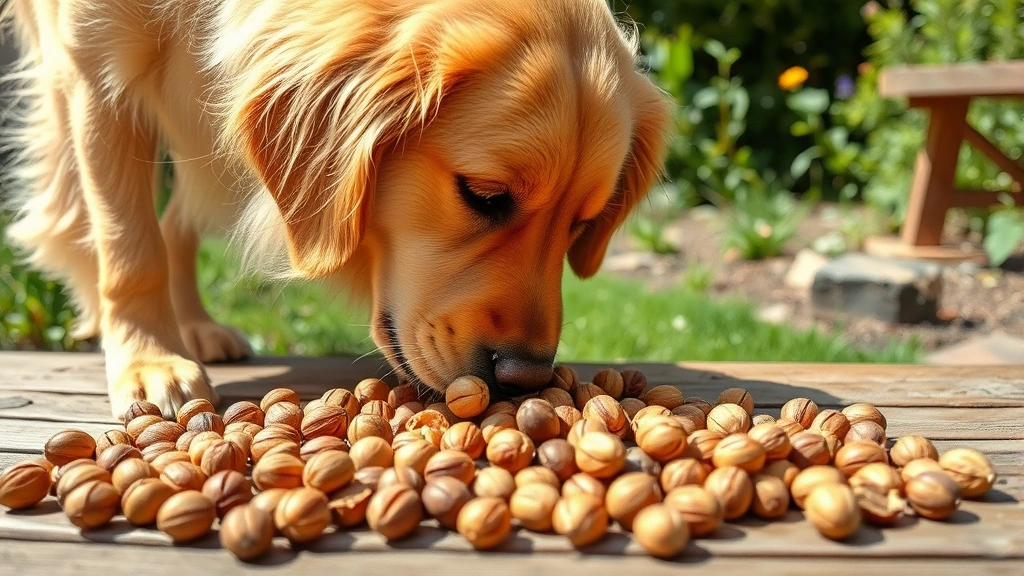
” alt=”Golden retriever sniffing at a pile of various nuts in shells on wooden surface”>
Portion Guidelines and Serving Tips
The general rule for treating your dog is that treats should comprise no more than 10% of their daily caloric intake, with the remaining 90% coming from their regular balanced diet. For nuts specifically, this means they should be an occasional treat rather than a dietary staple.
For a small dog (under 10 pounds), one small nut or a tiny dab of peanut butter is sufficient. Medium dogs (10-50 pounds) can handle 2-3 small nuts or a teaspoon of peanut butter. Large dogs (50+ pounds) might enjoy 4-6 small nuts or a tablespoon of peanut butter, though even this should be infrequent. Remember that nuts are calorie-dense, and excessive consumption can contribute to obesity and pancreatitis in dogs.
Always remove shells completely before offering nuts to your dog. Shells pose serious choking and blockage risks, particularly in smaller breeds or dogs who don’t chew thoroughly. Chop larger nuts into small pieces to minimize choking hazards.
Never give nuts as a primary treat or reward. Instead, incorporate them occasionally into a rotation of dog-safe snacks. Consider healthier alternatives like carrots, which offer nutritional benefits with fewer calories, or broccoli, another vegetable option for dogs. You might also explore cauliflower as a low-calorie treat alternative.
Nutritional Benefits of Nuts
Nuts contain several nutrients that can benefit dogs when given appropriately. They’re rich in healthy unsaturated fats, particularly omega-3 and omega-6 fatty acids, which support skin health, coat quality, and cognitive function. These fats are essential nutrients that dogs cannot produce independently and must obtain through diet.
Many nuts provide protein, essential amino acids, vitamins (particularly B vitamins and vitamin E), and minerals like magnesium, zinc, and selenium. Vitamin E acts as an antioxidant, helping protect cells from oxidative damage. The fiber content in some nuts can support digestive health, though too much fiber can cause gastrointestinal upset.
However, it’s important to note that dogs don’t require nuts to obtain these nutrients. A complete and balanced commercial dog food already provides all necessary vitamins, minerals, and fatty acids your dog needs. Nuts should be viewed as an occasional treat that may provide supplemental nutrients, not as a nutritional necessity.
” alt=”Veterinarian examining a small brown terrier dog with stethoscope in modern clinic setting”>
Preparation Methods Matter
How you prepare nuts significantly impacts their safety for your dog. Raw, unsalted nuts are the best option if you choose to offer them. Avoid roasted nuts, especially those coated in salt or seasonings, as excess sodium isn’t healthy for dogs and can lead to increased thirst, urination, and potential sodium ion poisoning in severe cases.
Never give your dog nuts with added sweeteners, particularly xylitol. This artificial sweetener is extremely toxic to dogs, causing rapid insulin release, severe hypoglycemia, liver damage, and potentially death. Even small amounts can be life-threatening. Always read peanut butter labels carefully—many commercial brands contain xylitol.
Honey-roasted nuts, candied nuts, or nuts coated in chocolate are absolutely off-limits. Chocolate is toxic to dogs and can cause serious health complications. Nuts in chocolate coatings pose a double threat to your canine companion.
If you want to offer your dog peanut butter, choose brands with just peanuts and salt, or better yet, unsalted natural peanut butter. Some high-quality brands make dog-specific peanut butter without added ingredients. You can also make homemade peanut butter by processing raw or roasted peanuts until they reach a butter consistency.
Signs of Nut Toxicity in Dogs
If your dog accidentally consumes a toxic nut, watch for specific warning signs. Macadamia nut toxicity symptoms include weakness (particularly in hind legs), vomiting, tremors, hyperthermia (elevated body temperature), depression, and abdominal pain. Symptoms typically appear within 6-12 hours of ingestion.
Black walnut toxicity can cause vomiting, diarrhea, abdominal pain, tremors, seizures, and neurological symptoms. In severe cases, it may affect the heart and kidneys.
Xylitol poisoning symptoms include vomiting, lethargy, loss of coordination, seizures, and collapse. This can occur within 10-60 minutes of ingestion and requires immediate veterinary attention.
General signs that your dog is having difficulty with nuts include excessive drooling, difficulty swallowing, choking, constipation, diarrhea, abdominal distension, or behavioral changes. If you suspect your dog has eaten a toxic nut or is showing any concerning symptoms, contact the ASPCA Animal Poison Control Center immediately or seek emergency veterinary care.
Healthy Nut Alternatives and Similar Treats
If you’re looking for nutritious treats similar to nuts, several dog-safe options provide comparable benefits. Carrots are good for dogs and offer crunchy texture with low calories and natural sweetness. Corn can be given occasionally in moderation, providing carbohydrates and fiber.
Seeds like pumpkin seeds are safe alternatives offering similar nutritional profiles to nuts. Coconut (unsweetened, in small amounts) provides healthy fats. Fish oil supplements specifically formulated for dogs deliver the omega-3 benefits without the choking risks associated with nuts.
Commercial dog treats formulated with limited ingredients provide controlled nutrition and portion sizes. Freeze-dried meat treats offer protein without the fat content of nuts. Dental chews satisfy the craving to chew while providing oral health benefits.
Consider rotating treats to prevent boredom while maintaining nutritional balance. Many veterinarians recommend using small pieces of regular dog kibble as treats—your dog gets rewarded without excess calories or potential health risks.
Frequently Asked Questions
Can dogs eat peanuts safely?
Yes, peanuts (technically legumes, not true nuts) are generally safe for dogs in small quantities, provided they’re unsalted and given without shells. However, some dogs may have peanut allergies, so introduce them gradually and monitor for reactions. Always choose peanut products without xylitol, which is toxic to dogs.
Is peanut butter safe for dogs?
Peanut butter can be safe for dogs if it contains only peanuts and salt, or preferably is unsalted. However, many commercial peanut butter brands contain xylitol, an artificial sweetener that’s extremely toxic to dogs. Always check the label before giving your dog peanut butter. Natural, unsalted varieties or dog-specific peanut butter are the safest choices.
What should I do if my dog eats macadamia nuts?
If your dog consumes macadamia nuts, contact your veterinarian or ASPCA Poison Control immediately. Even small quantities can be toxic. Provide the amount consumed and your dog’s weight. Watch for weakness, vomiting, tremors, and elevated temperature. Seek emergency veterinary care if symptoms develop.
Are almonds bad for dogs?
Almonds aren’t toxic to dogs, but they’re not ideal treats. They’re high in fat, which can cause pancreatitis or digestive upset in some dogs. They also pose a choking hazard, especially for smaller breeds. If you offer almonds, ensure they’re unsalted, shelled, and given in very small quantities as occasional treats.
Can dogs have walnuts?
English walnuts in very small quantities are generally non-toxic, though they’re fatty and not recommended. Black walnuts must be completely avoided—they contain juglone, a compound toxic to dogs that causes severe gastrointestinal and neurological symptoms. If you have black walnut trees in your yard, prevent your dog from accessing fallen nuts.
What nuts are toxic to dogs?
The most dangerous nuts for dogs are macadamia nuts and black walnuts. Pistachios, pecans, and hickory nuts should also be avoided due to potential toxins and choking risks. Additionally, any nuts with added ingredients like xylitol, chocolate, salt, or sugar are unsafe.
How many nuts can a dog safely eat?
There’s no specific safe number—it depends on your dog’s size and the nut type. As a general rule, treats should comprise only 10% of daily calories. For most dogs, this means 1-6 small nuts occasionally (not daily). Always prioritize whole, balanced meals over treats.
Are there nut butters safe for dogs?
Peanut butter and almond butter can be safe if they contain only the nut and salt (preferably unsalted). Avoid any nut butter containing xylitol. Sunflower seed butter is a great alternative for dogs with nut allergies. Always offer in tiny amounts as an occasional treat.
What are symptoms of nut poisoning in dogs?
Symptoms vary by nut type but may include vomiting, diarrhea, abdominal pain, weakness, tremors, loss of coordination, seizures, elevated body temperature, and behavioral changes. Xylitol poisoning causes rapid onset of symptoms (within an hour), while macadamia toxicity typically appears within 6-12 hours. Seek veterinary care immediately if you suspect poisoning.





