
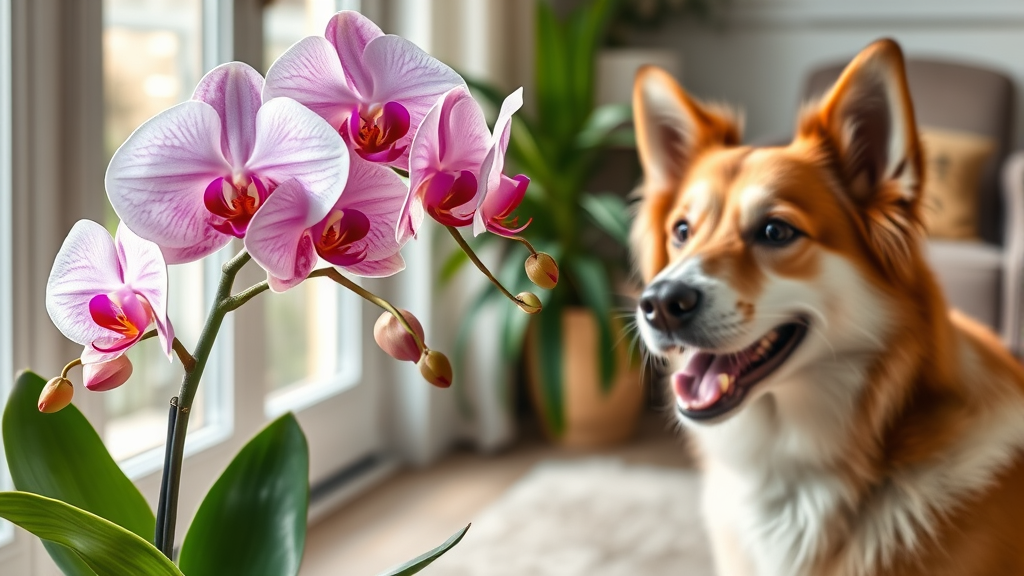
As pet parents, we want to fill our homes with beautiful plants while keeping our furry companions safe. Orchids, with their stunning blooms and elegant appearance, are among the most popular houseplants worldwide. But if you’re a dog owner wondering are orchids poisonous to dogs, you’ve come to the right place for definitive answers.
The relationship between dogs and houseplants can be complex, as many common plants pose serious health risks to our canine friends. Understanding which plants are safe and which ones to avoid is crucial for creating a pet-friendly environment that doesn’t compromise on beauty or your dog’s wellbeing.
Are Orchids Toxic to Dogs?
The good news for orchid lovers is that most orchids are not poisonous to dogs. According to the ASPCA’s comprehensive plant database, common orchid varieties like Phalaenopsis, Dendrobium, and Cattleya are listed as non-toxic to dogs, cats, and horses.
However, this doesn’t mean orchids are completely without risk. While the plants themselves aren’t poisonous, there are still several considerations to keep in mind when having orchids around dogs:
- Digestive upset: Even non-toxic plants can cause stomach irritation if consumed in large quantities
- Choking hazards: Small orchid parts could potentially pose choking risks
- Fertilizers and pesticides: Chemical treatments on orchids can be harmful
- Potting materials: Some growing media may contain harmful substances
The Pet Poison Helpline confirms that while orchids are generally safe, pet owners should still monitor their dogs around any houseplants and contact a veterinarian if significant plant material has been consumed.

Different Orchid Varieties and Safety
With over 25,000 orchid species worldwide, it’s important to understand that safety can vary slightly between varieties. Most commercially available orchids fall into safe categories, but let’s examine the most common types:
Safe Orchid Varieties
- Phalaenopsis (Moth Orchids): The most popular houseplant orchids, completely safe for dogs
- Dendrobium: Another common variety with no toxicity concerns
- Cattleya: Known for large, fragrant blooms and dog-safe
- Oncidium (Dancing Lady): Small, numerous flowers and non-toxic
- Paphiopedilum (Lady Slipper): Unique slipper-shaped blooms, safe for pets
Orchid-like Plants to Avoid
Some plants may be confused with orchids but are actually toxic. Unlike the safety of most orchids, plants such as lilies are highly toxic to dogs and should never be kept in homes with pets. Always verify the exact species of any plant before bringing it home.
The American Kennel Club maintains updated lists of both safe and dangerous plants, making it an excellent resource for pet owners looking to expand their plant collection safely.
Signs Your Dog Has Eaten Orchid
Even though orchids aren’t toxic, consuming any plant material can still cause mild digestive upset in dogs. Watch for these symptoms if you suspect your dog has eaten orchid parts:
Mild Symptoms (Generally Not Concerning)
- Slight stomach upset or nausea
- Minor drooling
- Temporary loss of appetite
- Mild diarrhea that resolves within 24 hours
Symptoms Requiring Veterinary Attention
- Persistent vomiting or diarrhea
- Signs of dehydration
- Lethargy lasting more than a day
- Difficulty swallowing or breathing
- Excessive drooling or pawing at the mouth
Unlike more dangerous plants such as those discussed in articles about hostas being poisonous to dogs, orchid ingestion rarely requires emergency intervention. However, it’s always better to err on the side of caution and consult with your veterinarian.
The American Veterinary Medical Association recommends keeping a pet emergency kit handy and knowing your local emergency veterinary clinic’s contact information.
Pet-Safe Plant Alternatives
If you’re concerned about any potential risks or want to explore other pet-safe options, there are numerous beautiful plants that are completely safe for dogs:
Flowering Alternatives
- African Violets: Colorful, compact flowering plants
- Gerbera Daisies: Bright, cheerful blooms
- Roses: Classic beauty (watch for thorns)
- Sunflowers: Large, dramatic flowers
Foliage Plants
- Boston Ferns: Lush, green fronds
- Prayer Plants: Attractive leaf patterns
- Ponytail Palms: Unique, sculptural appearance
- Bamboo Palm: Elegant, tropical look
When researching plant safety, remember that some common houseplants like spider plants are also safe for dogs, making them excellent choices for pet owners who want greenery without worry.

Creating a Dog-Friendly Plant Environment
Even with non-toxic plants like orchids, creating a safe environment requires thoughtful planning and placement. Here are strategies to enjoy your plants while keeping your dog safe:
Strategic Placement
- High shelves: Place orchids on tall plant stands or shelves
- Hanging planters: Suspend plants from ceilings or wall mounts
- Dedicated plant rooms: Create spaces your dog cannot access
- Barrier protection: Use decorative fencing around floor plants
Plant Care Considerations
- Use organic, pet-safe fertilizers
- Avoid pesticides and fungicides
- Choose safe potting materials
- Clean up fallen leaves and flowers promptly
- Secure heavy pots to prevent tipping
The Humane Society provides additional guidance on creating pet-safe homes while maintaining beautiful plant displays.
What to Do If Your Dog Eats Plants
Despite our best efforts, dogs sometimes manage to sample our houseplants. Having a clear action plan can help you respond appropriately:
Immediate Steps
- Stay calm: Panicking won’t help your dog
- Identify the plant: Take photos if possible
- Remove remaining plant material: Gently clear your dog’s mouth
- Assess the amount consumed: Note how much plant material is missing
- Monitor for symptoms: Watch your dog closely for changes
When to Contact Your Veterinarian
- Large quantities of any plant consumed
- Any symptoms of distress
- If you’re unsure about plant toxicity
- Previous history of plant poisoning
- Puppies or senior dogs (more vulnerable populations)
Unlike situations involving clearly toxic foods where you might wonder can dogs eat onions (they definitely cannot), orchid ingestion typically doesn’t require emergency treatment. However, professional guidance is always valuable.
Keep the number for the ASPCA Animal Poison Control Center (1-888-426-4435) easily accessible for any plant-related emergencies.
Prevention and Training Strategies
The best approach to plant safety is prevention through training and environmental management. Here are effective strategies to keep your dog away from your orchid collection:
Training Techniques
- “Leave it” command: Essential for plant safety
- Positive reinforcement: Reward ignoring plants
- Redirection: Offer appropriate chew toys
- Consistency: All family members must enforce rules
Environmental Management
- Provide adequate mental stimulation
- Ensure sufficient exercise
- Create designated play areas
- Use bitter apple spray as deterrent
- Install motion-activated deterrents
Just as we need to be cautious about foods like those discussed in articles about whether tomatoes are bad for dogs, plant safety requires ongoing vigilance and training.
The American Kennel Club’s training resources offer comprehensive guides for teaching dogs appropriate household behavior.
Puppy-Specific Considerations
Puppies require extra attention when it comes to plant safety:
- Higher curiosity and tendency to chew
- Less developed impulse control
- Smaller size means greater impact from ingestion
- Still learning household rules
During the teething phase, provide plenty of appropriate chew toys and supervise interactions with plants more closely. Unlike concerns about outdoor plants like hibiscus being poisonous to dogs, indoor orchid management is typically easier to control.
Frequently Asked Questions
Are all types of orchids safe for dogs?
Most commercially available orchids, including Phalaenopsis, Dendrobium, and Cattleya varieties, are non-toxic to dogs according to the ASPCA. However, it’s always best to verify the specific species and avoid any orchid that has been treated with pesticides or fertilizers that might be harmful to pets.
What should I do if my dog eats orchid bark or potting material?
Orchid potting materials like bark chips, moss, or perlite can cause digestive upset or blockages if consumed in large quantities. Monitor your dog for symptoms like vomiting, loss of appetite, or difficulty defecating, and contact your veterinarian if you’re concerned about the amount consumed or if symptoms develop.
Can orchid fertilizers harm my dog?
Yes, many commercial orchid fertilizers contain chemicals that can be harmful to dogs if ingested. Always use pet-safe, organic fertilizers when possible, and store all plant care products securely away from pets. Water plants when your dog is not around and allow soil to dry before allowing access to the area.
Are orchid flowers more dangerous than leaves for dogs?
Neither orchid flowers nor leaves are toxic to dogs, but flowers might be more appealing due to their fragrance and texture. However, fallen flowers should still be cleaned up promptly to prevent your dog from eating them, as large quantities of any plant material can cause mild digestive upset.
How can I tell if my orchid has been treated with harmful chemicals?
Ask the retailer about any treatments applied to the orchid, including pesticides, fungicides, or leaf shine products. When in doubt, rinse the plant thoroughly with water and allow it to dry before placing it in areas accessible to your dog. Consider repotting with fresh, organic potting material for added safety.
Is it safe to have orchids in the same room where my dog sleeps?
Yes, it’s generally safe to have orchids in the same room as your sleeping dog since they’re non-toxic. However, ensure the plants are positioned where your dog cannot reach them, especially if your pet has a tendency to chew or investigate objects during the night. Elevated placement is always the safest option.
What are the signs that my dog has developed a plant-eating habit I should be concerned about?
Concerning signs include repeatedly seeking out plants to chew, showing obsessive interest in plant material, or developing digestive issues after plant consumption. This behavior, known as pica, can indicate nutritional deficiencies, boredom, or anxiety. Consult with your veterinarian and a certified dog trainer to address the underlying causes and modify this behavior safely.





