Can Pitbulls Be Service Dogs? Expert Insights
The question of whether pitbulls can serve as service dogs is more nuanced than a simple yes or no. While pitbulls possess many admirable qualities—intelligence, loyalty, and physical capability—they face significant legal, practical, and social barriers that make them uncommon choices for professional service work. This comprehensive guide explores the facts behind pitbull service dogs, addressing misconceptions and examining what makes a dog suitable for this demanding role.
Service dogs undergo rigorous training to perform specific tasks for individuals with disabilities, whether physical, psychiatric, or neurological. The breed of the dog matters less than individual temperament, trainability, and physical characteristics. However, breed restrictions, liability concerns, and housing limitations create real obstacles for pitbull service dog handlers, even when the dog is perfectly suited to the work.
What Defines a Service Dog?
According to the Americans with Disabilities Act (ADA), a service dog is “a dog that has been individually trained to perform work or perform tasks for a person with a disability.” The key word here is individually trained. These tasks might include guiding individuals who are blind, alerting to seizures, detecting blood sugar changes in diabetics, or providing psychiatric support during anxiety episodes.
Service dogs are not pets, emotional support animals, or therapy dogs—though these distinctions are often confused. A true service dog must be task-trained and have public access rights. The American Kennel Club recognizes various breeds as capable of service work, though their list emphasizes traditional choices like Labrador Retrievers, Golden Retrievers, and German Shepherds.
The ADA does not specify breed requirements for service dogs. In theory, any dog that can be trained to perform specific tasks and behave appropriately in public could qualify. However, practical considerations—size, temperament, public perception, and legal restrictions—create an informal barrier against certain breeds.
Pitbull Characteristics and Temperament
“Pitbull” is not a single breed but rather a category encompassing American Pit Bull Terriers, American Staffordshire Terriers, Staffordshire Bull Terriers, and mixed breeds sharing similar physical traits. These dogs were originally bred for strength and determination, but modern pitbulls are equally capable of gentleness, affection, and focused training as any other breed.
Pitbulls possess several qualities that would theoretically make them excellent service dogs:
- Intelligence: Pitbulls are highly intelligent and capable of learning complex tasks quickly
- Physical capability: Their muscular build and strength make them suitable for mobility assistance and deep pressure therapy
- Loyalty: Pitbulls form strong bonds with their handlers, essential for service work
- Trainability: When properly socialized and trained, they respond well to commands and structure
- Motivation: Their eagerness to please makes them responsive to positive reinforcement training
Research from the ASPCA indicates that breed-based behavior predictions are far less reliable than individual temperament assessment. A well-socialized pitbull may be more suitable for service work than a poorly-socialized golden retriever.

Legal and Housing Barriers
The primary obstacle preventing pitbulls from becoming common service dogs is not capability but legality. Approximately 1,000 U.S. cities maintain breed-specific legislation (BSL) that either bans pitbulls outright or severely restricts ownership. Some jurisdictions specifically exclude pitbulls from service dog exemptions, even when the dog meets all ADA requirements.
Housing discrimination compounds this problem. Many apartment complexes, housing authorities, and insurance companies maintain pitbull restrictions regardless of the dog’s training or purpose. A handler with a pitbull service dog may find themselves unable to secure housing in their area, despite the dog’s legitimate service status.
These legal barriers exist due to historical perception rather than scientific evidence. Media coverage disproportionately highlights incidents involving pitbulls, creating public fear that influences policy. The Journal of Veterinary Behavior has published multiple studies indicating that breed-specific legislation is ineffective at reducing dog bite incidents.
Insurance liability is another significant factor. Service dog organizations and handlers face higher insurance premiums for pitbull service dogs, and some insurance companies refuse coverage altogether. This financial barrier makes pitbull service dog training economically unfeasible for many organizations.
Training Requirements for Service Work
Regardless of breed, service dogs must meet rigorous training standards. The training process typically takes 18-24 months and costs $15,000-$30,000. A pitbull service dog candidate would need to demonstrate:
- Temperament stability: Consistent, predictable behavior in all situations
- Task proficiency: Ability to perform specific, trained tasks reliably
- Public manners: Appropriate behavior around strangers, other dogs, and distractions
- Handler focus: Maintaining attention on handler despite environmental stimuli
- Impulse control: Ability to remain calm and focused during extended periods
A pitbull can absolutely meet these standards. The difference lies in public perception and systemic barriers rather than capability. A well-trained pitbull service dog may perform identically to a golden retriever in terms of task execution and public behavior, yet face discrimination and access challenges.
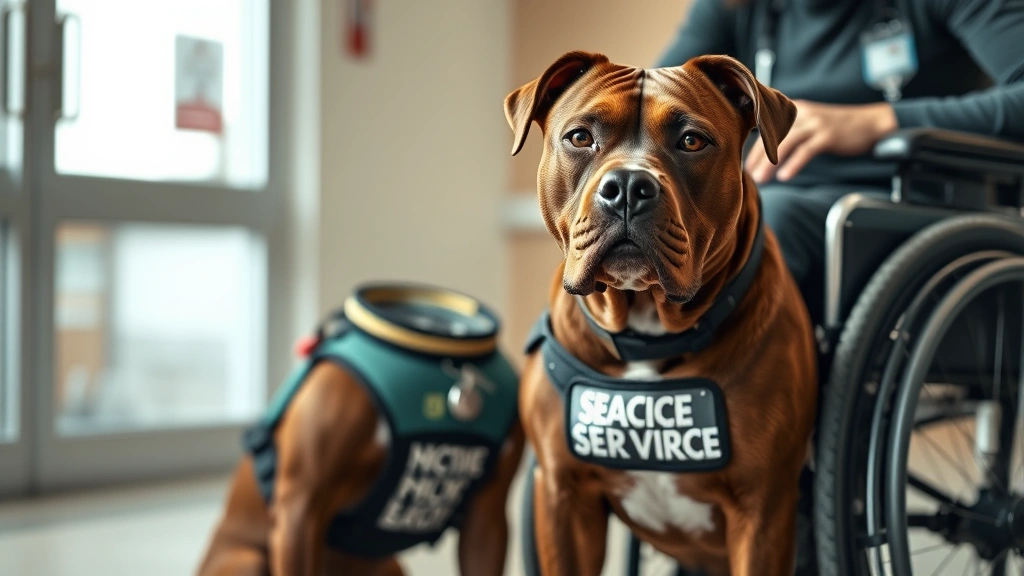
Organizations like Service Dogs Inc. have successfully trained pitbulls for specific service roles, particularly for individuals with PTSD and mobility needs. These dogs demonstrate that breed is not a determining factor in service dog success when proper training and socialization are provided.
Practical Challenges in Public Access
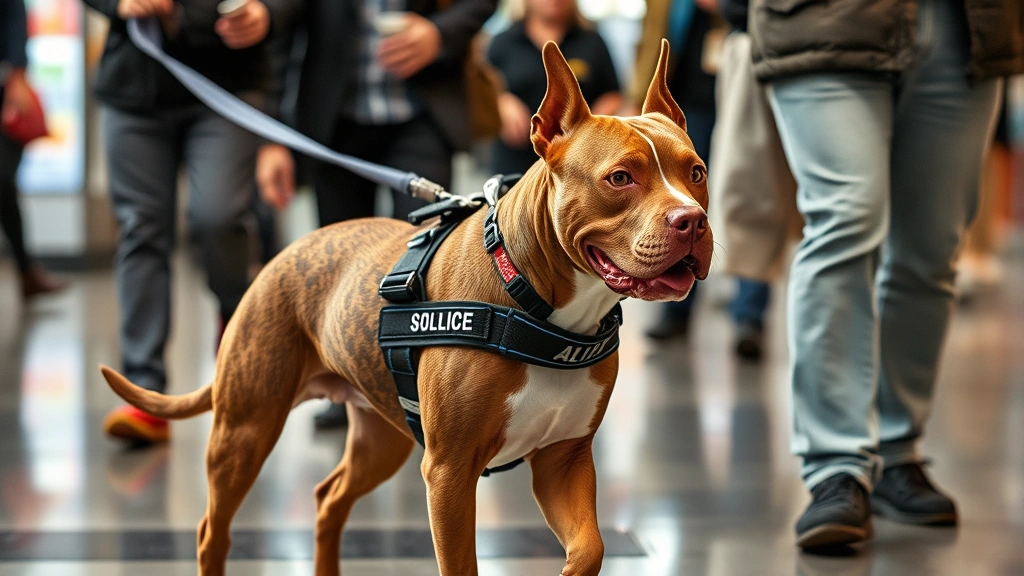
Beyond legal restrictions, pitbull service dog handlers face practical challenges in public spaces. Business owners, despite ADA requirements for public access, may refuse service to handlers with pitbull service dogs based on fear or policy. While this violates ADA regulations, enforcement is difficult and expensive.
Social stigma creates additional stress for handlers. People may assume the dog is aggressive, refuse to sit near the handler, or make negative comments. For individuals with anxiety disorders or PTSD—conditions many service dogs address—this social pressure can be counterproductive to the therapeutic benefit the dog provides.
Other dog owners may become defensive or anxious around pitbull service dogs, even when the service dog is perfectly behaved. This can create unsafe situations during tasks like public access training or routine outings.
Public perception is reinforced by media representation. Studies show that incidents involving pitbulls receive disproportionate media coverage compared to incidents involving other breeds, creating an inaccurate perception of relative danger.
Alternatives and Solutions
For individuals who want a pitbull as a service dog, several approaches exist:
- Owner-trained service dogs: The ADA permits handler-trained service dogs, though this requires significant time and knowledge investment. Many resources and trainers specialize in this approach
- Relocating to supportive jurisdictions: Some areas have eliminated breed-specific legislation and are more accepting of pitbull service dogs
- Emotional support animals: While not service dogs, ESAs have housing protections under the Fair Housing Act, providing an alternative in breed-restricted areas
- Advocacy: Supporting organizations working to eliminate breed-specific legislation creates long-term change
- Documentation: Maintaining comprehensive training records and certification helps establish legitimacy
When considering any dog for service work, remember that proper nutrition is essential. Consulting with a veterinarian about appropriate diet ensures your service dog maintains optimal health. You might explore resources about can dogs eat broccoli, can dogs eat corn, and can dogs eat cheese as part of comprehensive service dog care planning.
Additionally, understanding food safety is critical—learning why can’t dogs have chocolate and other toxic foods helps prevent medical emergencies that could interfere with service dog duties.
FAQ
Can a pitbull legally be a service dog?
Yes, under the ADA, any dog capable of being trained to perform specific tasks can be a service dog, regardless of breed. However, local breed-specific legislation may prohibit pitbulls in some jurisdictions, creating legal complications even for legitimate service dogs.
What’s the difference between a pitbull service dog and a pitbull emotional support animal?
A service dog is individually trained to perform specific tasks for a person with a disability and has public access rights. An emotional support animal provides comfort through companionship but is not task-trained and typically does not have public access rights, though they have housing protections.
How much does it cost to train a pitbull as a service dog?
Professional service dog training typically costs $15,000-$30,000 regardless of breed. Owner-training costs less but requires significant time investment and training knowledge.
Are pitbulls good at specific types of service work?
Pitbulls excel at mobility assistance, deep pressure therapy for PTSD, and psychiatric alert tasks due to their strength and trainability. Their physical capabilities make them particularly suitable for handlers requiring mobility support.
What should I do if I’m denied public access with my pitbull service dog?
Document the incident with the business name, date, and details. Report violations to the Equal Employment Opportunity Commission (EEOC) or your state’s disability rights organization. Maintain comprehensive service dog documentation to establish legitimacy.
Can I train my own pitbull as a service dog?
Yes, the ADA permits owner-trained service dogs. However, this requires significant knowledge, time (typically 18-24 months), and access to quality training resources. Many trainers specialize in helping handlers train their own dogs.
Why are pitbulls rarely seen as service dogs?
Breed-specific legislation, housing restrictions, insurance liability concerns, and public stigma create systemic barriers, not lack of capability. Many organizations avoid training pitbulls for service work due to these external factors rather than the dog’s ability to perform.