
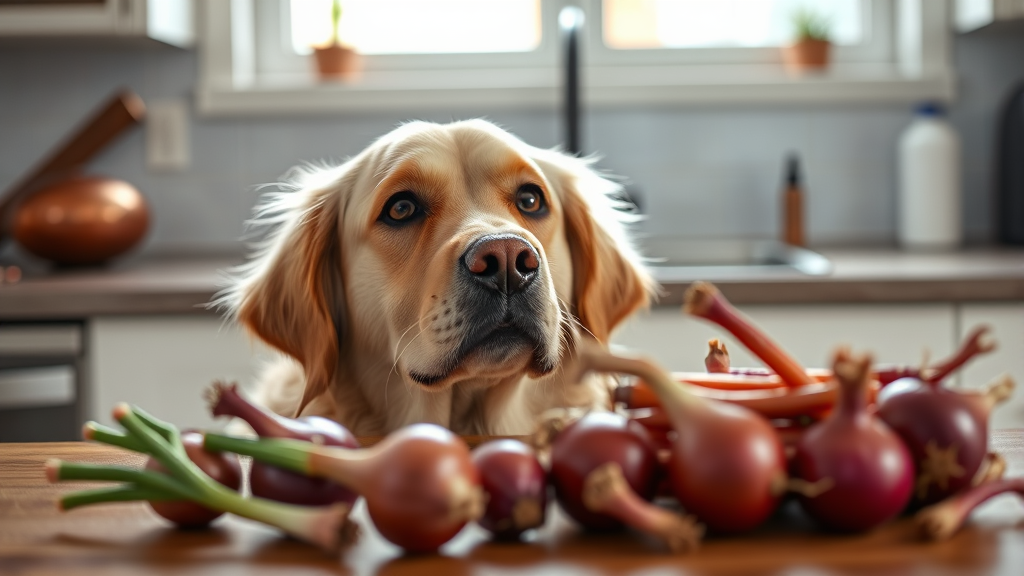
As a responsible dog owner, you’ve probably found yourself wondering about the safety of various human foods for your furry companion. One question that frequently arises is: can dogs eat onions? The answer is a resounding no. Onions, along with other members of the allium family, are among the most dangerous foods you can give to your dog.
Understanding why onions are toxic to dogs is crucial for every pet owner. Unlike humans who can enjoy onions in various dishes without harm, dogs lack the necessary enzymes to properly process the compounds found in onions. This fundamental difference in metabolism makes what seems like a harmless vegetable into a potentially life-threatening hazard for our canine friends.
Why Onions Are Toxic to Dogs
The toxicity of onions in dogs stems from compounds called organosulfides, particularly n-propyldisulfide and sodium n-propylthiosulfate. These sulfur-containing compounds are what give onions their characteristic smell and flavor, but they wreak havoc on a dog’s red blood cells. When dogs consume onions, these compounds cause oxidative damage to their red blood cells, leading to a condition called hemolytic anemia.
Dogs are particularly susceptible to this type of poisoning because they have a higher concentration of sulfur-containing amino acids in their red blood cell membranes compared to other animals. Additionally, dogs process these toxic compounds much more slowly than humans, allowing the toxins to accumulate and cause more severe damage over time.
The ASPCA Animal Poison Control Center lists onions as toxic to dogs, cats, and horses. The toxicity is dose-dependent, meaning that larger amounts cause more severe symptoms, but even small quantities consumed regularly can lead to chronic poisoning.
What makes onion toxicity particularly dangerous is that it’s cumulative. This means that small amounts of onion consumed over several days can be just as harmful as a large amount consumed all at once. The toxic threshold is generally considered to be around 0.5% of a dog’s body weight, which translates to approximately 5 grams of onion per kilogram of body weight.

Symptoms of Onion Poisoning
Recognizing the symptoms of onion poisoning is crucial for early intervention and treatment. The onset of symptoms can vary depending on the amount consumed and the size of your dog, but they typically appear within 1-3 days after ingestion. The primary concern is the development of hemolytic anemia, which occurs when red blood cells are destroyed faster than they can be replaced.
Early symptoms of onion poisoning include:
- Lethargy and weakness
- Loss of appetite
- Vomiting and diarrhea
- Abdominal pain
- Excessive drooling
- Difficulty breathing
As the condition progresses and anemia develops, you may notice more severe symptoms:
- Pale or yellow gums and tongue
- Rapid heart rate
- Dark-colored urine (red or brown)
- Collapse or fainting
- Exercise intolerance
- Cold extremities
The pale gums are particularly telling, as they indicate a significant reduction in red blood cells. Healthy dog gums should be pink and moist. If you notice any combination of these symptoms, especially after known or suspected onion consumption, seek veterinary care immediately.
Types of Onions and Alliums to Avoid
All members of the allium family are toxic to dogs, not just traditional yellow onions. This comprehensive list includes various forms and preparations that pet owners should be aware of:
Fresh Alliums:
- Yellow, white, and red onions
- Green onions (scallions)
- Shallots
- Leeks
- Chives
- Garlic (even more toxic than onions)
Processed Forms:
- Onion powder
- Garlic powder
- Dried onions
- Onion salt
- Soup mixes containing onions
- Seasoning blends
It’s important to note that cooking does not eliminate the toxicity of onions. Whether raw, cooked, dehydrated, or powdered, onions remain dangerous for dogs. In fact, concentrated forms like onion powder can be even more potent because the toxic compounds are more concentrated per unit weight.
Many commercial human foods contain hidden onions or garlic, including baby food, broths, gravies, and processed meats. Always check ingredient labels carefully before sharing any human food with your dog. Unlike safe vegetables such as broccoli or corn, onions should never be considered as a treat option.
What to Do If Your Dog Eats Onions
If you discover that your dog has consumed onions, time is of the essence. The faster you act, the better the chances of preventing serious complications. Here’s a step-by-step guide on what to do:
Immediate Steps:
- Remain calm and assess the situation
- Determine how much onion was consumed and when
- Remove any remaining onions from your dog’s reach
- Contact your veterinarian or emergency animal hospital immediately
- Do not induce vomiting unless specifically instructed by a veterinary professional
When calling your veterinarian, be prepared to provide specific information:
- Your dog’s weight and breed
- The type and amount of onion consumed
- The time of ingestion
- Any symptoms you’ve observed
- Your dog’s current health status and any medications
The Pet Poison Helpline is available 24/7 and can provide immediate guidance if you cannot reach your regular veterinarian. They may recommend inducing vomiting if the ingestion was recent (within 2 hours) and the dog is conscious and alert.
Never attempt home remedies or wait to see if symptoms develop. Onion toxicity can be delayed, and by the time symptoms appear, significant damage may have already occurred. Professional veterinary intervention is always the safest course of action.
Prevention and Safe Food Alternatives
Prevention is always better than treatment when it comes to onion toxicity. Creating a safe environment for your dog requires vigilance and education of all family members about the dangers of onions and related foods.
Kitchen Safety Measures:
- Store onions in closed cabinets or pantries
- Clean up onion scraps immediately during cooking
- Secure garbage cans with tight-fitting lids
- Educate children about foods that are dangerous for dogs
- Be cautious when guests are present, as they may unknowingly offer harmful foods
Instead of onions, there are many safe vegetables and fruits that dogs can enjoy as healthy treats. Consider offering your dog cucumbers for a refreshing, low-calorie snack, or blackberries for a antioxidant-rich treat. Cantaloupe is another excellent option that provides vitamins and hydration.
When preparing meals that contain onions, consider making a separate, dog-safe portion before adding any seasonings or onions. This allows your dog to share in mealtime without the risks associated with toxic ingredients.
Training your dog to have a reliable “leave it” command is invaluable for preventing accidental ingestion of dangerous foods. This command can be a lifesaver in situations where your dog encounters dropped onions or gets into food they shouldn’t have.
Treatment and Recovery Process
Treatment for onion poisoning depends on several factors, including the amount consumed, the time elapsed since ingestion, and the severity of symptoms. Veterinary professionals have several treatment options available, and early intervention significantly improves the prognosis.
Initial Treatment Options:
- Induced vomiting (if ingestion was recent)
- Activated charcoal to bind remaining toxins
- IV fluids to support kidney function and hydration
- Monitoring of vital signs and blood work
For dogs showing signs of anemia, more intensive treatment may be necessary:
- Oxygen therapy for breathing difficulties
- Blood transfusions in severe cases
- Medications to support red blood cell production
- Hospitalization for close monitoring
According to the American Veterinary Medical Association, the recovery time varies depending on the severity of the poisoning. Mild cases may resolve within a few days with supportive care, while severe cases requiring blood transfusions may take weeks for full recovery.
During recovery, your dog will need regular blood work to monitor red blood cell counts and organ function. Follow-up appointments are crucial to ensure that your dog is recovering properly and that no long-term damage has occurred.
The prognosis for onion poisoning is generally good when treatment begins early and the amount consumed was relatively small. However, dogs who develop severe anemia or who don’t receive prompt treatment may face more serious complications or longer recovery times.
Frequently Asked Questions
How much onion is toxic to dogs?
The toxic dose of onion for dogs is approximately 0.5% of their body weight, which equals about 5 grams of onion per kilogram of body weight. For a 20-pound dog, this would be roughly 45 grams or about 1.5 ounces of onion. However, even smaller amounts can cause problems with repeated exposure, and some dogs may be more sensitive than others.
Are cooked onions safer than raw onions for dogs?
No, cooking does not reduce the toxicity of onions for dogs. The toxic compounds (organosulfides) remain active regardless of how the onions are prepared. Raw, cooked, dehydrated, or powdered onions are all equally dangerous for dogs. In fact, onion powder can be more concentrated and potentially more harmful.
What should I do if my dog ate a small amount of onion accidentally?
Even if your dog consumed only a small amount of onion, you should contact your veterinarian immediately. Don’t wait for symptoms to appear, as onion toxicity can be delayed and cumulative. Your vet may recommend monitoring at home or bringing your dog in for evaluation depending on the amount consumed and your dog’s size.
Can dogs eat foods that have been cooked with onions?
No, dogs should not eat any food that has been prepared with onions, even if the onion pieces have been removed. The toxic compounds leach into the food during cooking, making the entire dish potentially harmful. This includes soups, stews, gravies, and any seasoned dishes that contained onions during preparation.
How long does it take for onion poisoning symptoms to appear in dogs?
Symptoms of onion poisoning typically appear within 1-3 days after ingestion, but they can sometimes take up to a week to manifest. The delay occurs because it takes time for the red blood cells to be damaged and destroyed. This is why it’s crucial not to wait for symptoms before seeking veterinary care.
Are some dog breeds more susceptible to onion toxicity?
While all dogs are susceptible to onion toxicity, certain breeds may be at higher risk. Japanese breeds like Akitas and Shiba Inus have been noted to have increased sensitivity to onion toxicity. Additionally, dogs with pre-existing health conditions or those taking certain medications may be more vulnerable to the effects of onion poisoning.
What are safe alternatives to onions for flavoring my dog’s food?
There are many safe herbs and vegetables you can use to add flavor to your dog’s food. Consider dog-safe options like parsley, basil, carrots, sweet potatoes, or small amounts of cheese. Always introduce new foods gradually and in small amounts. Consult with your veterinarian about the best dietary additions for your specific dog’s needs and health status.





