
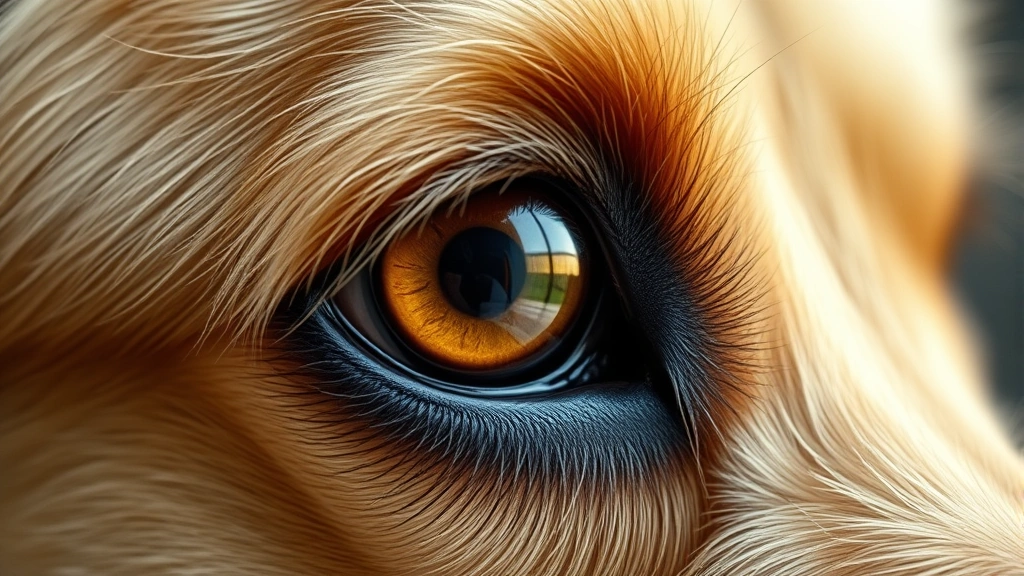
Can Dogs See in the Dark? A Dog’s Night Vision Guide
Ever wonder why your pup seems to navigate your dark bedroom like a furry ninja while you’re stumbling around looking for the light switch? There’s actually some fascinating science behind those glowing eyes and their seemingly supernatural ability to see in low-light conditions. While dogs aren’t exactly equipped with built-in night-vision goggles, their eyes are remarkably adapted for darkness in ways that put human vision to shame.
The truth is, dogs possess a collection of anatomical features that make them exceptional night-vision experts. From the structure of their eyes to the density of light-sensitive cells, our canine companions have evolved to thrive in conditions where we’d be completely lost. Understanding how your dog’s eyes work in the dark isn’t just scientifically interesting—it can help you create a safer environment for your pup and deepen your appreciation for their unique abilities.
Let’s dive into the remarkable world of canine night vision and discover what makes dogs such impressive creatures of the darkness.
The Anatomy of a Dog’s Eye
To understand how dogs see in the dark, we first need to examine the structure of their eyes. A dog’s eye is surprisingly similar to a human eye in many ways, but with some crucial differences that give them their night-vision superpowers. The basic components include the cornea, lens, retina, and optic nerve—all working together to create a sophisticated visual system.
The key to understanding canine night vision lies in the retina, which is packed with special light-sensitive cells. Dogs have a higher concentration of these cells compared to humans, and they’re specifically optimized for detecting movement and light rather than color detail. This is why dogs can see at night so much better than we can. The lens in a dog’s eye is also larger and more spherical than a human’s, allowing more light to enter the eye—similar to how a wide-open camera aperture captures more light.
Another fascinating aspect of dog eye anatomy is their pupils. Dogs can dilate their pupils much wider than humans, which means more light can reach the retina. When you’re wondering if dogs can see orange or other colors, remember that their color perception is just one piece of a much larger visual puzzle. Their eyes are fundamentally built for low-light conditions and movement detection.
How Tapetum Lucidum Works
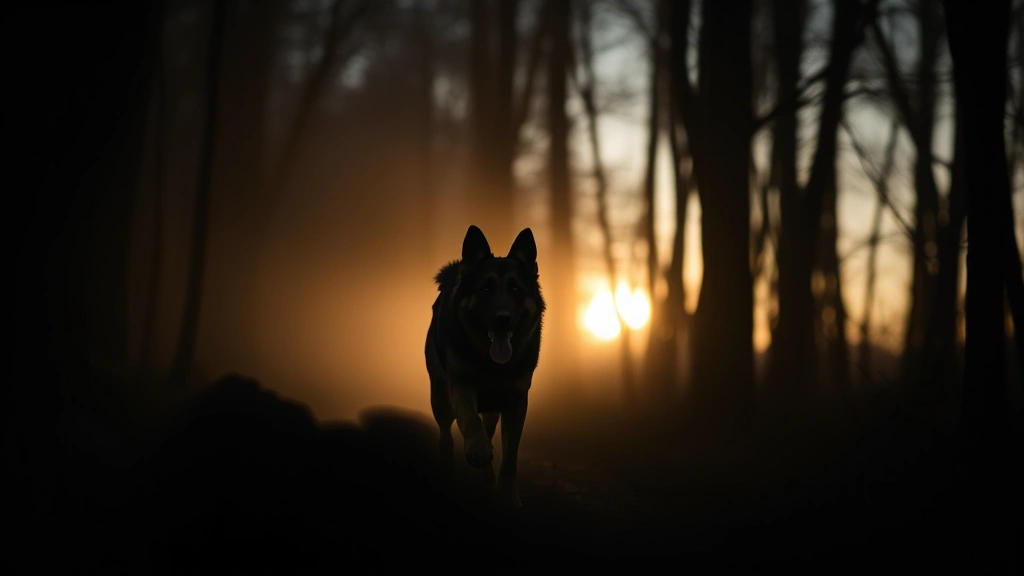
The real secret behind your dog’s night-vision abilities is an anatomical feature called the tapetum lucidum. This is a reflective layer of tissue located behind the retina, and it’s the reason your dog’s eyes seem to glow eerily in the dark when you shine a light at them. Think of it as a biological mirror that bounces light back through the retina, giving the light-sensitive cells a second chance to capture photons.
This reflective layer is incredibly effective. When light enters a dog’s eye, it first passes through the retina where cells capture the light information. Then, instead of that light being absorbed and wasted, the tapetum lucidum reflects it back through the retina again. This essentially doubles the amount of light information the eye can process, which is why dogs need only about one-sixth of the light that humans need to see clearly.
The tapetum lucidum is why your pup’s eyes appear to glow bright green, yellow, or red when you photograph them with flash or shine a light directly at them. This same feature is found in many other animals that hunt or navigate in low-light conditions, including cats, deer, and nocturnal predators. It’s one of nature’s most elegant solutions to the challenge of seeing in darkness, and it’s a major reason why dogs can see pink and other colors better in dim light than humans.
Rod and Cone Cells Explained
Understanding the difference between rod and cone cells is essential to grasping how dogs see in the dark. The retina contains two types of light-sensitive cells: rods and cones. Rods are highly sensitive to light and motion but don’t detect color well. Cones are less sensitive to light but provide color vision and fine detail. Dogs have significantly more rods than cones compared to humans, which is a major factor in their superior night vision.
According to research from the American Kennel Club, dogs have approximately 250 million scent receptors and their eyes are equally impressive in the low-light department. The abundance of rods in a dog’s eye means they’re exquisitely sensitive to movement and light changes, even in near-total darkness. This is an evolutionary adaptation that served their wolf ancestors well when hunting at dawn, dusk, and nighttime.
The trade-off is that dogs don’t see colors as vibrantly as humans do. While humans have three types of color-detecting cones, dogs have only two. This means their color perception is similar to red-green colorblindness in humans. However, this isn’t a disadvantage in low-light situations—it’s actually a benefit, because the rod cells that dominate in dim lighting are far more important for night vision than color perception.
Comparing Dog Vision to Human Vision
When we compare canine and human vision, dogs come out as clear winners in the darkness department, but humans excel in other areas. Dogs can see in light levels about six times lower than what humans require to see, making them exceptional night hunters and navigators. Their field of vision is also wider than ours—dogs typically have a field of view of about 250 degrees compared to our 190 degrees, though they have less binocular vision overlap.
However, humans have some visual advantages too. We see colors much more vividly and in greater detail than dogs. We also have superior visual acuity in bright daylight conditions and can focus on fine details much better than our canine companions. Interestingly, the behavioral and anatomical differences between our species mean that dogs prioritize different visual information than we do. While we focus on faces and fine details, dogs are attuned to movement and changes in light.
When you’re curious about what your dog perceives, remember that their entire visual system is optimized for a different ecological niche than ours. Understanding this helps explain why your dog might react to things you can’t see in a dark room, or why they seem less interested in reading text on a screen. Their vision is simply built for different purposes. The concept of how dogs perceive the world extends beyond night vision—factors like whether dogs have eyebrows also play a role in their visual communication and expression.
Why Dog Eyes Glow in the Dark
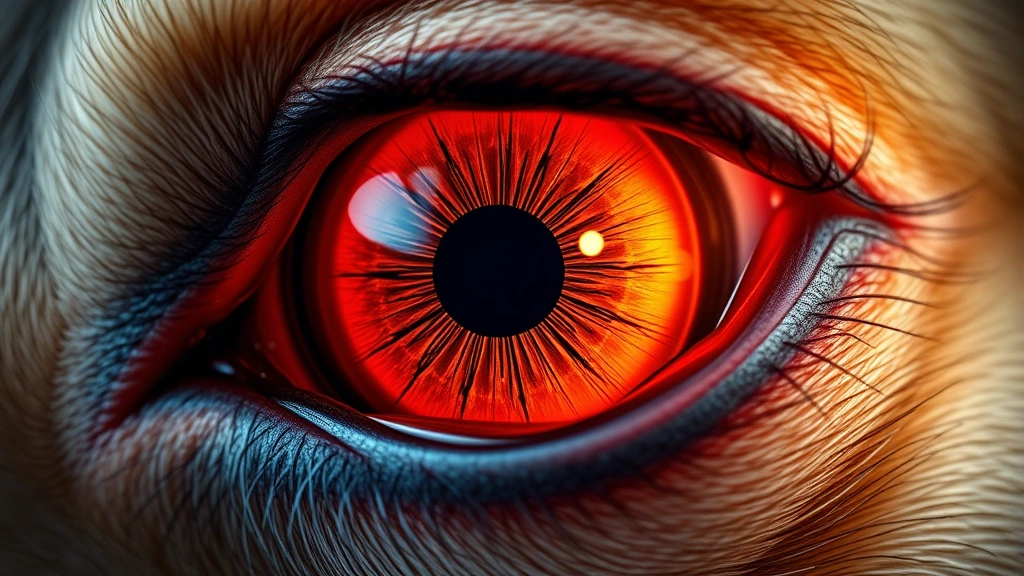
That eerie glow you see when a dog’s eyes catch light in a dark room is one of the most recognizable features of canine night vision. This phenomenon is called eyeshine or eye-glow, and it’s caused by the tapetum lucidum reflecting light back out through the pupil. The color of the glow can vary depending on the dog’s breed, the angle of the light, and the specific composition of the reflective layer.
Different dogs produce different colored eye-glow. Some dogs have bright green or yellow glowing eyes, while others might have a reddish or orange glow. This variation is due to differences in the pigmentation and structure of the tapetum lucidum across different breeds. Interestingly, not all mammals have a tapetum lucidum—humans don’t have one, which is why our eyes don’t glow in the dark. Instead, human eyes appear red in flash photography because light is reflecting off the blood vessels in the back of our eyes.
The presence of the tapetum lucidum is one of the clearest indicators that a species has evolved for low-light vision. It’s found in most carnivores and many herbivores that are active during twilight hours. Your dog’s glowing eyes aren’t just a cool party trick—they’re a window into millions of years of evolutionary adaptation for hunting and surviving in low-light conditions.
Breeds with Superior Night Vision
While all dogs have better night vision than humans, some breeds have particularly exceptional low-light abilities. Breeds that were originally developed for hunting, herding, or working at night tend to have especially well-adapted eyes. German Shepherds, for example, were bred to work as police and military dogs, often operating in low-light conditions. Bloodhounds, bred for tracking at all hours, also have exceptional night vision capabilities.
Sighthounds like Greyhounds and Whippets also have outstanding night vision, as they were developed to hunt primarily by sight rather than scent. Their eyes are positioned more toward the sides of their heads, giving them that wider field of vision we mentioned earlier. This positioning is perfect for spotting prey movement in dim light. Similarly, breeds like the Doberman Pinscher and Rottweiler were developed for guarding and protection work, tasks that often required operating in darkness.
It’s worth noting that even toy breeds and companion dogs have respectable night vision compared to humans, even if they weren’t specifically bred for low-light work. The fundamental anatomy that enables night vision is present in all dogs, regardless of size or original purpose. However, factors like eye color and the specific structure of the tapetum lucidum can create variations in just how well individual dogs see in the dark.
Tips for Keeping Your Dog Safe at Night
Understanding that your dog can see better in the dark than you can is important for their safety. However, just because dogs have superior night vision doesn’t mean they can navigate perfectly in complete darkness or that they don’t need any help from us. Here are some practical tips for keeping your pup safe during nighttime activities.
Use reflective gear: Even though your dog can see better than you, they’re still invisible to cars and other hazards. Reflective collars, leashes, and vests make your dog visible to drivers and other people, even if your dog can see them just fine.
Install outdoor lighting: While your dog’s night vision is impressive, well-lit outdoor spaces are safer for everyone. Motion-activated lights near your dog’s favorite outdoor spots can help prevent accidents and deter unwanted visitors.
Keep your dog on a leash: Your dog’s ability to see in the dark might tempt them to wander farther than they should. Keep them leashed during nighttime walks to prevent them from getting lost or injured.
Watch for hazards: Just because your dog can see in the dark doesn’t mean they’ll avoid every obstacle. Holes, sharp objects, and other hazards might still be difficult for them to navigate, especially if they’re focused on an interesting scent or sound. Taking care of your dog’s overall health, including understanding behaviors like why dogs lick their paws, can prevent injuries that make nighttime navigation more difficult.
Be aware of your dog’s limitations: Remember that while dogs excel at detecting movement and light changes, they might struggle with stationary objects in very low light. What’s obvious to you in bright daylight might not be obvious to your dog in complete darkness.
Schedule bathroom breaks strategically: If your dog has vision issues or is aging, try to schedule most bathroom breaks during daylight hours. This reduces their risk of injury during nighttime outings.
Use a headlamp or flashlight for yourself: Your dog might not need extra light, but you do. Using a headlamp or holding a flashlight helps you spot hazards and navigate safely while your dog does their thing.
Frequently Asked Questions
Can dogs see in complete darkness?
Dogs cannot see in absolute, total darkness with no light source whatsoever. However, they can see effectively in light levels that would appear as complete darkness to human eyes. They need only about one-sixth of the light that humans require to see clearly, which is why they seem to navigate perfectly in conditions where we’re completely blind.
Why do some dogs have better night vision than others?
Several factors influence how well individual dogs see at night. Breed heritage plays a role, as breeds developed for low-light work tend to have better-adapted eyes. Age is another factor—puppies and young adults typically have better night vision than senior dogs. Eye health and color also matter; dogs with lighter-colored eyes sometimes have slightly different tapetum lucidum structures than those with darker eyes.
Does a dog’s eye color affect their night vision?
Eye color can have a minor influence on night vision quality. Dogs with amber or light-colored eyes might have slightly different tapetum lucidum characteristics than those with brown or dark eyes. However, the difference is usually minimal, and dogs of all eye colors have excellent night vision compared to humans. The breed and individual genetics play a much larger role than eye color alone.
Can dogs see better at night than cats?
This is a close call, but cats generally have a slight edge over dogs when it comes to night vision. Cats have a larger tapetum lucidum and more rod cells in proportion to their eye size, giving them a marginal advantage in extremely low-light conditions. However, the difference is relatively small, and both animals are far superior to humans in darkness. According to veterinary research from the ASPCA, cats need only about one-eighth of the light that humans need, compared to dogs needing about one-sixth.
Should I be concerned if my dog’s eyes don’t glow in the dark?
Not all dogs’ eyes glow noticeably in the dark, and this doesn’t indicate a vision problem. The visibility of eyeshine depends on the angle of the light, the pigmentation of the tapetum lucidum, and the specific structure of the eye. Some dogs have very reflective tapetums that create a bright glow, while others have less reflective versions that produce minimal glow. All dogs still have excellent night vision regardless of how much their eyes glow.
How can I tell if my dog has night vision problems?
Signs that your dog might have vision issues include bumping into objects in low light, reluctance to go outside at night, excessive caution when navigating dark spaces, or changes in behavior during evening hours. If you notice these signs, consult with your veterinarian. Conditions like cataracts, progressive retinal atrophy, or other eye diseases can affect a dog’s night vision. Your vet can perform an eye examination to determine if there are any underlying issues. The Ocular Surgery Foundation provides resources about canine eye conditions.
Why do dogs seem to see things in the dark that I can’t?
Dogs aren’t necessarily seeing things you can’t see—they’re just seeing in light conditions where you’re effectively blind. Additionally, dogs are incredibly attuned to movement and subtle changes in their environment. Something you might miss in the darkness could be obvious to your dog due to their superior motion detection capabilities. Their sense of smell also plays a huge role; your dog might be responding to scents rather than visual stimuli.
Can I improve my dog’s night vision?
You can’t improve your dog’s innate night vision, as it’s determined by their anatomy and genetics. However, you can support their overall eye health through proper nutrition, regular veterinary care, and protecting their eyes from injury and disease. A diet rich in antioxidants and omega-3 fatty acids supports eye health. According to the Veterinary Information Network, maintaining a healthy weight and managing conditions like diabetes also helps preserve vision as dogs age.





