

Can Dogs See Purple? Understanding Canine Vision
Ever wondered why your dog seems completely unimpressed by that gorgeous purple sweater you bought them? Or why they might ignore a purple toy while going absolutely bonkers for the blue one? The answer lies in one of the most fascinating differences between human and canine perception: dogs don’t see the world in the same colors we do. While we humans can perceive the full rainbow, including vibrant purples and magentas, our four-legged friends experience a much more limited color palette. Understanding canine vision isn’t just a fun trivia fact—it can actually help us choose better toys, design more engaging environments, and deepen our appreciation for how our dogs experience the world.
The question of whether dogs can see purple has puzzled pet owners for generations. The short answer is: no, dogs cannot see purple. But the longer, more interesting answer involves understanding the science behind dog vision, the structure of their eyes, and how their brains process color information. Let’s dive into this colorful topic and explore what your pup actually sees when they look around.
How Dog Vision Works
To understand whether dogs can see purple, we first need to grasp the basics of how canine vision functions. A dog’s eye is remarkably similar to a human eye in basic structure, but with some key differences that significantly impact how they perceive their environment. Both human and canine eyes contain specialized cells called cones and rods that detect light and color.
Cones are responsible for color vision and function best in bright light, while rods excel at detecting movement and seeing in low-light conditions. Here’s where things get interesting: humans have approximately three types of cones (trichromatic vision), while dogs have only two types of cones (dichromatic vision). This fundamental difference in cone structure is why dogs experience color so differently from us.
The lens and cornea of a dog’s eye also work differently than ours. Dogs have a wider field of vision—roughly 250 degrees compared to our 190 degrees—but they sacrifice some visual acuity in the process. Their eyes are positioned more to the sides of their head, which is why they excel at detecting movement and seeing peripheral activity. However, they don’t see fine details as clearly as we do, which means their color perception is just one of several ways their visual world differs from ours.
The Color Spectrum: Dogs vs. Humans
Imagine looking at a rainbow. You see red, orange, yellow, green, blue, indigo, and violet. A dog, however, sees something quite different. Due to their dichromatic vision, dogs see the world in shades of blue and yellow, with various combinations and gradations of these two colors. Everything else that doesn’t fall into the blue-yellow spectrum appears as a shade of gray or brown to them.
This isn’t a deficiency or a disability—it’s simply a different way of processing visual information. Many animals in nature have dichromatic vision, and it serves them perfectly well for their needs. In fact, some animals like birds and mantis shrimp can see colors that humans cannot even imagine, with tetrachromatic or even pentachromatic vision. Dogs’ color vision is specifically adapted for their evolutionary history and lifestyle as hunters and companions.
The distinction is important: when we say dogs see in “black and white,” that’s actually a misconception. Dogs absolutely see color; they just see a different range of colors than we do. Think of it like this—if you’ve ever adjusted the color settings on your television, you know that reducing the color palette changes how you perceive the image. That’s similar to what’s happening in a dog’s visual cortex compared to a human’s.
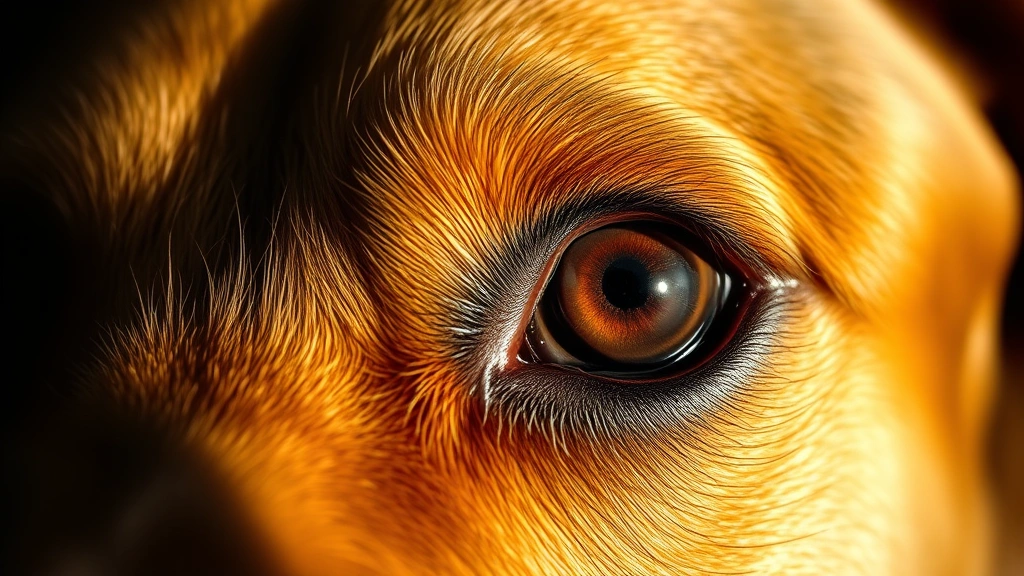
Why Can’t Dogs See Purple?
Purple is a color that exists on the red side of the visible light spectrum, beyond blue. Since dogs lack the cone cells necessary to perceive red light wavelengths, they cannot see purple, violet, or magenta. Their visual system simply doesn’t have the biological hardware to process these colors.
To understand this better, consider how color perception works at the cellular level. Human cones are sensitive to three different wavelengths of light: short (blue), medium (green), and long (red). When our brain receives signals from combinations of these three cone types, we perceive all the colors of the rainbow. Dogs, however, only have cones sensitive to short (blue) and medium (yellow) wavelengths. Without the long-wavelength (red) receptors, their brain cannot construct the perception of purple, which is a combination of red and blue light.
This means that a purple ball, purple collar, or purple dog bed that looks vibrant to you appears as some shade of gray or brown to your pup. If you’ve ever wondered why your dog doesn’t seem to care about that purple toy you bought, now you know—they literally cannot see the color that makes it special to you. Interestingly, this is why understanding what your dog actually sees can help you choose more engaging toys and enrichment items.
If you’re curious about other colors your dog might struggle with, you might want to explore whether dogs can see orange or learn more about whether dogs perceive pink. These questions all relate to the same fundamental limitation in canine color vision.
What Do Dogs Actually See Instead?
So if your dog can’t see purple, what do they see? The answer depends on the specific shade and brightness of the purple in question. Most purples that appear vibrant to humans will look like varying shades of brown, gray, or dark blue to dogs. A light purple might appear as a grayish-brown, while a darker purple could look almost black or very dark brown.
This is why it’s so important to choose dog toys in colors that your pup can actually appreciate. Dogs have excellent vision in the blue and yellow spectrums. Bright yellow and blue toys are much more visually stimulating to dogs than purple, red, or pink toys. This isn’t just about aesthetics—when your dog can clearly see and distinguish their toy from the background, they’re more likely to engage with it, which means more play time and mental stimulation for your furry friend.
Many dog toy manufacturers have caught onto this and now produce toys predominantly in blue and yellow. Tennis balls, for example, appear yellow to dogs (though not as brilliantly yellow as they do to us), which is one reason why dogs love tennis balls. The color is visible and engaging to their visual system, making these toys naturally more appealing.
Beyond color, your dog’s vision has other characteristics worth noting. Dogs have better night vision than humans, thanks to a higher proportion of rod cells and a special reflective layer behind their retina called the tapetum lucidum (which helps them see at night). They’re also incredibly sensitive to movement, which explains why your dog notices you reaching for the leash from across the room or spots a squirrel running through the yard from a distance.

Practical Implications for Pet Owners
Understanding that your dog can’t see purple has real, practical applications for how you care for and interact with your pet. Here are some ways you can use this knowledge to improve your dog’s life:
- Toy Selection: Choose toys in blue, yellow, or white colors. Your dog will be able to see these colors much more clearly than red, purple, or pink toys. This doesn’t mean your dog won’t play with purple toys—they just might have a harder time spotting them, especially if they’re on a background where they blend into gray or brown tones.
- Training Aids: When training, use toys and treats that are visually distinct. A bright yellow training bumper is easier for your dog to track than a purple one, which can make training sessions more effective.
- Home Environment: If you want to create a visually enriching environment for your dog, focus on blues and yellows rather than reds and purples. This is especially important if your dog has vision issues or is aging.
- Safety Considerations: Understand that your dog might not see a red or purple collar, leash, or ID tag as clearly as a blue or yellow one. In low-light conditions, this could be a safety concern, so consider the visibility of your dog’s gear.
- Dogs’ expressive features like their eyebrows are used for communication, but their actual visual perception of the world is quite different from ours. Keep this in mind when considering how your dog perceives their surroundings and other dogs.
It’s also worth noting that individual dogs might have variations in their color vision, just as humans do. Some dogs might have color blindness or other vision conditions, so while this information applies to most healthy dogs, your specific pup might have unique visual characteristics.
Beyond Color: Other Aspects of Canine Vision
While we’ve established that dogs can’t see purple, it’s important to remember that color is just one aspect of canine vision. In many ways, dogs’ visual system is actually superior to ours, despite the color limitation.
Motion Detection: Dogs are incredibly sensitive to movement. They can detect motion at much greater distances than humans and are particularly attuned to rapid movements. This evolutionary adaptation made them excellent hunters and is why your dog can spot that squirrel from across the yard before you even notice it.
According to research from the American Kennel Club, dogs’ sensitivity to motion is one of their most significant visual strengths. This is why moving toys are generally more engaging than stationary ones, regardless of color.
Night Vision: As mentioned earlier, dogs have superior night vision compared to humans. They need only one-quarter to one-half the amount of light that humans need to see clearly. This is due to their higher concentration of rod cells and the presence of the tapetum lucidum, a reflective layer that bounces light back through the retina, giving the photoreceptors a second chance to detect light particles.
Peripheral Vision: Dogs have a wider field of vision than humans, which means they can see more of what’s happening around them without moving their head. This is particularly useful for detecting predators or prey and is one reason why dogs are so good at keeping track of multiple things happening in their environment simultaneously.
Visual Acuity: While dogs see a narrower color spectrum, they actually have poorer visual acuity than humans. Dogs see at about 20/75 vision compared to our 20/20 baseline. However, this doesn’t mean dogs see poorly—they simply see less detail. What they lack in fine detail, they more than make up for in motion detection and low-light vision.
Understanding these various aspects of canine vision helps us appreciate just how different the dog’s world is from ours. When you consider that your dog can’t see purple but can see movement in near-total darkness, you start to realize that their visual system isn’t inferior—it’s just optimized for different priorities.
For more fascinating information about what your dog can and can’t see, you might be interested in learning about other seemingly simple questions. For instance, understanding the basics of dog anatomy like how many teeth dogs have can give you insights into their overall physiology and sensory systems.
Frequently Asked Questions
Can dogs see purple at all?
No, dogs cannot see purple. Purple falls outside their color perception range due to their dichromatic vision. What appears purple to you will look like a shade of gray, brown, or dark blue to your dog. This is because dogs lack the cone cells necessary to perceive red light wavelengths, which are essential for seeing purple.
Do dogs see the world in black and white?
No, this is a common misconception. Dogs don’t see in black and white; they see in shades of blue and yellow. Their world is full of color—just a different color palette than ours. They can distinguish between various shades of blue and yellow, making their vision colorful, just not in the same way humans experience color.
What colors can dogs see best?
Dogs can see blue and yellow most clearly. These are the colors within their dichromatic vision range. Bright blues and yellows are the most visually stimulating for dogs, which is why many dog toys are manufactured in these colors. According to the ASPCA, choosing toys in these colors can enhance your dog’s play experience.
Why do dog toys often come in blue and yellow?
Dog toy manufacturers have caught onto the science of canine vision. By creating toys in blue and yellow, they’re making products that are actually visible and engaging to dogs. These colors stand out clearly to a dog’s eyes, making the toys more interesting and easier to track during play.
Are there any health implications to dogs’ inability to see purple?
No, a dog’s inability to see purple has no health implications whatsoever. It’s simply how their visual system evolved. Dogs don’t suffer from this limitation—they thrive with their dichromatic vision. In fact, their superior motion detection and night vision more than compensate for their narrower color spectrum.
Can I test my dog’s color vision at home?
While you can’t formally test your dog’s color vision without professional equipment, you can observe how your dog responds to different colored toys. Offer your dog toys in various colors and watch which ones they engage with most readily. You’ll likely notice they show more interest in blue and yellow toys compared to red and purple ones. However, factors like toy size, texture, and smell will also influence their preference.
Should I stop buying purple toys for my dog?
Not necessarily. While your dog can’t see the purple color, they can still see the toy itself—it will just appear as a different color to them. If your dog loves a particular purple toy because of its texture, smell, or shape, they’ll continue to enjoy it. However, if you’re trying to maximize visual engagement, blue and yellow toys are better choices.





