
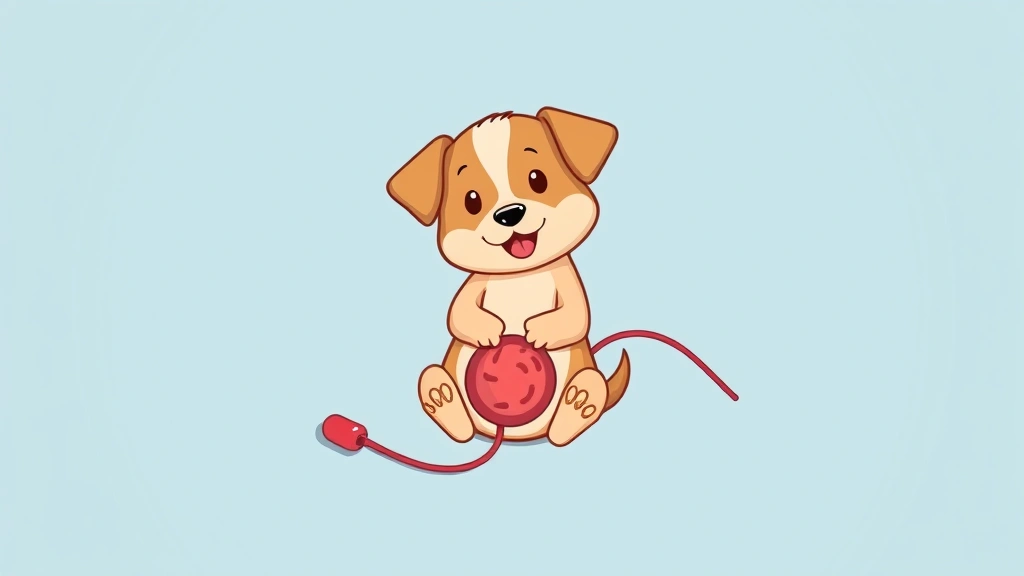
You’re scratching your dog’s belly, and suddenly you wonder: do dogs have belly buttons? It’s one of those questions that sounds silly until you actually think about it. Then it becomes genuinely interesting. The short answer? Yes, dogs absolutely have belly buttons. But here’s where it gets fascinating—they look different from ours, and most people never notice them because they’re hidden under all that fur. Let me explain what’s actually going on under your pup’s coat and why this tiny detail matters more than you’d think.
Yes, Dogs Have Belly Buttons—Here’s Why
Every mammal that’s born alive—not laid as an egg—has a belly button. This includes dogs, cats, humans, whales, and even your neighbor’s grumpy ferret. The belly button (or umbilicus) is simply the scar left behind after the umbilical cord is severed. Think of it like this: the umbilical cord is the lifeline connecting a puppy to its mother while it’s developing inside the womb. It delivers oxygen, nutrients, and antibodies. Once the puppy is born and takes its first breath, that cord isn’t needed anymore. The mother dog (or veterinarian, in the case of a C-section) cuts or chews through it, and what remains is a small scar—the belly button.
According to the American Kennel Club, all puppies are born with an umbilical cord, and all develop a belly button afterward. It’s basic mammalian biology. The reason this surprises people is simply because we don’t see them very often on dogs. Their fur covers it up, and frankly, most dog owners aren’t spending time searching their pup’s abdomen for anatomical landmarks.
Pro Tip: If you want to find your dog’s belly button, gently part the fur on their lower abdomen, just below the rib cage. You’re looking for a small, circular scar or line. It might look like a tiny knot, a line, or barely anything at all—depending on how prominent it is on your individual dog.
The presence of a belly button is one of those cool reminders that dogs and humans share fundamental biology. We’re both mammals. We both develop inside a mother’s womb. We both rely on that temporary umbilical connection before birth. And we both end up with a permanent mark to prove it happened.
What Does a Dog’s Belly Button Actually Look Like?
Here’s where things get interesting: a dog’s belly button doesn’t look like a human’s belly button. Ours is often a deep indent or protruding knot. Dogs’ belly buttons are usually much less dramatic. In most cases, you’re looking at one of these:
- A small scar line: Often just a faint line running horizontally across the skin, barely noticeable even when you’re looking for it.
- A slight indentation: Some dogs have a tiny dip in the skin, similar to a human’s but much subtler.
- A small knot or bump: Less common, but some dogs have a more prominent scar tissue formation.
- Barely visible: On many dogs, especially those with thick or curly coats, the belly button is so faint that you’d need good lighting and patience to spot it at all.
The variation depends on several factors: breed size, how the umbilical cord was handled after birth, genetics, and how the scar tissue healed over time. A Great Dane’s belly button might be more visible simply because there’s more surface area to see it on. A Chihuahua’s might be nearly microscopic.
When you do find it, you might feel a bit underwhelmed. It’s not the dramatic feature that a human belly button can be. It’s more like a subtle reminder that your dog spent time growing inside their mother, connected by that cord. Pretty cool when you think about it, but visually? It’s basically a tiny scar that most people miss their entire lives.
How the Umbilical Cord Works in Puppies
To understand why dogs have belly buttons, let’s back up and talk about what the umbilical cord actually does. During pregnancy, the umbilical cord is the puppy’s connection to the placenta, which is attached to the mother’s uterus. This cord contains blood vessels that carry oxygen-rich blood from the mother to the developing puppy and return deoxygenated blood back to the mother for oxygenation.
The umbilical cord also delivers nutrients, antibodies, and hormones. It’s basically the puppy’s life support system while they’re developing. The mother dog’s body is doing all the breathing, eating, and filtering of waste for her unborn puppies. The cord is how that exchange happens.
When a puppy is born, it takes its first breath and its lungs expand. Suddenly, the puppy can get oxygen directly from the air instead of through the umbilical cord. The cord becomes unnecessary almost instantly. That’s why the mother dog instinctively bites or tears the umbilical cord shortly after birth—it’s no longer serving a purpose, and leaving it attached increases infection risk.
According to PetMD, the umbilical cord stump typically dries up and falls off within a few days of birth. What remains is the umbilicus—that small scar we call the belly button. In rare cases where the cord isn’t properly cleaned or cared for, infection can occur, but this is uncommon in healthy, normally delivered puppies.
The whole process is remarkably efficient. Nature has designed it so that the moment a puppy no longer needs the cord, the body starts the process of sealing it off and healing the wound. Within weeks, the scar is barely noticeable.
Why You Probably Can’t See Your Dog’s Belly Button
The main reason you can’t easily spot your dog’s belly button is fur. Dogs are covered in it. That thick coat that keeps them warm and protects their skin also hides anatomical details like belly buttons. If you’ve ever tried to find a tick on a fluffy dog, you know how challenging it can be to locate something small on their body.
Additionally, the belly button on a dog is typically very small and subtle. Unlike a human belly button, which can be quite prominent (especially an outie), most dogs’ belly buttons are barely raised above the skin surface. They’re essentially flat scars. When you combine that with fur coverage, it’s almost impossible to notice unless you’re specifically looking for it.
There’s also a practical reason: we don’t spend much time examining our dogs’ abdomens in detail. We pet them, scratch their bellies, maybe check for lumps or bumps if we’re concerned about health, but we’re not doing thorough anatomical inspections. A dog’s belly button just isn’t something that comes up in normal dog ownership.
If you have a hairless or short-haired breed—like a Chihuahua, Italian Greyhound, or Xoloitzcuintli—you might actually be able to see the belly button more easily. The lack of fur makes it visible. But even then, it’s often so subtle that you might miss it.
Here’s a fun fact: if your dog has ever had surgery on their abdomen, you’ve probably seen a surgical scar, which looks very different from a belly button. Surgical scars are often larger, more visible, and sometimes have stitch marks or a different appearance because they’re fresh wounds that healed. A belly button is a scar that formed decades ago (in evolutionary terms) and is essentially just a normal part of the skin now.
Is It Normal to See Your Dog’s Belly Button?
If you can clearly see your dog’s belly button, that’s completely normal. There’s nothing wrong with your dog. Some dogs just have more visible belly buttons than others, depending on genetics, coat type, and individual variation. A short-haired dog with thin skin might have a very noticeable belly button. A thick-coated dog might have one that’s virtually invisible.
However, if you notice something unusual in the belly button area—like swelling, discharge, redness, or an odor—that’s worth paying attention to. These could be signs of an umbilical hernia or infection, which we’ll discuss in more detail below.
It’s also worth noting that some dog owners get excited when they first discover their dog’s belly button and think something is wrong. “My dog has a bump on their belly!” No, that’s just the belly button. It’s supposed to be there. But if you’re ever unsure, your veterinarian can take a quick look and confirm that everything is normal.
The belly button is one of those anatomical features that’s there whether you can see it or not. It’s not going anywhere, and it doesn’t require any special care just because it exists. It’s simply a remnant of the puppy’s time in the womb.
If you’re curious about other quirky dog anatomy questions, you might also wonder about things like whether dogs have nightmares or if dogs can laugh. These are all fascinating aspects of canine biology that remind us how similar—and how different—dogs are from humans.
Health Issues Related to the Belly Button Area
While a normal belly button is nothing to worry about, there are a few health conditions related to the umbilicus that you should know about:
Umbilical Hernia
An umbilical hernia occurs when part of the intestine protrudes through a gap in the abdominal muscles near the belly button. This creates a noticeable bulge or soft lump in that area. Umbilical hernias are fairly common in puppies and are often inherited. The good news? Many umbilical hernias are small and cause no problems. The bad news? If the hernia is large or if tissue becomes trapped, surgery might be necessary.
According to the American Veterinary Medical Association, most umbilical hernias that are small and not causing symptoms can be monitored. However, your vet should evaluate any suspicious bulge to rule out a hernia or other issue. If your puppy has a noticeable lump at the belly button that gets bigger or causes discomfort, mention it to your veterinarian at the next checkup.
Infection or Inflammation
Rarely, the belly button area can become infected if the umbilical cord wasn’t properly cared for after birth. Signs of infection include redness, swelling, discharge, or an odor coming from the area. This is uncommon in healthy puppies but more likely in those born in unsanitary conditions or without proper post-birth care. If you notice these signs, contact your vet.
Persistent Patent Urachus
This is a rare condition where the urachus (a duct that normally closes before birth) remains open. It can cause discharge from the belly button or urinary issues. This is something your vet would diagnose and treat if it occurs.
For most dogs, the belly button area is completely unremarkable and requires no special attention. But if you ever notice something unusual—swelling, discharge, sensitivity, or a foul smell—get it checked out. It’s better to be cautious with anything involving the abdomen.
Caring for Your Dog’s Belly Button
Here’s the straightforward truth: you don’t need to do anything special to care for your dog’s belly button. It’s a scar. It’s healed. It’s done. You’re not going to clean it or treat it or apply anything to it under normal circumstances.
That said, here are a few situations where the belly button area might warrant attention:
- During grooming: If you’re bathing your dog or grooming them, the belly button area is just like any other part of their skin. Keep it clean and dry, but don’t obsess over it.
- If you notice swelling or discharge: This is the time to contact your vet. Don’t try to treat it yourself or assume it will go away.
- Post-surgery: If your dog has abdominal surgery, your vet will give you specific care instructions for the surgical incision. Follow those exactly. This is different from the natural belly button.
- Regular health checks: As part of your routine dog care, it’s fine to occasionally check your dog’s belly for lumps, bumps, or anything unusual. This includes the belly button area. But you’re not doing anything special—just observing.
The belly button is essentially maintenance-free. It’s there, it’s part of your dog’s anatomy, and unless something goes wrong, you can forget about it entirely. Your dog certainly isn’t thinking about theirs.
If you’re interested in learning more about dog anatomy and health, you might want to read about why dogs foam at the mouth or check out our guide on how to clean dog ears. Understanding your dog’s body helps you catch potential problems early.
Frequently Asked Questions
Do all dogs have belly buttons?
– Yes, every dog that was born alive (not cloned or created in a lab, which isn’t a thing) has a belly button. It’s a fundamental part of mammalian development. The only exception would be extremely rare birth defects, which would be identified by a veterinarian.
Why can’t I find my dog’s belly button?
– Most likely because it’s hidden under fur and it’s very subtle. Part the fur on your dog’s lower abdomen, just below the rib cage, and look for a small scar or line. If you still can’t find it, don’t worry—it’s there, you’re just not spotting the small mark. Some belly buttons are extremely faint.
Is a visible belly button bump on my dog normal?
– A small, flat scar-like belly button is normal. A noticeable, soft bulge could be an umbilical hernia. If you’re unsure, ask your vet. They can quickly determine if it’s just a belly button or something that needs attention.
Can a dog’s belly button get infected?
– It’s rare, but yes, it’s possible if the umbilical cord wasn’t properly cared for after birth. Signs would include redness, swelling, discharge, or odor. If you notice these, contact your veterinarian.
Do I need to clean my dog’s belly button?
– No. It’s a healed scar. There’s nothing to clean. Just keep the area clean and dry as part of normal grooming, but don’t do anything special.
What’s the difference between a belly button and a surgical scar?
– A belly button is a scar from the umbilical cord that formed at birth—it’s small, subtle, and essentially a normal part of the skin. A surgical scar is from a recent surgical incision—it’s usually larger, more visible, and may have stitch marks or a different appearance while healing.
Can you see a dog’s belly button in an X-ray or ultrasound?
– Not really. Belly buttons are just scars on the skin surface. They wouldn’t show up on imaging the way internal organs or bones do. Veterinarians use these tools to look at what’s inside, not surface-level scars.
Do puppies have belly buttons before they’re born?
– No. The belly button forms after birth, once the umbilical cord is cut. Before birth, puppies have the umbilical cord itself, but not the scar we call a belly button.

Are some dog breeds more likely to have visible belly buttons?
– Yes. Short-haired breeds and hairless breeds are more likely to have visible belly buttons simply because there’s less fur covering them. Long-haired breeds’ belly buttons are almost always hidden.
What does an umbilical hernia look like?
– It appears as a soft bulge or lump near the belly button, usually more noticeable when the dog is standing or moving. It might feel like a soft pocket under the skin. If you suspect a hernia, have your vet evaluate it.





