
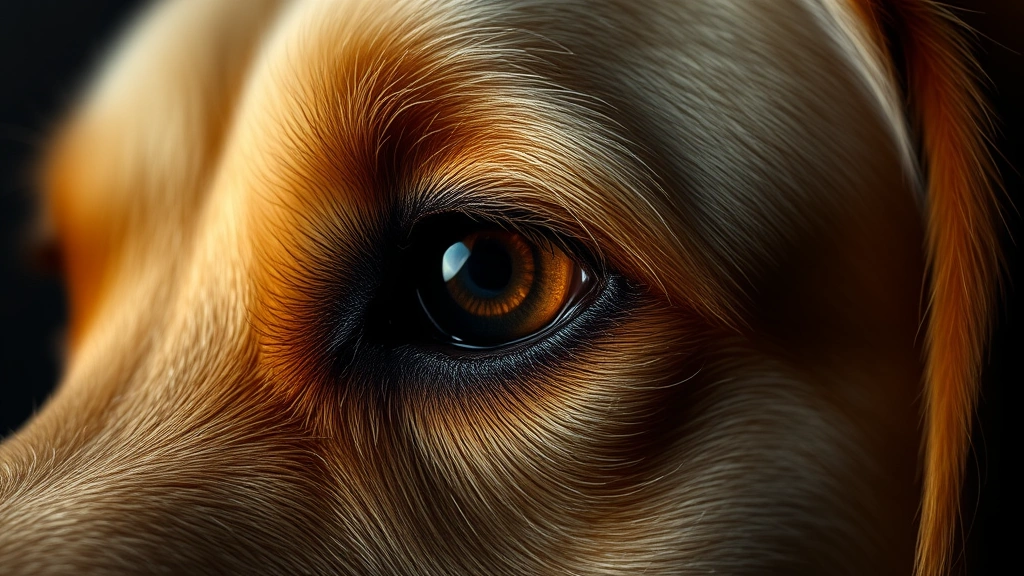
Can Dogs See in the Dark? The Truth Explained
Ever wonder why your furry best friend seems to navigate your dark bedroom like they have night vision goggles? Or perhaps you’ve noticed how your pup’s eyes seem to glow eerily in the flash of your camera? The truth is, dogs don’t see quite like we do in low-light conditions, but they’re definitely equipped with some pretty impressive visual superpowers that put our human night vision to shame.
The question “do dogs see in the dark” is more nuanced than a simple yes or no. While dogs can’t see in complete darkness any more than humans can, they possess several anatomical and physiological adaptations that make them exceptional at seeing in dim lighting. Understanding how your dog’s vision works—especially in low-light situations—can help you better care for them and appreciate just how differently they perceive the world around us.
So let’s dive deep into the canine eye and uncover the fascinating science behind why your dog might be the better navigator when the lights go out.
How Dogs See Differently Than Humans
When we talk about whether dogs can see at night, we need to first understand that canine vision is fundamentally different from human vision in several ways. Dogs are descended from wolves, animals that hunt primarily during dawn and dusk when light levels are low. This evolutionary history has shaped their visual system in remarkable ways.
One of the most significant differences is that dogs have more rod cells in their retinas compared to humans. Rod cells are the photoreceptors responsible for detecting light and motion, making them essential for vision in low-light conditions. While humans have about 120 million rod cells per square millimeter of retina, dogs have even more concentrated in certain areas, giving them superior ability to detect movement and navigate dimly lit environments.
Additionally, dogs have a wider field of view than humans—approximately 250 degrees compared to our 190 degrees. This broader perspective, combined with their enhanced ability to detect movement, means dogs can track motion in darker settings much more effectively than we can. When your dog seems to notice something in the shadows that you completely miss, they’re likely picking up on subtle movements that their visual system is optimized to detect.
Another crucial factor is the shape of the canine eye itself. Dogs have a more spherical lens compared to humans, which helps them focus light more effectively on the retina, even when ambient light is scarce. This optical advantage, combined with their other adaptations, creates a visual system that’s genuinely superior in low-light conditions.
The Anatomy Behind Canine Night Vision
To truly answer the question of whether dogs can see in the dark, we need to examine the specific anatomical features that make their night vision so effective. The canine eye is a marvel of evolutionary engineering, with several structures working together to maximize light capture and processing.
The pupil of a dog’s eye is quite large, particularly when dilated in low-light conditions. A larger pupil allows more light to enter the eye, which is a fundamental principle of low-light vision. You’ve probably noticed how your dog’s pupils dilate significantly in dim lighting—this is an automatic response that helps gather more photons for their visual system to process.
The cornea and lens in a dog’s eye are also optimized for light transmission. The lens has a different shape than a human lens, and it’s positioned differently within the eye, allowing for better light concentration on the retina. This is particularly helpful for dogs that need to track fast-moving prey in low-light conditions, a trait inherited from their wolf ancestors.
The Tapetum Lucidum: Nature’s Reflector
Perhaps the most fascinating adaptation in the canine eye is a structure called the tapetum lucidum, which literally means “shining layer” in Latin. This reflective layer sits behind the retina and acts like a mirror, bouncing light back through the photoreceptor cells. This gives the light a second chance to be detected, essentially doubling the eye’s light-gathering efficiency.
The tapetum lucidum is the reason why your dog’s eyes seem to glow or shine in photographs, especially when a flash is used. That eerie, glowing effect you see in photos is the light from the flash bouncing off this reflective layer and back toward the camera. It’s not supernatural—it’s pure biology.
This reflective layer is absent in humans, which is one of the primary reasons we don’t see well in low-light conditions compared to dogs. The tapetum lucidum is found in many animals adapted to low-light vision, including cats, deer, and many other nocturnal and crepuscular creatures. It’s a game-changer when it comes to night vision capability.
However, it’s important to note that the tapetum lucidum does come with a trade-off. While it enhances light sensitivity, it can slightly reduce visual acuity and contrast sensitivity in well-lit conditions. This is why your dog might not be quite as sharp at reading fine details in bright daylight as you might be, but they absolutely dominate in dim lighting situations.

Rod Cells and Light Sensitivity
The photoreceptor cells in the retina come in two types: rods and cones. Rods are responsible for black-and-white vision and are incredibly sensitive to light, making them perfect for low-light vision. Cones are responsible for color vision and require more light to function effectively.
Dogs have a significantly higher proportion of rod cells compared to cones in their retinas. This means they sacrifice some color perception for enhanced low-light vision—a trade-off that makes perfect sense given their evolutionary history as hunters. When your dog sees orange, they’re actually perceiving it as a shade of yellow or brown rather than the vibrant orange we see.
The distribution of rod cells in the canine retina is also strategic. Dogs have a higher concentration of rods in the central area of their retina, which is the part they use for forward vision and tracking movement. This concentration is another adaptation that supports their ability to hunt and navigate in low-light conditions.
Research from veterinary ophthalmologists has shown that dogs can see in light levels as low as one-sixth of what humans need to see the same scene. This means that in conditions where you’d need to turn on a flashlight, your dog might still be able to navigate and identify objects without any artificial light source.
Comparing Dog Vision to Human Vision
Let’s break down the specific differences between how dogs and humans see, particularly in low-light conditions:
- Light Sensitivity: Dogs require only one-sixth of the light that humans need to see clearly. This is due to their higher rod cell concentration and the tapetum lucidum.
- Motion Detection: Dogs are superior at detecting movement, especially in peripheral vision. They can pick up on subtle motions that humans would miss entirely.
- Field of View: Dogs have a wider field of view (around 250 degrees) compared to humans (190 degrees), though this varies by breed and eye placement.
- Color Vision: Dogs see the world in shades of blue and yellow, missing the reds and greens that humans perceive. This is why understanding what colors dogs see matters when choosing toys and training equipment.
- Night Vision Capability: Dogs excel in low-light conditions, while humans struggle significantly without artificial light.
- Visual Acuity: In bright daylight, humans typically have better visual acuity than dogs. Dogs see at about 20/75 vision compared to our 20/20.
Understanding these differences helps explain why your dog might seem to have supernatural abilities in the dark while also explaining why they might miss a treat you’ve placed right in front of them on a sunny afternoon.
Practical Implications for Pet Owners
Now that we understand the science behind canine night vision, let’s explore what this means for you as a dog owner. Knowing that dogs can see at night better than we can has several practical applications for keeping your pet safe and comfortable.
Home Safety Considerations: Since your dog can navigate your home in darkness much better than you can, you might think they don’t need nightlights. However, this doesn’t mean you should leave them in complete darkness. Some low-level lighting is still beneficial for preventing accidents and creating a comfortable environment. Additionally, sudden transitions from light to dark can still be disorienting for dogs, even with their superior night vision.
Outdoor Adventures: If you take your dog for evening walks or camping trips, remember that while they can see better than you in low light, they still benefit from you using a flashlight or headlamp. Your dog’s superior vision doesn’t protect them from hazards you can’t see either, like unseen holes or obstacles. Plus, other people and vehicles need to see your dog to avoid accidents.
Exercise and Play: Your dog’s ability to see in the dark means they can potentially get into trouble during evening hours when you might not notice. Keep a close eye on them during twilight hours and make sure your yard is secure. If you’re concerned about your dog’s behavior during low-light conditions, it might be related to other factors—for instance, you might wonder do dogs have nightmares if they seem restless at night, though this is typically a separate issue from vision.
Breed Variations: It’s worth noting that different dog breeds can have variations in their night vision capabilities. Breeds with larger eyes and more prominent tapetum lucidums generally have better night vision. Additionally, breeds with blue or amber-colored eyes might have slightly different vision characteristics than those with brown eyes, though all dogs still outperform humans in low-light conditions.
Interestingly, while we’re focused on what dogs can see, it’s also worth understanding other aspects of their sensory world. For instance, some dog behaviors that seem strange to us might be explained by their unique sensory abilities. If your dog licks their paws frequently, it’s usually not related to their vision, but understanding all aspects of your dog’s behavior helps you be a better pet owner.
Training and Commands: If you’re training your dog or working with them in low-light conditions, remember that they might actually see better than you do. Use this to your advantage by practicing commands in various lighting conditions. However, always prioritize your own safety and visibility to prevent accidents.
Medical Considerations: If you notice your dog having difficulty navigating in low-light conditions when they previously didn’t, this could indicate a vision problem that requires veterinary attention. Progressive retinal atrophy (PRA) is a condition that can affect a dog’s night vision, causing it to gradually worsen over time. If you suspect your dog’s vision is declining, consult with your veterinarian.
Understanding your dog’s visual capabilities also helps you appreciate other unique aspects of their anatomy. Did you know that understanding how many teeth dogs have is also important for their overall health? Similarly, knowing about their vision helps you provide comprehensive care. Even something as simple as knowing whether dogs can sleep with their eyes open gives us insight into their unique physiology.
According to the American Kennel Club, understanding your dog’s vision is crucial for responsible pet ownership. The AKC provides comprehensive information about canine vision and how it affects behavior and training.
Frequently Asked Questions
Can dogs see in complete darkness?
No, dogs cannot see in complete darkness any more than humans can. However, they can see in much lower light levels than humans. They require approximately one-sixth of the light that humans need to see the same scene. In complete darkness with zero light, dogs are just as blind as we are.
Why do dogs’ eyes glow in the dark?
Dogs’ eyes don’t actually glow in the dark on their own. What you’re seeing is the reflection of light (usually from a camera flash or flashlight) bouncing off the tapetum lucidum, the reflective layer behind their retina. This same structure is what helps them see so well in low-light conditions.
Do all dogs have the same night vision abilities?
While all dogs have better night vision than humans due to their shared anatomical features, there can be variations between breeds. Dogs with larger eyes and more prominent tapetum lucidums tend to have better night vision. Additionally, individual dogs may have variations in their vision capabilities, and some eye conditions can affect night vision specifically.
Can dogs see in color at night?
Dogs see in shades of blue and yellow throughout the day, but in very low-light conditions, their vision becomes essentially black and white. This is because the cone cells (which detect color) require more light to function, so in dim lighting, only the rod cells (which detect light and motion in black and white) are active.
Is it safe to leave my dog in the dark?
While dogs can navigate better than humans in low light, it’s still good practice to provide at least some low-level lighting in areas where your dog spends time. This prevents accidents and creates a comfortable environment. Complete darkness can be disorienting for dogs, and they still benefit from being able to see their surroundings clearly.
How does age affect a dog’s night vision?
As dogs age, their vision can decline, including their night vision capabilities. Senior dogs may develop cataracts or other age-related eye conditions that reduce their ability to see in low-light conditions. If you notice your older dog having difficulty in dim lighting, consult with your veterinarian.
Can dogs see better than cats in the dark?
Cats actually have slightly better night vision than dogs. Cats have even more rod cells and a larger tapetum lucidum relative to their eye size. However, dogs still have significantly better low-light vision than humans, and the difference between dogs and cats is relatively modest.





