
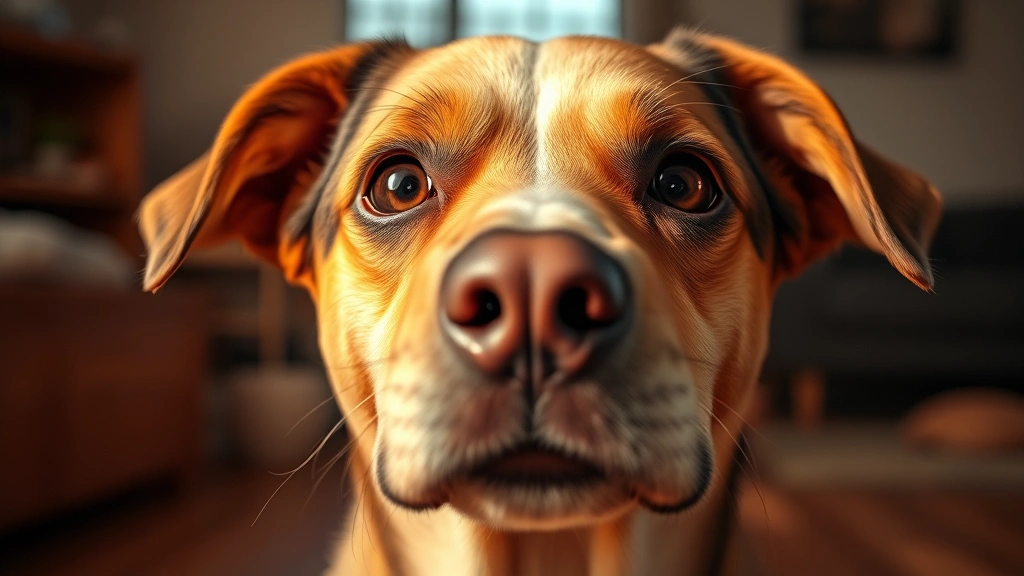
Ever wonder how do dogs see people? It’s way more complicated than just “man’s best friend looks at you with puppy dog eyes.” Your dog isn’t seeing you the way you see yourself in the mirror. Nope. Their entire visual world is fundamentally different from ours, and honestly? It’s kind of wild.
Table of Contents
- Dogs See in Shades of Blue and Yellow, Not Full Color
- Motion Detection is Their Superpower
- Night Vision: Dogs Are the Ninjas of the Animal World
- Distance Vision: Not as Sharp as You’d Think
- How Dogs See People: The Scent-Vision Connection
- Facial Recognition: Do Dogs Actually Know Your Face?
- Peripheral Vision and the “Blind Spot” Behind Them
- How Dogs See People’s Emotions and Body Language
- Aging Eyes: How a Dog’s Vision Changes Over Time
- Breed-Specific Vision Differences
- The Bottom Line: Your Dog Sees You Differently Than You See Yourself
- Frequently Asked Questions
Dogs See in Shades of Blue and Yellow, Not Full Color
Let’s bust the biggest myth right off the bat: your dog isn’t colorblind. They just see the world like someone with red-green colorblindness. While humans can see the full spectrum of colors, dogs perceive the world in shades of blue, yellow, and gray. That fancy red toy you bought? Your pup sees it as a brownish-gray blob. The green grass? More like a yellowish-brown carpet.
This means when how dogs see people comes into play, they’re not admiring your stylish outfit’s color. They’re noticing your shape, movement, and the contrast between your clothing and the background. Your dog’s vision is optimized for detecting motion and navigating low-light environments, not for appreciating your fashion choices.
Motion Detection is Their Superpower
Dogs have an incredible ability to detect movement. Their eyes are positioned on the sides of their heads (unlike our forward-facing eyes), giving them a wider field of vision—about 250 degrees compared to our 190 degrees. This side-eye placement means they can spot movement from the corner of their vision that we’d completely miss.
When your dog watches you move around the house, they’re tracking every gesture with precision. A slight hand movement? They catch it. You reaching for the leash? They know before your brain has fully committed to the decision. This motion-detection superpower is why dogs are so responsive to our body language and why training with hand signals works so effectively.
Night Vision: Dogs Are the Ninjas of the Animal World
Your dog can see in light levels six times lower than what humans need. They have a special reflective layer behind their retinas called the tapetum lucidum that bounces light back through the photoreceptors, essentially giving them night-vision goggles built into their eyeballs. Seriously, it’s like they’re equipped with thermal imaging.
This is why your pup can navigate a dark room while you’re stumbling around like a newborn giraffe. When you’re getting ready for bed at night, your dog isn’t struggling to see you—they’ve got a crystal-clear view of your every move. It’s both impressive and slightly unsettling when you think about it.
Distance Vision: Not as Sharp as You’d Think
Here’s where dogs lose some points. While they excel at detecting movement, their distance vision (visual acuity) is actually worse than ours. Dogs see at 20/75 vision, meaning they need to be 20 feet away from something to see it as clearly as we can see it from 75 feet away. That dog in the distance that seems to be staring at you? They might just be seeing a blurry shape.
However, this doesn’t matter much because dogs rely heavily on their other senses—smell and hearing—to compensate. They can smell a person from miles away and hear frequencies we can’t even perceive. So while their distance vision is mediocre, they’re getting all the information they need through their nose and ears.
How Dogs See People: The Scent-Vision Connection
Here’s the mind-bending part: how dogs see people isn’t just about vision. Dogs process information from multiple senses simultaneously in a way that’s hard for us to imagine. When your dog looks at you, they’re not just seeing your face—they’re simultaneously smelling the unique scent profile you emit, hearing your heartbeat, and picking up on micro-expressions and body language cues.
A dog’s brain integrates all this sensory data into a complete picture of who you are. So when your pup greets you at the door, they’re recognizing you through a combination of your appearance, your scent, your voice, and your movement patterns. It’s like they’re seeing you in 4D while we’re stuck in 3D.
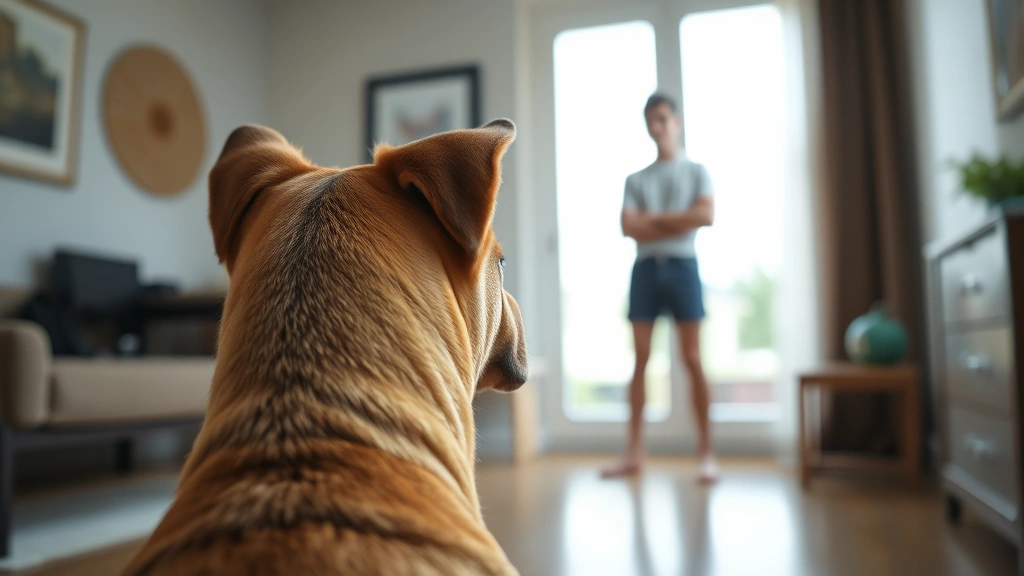
Facial Recognition: Do Dogs Actually Know Your Face?
Dogs can recognize human faces, but not in the way we do. Research shows dogs can distinguish between familiar and unfamiliar people, and they can identify their owners from photos. However, they rely less on facial features and more on the overall shape of your head, your ears, and your distinctive features combined with scent and voice.
This explains why your dog might not recognize you immediately if you drastically change your appearance—new glasses, a hat, or a complete haircut can throw them off temporarily. But once you speak or they catch your scent, recognition kicks in instantly. They’re not face-blind; they’re just using a different recognition system than we are.
Peripheral Vision and the “Blind Spot” Behind Them
While dogs have a wider field of vision than humans, they actually have a blind spot directly behind them. This is why dogs can be startled if you approach from directly behind. Their wide peripheral vision covers the sides and front, but that rear area? Total blind zone. This is something to keep in mind when playing with your dog or approaching them from behind—always announce yourself to avoid giving your pup a heart attack.
How Dogs See People’s Emotions and Body Language
Dogs are incredibly attuned to human body language and emotional cues. They can read your posture, your facial expressions, and your energy levels with remarkable accuracy. When you’re anxious, your dog picks up on it. When you’re happy, they sense it. This ability goes beyond just vision—it’s a combination of reading your body language, hearing the tone of your voice, and smelling the chemical changes your body undergoes when you’re stressed or excited.
Research has shown that dogs can even see the whites of human eyes, which is rare in the animal kingdom. This helps them read human facial expressions more effectively. So when you’re looking at your dog with love, they’re not just seeing your face—they’re reading the intention behind your gaze.
Aging Eyes: How a Dog’s Vision Changes Over Time
Just like humans, dogs’ vision deteriorates as they age. Senior dogs may develop cataracts, presbyopia (difficulty focusing on close objects), or general cloudiness in their eyes. If you have an older pup, you might notice they’re more cautious in low light or have trouble with stairs. This is completely normal and part of the aging process.
Understanding how your aging dog’s vision is changing can help you modify your home to make it safer. Keep pathways clear, use nightlights, and be patient with your senior companion as their eyesight fades. They’re still seeing you and loving you—they’re just doing it with a bit less clarity.
Breed-Specific Vision Differences
Different dog breeds have different visual capabilities based on their original purpose. Greyhounds and other sighthounds have better distance vision and motion detection because they were bred to chase prey. Bloodhounds and scent hounds have sacrificed some visual acuity for superior olfactory abilities. Dogs with flat faces (like Bulldogs) have more forward-facing eyes and better binocular vision, similar to humans, but less peripheral vision.
When you’re thinking about how dogs see people, remember that a Chihuahua’s visual experience is different from a German Shepherd’s. Breed history and anatomy play a huge role in how your individual dog perceives the world.
The Bottom Line: Your Dog Sees You Differently Than You See Yourself
Your dog doesn’t see you the way you see yourself. They’re not admiring your outfit or noticing that new haircut. But they are seeing you in a way that’s perfectly suited to their needs—detecting your movements, reading your emotions, and recognizing you as their favorite person in the world. They’re seeing you through a lens of motion, emotion, and scent that creates a bond stronger than any visual connection could create.
The next time your dog looks at you with those soulful eyes, remember: they’re not just looking at your face. They’re reading your entire being—your body language, your emotional state, and your unique scent signature. It’s actually way cooler than if they saw you in perfect HD color.
Frequently Asked Questions
Can dogs see TV screens clearly?
Dogs can see TV screens, but older CRT and plasma screens flicker at a rate that dogs perceive as flickering, making the image appear unstable. Modern LED and OLED screens have higher refresh rates that appear more stable to dogs. Even so, dogs don’t process 2D images the way we do, so they’re not as engaged with television as humans are. Some dogs are interested in the movement and sounds, while others completely ignore it. Check out our guide on cool dog names if you’re looking for inspiration for your new pup.
Do dogs see better than humans?
It depends on what you mean by “better.” Dogs have superior night vision, motion detection, and peripheral vision. Humans have better color vision, distance vision, and the ability to focus on fine details. Each species’ vision is optimized for their specific needs. Dogs are built for hunting and survival; humans are built for detailed visual analysis.
Why do dogs have different eye colors?
Eye color in dogs is determined by genetics and the amount of melanin in the iris, just like in humans. Some breeds are predisposed to certain eye colors. The eye color doesn’t significantly affect how dogs see people or the world around them—it’s purely aesthetic. Dogs with lighter eyes might be slightly more sensitive to bright light, but the difference is minimal.
Can dogs see in complete darkness?
No, dogs cannot see in complete darkness. However, they can see in light levels much lower than humans need. They require some light source, even if it’s just starlight or moonlight. Their superior night vision allows them to see in conditions that would appear pitch-black to us, but true complete darkness is still dark for them too.
Do dogs recognize themselves in mirrors?
Most dogs don’t recognize themselves in mirrors. When a dog sees its reflection, it typically treats it as another dog. This is because dogs rely primarily on scent for self-recognition, not vision. Some highly intelligent dogs might eventually figure out that the reflection is them, but this is rare. The mirror test that’s used for primates doesn’t work the same way for dogs because vision isn’t their primary sense.
How does breed affect dog vision?
Breed significantly affects how dogs see. Sighthounds like Greyhounds have better distance vision and motion detection. Scent hounds like Bloodhounds have sacrificed some visual acuity for superior smell. Flat-faced breeds have more forward-facing eyes similar to humans. Understanding your breed’s visual strengths can help you train and interact with your dog more effectively. For more on understanding your dog’s behavior, check out our article comparing cats vs dogs.
Can dogs see ultraviolet light?
Dogs cannot see ultraviolet light the way some animals can. Their vision is limited to the visible spectrum, though they see a different portion of it than humans do (blues and yellows instead of the full rainbow). This is one area where dogs don’t have a sensory advantage over humans.





