

Figuring out how much canned food to feed a dog is one of those questions that keeps pet parents up at night—right alongside “Why does my dog eat grass?” and “Is that normal?” The truth is, there’s no one-size-fits-all answer, but we’re about to break down exactly how to nail your pup’s portion sizes like a pro.
Table of Contents
- Understanding Your Dog’s Caloric Needs
- Reading Canned Dog Food Labels Like a Boss
- The Age Factor: Puppies, Adults, and Seniors
- Weight Management and Portion Control
- Mixing Canned and Dry Food: The Combo Approach
- Special Diets and Health Conditions
- The Transition Game: Switching to Canned Food
- Activity Level and Metabolic Rate
- Portion Sizes by Dog Weight
- When to Call Your Vet
- Budget-Friendly Tips for Canned Food Feeding
- Frequently Asked Questions
- Summary: Getting Your Dog’s Portions Right
Understanding Your Dog’s Caloric Needs
Before we talk cans and cups, let’s talk calories. Your dog’s daily caloric requirement depends on several factors: age, weight, activity level, metabolism, and health status. A 50-pound couch potato needs way fewer calories than a 50-pound border collie who thinks “rest day” is a myth.
Most adult dogs need somewhere between 25-30 calories per pound of body weight per day, though this varies. A senior dog or one with weight management issues might need closer to 20 calories per pound, while an active, young dog might need 35-40. It’s like Goldilocks—you’re looking for that “just right” spot.
Reading Canned Dog Food Labels Like a Boss
Here’s where things get real. Every can of dog food has a feeding guide on the back, but these are often written by the manufacturer to move product (shocking, I know). The label will tell you the calories per can and suggested daily amounts based on your dog’s weight.
Let’s say your 40-pound dog needs about 1,000 calories daily. If your canned food has 250 calories per can, that’s four cans a day. But wait—most people mix canned with dry kibble, which changes the math entirely. If you’re doing 50/50 canned and dry, you’d feed two cans plus dry kibble to hit that caloric target.
Pro tip: Check the AAFCO statement on the label. This tells you whether the food meets nutritional standards. You want to see “Complete and Balanced” for your dog’s life stage.
The Age Factor: Puppies, Adults, and Seniors
Puppies are little calorie-burning machines. A growing pup needs roughly twice the calories of an adult dog per pound of body weight. So if you’re feeding a puppy canned food, you’ll be opening more cans than you’d expect. Puppies typically need three to four meals daily until around six months old, then you can transition to twice daily.
Adult dogs (1-7 years) are your sweet spot for standardized feeding guidelines. This is where most feeding recommendations apply, and your vet’s advice will be most straightforward.
Senior dogs (7+ years) often need fewer calories due to decreased activity, but they might need higher-quality protein to maintain muscle mass. Some seniors also benefit from prescription diets, which is where a virtual vet consultation for diet questions comes in handy.
Weight Management and Portion Control
This is the real talk section. If your dog is overweight, you can’t just keep feeding the standard amount and hope for the best. Obesity in dogs is serious—it leads to joint problems, diabetes, and heart disease.
If your vet says your dog needs to lose weight, you might reduce portions by 10-25% and increase exercise. Some owners switch to a lower-calorie canned formula. Others add low-calorie vegetables like green beans or pumpkin to stretch portions without adding significant calories.
For weight loss, your vet might recommend a specific prescription diet. Check out our guide on pet diet transition advice if you’re making changes.
Mixing Canned and Dry Food: The Combo Approach
Most dog owners don’t feed 100% canned food—it’s expensive, and honestly, your dog’s teeth benefit from some chewing action. When you’re mixing canned and dry, you need to account for calories from both.
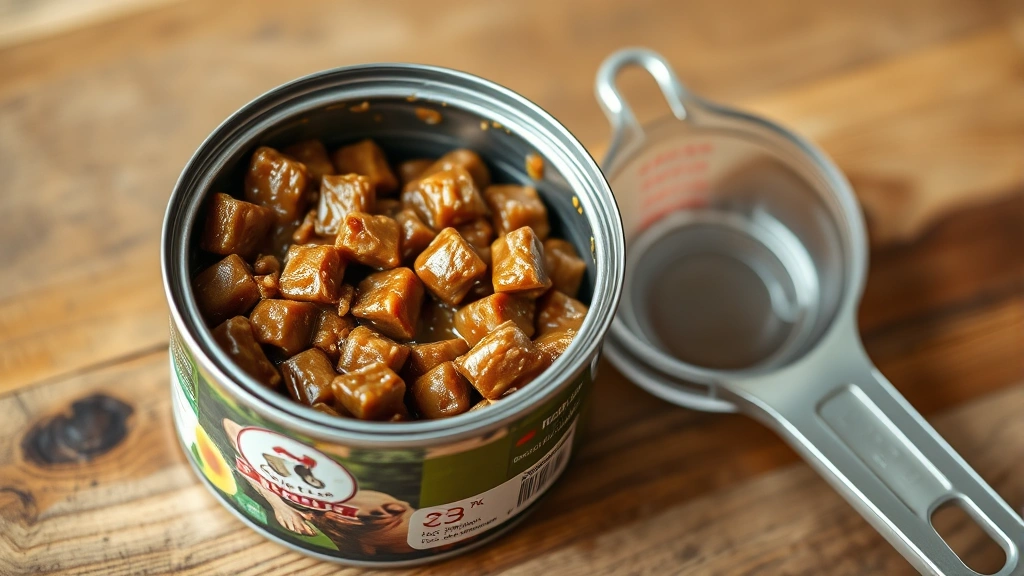
Here’s a practical example: Your 50-pound dog needs 1,200 calories daily. You decide to feed one can (250 calories) of canned food and supplement with dry kibble. That leaves 950 calories for kibble. If your kibble is 400 calories per cup, you’d feed about 2.4 cups of dry food daily.
The beauty of this approach? Your dog gets the moisture and palatability of canned food plus the dental benefits and cost-effectiveness of kibble. It’s the Goldilocks solution.
Special Diets and Health Conditions
Some dogs need prescription canned diets due to allergies, digestive issues, kidney disease, or other health concerns. These aren’t optional—they’re medical necessities, and you’ll follow your vet’s exact recommendations.
If your dog has a sensitive stomach, you might need to transition slowly to canned food. Our article on what not to feed your dog covers common allergens and problematic ingredients.
Senior dogs sometimes benefit from softer food that’s easier to chew, making canned an excellent choice. Learn more about senior pet friendly human foods and how to adjust nutrition for aging pups.
The Transition Game: Switching to Canned Food
If your dog’s been on dry kibble forever and you’re switching to canned, don’t just dump a can in the bowl. A sudden diet change causes digestive upset faster than you can say “diarrhea.”
Transition over 7-10 days: Start with 25% canned/75% old food, then 50/50, then 75/25, and finally 100% canned (if that’s your goal). Watch your dog’s stool consistency—if it gets loose, slow down the transition. For detailed guidance, check our pet diet transition advice.
Activity Level and Metabolic Rate
A working dog or one who exercises daily needs more calories than a sedentary companion. If your dog is a hiking buddy, runs regularly, or works as a service dog, they might need 20-30% more calories than the baseline calculation.
Conversely, if your dog has a slower metabolism (yes, some dogs are just wired that way), they might need 10-15% fewer calories. This is where observing your individual dog matters more than any chart. If your dog is maintaining a healthy weight on less food than the label suggests, that’s fine—every dog is different.
Portion Sizes by Dog Weight
Here’s a general guideline for adult dogs in moderate activity (assuming 1,000 calories per day needs roughly 4 cans of 250-calorie food, adjusted for your specific dog):
Small dogs (10-20 lbs): 0.5-1 can daily (depending on activity and metabolism)
Medium dogs (20-50 lbs): 1-2 cans daily
Large dogs (50-80 lbs): 2-3 cans daily
Giant dogs (80+ lbs): 3-4+ cans daily
These are starting points. Your vet’s recommendation trumps everything else.
When to Call Your Vet
If your dog is gaining or losing weight unexpectedly, has digestive issues, or you’re just unsure about portions, talk to your vet. They can assess your individual dog and make specific recommendations. Consider a telehealth pet nutrition consultation if you need professional guidance without leaving home.

Your vet might recommend premium brands, prescription formulas, or specific caloric targets. They’re your best resource for personalized advice.
Budget-Friendly Tips for Canned Food Feeding
Canned food is pricier than kibble, but you don’t have to go broke. Buy in bulk when there’s a sale, check for store brands that meet AAFCO standards, and consider mixing canned with dry to stretch your budget. Some owners feed canned as a topper rather than the main meal, which saves money while still providing benefits.
Look for sustainable options too—check out our guide on sustainable dog food for environmentally conscious choices.
Frequently Asked Questions
Can I feed my dog canned food exclusively?
Yes, if it’s a complete and balanced diet and your dog’s teeth stay healthy. However, it’s expensive and doesn’t provide the chewing stimulation dry food does. Most vets recommend a combination approach.
How do I know if I’m feeding the right amount?
Your dog should have a visible waist when viewed from above, and you should feel their ribs without pressing hard. They should maintain consistent weight and have good energy levels. If you’re unsure, ask your vet.
Is wet food better than dry food?
Neither is inherently “better”—it depends on your dog’s needs. Canned food has higher moisture content, which helps with hydration. Dry food is more convenient and better for dental health. Many dogs thrive on a combination.
What if my dog refuses to eat the amount I’m serving?
Some dogs self-regulate and eat only what they need. If your dog consistently leaves food and maintains healthy weight, that’s fine. If they’re losing weight, consult your vet—there might be an underlying issue.
Can I mix different brands of canned food?
Yes, as long as they’re all complete and balanced formulas. Mixing brands won’t hurt your dog, though switching frequently might cause digestive upset in sensitive dogs.
How long does an opened can stay fresh?
Refrigerate opened cans and use within 3-4 days. Some people portion into ice cube trays and freeze for convenience.
Summary: Getting Your Dog’s Portions Right
Figuring out how much canned food to feed a dog boils down to understanding your individual dog’s caloric needs, reading labels carefully, and adjusting based on weight and activity level. Start with the feeding guide on the can, monitor your dog’s weight and energy, and adjust as needed.
Most dogs thrive on a combination of canned and dry food, which balances nutrition, cost, and convenience. If you’re ever unsure, your vet is your best resource—they know your dog’s health history and can provide personalized recommendations.
The bottom line? Every dog is unique. What works for your neighbor’s golden retriever might not work for yours. Pay attention to your individual pup, keep their weight in a healthy range, and you’ll nail this whole feeding thing. Your dog will thank you with more tail wags and fewer digestive surprises.





