
How to Remove Dog Diarrhea from Carpet: A Complete Guide
Let’s be honest—one of the less glamorous aspects of dog ownership is dealing with the occasional accident on your carpet. While regular house training mishaps are manageable, diarrhea presents a uniquely challenging cleanup situation that can leave both stains and odors if not handled properly. Whether your furry friend ate something questionable at the park or is dealing with a temporary digestive upset, knowing how to get dog diarrhea out of carpet can save your flooring and your sanity.
The good news? With the right approach and materials, you can completely restore your carpet to its pre-accident condition. This comprehensive guide walks you through every step of the process, from immediate cleanup to deep cleaning and odor removal. We’ll also explore preventative measures and when it’s time to call in the professionals.
Before diving into the cleanup, it’s worth understanding that prompt action is your best friend here. The longer diarrhea sits on carpet fibers, the deeper it penetrates and the harder it becomes to remove completely. Let’s get started.
Immediate Cleanup Steps
The first few minutes after discovering diarrhea on your carpet are crucial. Your immediate goal is to remove as much of the solid and liquid matter as possible before it sets into the carpet fibers. Here’s the step-by-step process:
- Put on protective gear: Grab some disposable gloves and consider wearing a mask, especially if you have a sensitive stomach. This isn’t just about comfort—it’s about hygiene and preventing the spread of potential pathogens.
- Ventilate the area: Open windows and turn on fans to improve air circulation. This helps prevent odors from settling into your home and makes the cleanup process more pleasant.
- Remove the bulk: Using paper towels or a plastic scraper, gently remove as much of the diarrhea as possible. Work from the outside edges toward the center to avoid spreading it further. Don’t rub or scrub yet—that will only push it deeper into the fibers.
- Blot, don’t wipe: Once you’ve removed the bulk, use fresh paper towels to blot up remaining liquid. Press down firmly but gently, allowing the towels to absorb moisture rather than smearing it around.
- Dispose properly: Place all contaminated materials in a sealed plastic bag before throwing away. This prevents odors from spreading through your trash.
Essential Supplies You’ll Need
Before tackling the stain, gather these important supplies to ensure you have everything needed for effective cleanup:
- Paper towels and cleaning cloths: You’ll need plenty of absorbent materials. Microfiber cloths work particularly well as they trap liquids effectively.
- Disposable gloves: Latex or nitrile gloves protect your hands from bacteria and contaminants.
- Enzymatic cleaner: This is your secret weapon against diarrhea stains. Enzymatic cleaners break down organic matter at the molecular level, which is essential for complete removal.
- White vinegar: An affordable and natural option that helps neutralize odors and disinfect the area.
- Baking soda: Perfect for absorbing residual moisture and odors after initial cleanup.
- Hydrogen peroxide: A mild disinfectant that can help with stain removal, though test on a hidden carpet area first to ensure it won’t cause discoloration.
- Carpet cleaning machine (optional): A wet-dry vacuum or carpet cleaning machine can accelerate the drying process and provide deeper cleaning.
- Plastic scraper or old credit card: Use this to gently lift debris without damaging carpet fibers.
Proven Removal Methods
Now that you’ve done the initial cleanup and gathered your supplies, it’s time to tackle the stain itself. Different methods work for different situations, so choose based on what you have available and the severity of the accident.
The Enzymatic Cleaner Method
This is the most effective approach for diarrhea removal because enzymes actually digest organic matter. When cleaning dog accidents from carpet, enzymatic cleaners are worth their weight in gold. Here’s how to use them:
- Read the product instructions carefully—different brands have different application methods.
- Apply the enzymatic cleaner generously to the affected area, saturating the carpet fibers.
- Allow it to sit for the recommended time, usually 10-15 minutes. Don’t rush this step; the enzymes need time to work.
- Blot thoroughly with clean cloths, pressing down to extract as much liquid as possible.
- Rinse with clean water and blot again until the area is nearly dry.
- Allow to air dry completely before walking on the area.
The Vinegar and Baking Soda Method
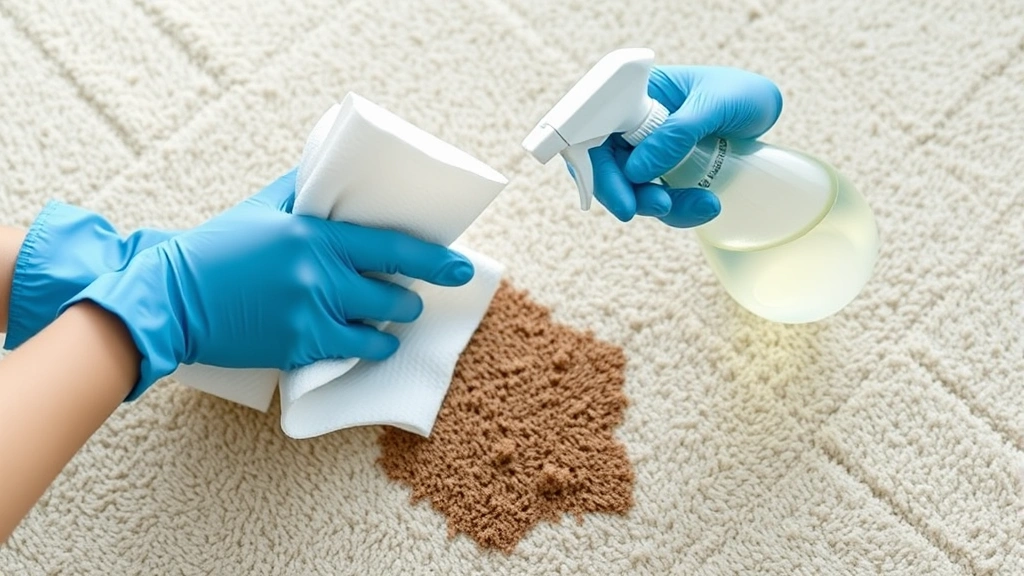
For a natural, budget-friendly approach, this combination is surprisingly effective:
- Mix equal parts white vinegar and water in a spray bottle.
- Spray the affected area generously, ensuring the solution penetrates the carpet fibers.
- Let it sit for 5-10 minutes, allowing the vinegar to neutralize odors and disinfect.
- Blot thoroughly with clean cloths.
- Sprinkle baking soda over the damp area and let it sit for several hours or overnight.
- Vacuum up the baking soda completely.
The Hydrogen Peroxide Method
This method works well for light-colored carpets but test it on a hidden area first to prevent bleaching:
- Blot up as much moisture as possible initially.
- Mix a solution of 3% hydrogen peroxide (standard drugstore variety) with a small amount of dish soap.
- Apply to the stain and let sit for 5-10 minutes.
- Scrub gently with a soft brush in circular motions.
- Blot thoroughly and rinse with clean water.
- Blot again and allow to air dry.
Deep Cleaning Your Carpet
After addressing the immediate stain, a thorough deep clean ensures complete removal of any remaining residue and bacteria. If you’re wondering about how to stop dog diarrhea from happening again, addressing the underlying cause is important, but first, let’s finish cleaning your carpet.
For best results, consider renting a professional-grade carpet cleaning machine from your local hardware store. These machines use hot water extraction, which is highly effective for deep cleaning. Here’s the process:
- Fill the machine’s tank with hot water and the recommended amount of carpet cleaning solution.
- Work in sections, moving the machine slowly over the affected area and surrounding carpet.
- Make multiple passes over the stained area to ensure thorough cleaning.
- Extract as much water as possible by making a final dry pass over the area.
- Open windows and turn on fans to facilitate drying.
- Avoid walking on the carpet until it’s completely dry, typically 12-24 hours.
According to the ASPCA, some household cleaning products can be toxic to dogs, so always choose pet-safe options when possible and rinse thoroughly after cleaning.
Eliminating Lingering Odors
Even after visible stains are gone, diarrhea can leave stubborn odors. Dogs have a much more sensitive sense of smell than humans, and lingering odors might prompt them to have accidents in the same spot again. Here’s how to eliminate odors completely:
- Activate charcoal: Place bowls of activated charcoal around the room to absorb odors naturally. Replace every 2-3 days for optimal results.
- Baking soda treatment: After your carpet is completely dry, sprinkle baking soda liberally over the affected area. Let it sit for 24-48 hours, then vacuum thoroughly. This is one of the most effective natural odor absorbers available.
- Enzymatic odor eliminators: These specialized products are designed specifically to neutralize pet odors by breaking down the compounds causing them. They’re often more effective than general deodorizers.
- Steam cleaning: A final steam cleaning pass can help eliminate any remaining odors while refreshing your entire carpet.
- Essential oils (with caution): While some essential oils can help with odors, many are toxic to dogs. If you use them, ensure the carpet is completely dry and the area is well-ventilated. Never use tea tree oil, citrus oils, or peppermint around pets.
The American Kennel Club provides guidance on house training, which can help prevent future accidents.
Prevention Tips
While accidents happen, understanding what causes diarrhea in dogs can help you prevent future carpet disasters. What to feed a dog with diarrhea is an important question, as diet often plays a significant role in digestive health.
Common causes of dog diarrhea include:
- Sudden dietary changes or eating inappropriate foods
- Food sensitivities or allergies
- Parasites or bacterial infections
- Stress or anxiety
- Ingestion of foreign objects
- Medications or supplements
To minimize accidents:
- Maintain a consistent feeding schedule: Regular meal times help regulate your dog’s digestive system and make it easier to predict bathroom breaks.
- Provide frequent potty breaks: Take your dog outside more frequently, especially after meals and before bedtime.
- Use baby gates or crates: If your dog has a sensitive stomach, limiting their access to carpeted areas during vulnerable times can prevent accidents.
- Monitor diet carefully: Avoid table scraps and sudden food changes. If you need to switch foods, do so gradually over 7-10 days.
- Treat underlying health issues: If diarrhea is chronic, consult your veterinarian to rule out infections, parasites, or allergies. You might also explore whether dogs can eat pumpkin, as it’s often recommended as a natural remedy for digestive issues.
According to the Merck Veterinary Manual, most cases of acute diarrhea resolve within a few days with proper management, but chronic diarrhea warrants professional evaluation.
When to Call Professional Cleaners
Sometimes, despite your best efforts, you need professional help. Consider calling in the experts if:
- The stain covers a large area or multiple spots
- Your carpet is delicate, antique, or expensive
- The diarrhea has dried completely and home remedies haven’t worked
- Odors persist after multiple cleaning attempts
- You’re concerned about bacterial contamination or health hazards
- Your carpet requires specialized cleaning methods
Professional carpet cleaners have access to industrial-grade equipment and specialized solutions that can tackle even the most stubborn diarrhea stains. They can also treat your carpet with protective coatings that make future cleanup easier. When choosing a professional service, look for companies experienced with pet-related accidents and ask about their use of pet-safe cleaning products.
Understanding how to treat dog diarrhea medically can also help prevent future carpet incidents, so consult your veterinarian if your dog experiences recurring episodes.
Frequently Asked Questions
What’s the best immediate action to take when I discover diarrhea on my carpet?
Act quickly! Remove the bulk of the material using paper towels or a plastic scraper, working from the edges toward the center. Blot (don’t wipe) remaining liquid with fresh paper towels. The faster you address it, the easier complete removal will be.
Can I use regular household cleaners on diarrhea stains?
While regular cleaners can help, enzymatic cleaners are specifically designed to break down organic matter and are far more effective for diarrhea. Regular cleaners may mask odors temporarily but won’t eliminate them completely. Always check that any cleaner you use is pet-safe.
How long does it typically take to completely remove a diarrhea stain?
Initial cleanup takes 15-30 minutes, but complete odor elimination and deep cleaning may take 24-48 hours. The carpet needs time to dry completely, and enzymatic cleaners need time to work. Rushing the process often means incomplete removal.
Why does my dog keep having accidents in the same spot?
Dogs have an incredible sense of smell. If odors aren’t completely eliminated, your dog will be drawn back to the same spot. This is why thorough cleaning and odor elimination are so important. If the problem persists, consult your veterinarian to rule out medical issues.
Are there any cleaning methods I should avoid?
Avoid using ammonia-based cleaners, as the smell can mimic urine and may encourage your dog to re-mark the area. Also avoid excessive scrubbing, which can damage carpet fibers and push stains deeper. Never use products containing essential oils like tea tree oil around pets, as they can be toxic.
Will professional carpet cleaning remove all diarrhea stains?
Professional cleaners have excellent success rates with pet-related stains, especially when called promptly. However, if the stain has set for weeks or the carpet was already damaged, complete restoration might not be possible. It’s worth getting a professional assessment before deciding.
How can I prevent my dog from having diarrhea accidents?
Maintain consistent feeding schedules, provide frequent potty breaks, avoid sudden dietary changes, and monitor what your dog eats. If diarrhea is chronic, consult your veterinarian to identify underlying causes such as parasites, allergies, or infections.
Is it safe to use vinegar and baking soda on all carpet types?
Generally yes—this natural combination is safe for most carpets. However, test on a hidden area first if your carpet is delicate, antique, or dyed with natural dyes. When in doubt, consult your carpet manufacturer’s cleaning guidelines.





