

Learning how to teach a dog to retrieve is one of the most rewarding skills you can instill in your furry friend, and honestly, it’s way easier than you’d think. Whether you’ve got a natural-born fetcher or a couch potato who thinks “retrieve” is a four-letter word, this guide will walk you through everything you need to know to turn your pup into a retrieval superstar.
Table of Contents
- Why Teaching Your Dog to Retrieve Matters
- Understanding Your Dog’s Natural Instincts
- Step 1: Start With the Right Equipment
- Step 2: Build Prey Drive With Enticing Games
- Step 3: Introduce the Basic Throw and Chase
- Step 4: Encourage the Return With High-Value Rewards
- Step 5: Add Distance and Duration Gradually
- Common Retrieval Training Mistakes to Avoid
- Breed-Specific Considerations
- Troubleshooting: When Your Dog Won’t Retrieve
- Advanced Retrieval: Taking It to the Next Level
- Safety Tips for Retrieval Training
- Frequently Asked Questions
- Summary: Your Retrieval Training Roadmap
Why Teaching Your Dog to Retrieve Matters
Before we dive into the nitty-gritty, let’s talk about why this skill is actually a big deal. Teaching your dog to retrieve isn’t just about impressing your friends at the dog park (though that’s a nice bonus). It’s about mental stimulation, physical exercise, and strengthening the bond between you and your furry companion. Dogs that know how to retrieve are happier, more engaged, and frankly, they tire out faster—which means fewer “destroy the couch” incidents at home.
Plus, if you’ve got a sporting breed or a high-energy pup, energy-boosting foods for active pets paired with retrieval training creates the perfect combo for a well-adjusted dog.
Understanding Your Dog’s Natural Instincts
Here’s the thing: some dogs are literally hardwired to retrieve. Retrievers, Spaniels, and Labradoodles have centuries of breeding telling them to chase and bring things back. But even if you’ve got a stubborn Bulldog or a independent Husky, you can still teach retrieval—it just might take a bit more patience and the right motivation.
The key is understanding what drives your individual dog. Is it food? Toys? Praise? Once you crack that code, you’re golden.
Step 1: Start With the Right Equipment
You don’t need fancy gear to teach your dog to retrieve. A simple tennis ball, a rope toy, or even an old sock will do the trick. What matters is choosing something your dog actually wants. Spend a few days observing what toys your pup gravitates toward naturally.
Pro tip: Start indoors in a controlled environment where distractions are minimal. Your living room is your training ground, not the dog park.
Step 2: Build Prey Drive With Enticing Games
Before your dog can retrieve, they need to want to chase. Make the toy irresistible by dragging it around, tossing it just out of reach, and acting like it’s the most exciting thing in the world. Your enthusiasm is contagious—if you’re bored, your dog will be too.
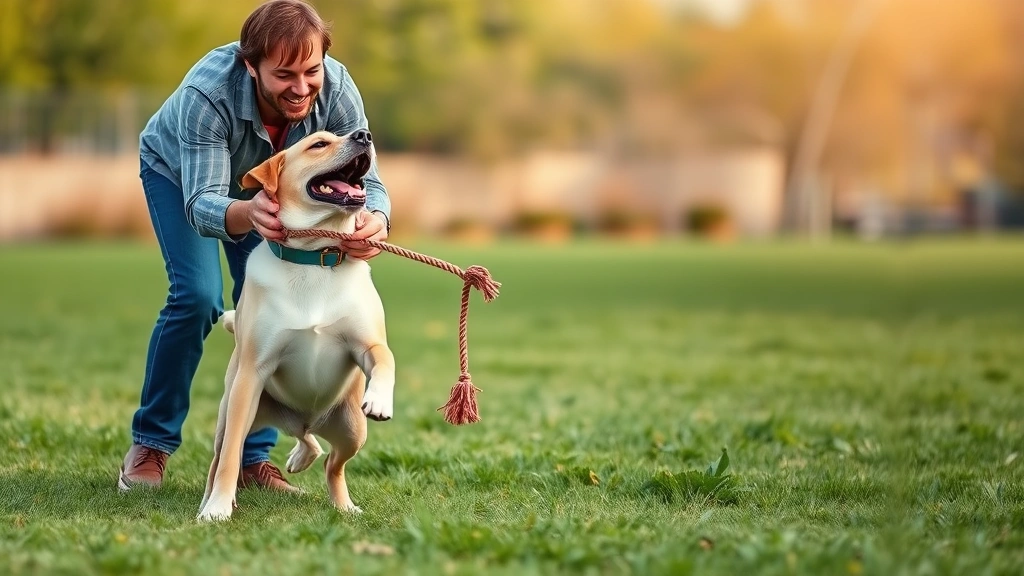
Play tug-of-war, wave the toy around, and let your dog “catch” it occasionally. This builds excitement and makes them associate the toy with fun. This foundational work is crucial for dog retrieval training success.
Step 3: Introduce the Basic Throw and Chase
Once your dog is interested in the toy, try a very short throw—we’re talking 3-5 feet. The goal isn’t distance; it’s building the habit of chasing. When your dog goes after the toy, celebrate like they just won the lottery. Use a high-pitched, excited voice: “Yes! Good dog!”
At this stage, don’t worry about them bringing it back. Just reward the chase. This is the foundation of teaching your dog to retrieve effectively.
Step 4: Encourage the Return With High-Value Rewards
Now comes the tricky part: getting them to bring it back. This is where proper nutrition and treats become your secret weapon. Have a treat ready—something your dog loves more than the toy itself. When they pick up the toy, show them the treat and say “Come!” in an excited voice.
When they come toward you, take the toy gently and immediately reward them with the treat and praise. Repeat this dozens of times. Consistency is everything here.
Step 5: Add Distance and Duration Gradually
Once your dog consistently brings the toy back for short distances, slowly increase the throw distance. Add it incrementally—5 feet to 10 feet to 20 feet. Each dog progresses at their own pace, so don’t rush this phase.
Some dogs will nail this in a week; others might take a month. That’s completely normal. Patience is your best friend in dog retrieval training.
Common Retrieval Training Mistakes to Avoid
Let’s talk about what NOT to do. First, never chase your dog to get the toy back. You’re teaching them that keeping it away is a game. Instead, make coming to you more rewarding than running away.
Second, don’t punish a dog who doesn’t want to retrieve. This creates negative associations and makes training harder. If your pup isn’t interested, take a break and try again later.
Third, avoid using the same toy every single time. Rotate toys to keep things fresh and exciting. And remember, giving your dog a cool name and using it consistently during training helps with overall obedience too.
Breed-Specific Considerations
Different breeds have different natural inclinations. Sporting breeds like Retrievers and Pointers typically pick this up quickly. Hounds might be more interested in scent than in returning toys. Toy breeds might find larger toys intimidating. Adjust your approach based on your dog’s breed characteristics and individual personality.
Even breeds like Chug dogs or Coonhound dogs can learn retrieval with the right motivation and patience.
Troubleshooting: When Your Dog Won’t Retrieve
If your dog shows zero interest in chasing toys, try different items: balls, sticks, squeaky toys, or even crumpled paper. Some dogs prefer soft toys; others like hard ones. Experiment.
If your dog chases but won’t return, go back to shorter distances and higher-value rewards. You might need to make coming to you more rewarding than anything else in the world.
According to the American Kennel Club, patience and positive reinforcement are the cornerstones of successful retrieval training. Never force it or use punishment-based methods.
Advanced Retrieval: Taking It to the Next Level
Once your dog has the basics down, you can add complexity. Try throwing toys in different directions, hiding toys for them to find, or training them to retrieve specific items by name. Some owners even teach their dogs to retrieve on command in water or over obstacles.
The PetMD training guide offers excellent resources for advanced techniques once your dog masters the fundamentals.

Safety Tips for Retrieval Training
Always supervise training sessions. Make sure the toys you use are appropriately sized for your dog—nothing so small it could be a choking hazard. Avoid training in extreme heat or cold, and always provide fresh water.
Check out Veterinary Partners for health considerations specific to high-activity training.
Frequently Asked Questions
How long does it take to teach a dog to retrieve?
Most dogs can learn basic retrieval in 2-4 weeks with consistent daily training (10-15 minutes per day). Some naturally gifted retrievers might get it in days, while others might need 2-3 months. Every dog is unique, and that’s perfectly okay.
Can older dogs learn to retrieve?
Absolutely! While puppies might pick it up faster, older dogs can definitely learn. Older dogs sometimes have the advantage of better focus and impulse control. Start slowly and be extra patient with senior pups.
What if my dog just keeps the toy and won’t give it back?
Trade up. Have an even better reward ready. If they bring the toy back, they get the treat. If they don’t, the game ends. Dogs are smart—they’ll figure out the equation quickly.
Is retrieval training safe for puppies?
Yes, but keep it short and low-impact. Avoid jumping or running on hard surfaces until their bones fully develop (around 12-18 months depending on breed). Stick to soft grass and short distances with young pups.
Do all dogs enjoy retrieving?
Not necessarily. Some dogs simply aren’t interested in chasing toys, and that’s okay. Not every dog needs to be a retriever. If your dog prefers other activities, that’s their personality coming through.
Summary: Your Retrieval Training Roadmap
Teaching your dog how to retrieve doesn’t require a degree in canine behavior or expensive professional training. It requires patience, consistency, the right rewards, and a genuine love for your furry friend. Start with short distances, use high-value treats, celebrate every small success, and never force it.
Remember that every dog learns at their own pace. Some will become retrieval champions in weeks; others will take longer. The journey is just as important as the destination. And honestly? Watching your dog figure out that bringing the toy back gets them the best reward is one of the purest joys of dog ownership.
So grab that tennis ball, head outside, and start your retrieval adventure today. Your dog is ready, and so are you.





