
Getting your pet’s medication with food schedule right is literally the difference between your furry friend bouncing around like they own the place and them spending the day looking like they’ve seen better days. It sounds simple—give pill, give food, done—but if you’ve ever tried to convince a cat that their medication-laced treat is actually delicious, you know it’s way more complicated than that.
Table of Contents
- Why Timing Matters: The Food and Medication Connection
- Understanding Your Vet’s Instructions: The Real Translation
- Creating a Realistic Medication Schedule for Your Pet
- Managing Multiple Medications and Complex Schedules
- Tricks for Getting Stubborn Pets to Take Medications
- Post-Surgery and Recovery: Special Medication Considerations
- Storage and Consistency: Keeping Your Medication Schedule On Track
- Digital Tools and Apps for Managing Your Pet’s Medications
- Common Mistakes That Derail Medication Schedules
- When to Contact Your Vet About Medication Issues
- Summary: Making Medication With Food Schedule Actually Work
- Frequently Asked Questions
Why Timing Matters: The Food and Medication Connection
Here’s the thing: not all medications play nicely with food, and some absolutely demand it. Some drugs get absorbed better on an empty stomach because food interferes with their absorption rate. Others? They’ll tear up your pet’s stomach lining faster than you can say “emergency vet visit” if you don’t pair them with food. Think of it like pairing wine with dinner—some combos are perfect, others are a disaster.
The timing of your pet’s medication with food schedule affects how quickly the drug enters the bloodstream, how much of it actually gets absorbed, and whether your pet’s digestive system stays happy or stages a rebellion. Your vet isn’t just being difficult when they specify “with food” or “on an empty stomach”—they’re trying to keep your pet comfortable and ensure the medication actually works.
Understanding Your Vet’s Instructions: The Real Translation
When your vet says “give with food,” they usually mean within 30 minutes of a meal, though some medications are flexible. “On an empty stomach” typically means at least 2 hours before eating or 1 hour after. But here’s where it gets tricky: your pet doesn’t read schedules. They eat when they feel like it, sleep when they want, and completely ignore your carefully planned medication routine.
This is where pet supplement dosage guidance becomes your best friend. Understanding the exact requirements helps you create a realistic schedule that actually works with your pet’s natural habits rather than against them.
Creating a Realistic Medication Schedule for Your Pet
The best medication with food schedule is one you can actually stick to. If you work full-time and your pet stays home alone, twice-daily medication at 8 AM and 8 PM might sound perfect on paper but fail spectacularly in practice. Instead, sync your pet’s medication times with their natural eating patterns.
Most pets eat at the same times daily. Use those moments as anchors for your medication schedule. If your dog eats breakfast at 7 AM and dinner at 6 PM, give morning medications with breakfast and evening ones with dinner. Cats? They’re pickier, so you might need to establish feeding times if they’re currently grazing all day.
Create a visual calendar or set phone reminders. Seriously. Your brain will forget. Phone reminders won’t. There’s no shame in using technology to keep your pet healthy.
Managing Multiple Medications and Complex Schedules
When your pet needs multiple medications, things get spicy. Some can be taken together, others absolutely cannot because they’ll interact and reduce effectiveness or create dangerous combinations. Your vet or pharmacist should provide a chart showing which medications go together and which need spacing.
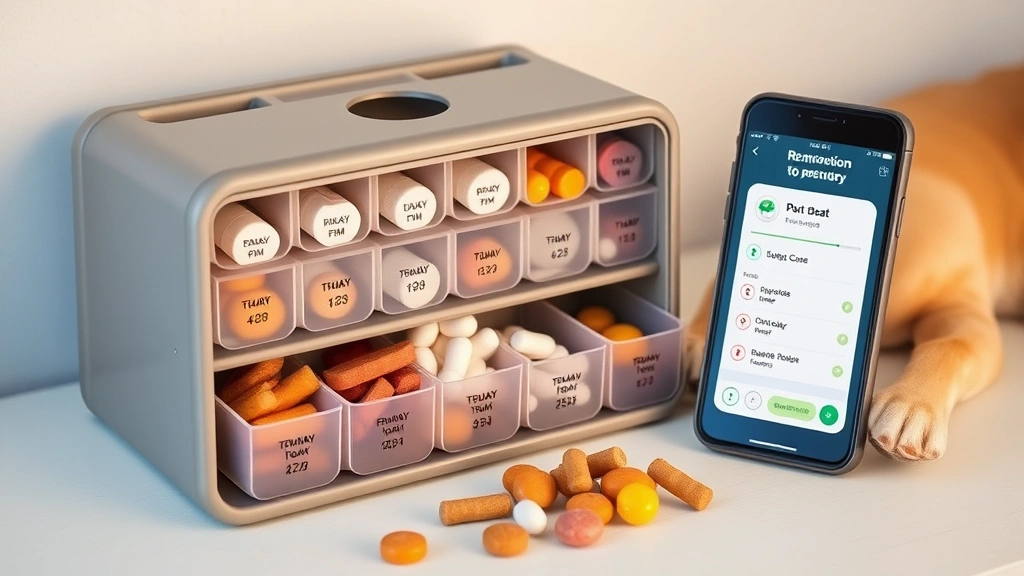
For pets requiring multiple drugs, consider using a pill organizer labeled by day and time. It sounds overly organized, but it prevents the “did I give the afternoon dose?” panic at 9 PM. Some pet owners even photograph their organizer at the start of the week as proof of what they’re giving and when.
If your pet needs medications spaced apart, the medication with food schedule becomes even more critical. You might need to give one medication with breakfast, another with a mid-day snack, and a third with dinner. This requires planning, but it’s doable.
Tricks for Getting Stubborn Pets to Take Medications
Here’s where creativity meets desperation. Some pets will swallow pills hidden in peanut butter like they’re treats. Others can detect a single medication molecule hidden in a pile of their favorite food and reject the entire meal with the disdain of a food critic.
Options include pill pockets (those little dough things), cream cheese, liverwurst, or compounded medications that taste like chicken or beef. Some compounding pharmacies can turn bitter pills into flavored liquids or treats, making the medication with food schedule infinitely easier. Check with your vet about whether this option exists for your pet’s specific medication.
For liquid medications, a syringe or dropper lets you place it directly in the mouth, bypassing the taste buds entirely. For cats especially, this might be your only option. Sensitive stomach supplements and medications often come in forms designed to be easier on digestive systems, so ask your vet about formulation options.
Post-Surgery and Recovery: Special Medication Considerations
Post-operative pets need extra care with their medication schedule. After surgery, your pet’s appetite might be weird—they could refuse food for a day or two, which throws your carefully planned medication with food schedule into chaos. Some post-surgery medications are critical and can’t be missed, even if your pet isn’t eating normally.
In these cases, work with your vet on alternatives. Some medications can be given on a small amount of food (like a single spoonful of broth or wet food) rather than a full meal. Others might need to be given regardless of food intake, with instructions to monitor for stomach upset. Post-surgery supplements for pets often have specific timing requirements that differ from regular medications.
Storage and Consistency: Keeping Your Medication Schedule On Track
A solid medication with food schedule only works if you can actually access your medications. Keep them in a consistent, easy-to-reach location—preferably near where you feed your pet. Some people keep medications in the kitchen, right next to the pet food, so they can’t forget.
Temperature and humidity matter too. Most medications need cool, dry storage. Bathrooms might seem convenient, but the humidity from showers degrades many drugs. Kitchens work better, as long as they’re not directly above the stove. Pet supplement storage follows similar rules and ensures your medications stay effective for their full shelf life.
Keep the original bottle with labels intact so you always know the medication name, dosage, and any special instructions. If you refill prescriptions, don’t transfer pills between bottles—that’s how mistakes happen.
Digital Tools and Apps for Managing Your Pet’s Medications
In 2024, there’s literally an app for everything, including pet medication management. Apps like PetDesk, Chewy’s medication reminder feature, or even a simple Google Calendar can help you track when medications were given, refill dates, and upcoming vet appointments.
Some apps let you photograph your pet’s medication bottle and set automatic reminders. Others sync with multiple family members so everyone knows what’s been given. If your pet is being cared for by a pet sitter or family member, these apps provide proof that medications were administered on schedule.
For pet owners who travel or have irregular schedules, automatic pet supplement delivery services can ensure medications arrive on time and you never run out unexpectedly.
Common Mistakes That Derail Medication Schedules
The biggest mistake? Assuming your pet will eat on schedule. They won’t. Life happens. Your pet gets stressed, sick, or just decides breakfast looks boring today. Have a backup plan for giving medications if your pet refuses food.
Another common error: not telling your vet about over-the-counter supplements or treats your pet takes. Some of these interact with prescription medications, reducing effectiveness or creating problems. When your vet asks “is your pet on anything else?,” include everything—treats, supplements, dental chews, everything.
Stopping medication early because your pet seems better is a classic mistake that leads to relapsed infections or uncontrolled conditions. Finish the full course unless your vet explicitly says otherwise. The medication with food schedule might feel tedious by day 10, but it’s there for a reason.
When to Contact Your Vet About Medication Issues
If your pet consistently refuses food when it’s time for medication, tell your vet. They might adjust the timing, change the formulation, or provide alternative options. If your pet shows signs of stomach upset, vomiting, or diarrhea after medications, report it immediately—the food pairing might need adjustment.
If you miss a dose, contact your vet before giving a double dose at the next scheduled time. Depending on the medication and how much time has passed, they might have specific instructions. Some medications are flexible; others need precise timing.
External resources like PetMD’s medication guide and the American Kennel Club’s health resources provide additional information about specific medications and their requirements. Your vet’s office should also have printed materials about your pet’s specific prescriptions.
Summary: Making Medication With Food Schedule Actually Work
Your pet’s medication with food schedule isn’t just bureaucratic busywork from your vet—it’s a critical component of their treatment plan. The right timing and food pairing ensure medications work effectively and your pet’s digestive system stays happy.
Start by understanding your vet’s specific instructions, sync medication times with your pet’s natural eating patterns, use reminders and organizational tools, and don’t hesitate to ask for alternatives if your current system isn’t working. Pets are individuals; what works for your neighbor’s dog might be completely impractical for yours.
The goal is creating a sustainable routine that you can maintain long-term without stress or missed doses. That’s when real healing happens.
Frequently Asked Questions
Can I give medication without food if my pet refuses to eat?
Not always. Some medications absolutely require food to prevent stomach upset, while others are fine on an empty stomach. Contact your vet immediately if your pet consistently refuses food at medication time—they can adjust the timing, change formulations, or provide alternative options like compounded medications.
What if I miss a dose of my pet’s medication?
Don’t give a double dose at the next scheduled time. Instead, contact your vet or pharmacist for guidance. Depending on the medication and how much time has passed, they’ll advise whether to give the missed dose late or skip it and resume the regular schedule. Some medications are flexible; others require precise timing.
How long should I wait between giving medication and food?
This varies by medication. “With food” typically means within 30 minutes of eating. “On an empty stomach” usually means at least 2 hours before eating or 1 hour after. Always follow your vet’s specific instructions, as some medications have stricter requirements than others.
Can I use pill pockets or treats to hide medications?
Yes, if your pet will eat them. Pill pockets, cream cheese, liverwurst, or other high-value treats work for many pets. However, some pets detect medications and reject the entire treat. If this happens, ask your vet about compounded medications formulated to taste better or alternative delivery methods like liquid formulations.
What should I do if my pet vomits after taking medication with food?
Contact your vet. Vomiting could indicate that the food-medication pairing isn’t working, the dosage is too high, or your pet has an underlying stomach issue. Your vet might recommend giving medication with a smaller amount of food, changing the type of food, adjusting timing, or switching to a different medication formulation.





