
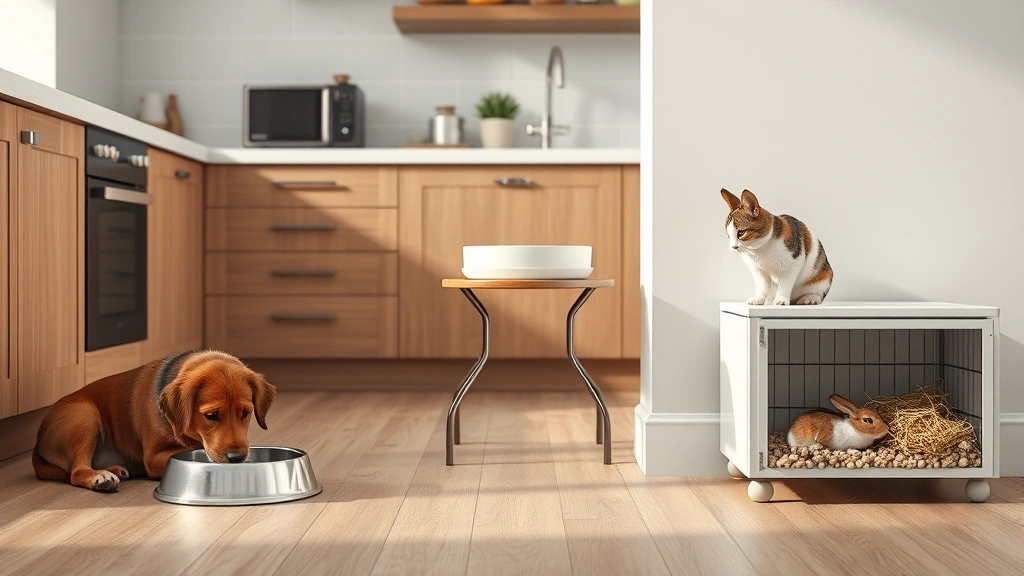
Feeding multiple pets simultaneously sounds simple until your cat decides your dog’s food is gourmet, your rabbit claims the guinea pig’s hay as personal property, and nobody’s actually eating what you put down. Multi-pet household feeding strategies are essential for keeping peace in the kingdom, ensuring each furry (or fluffy) family member gets the nutrition they need, and preventing the chaos that ensues when pets raid each other’s meals.
Table of Contents
- Why Multi-Pet Feeding Gets Complicated (And Why It Matters)
- Solution 1: Separate Feeding Stations (The Gold Standard)
- Solution 2: Timed Feeding With Scheduled Meals
- Solution 3: Microchip Feeders (Tech-Savvy Pet Parents)
- Solution 4: Elevated Feeders and Furniture Barriers
- Solution 5: Crate Training and Enclosed Feeding Spaces
- Preventing Overfeeding in Multi-Pet Homes
- Using Enrichment Tools to Manage Feeding Chaos
- Choosing the Right Feeders for Your Setup
- Health Monitoring Through Feeding Habits
- Frequently Asked Questions
- Creating Your Multi-Pet Feeding System
- Summary: Your Multi-Pet Feeding Action Plan
Whether you’re managing a dog-cat duo, a full menagerie, or somewhere in between, the right feeding approach transforms mealtime from a circus act into something manageable. Let’s dive into proven solutions that actually work.
Why Multi-Pet Feeding Gets Complicated (And Why It Matters)
Feeding multiple pets isn’t just about doubling the portion sizes. Each pet has different nutritional needs, eating speeds, and dietary restrictions. Your senior dog might need joint-supporting supplements while your young cat requires high protein. Your rabbit needs unlimited hay, but your guinea pig can’t have certain vegetables that are safe for others.
The real challenge? Preventing food theft. Dogs often see cat food as a premium snack. Cats sometimes get curious about dog kibble. Smaller pets’ specialized diets can be dangerous for larger ones. According to the PetMD nutrition guide, feeding incompatibility issues cause more household stress than most pet parents realize.
Solution 1: Separate Feeding Stations (The Gold Standard)
The most effective multi-pet household feeding strategy is creating dedicated feeding zones for each pet. This isn’t about fancy equipment—it’s about geography and boundaries.
Set up each pet’s feeding station in a different room or area. Your dog eats in the kitchen, the cat gets a quiet corner in the bedroom, and smaller pets have their setup in a separate space entirely. The beauty here? Supervision becomes easier, portion control improves, and food theft becomes nearly impossible.
Pro tip: Use baby gates or pet barriers to create physical separation. Your dog stays out of the cat’s territory during meals, and everyone eats in peace. This approach also helps you monitor individual consumption, which is crucial for detecting health issues early.
Solution 2: Timed Feeding With Scheduled Meals
Instead of leaving food down all day (free feeding), implement scheduled meal times. This transforms feeding from a constant availability situation into structured events.
Here’s how it works: Feed your pets at specific times—say 8 AM and 5 PM. Put food down for 15-20 minutes, then remove whatever isn’t eaten. This method lets you control portions, monitor appetite changes, and prevent overeating. It’s particularly effective in mixed diet feeding scenarios where different pets need different foods.
Timed feeding also helps with house training and digestive issues. You’ll know exactly when your pets need bathroom breaks, and it’s easier to spot if someone’s experiencing digestive upset. Plus, it creates routine—pets love knowing when meals happen.
Solution 3: Microchip Feeders (Tech-Savvy Pet Parents)
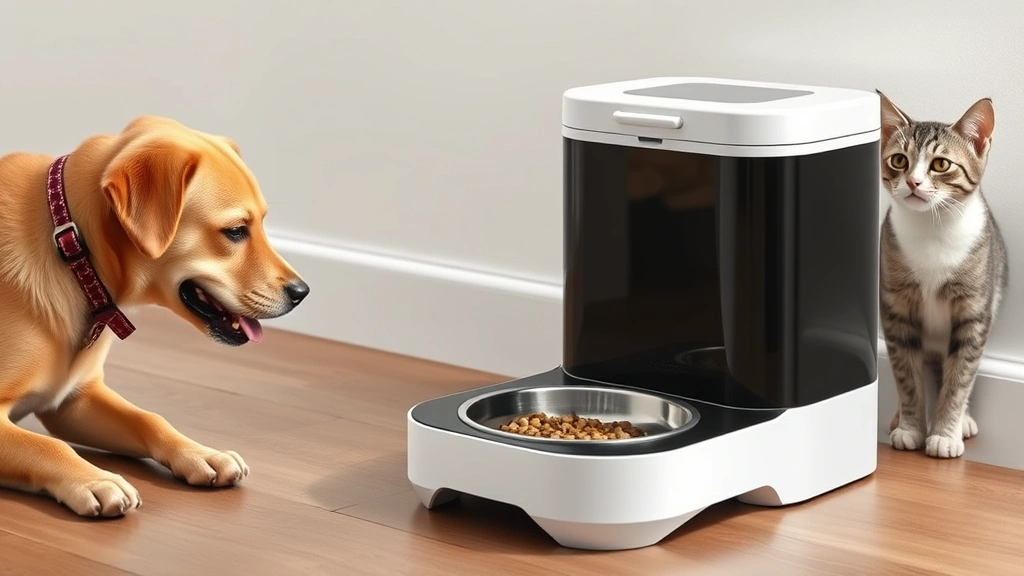
If you’re ready to embrace technology, microchip feeders are game-changers. These smart bowls only open for the specific pet wearing a microchip collar.
Your dog’s microchip triggers the bowl to open for their food while the cat’s microchip activates a different feeder with their meal. It’s like having a VIP pass to the right restaurant. While pricier than traditional feeders, microchip feeders eliminate guesswork and prevent unwanted food sharing entirely.
They’re especially valuable if you have pets with sensitive stomach feeding schedules or prescription diets. No accidental cross-contamination, no dietary disasters.
Solution 4: Elevated Feeders and Furniture Barriers
Sometimes the simplest solutions work best. Elevated feeders keep smaller pets’ food at appropriate heights while creating physical barriers for larger pets.
Place your cat’s food on a high shelf, elevated stand, or cat-specific furniture your dog can’t access. Dogs typically can’t jump as high as cats, so this height difference becomes your security system. Your cat eats peacefully while your dog respects the boundary (with training, of course).
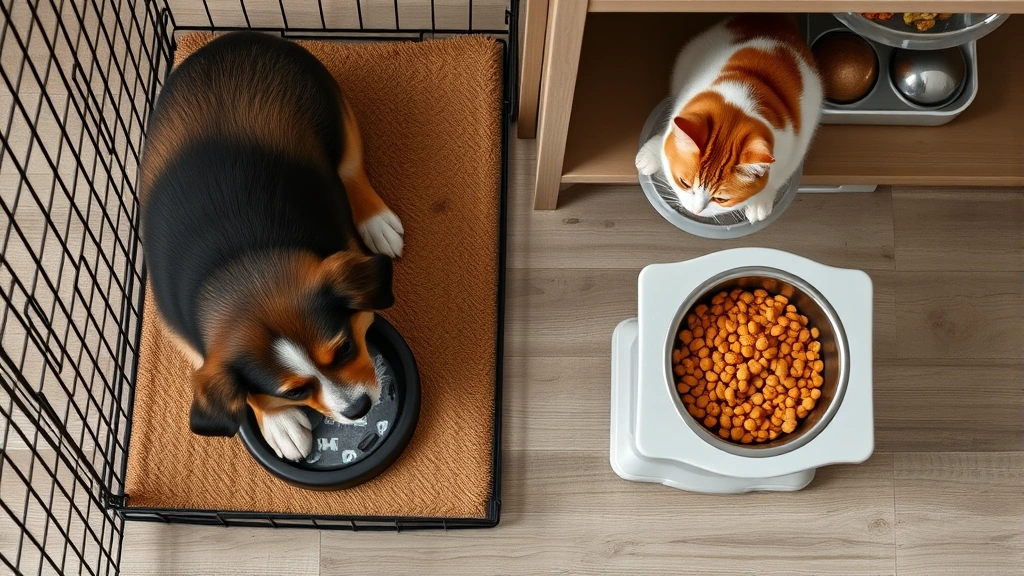
For households with multiple dogs of different sizes, elevated feeders help smaller dogs eat without larger dogs dominating the bowl. This approach also improves digestion—elevated feeding reduces bloating and neck strain, particularly beneficial for larger breeds.
Solution 5: Crate Training and Enclosed Feeding Spaces
Crate training isn’t just for house training—it’s an excellent feeding strategy. Feed your dog in their crate with the door open, creating a safe space that’s theirs alone.
Cats appreciate enclosed spaces too. A covered cat bed or box near their feeding area creates security. Smaller pets like rabbits and guinea pigs benefit from enclosures that prevent larger pets from accessing their food.
This method combines security with comfort. Your dog learns their crate is a positive place (not punishment), while other pets feel protected during vulnerable eating moments. It’s particularly effective when you need to manage a pet food transition schedule for one pet while others continue their regular diet.
Preventing Overfeeding in Multi-Pet Homes
One sneaky problem with multiple pets? Nobody knows who’s eating what. Your dog might eat their food plus the cat’s leftovers, leading to overfeeding pets and weight issues.
Track feeding carefully. Use a chart showing what each pet ate and when. Weigh your pets monthly to catch weight changes early. Adjust portions based on individual activity levels and metabolism. Your energetic young dog needs more calories than your senior cat—feeding strategies must account for these differences.
According to AAFCO guidelines, proper portion sizing is crucial for multi-pet households. Obesity in pets leads to joint problems, diabetes, and shortened lifespans. Getting portions right matters.
Using Enrichment Tools to Manage Feeding Chaos
Smart feeding doesn’t mean boring feeding. Feeding enrichment toys make mealtime engaging while naturally slowing consumption.
Puzzle feeders, treat-dispensing toys, and slow-feed bowls turn eating into mental stimulation. Your dog works for their food, gets enrichment, and eats slower (better digestion). Cats enjoy puzzle feeders that mimic hunting. Even small pets benefit from enrichment during feeding.
This approach serves double duty: It keeps pets occupied during feeding time, reducing the likelihood of food theft, and provides mental stimulation that prevents behavioral issues.
Choosing the Right Feeders for Your Setup
Not all feeders work for all situations. Gravity feeders for pets work well for free-feeding scenarios but are terrible for multi-pet households where you need portion control.
Stainless steel bowls are durable and easy to clean. Ceramic works well but breaks easily. Elevated feeders reduce strain on joints. Slow-feed bowls prevent bloating. Choose feeders that match your specific multi-pet feeding strategy.
Consider your pets’ sizes, eating habits, and any special needs. A dog that inhales food needs a slow-feed bowl. A cat that prefers privacy needs an enclosed space. Rabbits need hay racks separate from pellet feeders. Match equipment to needs.
Health Monitoring Through Feeding Habits
Structured feeding strategies reveal health changes fast. When you know exactly what each pet should eat and monitor actual consumption, you spot problems early.
Changes in appetite can indicate illness, stress, or dietary issues. A pet suddenly eating less or more warrants a vet visit. With separate feeding stations and timed feeding, you’ll notice these changes immediately instead of assuming someone else ate the food.
Keep records. Note what each pet ate, when they ate it, and any behavioral changes during feeding. This information is invaluable for veterinarians diagnosing health issues.
Frequently Asked Questions
Can I free-feed some pets while others eat scheduled meals?
Yes, but it requires careful management. Use separate feeding stations and physical barriers to prevent the free-fed pet’s food from being eaten by scheduled-fed pets. This works best when you can truly keep feeding areas completely separate—different rooms are ideal.
What should I do if my dog is stealing the cat’s food?
Implement separate feeding stations immediately. Feed them in different rooms or use baby gates to create barriers. Consider elevated feeders for the cat or enclosed spaces. If behavioral issues persist, consult a trainer. The goal is prevention—don’t rely on training alone to stop food theft.
How do I transition one pet’s diet without affecting others?
Separate feeding stations make diet transitions simple. Feed the transitioning pet their new food while others continue their regular diet. Follow a gradual transition schedule (typically 7-10 days) to avoid digestive upset. Separate spaces ensure no accidental cross-feeding.
Are microchip feeders worth the investment?
For households with strict dietary needs, prescription diets, or persistent food-stealing issues, absolutely. They’re expensive ($100-300+) but provide perfect portion control and prevent dietary accidents. For casual multi-pet households, separate feeding stations work fine.
How often should I feed multiple pets?
It depends on age and species. Puppies and kittens need 3-4 meals daily. Adult dogs typically eat twice daily. Adult cats can eat once or twice daily. Senior pets might benefit from smaller, more frequent meals. Consult your vet for individual recommendations.
What if my pets have different activity levels?
Adjust portions individually. Your active dog needs more calories than your lazy cat. Monitor body condition (you should feel ribs without pressing hard). Adjust portions based on actual results, not just age or weight. Each pet is unique.
Creating Your Multi-Pet Feeding System
The best multi-pet household feeding strategy combines multiple approaches tailored to your specific situation. Start with separate feeding stations and timed feeding—these are foundational. Add enrichment tools for engagement and mental stimulation. Consider microchip feeders if budget allows and needs warrant it. Monitor everything and adjust as needed.
Your goal isn’t perfection; it’s creating a system where each pet gets appropriate nutrition, behavioral issues decrease, and mealtime becomes less chaotic. Most households find success with a combination of strategies rather than relying on one solution alone.
Remember: What works for your neighbor’s three dogs might not work for your dog-cat-rabbit household. Observe your pets’ behavior, monitor their health, and adjust strategies based on real-world results. Feeding multiple pets successfully is about flexibility, observation, and willingness to adapt.
Summary: Your Multi-Pet Feeding Action Plan
Implementing multi-pet household feeding strategies doesn’t require expensive equipment or complicated systems. Start by creating separate feeding stations in different areas. Implement scheduled meal times instead of free feeding. Monitor individual consumption to catch health issues early. Use physical barriers and elevated feeders to prevent food theft. Add enrichment tools to keep meals interesting and slow consumption.
Track what works and what doesn’t. Adjust portions based on individual needs and body condition. Consult your veterinarian about specific dietary requirements for each pet. Most importantly, remember that feeding multiple pets is a solvable problem—thousands of households manage it successfully every day.
Your multi-pet family can thrive with the right feeding approach. It takes initial effort to establish systems, but once in place, mealtime becomes manageable, predictable, and actually enjoyable for everyone involved.





