
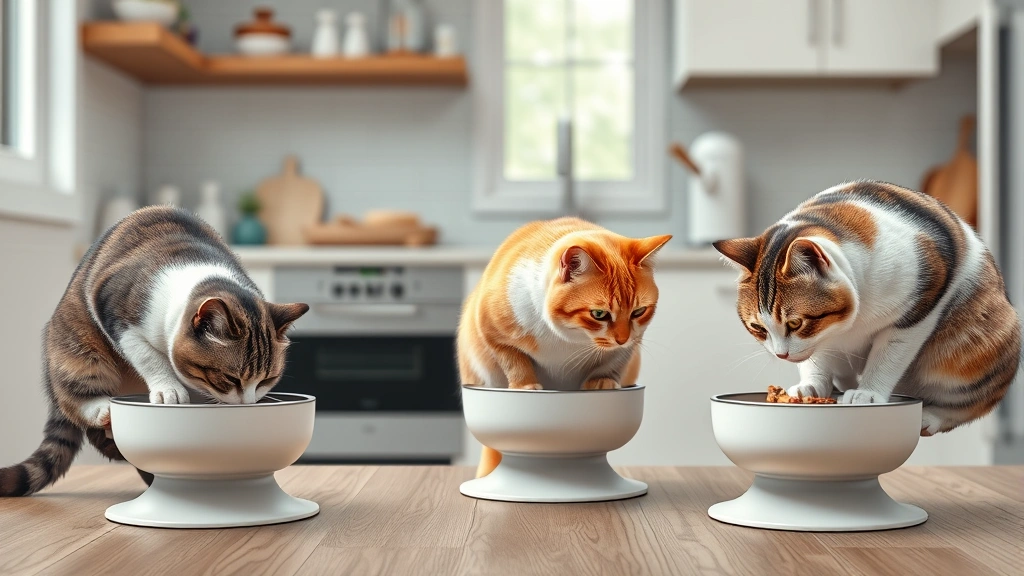
If you’ve got multiple cats at home, you know that feeding time can feel like herding, well, cats. One kitty scarfs down their food in seconds while another picks daintily, and somehow there’s always drama. The good news? Multiple cat feeding solutions exist to transform your chaotic mealtimes into peaceful, organized affairs where every feline gets exactly what they need.
Table of Contents
- Why Multiple Cat Feeding Solutions Matter
- Solution 1: Separate Feeding Stations in Different Rooms
- Solution 2: Microchip-Activated Automatic Feeders
- Solution 3: Timed Automatic Feeders with Portion Control
- Solution 4: Elevated Bowls and Cat-Specific Feeding Furniture
- Solution 5: Scheduled Feeding with Supervision
- Combining Solutions for Maximum Success
- Nutritional Considerations for Multi-Cat Households
- Common Mistakes to Avoid
- Frequently Asked Questions
- Conclusion: Your Path to Peaceful Mealtimes
Why Multiple Cat Feeding Solutions Matter
Feeding multiple cats isn’t just about tossing kibble in bowls and hoping for the best. Different cats have different nutritional needs, eating speeds, and dietary restrictions. One cat might be on a prescription diet while another needs weight management. Without proper cat feeding strategies, you risk food aggression, weight gain, nutritional imbalances, and stressed-out pets. The right approach ensures each cat eats the correct amount of appropriate food without stress or competition.
Solution 1: Separate Feeding Stations in Different Rooms
The simplest and most effective approach? Feed your cats in separate locations. This eliminates the visual stimulus of competition and allows each cat to eat at their own pace. Set up feeding stations in different rooms—maybe the kitchen for one cat, the bedroom for another, and the bathroom for a third. This method works especially well if you have cats with different dietary needs or eating speeds.
Pro tip: Use the same feeding schedule for all cats so they understand it’s mealtime. This creates routine and reduces anxiety. Keep water bowls separate too, as some cats prefer drinking away from their food.
Solution 2: Microchip-Activated Automatic Feeders
Technology to the rescue! Microchip feeders are game-changers for multi-cat households. These smart bowls only open for the cat wearing the corresponding microchip collar, allowing you to feed each cat their specific diet without worrying about food theft. Your chubby tabby can’t raid the skinny Siamese’s prescription food, and your picky eater gets their premium grain-free option protected.
These feeders range from $150 to $400, but they’re worth every penny if you have cats with vastly different dietary needs. Some models even connect to apps so you can monitor eating habits remotely. Check out our guide on Pet Health Monitoring to learn how tracking eating patterns helps identify health issues early.
Solution 3: Timed Automatic Feeders with Portion Control
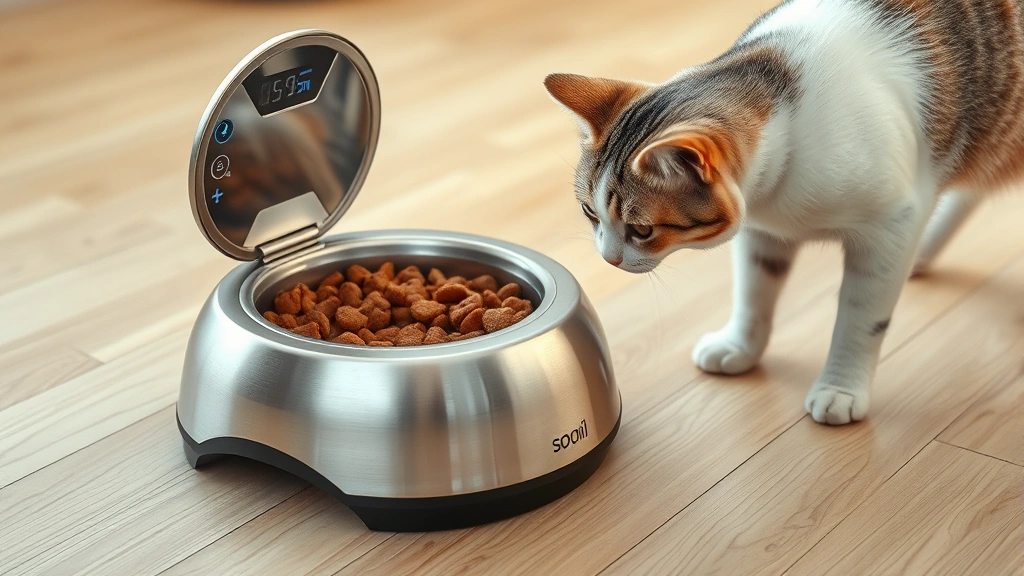
If microchip feeders feel like overkill, timed automatic feeders offer a solid middle ground. These devices dispense predetermined portions at set times throughout the day. You can program multiple feeders to release food at staggered intervals, ensuring each cat gets their turn without competition.
This approach works beautifully for cats on similar diets but different portion sizes. Set one feeder for 7 AM, another for noon, and a third for 6 PM. Your cats learn the routine quickly, and you maintain portion control to prevent obesity. Many modern models come with smartphone connectivity, letting you adjust schedules or portions remotely.
Solution 4: Elevated Bowls and Cat-Specific Feeding Furniture
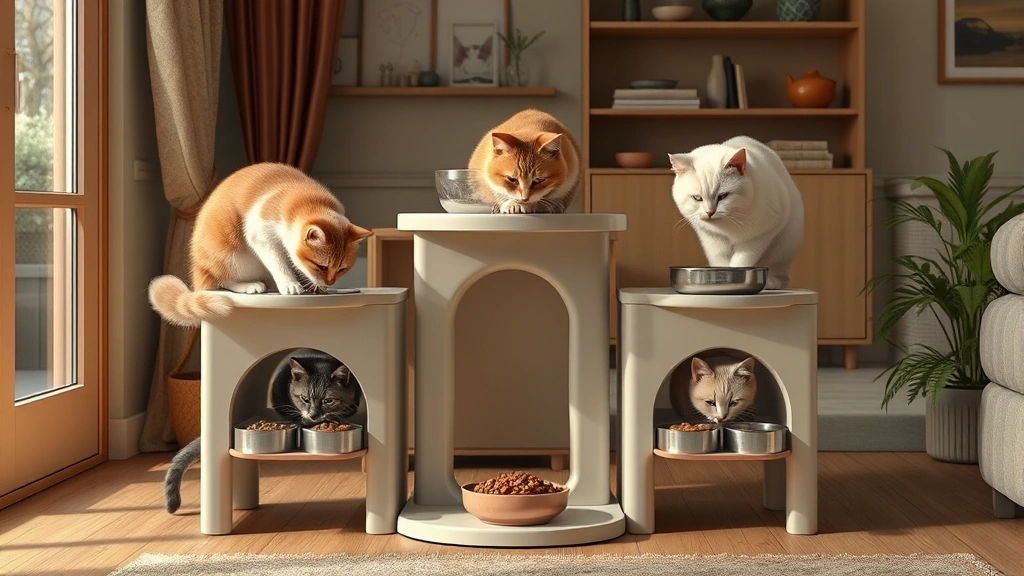
Sometimes the solution is as simple as elevation. Elevated feeders reduce stress on joints, improve digestion, and create physical separation that deters food aggression. Place elevated bowls at different heights or in different corners of the same room—the vertical separation often prevents dominant cats from monopolizing multiple bowls.
Some pet parents swear by feeding furniture designed specifically for multiple cats—essentially small tables with individual compartments. These keep bowls organized, contained, and visually separated even in the same space. It’s a low-tech solution that surprisingly effective for cats that don’t have serious food aggression issues.
Solution 5: Scheduled Feeding with Supervision
The old-fashioned approach still works: scheduled meals with your presence. Instead of leaving food out all day (free feeding), establish specific mealtimes when you’re present to supervise. Feed each cat their portion, give them 15-20 minutes to eat, then remove uneaten food. This method requires more effort but gives you complete control and insight into each cat’s eating habits and appetite changes.
Scheduled feeding is particularly valuable for monitoring health. Changes in appetite often signal illness, and you’ll catch these red flags immediately. It’s also the most cost-effective solution and works well for cats without serious aggression issues. Pair this approach with our Pet Health Monitoring practices to stay on top of your cats’ wellness.
Combining Solutions for Maximum Success
The best approach often combines multiple strategies. You might use separate feeding stations in different rooms with timed feeders and elevated bowls. Or you could use microchip feeders in the kitchen while also maintaining a supervised feeding schedule. Layer your solutions based on your specific cats’ personalities, dietary needs, and your household layout.
Consider your cats’ individual temperaments too. Some cats are relaxed about food sharing, while others turn into tiny tigers at mealtime. Observe their behavior carefully—if you see stiff body language, hissing, or one cat consistently preventing another from eating, you need a more robust solution like microchip feeders or complete room separation.
Nutritional Considerations for Multi-Cat Households
Different cats often need different nutrition. A senior cat might need joint support and easier-to-digest food. A younger, more active cat needs higher protein. An overweight cat needs portion control and possibly a weight management formula. Ensure each cat receives appropriate nutrition by keeping their foods separate and feeding according to their individual needs.
Consider supplementing your cats’ diets with quality options. Our guide on Pet Multivitamins explains how supplements support feline health, and our Pet Supplement Dosage Guidance ensures you’re giving the right amounts. For cats on prescription diets or with specific health concerns, check out Preventative Care Supplements to optimize their wellness regimen.
Common Mistakes to Avoid
Don’t make these feeding blunders. First, avoid free feeding (leaving food out constantly) in multi-cat homes—it encourages overeating and makes monitoring individual intake impossible. Second, don’t ignore signs of food aggression; address them proactively before they escalate. Third, don’t forget to account for treats and snacks when calculating daily calories. Fourth, don’t use the same bowl for different cats without washing between meals—this spreads bacteria and prevents you from monitoring individual intake accurately.
Frequently Asked Questions
What’s the best feeding solution for cats that fight over food?
Microchip-activated feeders or complete room separation are your best bets. These physically prevent food aggression from occurring. If aggression is severe, consult your veterinarian or a feline behaviorist for additional strategies.
Can I feed multiple cats the same food?
Only if they have identical nutritional needs and no health issues requiring special diets. Most multi-cat households benefit from individualized feeding because cats have different age-related, activity-level, and health-related nutritional requirements.
How often should I feed multiple cats?
Adult cats typically thrive on two meals daily. Kittens need three to four meals. Seniors might benefit from smaller, more frequent meals. Establish a consistent schedule that works for your household and stick to it religiously.
Will separate feeding stations cause stress?
Quite the opposite! Separate stations reduce stress by eliminating competition. Cats actually appreciate having their own space and routine. Make sure each station is in a quiet, accessible location where the cat feels safe.
How do I transition to multiple cat feeding solutions?
Make changes gradually. If moving to separate rooms, start by feeding them closer together, then slowly increase distance over several days. If introducing new feeders, let cats investigate them first before adding food. Patience prevents stress-related feeding refusal.
Conclusion: Your Path to Peaceful Mealtimes
Multiple cat feeding solutions range from simple (separate bowls in different rooms) to high-tech (microchip feeders), but they all share one goal: ensuring every cat eats the right food in the right amount without stress or competition. Start by assessing your cats’ personalities, dietary needs, and your household layout. Then choose the solution (or combination of solutions) that best fits your situation. Whether you go low-tech with supervised scheduled feeding or invest in smart microchip feeders, your cats will thank you with better health, reduced stress, and peaceful mealtimes. The chaos ends here.





