
When you’re shopping for pet supplement certifications, you’re basically playing detective with your furry friend’s health—and honestly, it’s way more important than figuring out which influencer actually uses the products they promote. The supplement aisle can feel like a minefield of marketing claims, pretty labels, and promises that sound too good to be true (because, let’s face it, sometimes they are). But here’s the good news: understanding pet supplement certifications is like having a cheat code that separates the legit products from the sketchy ones.
Table of Contents
- Why Pet Supplement Certifications Actually Matter
- Understanding AAFCO Standards for Pet Supplements
- NSF Certification: The Science Stamp of Approval
- The USP Verification Mark: Quality You Can Trust
- ConsumerLab Testing: Independent Verification You Can Count On
- GMP Certification: Manufacturing Done Right
- The Difference Between Certified and Non-Certified Supplements
- How to Identify Legitimate Pet Supplement Certifications
- Red Flags: Certifications to Avoid or Question
- The Role of Veterinarians in Supplement Certification
- Understanding Pet Supplement Dosage Guidance and Certification
- Frequently Asked Questions
- Summary: Making Informed Choices About Pet Supplement Certifications
Why Pet Supplement Certifications Actually Matter
Your dog doesn’t care about fancy packaging. What matters is whether that joint supplement actually contains what it claims, whether it’s safe, and whether it’ll actually help Fido’s creaky knees. This is where pet supplement certifications and quality standards become your best friend. These certifications are third-party validations that essentially say, “Hey, we tested this stuff, and it’s legit.” Without them, you’re basically buying a mystery box of powders and hoping for the best.
The FDA doesn’t regulate supplements the same way they regulate medications, which means manufacturers have a lot more leeway—and that’s where certified products shine. A certified supplement has been independently tested and verified to contain exactly what’s on the label. No surprise fillers, no false claims, just pure pet health support.
Understanding AAFCO Standards for Pet Supplements
AAFCO (Association of American Feed Control Officials) is the big kahuna when it comes to pet food and supplement standards in the United States. Think of them as the quality police for pet nutrition. They don’t actually test products themselves, but they set the standards that manufacturers must follow.
When a supplement meets AAFCO standards, it means the ingredients are properly identified, the nutrient levels are accurate, and the product is safe for your pet. It’s basically the gold standard in the pet supplement world. You’ll often see “AAFCO Compliant” on quality products, and that’s a green flag worth paying attention to.
The tricky part? AAFCO compliance doesn’t mean the product is effective—just that it’s safe and contains what it claims. It’s like saying a car passes safety inspection; it doesn’t guarantee it’ll win a race.
NSF Certification: The Science Stamp of Approval
NSF International is another heavyweight in the certification game. They’re known for rigorous testing and quality assurance across multiple industries, including pet supplements. An NSF-certified supplement has been tested for banned substances, contaminants, and label accuracy.

What makes NSF special is their focus on banned substance testing. If your pet is a competitive athlete (yes, that’s a thing—hello, agility competitions), NSF certification means the supplement won’t accidentally contain anything that would disqualify them. But even for regular pets, knowing a product has been screened for contaminants is pretty reassuring.
You can verify NSF certification directly on their website, which is clutch if you want to double-check before buying. No guessing games, just transparency.
The USP Verification Mark: Quality You Can Trust
The United States Pharmacopeia (USP) is the OG of quality verification in the supplement world. Their verification mark means a supplement has met strict standards for strength, purity, and disintegration. It’s like the supplement equivalent of a Michelin star.
USP-verified supplements undergo rigorous testing to ensure they contain the ingredients listed in the amounts claimed, with no harmful contaminants. They also test that the supplement will actually break down in your pet’s digestive system (because what good is a supplement that passes through undigested?). Veterinarian recommended supplements often carry USP verification because vets know quality when they see it.
ConsumerLab Testing: Independent Verification You Can Count On
ConsumerLab.com is an independent testing organization that evaluates supplements for label accuracy and contaminants. They’re not affiliated with manufacturers, which means their testing is genuinely unbiased. Think of them as the supplement fact-checkers.
When a product passes ConsumerLab testing, you know it actually contains what the label says. They’ve caught numerous supplements that claimed to have certain ingredients but actually didn’t—talk about dodging a bullet. Their reports are publicly available, so you can see exactly what they tested and the results.
The downside? Not all supplements are tested by ConsumerLab, so you might not find your specific product. But if you do find one with their seal of approval, you’re golden.
GMP Certification: Manufacturing Done Right
GMP stands for Good Manufacturing Practices, and it’s basically a set of rules ensuring supplements are made in clean, controlled facilities by competent people. An FDA-registered GMP facility has passed inspections and maintains strict quality control standards.
This certification matters because it covers the entire production process—from ingredient sourcing to packaging. A GMP-certified supplement manufacturer has documented procedures, trained staff, and quality control measures in place. It’s not glamorous, but it’s absolutely essential.
Professional grade pet supplements almost always come from GMP-certified facilities because that’s what separates the pros from the hobbyists.
The Difference Between Certified and Non-Certified Supplements
Here’s where things get real. A non-certified supplement might be perfectly fine, or it might be a complete dud. You’re basically gambling. Certified supplements remove the guesswork because they’ve been independently verified.
Studies have shown that a significant percentage of non-certified supplements don’t contain the ingredients they claim or contain harmful contaminants. Some have too much of an ingredient (potentially dangerous), while others have too little (basically useless). Certified supplements have been tested to prevent exactly these problems.

The price difference between certified and non-certified supplements is often minimal, which makes it kind of a no-brainer to go with the certified option. You’re paying maybe 10-20% more for peace of mind and actual quality assurance.
How to Identify Legitimate Pet Supplement Certifications
Not all certification claims are created equal. Here’s how to spot the real deal:
Check the label carefully. Legitimate certifications will have the organization’s name and logo clearly displayed. If it’s tiny or hard to find, that’s suspicious. Real certifications are something companies are proud of and display prominently.
Verify online. Visit the certification organization’s website and search their database. NSF, USP, and ConsumerLab all have searchable databases where you can verify if a product is actually certified. If you can’t find it listed, it’s probably not certified.
Look for multiple certifications. A supplement with multiple certifications (like both GMP and NSF) is generally safer than one with just one. It shows the manufacturer is serious about quality.
Read the fine print. Legitimate certifications will explain what they tested for and what the certification covers. Vague language is a red flag.
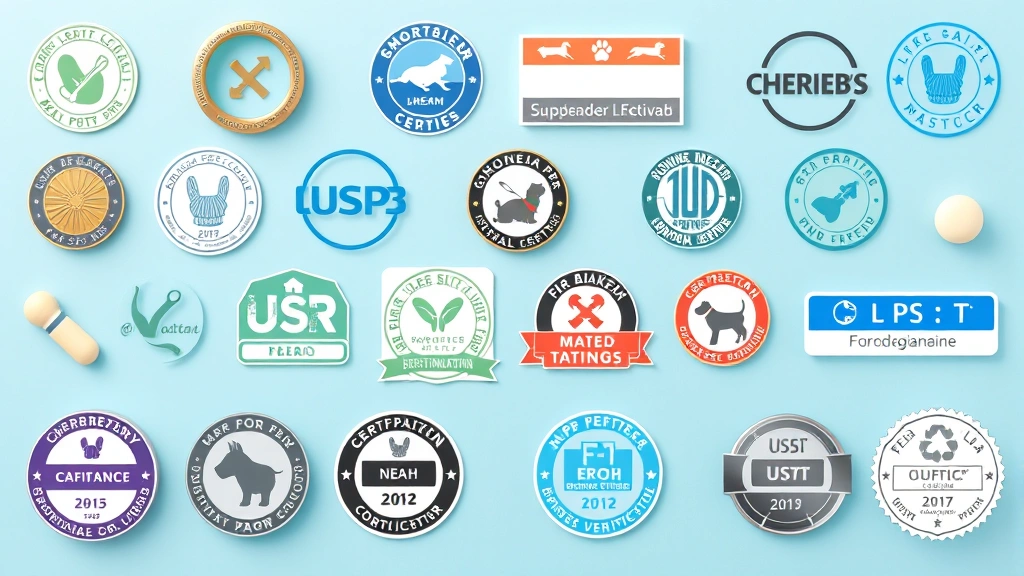
Made in USA pet supplements often come with certifications, but being made in the USA alone doesn’t guarantee quality—the certifications do.
Red Flags: Certifications to Avoid or Question
Some certifications sound official but aren’t actually rigorous. Here are the ones to be skeptical about:
Proprietary certifications. If a company created their own certification system, it’s not worth much. Real certifications come from independent third parties with no financial interest in the product.
Vague claims like “certified natural” or “certified pure.” These terms aren’t regulated and can mean almost anything. Stick with specific certifications from known organizations.
Certifications from the manufacturer’s own testing lab. If the company tested their own product, that’s a conflict of interest. You want independent testing.
Missing certification details. If a label claims certification but doesn’t say which organization certified it, be suspicious. Legitimate certifications are specific and verifiable.

The Role of Veterinarians in Supplement Certification
Your vet can be an amazing resource for navigating the supplement landscape. They understand which certifications matter, which products are backed by research, and which ones are just marketing fluff. Premium pet supplements recommended by veterinarians typically carry the certifications we’ve discussed.
Vets also know about potential interactions between supplements and medications, which is crucial information that the bottle label won’t tell you. They can help you understand whether a certification is relevant to your specific pet’s needs.
Don’t hesitate to ask your vet about a supplement’s certifications. A good vet will either know or be willing to research it with you.
Understanding Pet Supplement Dosage Guidance and Certification
Here’s something people often overlook: certification doesn’t automatically mean the dosage recommendations are correct for your pet. A certified supplement contains what it claims, but whether your 10-pound Chihuahua should take the same amount as a 90-pound Labrador is a different question.
This is where your vet becomes essential. They can interpret the certified supplement’s dosage guidance and adjust it for your specific pet’s weight, age, and health status. Certification ensures the product is safe and accurately labeled, but proper dosing is between you and your veterinarian.
Frequently Asked Questions
What certification is most important for pet supplements?
USP verification and NSF certification are generally considered the gold standards. However, AAFCO compliance and GMP certification are also important. The best supplements often have multiple certifications, showing they’ve met several rigorous quality standards.
Can I trust supplements without certifications?
Not really. While some non-certified supplements might be fine, you’re taking a significant risk. Studies show a substantial percentage of non-certified supplements don’t contain what they claim or contain contaminants. It’s better to stick with certified products where the quality has been independently verified.
Are certified supplements always more expensive?
Usually only slightly more expensive—often just 10-20% more. When you consider you’re paying for independent verification and quality assurance, it’s generally worth the extra cost. Buying a cheap supplement that doesn’t work or contains contaminants is far more expensive in the long run.
How do I verify a supplement’s certification?
Visit the certification organization’s website directly. NSF, USP, ConsumerLab, and others all have searchable databases. Enter the product name and see if it appears in their certified products list. If it doesn’t, the certification claim might be false.
Does a certified supplement guarantee it will work for my pet?
No. Certification guarantees safety, purity, and label accuracy—not effectiveness. A certified joint supplement contains the ingredients it claims, but whether it’ll help your dog’s arthritis depends on many factors including your pet’s specific condition, dosage, and individual response. This is why vet guidance is crucial.
Are all veterinarian-recommended supplements certified?
Most reputable veterinarian-recommended supplements carry certifications, but not all. However, if your vet recommends something, they’ve likely researched its quality and safety. Still, it’s fair to ask about certifications when your vet recommends a supplement.
Summary: Making Informed Choices About Pet Supplement Certifications
Navigating pet supplement certifications doesn’t have to be complicated. The key takeaway is simple: look for independent third-party certifications from organizations like USP, NSF, ConsumerLab, or AAFCO compliance. These certifications mean someone unbiased has verified that the supplement contains what it claims and is safe for your pet.
Don’t get fooled by marketing hype or pretty packaging. The real proof is in the certifications. When you see that USP mark, NSF logo, or ConsumerLab verification, you know you’re buying a product that’s been rigorously tested and verified.
Remember to involve your veterinarian in the process. They can help you choose certified supplements that are actually appropriate for your pet’s specific needs and can advise on proper dosing. Your vet’s expertise combined with certified products gives your pet the best chance of getting safe, effective supplementation.
The bottom line? Certified supplements cost a little more but give you peace of mind and significantly reduce the risk of buying something that’s ineffective or potentially harmful. In the world of pet health, that’s money well spent.
External authoritative sources for further reading:





