
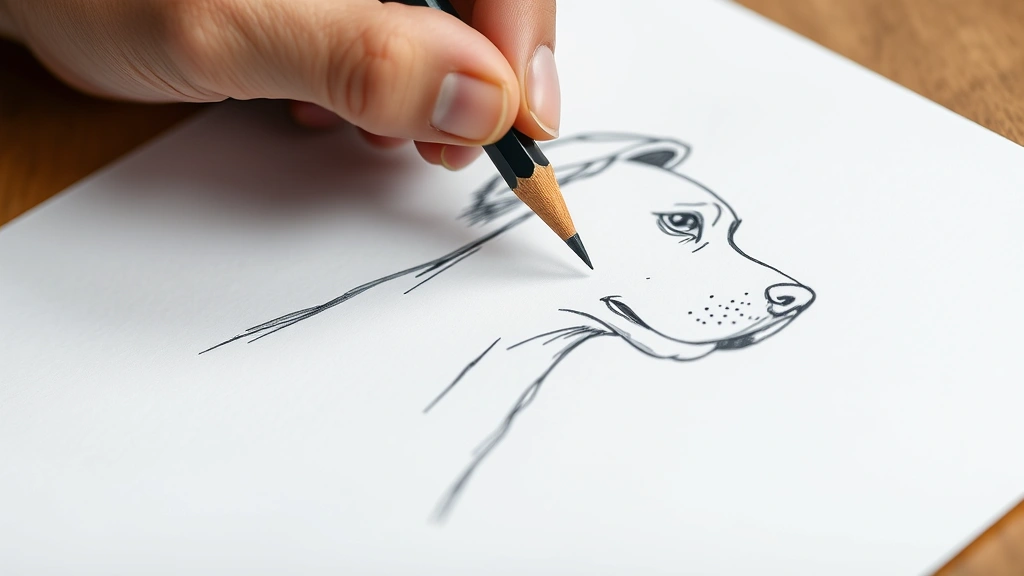
Learning how to create a simple dog drawing doesn’t require a fancy art degree or years of practice—just some basic supplies and the willingness to laugh at your first attempts. Whether you’re doodling during a boring meeting, entertaining your kids, or finally tackling that Pinterest board you’ve been eyeing, drawing a dog is one of the most satisfying sketches you can pull off. I’m here to walk you through five ridiculously easy steps that’ll have you sketching pups faster than your actual dog can fetch a ball.
Table of Contents
- Why Everyone Should Learn to Draw Dogs
- Gather Your Supplies for Dog Sketching
- Step 1: Start With the Basic Head Circle
- Step 2: Add the Snout and Ears
- Step 3: Sketch the Body and Legs
- Step 4: Draw the Facial Features
- Step 5: Refine and Add Details
- Common Mistakes to Avoid When Drawing Dogs
- Different Dog Breeds and Drawing Variations
- Tips for Improving Your Dog Drawing Skills
- Using Your Dog Drawings in Creative Projects
- Frequently Asked Questions
- Conclusion: You’re Ready to Draw
Why Everyone Should Learn to Draw Dogs
Before we dive into the nitty-gritty, let’s talk about why dog drawing techniques matter. Dogs are everywhere—in our homes, our hearts, and apparently, in every greeting card ever made. Being able to sketch a simple dog means you can personalize gifts, create fun illustrations for your dog-loving friends, or finally understand what your toddler has been scribbling on the walls. Plus, drawing is a surprisingly therapeutic activity that beats scrolling through social media for hours. Studies show that sketching activates the creative side of your brain and reduces stress. So grab a pencil and let’s get started!
Gather Your Supplies for Dog Sketching
Here’s the beautiful part: you don’t need much. A pencil (HB or 2B works great), some paper, and an eraser are literally all you need to create a simple dog drawing. If you want to get fancy, grab some colored pencils or markers, but honestly, a basic pencil sketch looks just as good. Some people like using a ruler to get proportions right, but that’s optional—we’re going for “charming” here, not “architectural blueprint.” If you’re sketching a long-haired dog, you might want to keep a blending stump handy for smoothing out fur textures later.
Step 1: Start With the Basic Head Circle
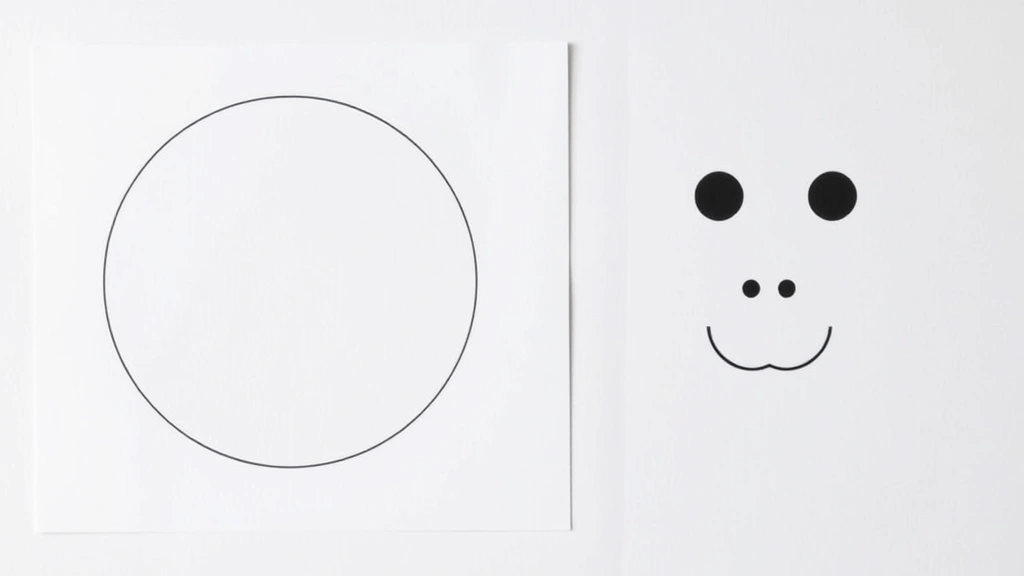
Every great dog drawing begins with a circle. Seriously, that’s it. Draw a circle in the center of your paper—it doesn’t need to be perfect. This circle represents your dog’s head and will be your anchor point for everything else. Make it medium-sized, leaving plenty of room around it for the body. If your circle looks like a lumpy potato, congratulations—you’re already on your way to creating an adorably imperfect dog. The beauty of easy dog drawing is that imperfection adds character.
Step 2: Add the Snout and Ears
Now comes the fun part where your circle actually starts looking like a dog. Draw a smaller oval or rectangle below the circle for the snout—this is where the nose and mouth will go. Then add two triangles or floppy shapes on top of your head circle for ears. Want your pup to look alert? Make the ears pointy. Going for a droopy, sad-puppy vibe? Make them long and floppy. This is where you inject personality into your simple dog drawing. You’re basically the artist equivalent of a dog parent choosing their pup’s personality traits.

Step 3: Sketch the Body and Legs
Below your head circle, draw a larger oval or rectangle for the body. Don’t overthink this—it’s basically a potato shape attached to your head circle. Now add four lines extending down from the body for legs. These can be straight, slightly bent, or whatever angle feels right. Add small circles or ovals at the bottom of each leg for paws. If you’re drawing a low shedding dog breed like a Poodle, you might want to add some fluffy texture around the body later, but for now, keep it simple.
Step 4: Draw the Facial Features
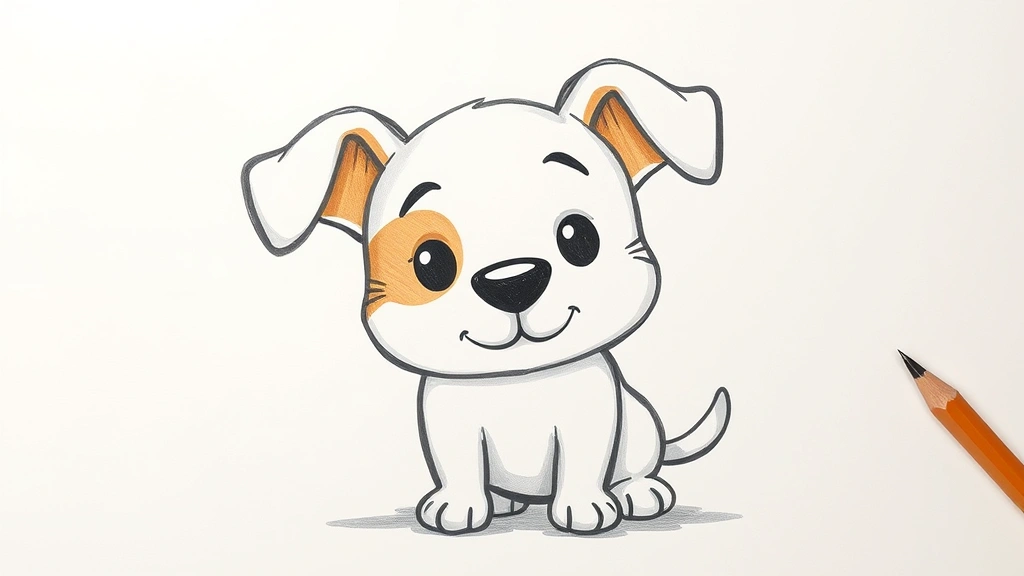
Time to bring your pup to life! In the snout area, draw two small circles or dots for eyes—these should be positioned on the head circle, not the snout. Add a small triangle or circle in the center of the snout for the nose. Draw a simple curved line under the nose for the mouth. Want your dog to look happy? Make that mouth curve upward in a smile. Sad? Curve it downward. You’re literally controlling your dog’s emotions through pencil strokes. Add a tail extending from the back of the body—curved, straight, or wagging wildly, whatever floats your boat.
Step 5: Refine and Add Details
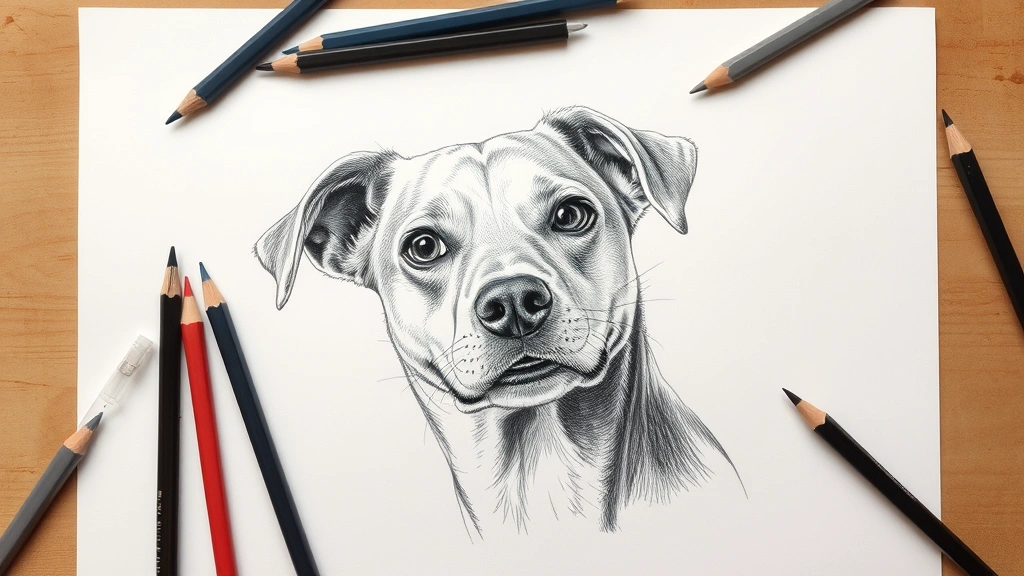
This is where your simple dog drawing transforms from basic sketch to something you’d actually want to frame. Darken the lines you want to keep and erase the construction lines that are no longer needed. Add details like pupils in the eyes, texture lines for fur, or shading to give your dog dimension. If your dog is wearing a leather dog collar, sketch that in. Add some fur texture by drawing short lines in the direction the fur would grow. This step is totally optional—some of the cutest dog drawings are super minimalist with just basic outlines.
Common Mistakes to Avoid When Drawing Dogs
Let’s talk about what NOT to do. First, don’t make the head and body the same size—dogs have proportionally larger heads. Second, avoid placing the eyes too close together or too far apart; they should be roughly a dog’s nose-width apart. Third, don’t forget about the tail—it’s basically the dog’s mood ring and makes a huge difference in how your drawing looks. Fourth, resist the urge to make all four legs identical; dogs stand with weight distributed differently on each leg. Finally, don’t erase everything and start over just because it’s not perfect. Imperfect dog drawings have charm that flawless ones sometimes lack.
Different Dog Breeds and Drawing Variations
Once you’ve mastered the basic simple dog drawing, you can customize it for different breeds. Drawing a Dachshund? Make the body longer and the legs shorter. Sketching a Bulldog? Add wrinkles and make the snout wider and flatter. For a German Shepherd, create pointy ears and a leaner body. A Pug? Huge head relative to body, flat face, and those adorable wrinkles. The beauty of learning basic dog drawing is that you can adapt the fundamental steps to create virtually any breed. Whether you’re drawing a senior dog with a slower gait or a bouncy puppy, the core technique remains the same.
Tips for Improving Your Dog Drawing Skills
Want to level up your dog drawing abilities? Practice drawing dogs from different angles—front-facing, side profile, three-quarter view. Study real dogs or photos to understand how their proportions actually work. Keep a sketchbook and doodle dogs whenever inspiration strikes. Watch tutorial videos (YouTube is packed with them), and don’t compare your beginning to someone else’s middle. Every professional artist started with lumpy circles and wobbly legs. Join online drawing communities where you can share your work and get constructive feedback. The more you draw, the better you’ll become—it’s literally that simple.

Using Your Dog Drawings in Creative Projects
Now that you can create a simple dog drawing, what’s next? Use your sketches to personalize greeting cards for dog-loving friends. Create custom illustrations for your own pup and frame them. Design stickers, t-shirt designs, or social media graphics. Make a comic strip featuring your drawn dogs getting into ridiculous situations. Create a children’s book if you’re feeling ambitious. The possibilities are honestly endless. Your drawings don’t need to be gallery-quality to bring joy to people—sometimes the most meaningful art is the stuff created with love and a sense of humor.
Frequently Asked Questions
Can I learn to draw a simple dog if I have no artistic experience?
Absolutely! This method is specifically designed for beginners. If you can draw a circle and a few basic shapes, you can draw a dog. Artistic talent is mostly just practice and patience—not some magical gift reserved for “talented” people.
What’s the best paper to use for dog drawings?
Standard printer paper works fine for practicing, but sketch paper or drawing paper gives you better texture and durability. Thicker paper also handles erasing better without getting all torn up and sad-looking.
How long does it take to get good at drawing dogs?
You can create a recognizable simple dog drawing in about 10-15 minutes once you know the steps. Getting really good at capturing personality and detail takes more practice, but even your first attempts will be adorable.
Should I use a reference photo when drawing dogs?
Absolutely! Using reference photos helps you understand dog anatomy and proportions. Even professional artists use references. It’s not cheating—it’s smart drawing.
Can I draw a simple dog digitally?
Yes! The same basic steps work on tablets or digital drawing software. The principles are identical; you’re just using a stylus instead of a pencil.
Conclusion: You’re Ready to Draw
There you have it—your complete guide to mastering the simple dog drawing in five easy steps. You’ve learned how to start with basic shapes, add personality with facial features, and refine your sketch into something you’d actually be proud of. The best part? You can do this literally right now. Grab a pencil, some paper, and start sketching. Your first dog might look a little wonky, but that’s part of the charm. Every artist, from doodlers to professionals, started exactly where you are now. So go forth, draw some dogs, and remember: the only bad drawing is the one you never attempted. Happy sketching!





