
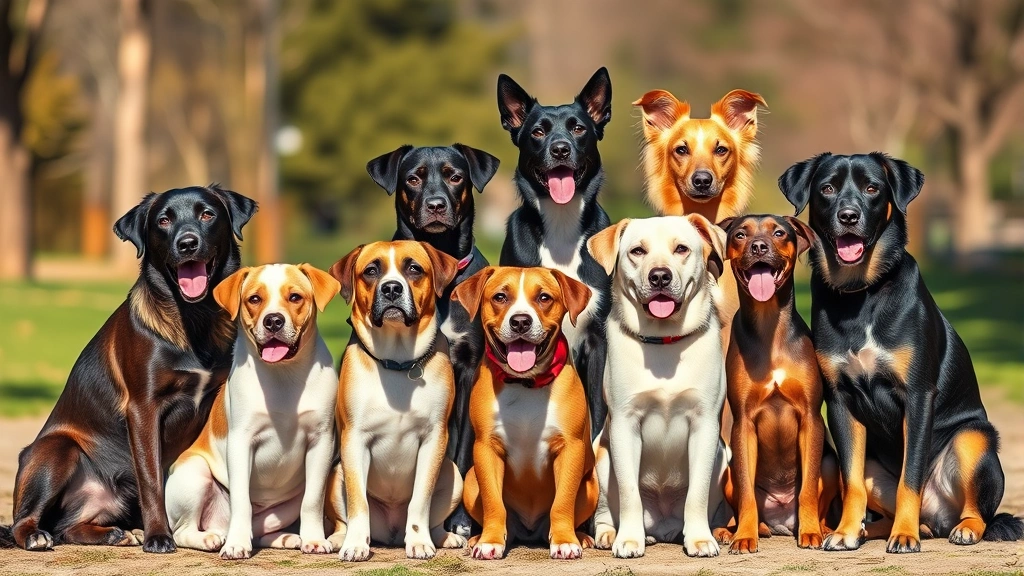
Ever wondered what breed of dog am I? Whether you’re a new dog owner trying to identify your rescue pup, curious about your mixed breed’s heritage, or just having fun comparing yourself to canine personalities, this guide has you covered. We’re diving deep into dog breed characteristics, personality traits, and a fun quiz to help you discover your inner doggo.
Table of Contents
- Why People Ask ‘What Breed of Dog Am I?’
- Understanding Dog Breed Characteristics
- Physical Traits: Size, Coat, and Appearance
- Energy Levels and Activity Requirements
- Temperament and Social Traits
- Intelligence and Training Aptitude
- Loyalty and Bonding Patterns
- Stubbornness and Independence
- The Ultimate ‘What Breed of Dog Am I’ Quiz
- Common Breed Personality Archetypes
- DNA Testing for Dog Breed Identification
- Using Breed Information from Reputable Sources
- Matching Your Lifestyle to Your Breed Personality
- Frequently Asked Questions
- Summary: Finding Your Inner Dog
Why People Ask ‘What Breed of Dog Am I?’
Let’s be real—comparing ourselves to dogs is a beloved pastime. Maybe you’re as loyal as a German Shepherd, as goofy as a Golden Retriever, or as independent as a cat… wait, wrong species. People ask this question for various reasons: understanding their rescue dog’s background, finding out what breed matches their personality, or just having a laugh with friends. DNA tests for dogs have made breed identification more accessible than ever, but personality-based breed matching? That’s pure fun.
Understanding Dog Breed Characteristics
Before you can figure out what breed of dog you are, you need to understand what makes breeds tick. Each breed developed specific traits through selective breeding. Some were bred for herding (like the McNab Dog), others for hunting, guarding, or companionship. These aren’t just physical traits—they’re deeply embedded personality characteristics that define how dogs (and maybe you!) interact with the world.
Physical Traits: Size, Coat, and Appearance
Start by assessing the basics. Are you a small lap dog type, a medium-sized companion, or a large, imposing presence? Your coat type matters too—are you high-maintenance with grooming needs, or low-maintenance and practical? Check out our guide on low-maintenance dogs if you’re the no-fuss type. Physical characteristics often hint at a dog’s original purpose and can reveal a lot about personality. A merle dog pattern might suggest herding or working dog ancestry, while a stocky build could indicate a guardian breed heritage.
Energy Levels and Activity Requirements
This is where personality really shines. Are you a couch potato who’d rather binge Netflix, or do you have boundless energy requiring constant stimulation? High-energy breeds like Border Collies, Australian Shepherds, and Vizslas need serious exercise and mental engagement. Low-energy breeds like Bulldogs and Basset Hounds are content with short walks and lots of napping. Your activity level is a massive indicator of your breed personality. Honest self-assessment here is crucial—no point claiming you’re a Husky if you hate running.
Temperament and Social Traits
Are you the life of the party or a reserved observer? Some breeds are naturally outgoing and love everyone (Golden Retrievers, Labs), while others are selective with their affection (Akitas, Chow Chows). Consider whether you’re protective and territorial, or welcoming to strangers. Do you play well with others or prefer solo activities? Understanding what makes you happy is similar to understanding breed temperament—it reveals your social needs and personality framework. Some people are pack animals; others are lone wolves.
Intelligence and Training Aptitude
Different breeds have wildly different intelligence types. Border Collies and Poodles are problem-solvers who love mental challenges. Bulldogs are stubborn and independent thinkers. Retrievers are eager-to-please learners. Are you quick to pick up new skills, or do you need things explained multiple times? Are you motivated by praise and rewards, or do you march to your own drum? Your learning style and intelligence profile can absolutely match a breed archetype. Some people thrive under structure; others rebel against it.
Loyalty and Bonding Patterns
Certain breeds form intense one-person bonds (like German Shepherds or Mountain Cur Dogs), while others distribute their love equally among their pack. Are you fiercely loyal to a select few, or do you genuinely love everyone equally? How important is family to you? How do you handle separation? Breeds like Velcro dogs literally follow their people everywhere, while independent breeds are perfectly content doing their own thing. This fundamental difference in bonding style is a core personality indicator.
Stubbornness and Independence
Let’s talk about that stubborn streak. Some breeds are bred to think independently and make decisions without human input (livestock guardian dogs, terriers). Others were bred to follow commands exactly (retrievers, spaniels). Are you naturally obedient and rule-following, or do you question authority and chart your own course? Do you need a reason to do things, or do you just trust the process? Your level of independence versus compliance can narrow down your breed personality significantly. Even something like a mini Bernese Mountain dog retains the stubborn independence of its larger relatives.
The Ultimate ‘What Breed of Dog Am I’ Quiz
Ready to discover your inner breed? Answer these questions honestly:
1. Your ideal weekend: A) Hiking or outdoor adventure | B) Coffee date with friends | C) Quiet time at home | D) Competitive sports or challenging activity
2. When faced with a problem: A) Jump in immediately | B) Collaborate with others | C) Think it through carefully | D) Ask for guidance
3. Your loyalty style: A) One best friend forever | B) Friendly with everyone | C) Selective friendships | D) Independent operator
4. Your energy level: A) Exhaustingly high | B) Moderately active | C) Prefer relaxation | D) Varies by mood
5. Stubbornness rating: A) Very stubborn | B) Flexible | C) Depends on the issue | D) Go-with-the-flow
6. Your size preference: A) Large and imposing | B) Medium and balanced | C) Small and compact | D) Doesn’t matter
7. Social style: A) Life of the party | B) Comfortable in groups | C) Prefer one-on-one | D) Happiest alone
Scoring Guide: Mostly A’s = High-energy working breed (Border Collie, Australian Shepherd, Husky). Mostly B’s = Friendly companion breed (Golden Retriever, Labrador, Spaniel). Mostly C’s = Calm, devoted breed (Bulldog, Basset Hound, Bernese Mountain Dog). Mostly D’s = Independent, intelligent breed (Akita, Shiba Inu, Terrier mix).
Common Breed Personality Archetypes
The Loyal Guardian: You’re protective, serious, and deeply devoted to those you love. Think German Shepherd energy—reliable, intelligent, and always on duty.
The Friendly Extrovert: You’re everyone’s best friend, optimistic, and love being the center of attention. Golden Retriever vibes all the way.
The Independent Thinker: You question authority, make your own decisions, and don’t need constant validation. Terrier or livestock guardian dog personality.
The Calm Companion: You’re easygoing, patient, and content with simple pleasures. Bulldog or Basset Hound soul.
The Eager Learner: You love challenges, mental stimulation, and proving your abilities. Poodle or Border Collie brain.

DNA Testing for Dog Breed Identification
If you’re trying to identify your rescue dog’s actual breed rather than personality match, DNA testing is your friend. According to the American Kennel Club, breed-specific DNA tests can identify purebred status and mixed breed heritage with impressive accuracy. Services like Embark and Wisdom Panel analyze your dog’s genetic makeup to reveal breed composition, health predispositions, and even ancestry patterns. It’s like 23andMe for dogs, and the results can be surprisingly eye-opening.
Using Breed Information from Reputable Sources
When researching dog breeds, stick with authoritative sources. PetMD offers detailed breed profiles including health concerns, temperament, and care requirements. The AKC maintains official breed standards and characteristics. University veterinary programs and breed clubs also provide evidence-based information. Don’t rely solely on stereotypes or anecdotal stories—individual dogs vary widely within breeds, just as individual people vary within personality types.
Matching Your Lifestyle to Your Breed Personality
Understanding what breed of dog you are can actually help you make better life decisions. If you identify as a high-energy working breed, you might need more physical activity and mental challenges. If you’re a calm companion type, you might thrive with a slower pace and simpler lifestyle. If you’re an independent thinker, you probably do well in entrepreneurial or creative pursuits. Using breed archetypes as a personality framework can provide genuine self-insight, even if it’s just for fun.
Frequently Asked Questions
Can mixed breed dogs be identified by DNA testing?
Absolutely! Modern DNA tests can identify mixed breed dogs with multiple breed components. These tests analyze thousands of genetic markers to determine breed percentages and ancestry. It’s particularly useful for rescue dogs with unknown backgrounds, giving you concrete information about your pup’s heritage and potential health considerations.
Is it accurate to match human personality to dog breeds?
It’s a fun framework, but take it with a grain of salt. Dog breeds were developed for specific tasks through selective breeding, creating consistent behavioral traits. While personality archetypes can be insightful and entertaining, individual variation is huge. You might be 80% Golden Retriever and 20% Husky—personality is complex in both humans and dogs.
What if I don’t fit neatly into one breed personality?
Most people are breed mixes! You might have the loyalty of a German Shepherd, the friendliness of a Labrador, and the independence of a Terrier. That’s perfectly normal and actually more interesting. The quiz and breed profiles are starting points for self-reflection, not definitive labels.
How do I find my dog’s actual breed if they’re a rescue?
Start with visual assessment—look at size, coat type, ear shape, and body structure. Consult breed guides and compare photos. For definitive answers, invest in a DNA test from a reputable company. Your veterinarian can also help identify likely breeds based on physical characteristics and behavioral traits.
Are certain breeds better suited to specific lifestyles?
Definitely. High-energy breeds need active owners; calm breeds suit relaxed lifestyles. Independent breeds need confident handlers; eager-to-please breeds thrive with positive reinforcement training. Matching breed characteristics to lifestyle prevents behavioral problems and ensures both dog and owner are happy.
What’s the most popular dog breed in America?
According to the American Kennel Club, the Labrador Retriever has held the #1 spot for years, followed closely by French Bulldogs and Golden Retrievers. These friendly, adaptable breeds suit diverse lifestyles, which explains their popularity.
Summary: Finding Your Inner Dog
Discovering what breed of dog you are is a fun journey of self-discovery. Whether you’re matching your personality to breed archetypes, identifying your rescue dog’s heritage through DNA testing, or simply having fun with breed stereotypes, there’s value in understanding canine characteristics. Use the quiz, explore breed profiles, and consider how different breed traits align with your personality and lifestyle. And if you’re trying to figure out your actual dog’s breed, don’t hesitate to use DNA testing for accurate answers. Either way, embracing your inner dog—whatever breed that might be—is a pretty delightful way to understand yourself better. Now go forth and decide: are you a loyal guardian, friendly extrovert, independent thinker, or calm companion?





