
If you’ve ever wondered what breed of dog is Scooby Doo, you’re not alone—this question has stumped dog lovers and cartoon enthusiasts for decades. The answer is simpler than you might think, but the story behind everyone’s favorite mystery-solving canine is way more interesting than just a breed name.
Table of Contents
- The Official Answer: Great Dane
- Why a Great Dane? The Design Decision Behind Scooby
- Great Dane Characteristics That Match Scooby
- Scooby’s Size: How He Compares to Real Great Danes
- The Great Dane Breed Standard and Scooby’s Appearance
- Scooby’s Personality: A True Great Dane at Heart
- The Evolution of Scooby’s Design Across Different Media
- Great Dane Health and Scooby’s Eating Habits
- Why Scooby Became an Icon: The Perfect Breed Choice
- Real Great Danes vs. Cartoon Scooby: What You Should Know
- Frequently Asked Questions
- Conclusion: The Great Dane Legacy of Scooby-Doo
The Official Answer: Great Dane
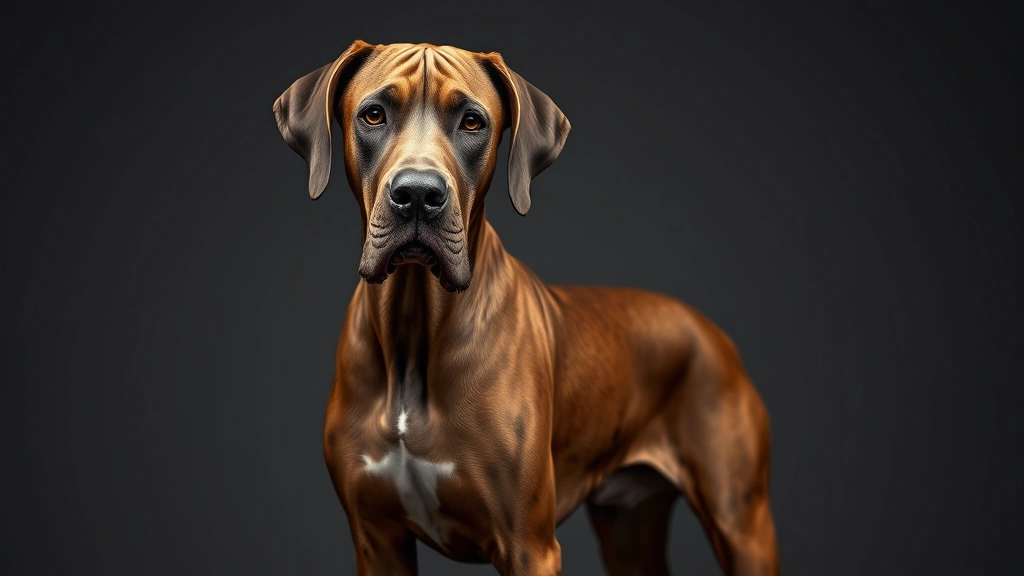
Scooby-Doo is a Great Dane, one of the largest dog breeds in the world. Created by animator Iwao Takamoto at Hanna-Barbera in 1969, Scooby was deliberately designed to be a Great Dane with some exaggerated cartoon characteristics. The show’s creators wanted a dog that was big enough to be intimidating yet goofy enough to be lovable—and the Great Dane fit that bill perfectly.
Great Danes are known for their massive size, gentle temperament, and surprising clumsiness, all traits that Scooby embodies perfectly. In fact, Scooby’s personality mirrors real Great Dane behavior in many ways, making him an unexpectedly accurate representation of the breed despite his cartoon absurdities.
Why a Great Dane? The Design Decision Behind Scooby
Iwao Takamoto didn’t just randomly pick a Great Dane. He deliberately chose this breed because it represented the perfect balance of physical comedy and emotional depth. Great Danes are naturally tall and lanky, which made them ideal for slapstick humor in animation. Their long legs, droopy ears, and expressive faces provided endless opportunities for visual gags.
What’s fascinating is that Takamoto actually studied real Great Danes to develop Scooby’s character model. He wanted the dog to move and behave like an actual Great Dane would, just with exaggerated proportions and that iconic cowardly personality. The result? A character that feels both authentically canine and completely fantastical.
Great Dane Characteristics That Match Scooby
Real Great Danes share several traits with their famous cartoon counterpart. They’re incredibly food-motivated—just like Scooby, who would do almost anything for a Scooby Snack. They’re also naturally cowardly despite their imposing size, preferring comfort and companionship over confrontation. Sound familiar?
Great Danes are also prone to separation anxiety and love being around their humans, which explains why Scooby is inseparable from Shaggy Rogers. The breed is known for being gentle giants, often unaware of their own size, which translates perfectly to Scooby’s clumsy antics and gentle nature despite his ability to accidentally cause chaos.
If you’re interested in other dog breeds with unique characteristics, check out our guide to lazy dog breeds, which includes several breeds that share Scooby’s love of relaxation and snacking.
Scooby’s Size: How He Compares to Real Great Danes
In the cartoon, Scooby is depicted as roughly the same height as Shaggy when standing on his hind legs—which would make him around 5’6″ to 5’9″ tall. Real Great Danes typically stand 28-34 inches at the shoulder, making them significantly smaller than cartoon Scooby. However, the largest Great Danes on record have reached heights close to 7 feet when standing up, so Scooby’s exaggerated size isn’t entirely unrealistic for an exceptionally large specimen.
This size discrepancy is intentional. The animators wanted Scooby to be large enough to dominate scenes and create physical comedy opportunities, but not so large that he’d dwarf the entire Mystery Inc. gang.
The Great Dane Breed Standard and Scooby’s Appearance
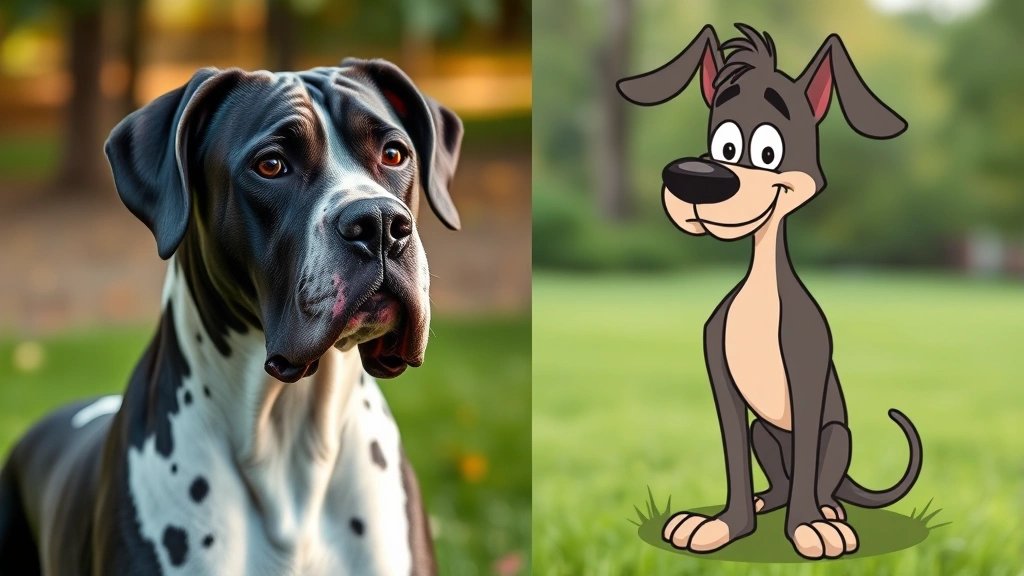
According to the American Kennel Club, Great Danes come in several color patterns, including fawn, brindle, black, and harlequin. Scooby’s brown coloring with black spots is actually closest to a brindle or fawn pattern, though his distinctive spots are more exaggerated than typical breed standards.
Real Great Danes have droopy jowls, large ears, and an athletic build—all features clearly visible in Scooby’s design. His sloped back and long tail are also characteristic of the breed. The main difference? Scooby’s spots are much more prominent and cartoon-like, designed for instant visual recognition and brand identity.
Scooby’s Personality: A True Great Dane at Heart
Scooby’s cowardice is perhaps his most defining characteristic, and it’s surprisingly accurate to Great Dane behavior. Despite their imposing size, Great Danes are sensitive, anxious dogs that prefer safety and comfort. They’re not naturally aggressive and often startle easily—exactly like Scooby when he encounters a ghost or monster.
His loyalty to Shaggy also reflects real Great Dane behavior. The breed forms incredibly strong bonds with their primary caregivers and can become anxious when separated. Scooby’s willingness to face danger alongside Shaggy, despite his fear, demonstrates the breed’s underlying courage and devotion, even if it’s masked by comedic panic.
The Evolution of Scooby’s Design Across Different Media
While Scooby has remained a Great Dane throughout his various incarnations—from the original 1969 series to modern movies and CGI adaptations—his design has evolved significantly. Early cartoons showed him with a more realistic Great Dane build, while later versions made him progressively rounder and more anthropomorphic.
In the live-action/CGI hybrid films, Scooby was rendered with more anatomically accurate Great Dane proportions, though still with cartoon exaggeration. His voice acting also evolved, with Don Messick’s original performance being replaced by other actors over the decades, though Messick’s version remains iconic.
Great Dane Health and Scooby’s Eating Habits
Here’s where Scooby’s character diverges from reality in a concerning way. Real Great Danes are prone to bloat and gastric dilatation-volvulus (GDV), a potentially fatal condition exacerbated by rapid eating and large meals. Scooby’s constant consumption of enormous quantities of food would actually be dangerous for a real Great Dane.
If you’re considering a Great Dane as a pet, proper nutrition is crucial. Check out our articles on whether Fresh Pet is good for dogs and whether Merrick is a good dog food to learn about quality nutrition options that won’t compromise your dog’s health.
Why Scooby Became an Icon: The Perfect Breed Choice
Scooby’s status as a cultural icon is partly due to the brilliant choice of making him a Great Dane. The breed’s combination of size, gentle nature, and natural clumsiness made him instantly endearing to audiences. Kids could relate to his fears and food obsession, while adults appreciated the physical comedy that his large frame enabled.
The Great Dane breed was already associated with nobility and mystery (think of the Hound of the Baskervilles), which made Scooby’s role as a mystery-solving dog feel appropriate, even if he was the comic relief. This breed choice elevated the entire concept of the show.
Real Great Danes vs. Cartoon Scooby: What You Should Know
If Scooby inspired you to get a Great Dane, there are some important differences to understand. Real Great Danes have a lifespan of only 7-10 years, making them one of the shortest-lived dog breeds. They require regular exercise, proper nutrition, and veterinary care to manage their size-related health issues.
Unlike Scooby, real Great Danes are generally well-behaved, intelligent, and eager to please their owners. They’re not naturally cowardly, though they can be sensitive and anxious if not properly socialized. They also don’t talk or solve mysteries, though they are remarkably perceptive about their owners’ emotions.
Frequently Asked Questions
Is Scooby-Doo really a purebred Great Dane?
In the show’s canon, Scooby is presented as a Great Dane, though his exaggerated size and cartoon features make him more of an artistic interpretation than a realistic representation of the breed. The creators used Great Dane characteristics as a foundation but heavily stylized them for animation purposes.
What would Scooby weigh if he were a real dog?
Based on his cartoon proportions, a realistic Scooby would likely weigh 150-200+ pounds, significantly more than the typical Great Dane weight of 110-175 pounds. His exaggerated height and build suggest a dog that would be unusually large even for the breed.
Could a real Great Dane be as cowardly as Scooby?
While Great Danes aren’t typically cowardly, they are sensitive and anxiety-prone dogs. A Great Dane with poor socialization or past trauma could exhibit fearful behavior similar to Scooby’s, though most well-adjusted Great Danes are confident and gentle rather than panicked.
Why did the creators choose a Great Dane over other large breeds?
The Great Dane’s combination of size, gentle temperament, droopy features, and natural clumsiness made it perfect for both physical comedy and emotional connection. Other large breeds like German Shepherds or Dobermans were too aggressive or serious in appearance to match Scooby’s lovable personality.
Has Scooby’s breed ever changed in different versions of the show?
No, Scooby has consistently been identified as a Great Dane across all official versions of the franchise, from the original 1969 series through modern films and spin-offs. His design has evolved, but his breed has remained constant.
What’s the difference between a Great Dane and other giant breeds?
Great Danes are distinguished by their elegant, athletic build, droopy jowls, and gentle temperament. Unlike Saint Bernards or Newfoundlands, they don’t have thick coats. Unlike Mastiffs, they’re more refined and less bulky. This combination made them ideal for Scooby’s character design.
Conclusion: The Great Dane Legacy of Scooby-Doo
So, what breed of dog is Scooby Doo? He’s a Great Dane—one of the most famous dogs in television history and arguably the best representation of the breed in popular culture. While cartoon Scooby is an exaggerated, anthropomorphic version of a real Great Dane, the breed choice was brilliant and intentional.
Iwao Takamoto’s decision to base Scooby on a Great Dane created a character that perfectly balanced physical comedy, emotional depth, and relatability. The breed’s natural characteristics—size, gentleness, sensitivity, and food motivation—translated seamlessly into an iconic personality that has entertained audiences for over 50 years.
Whether you’re a lifelong Scooby fan or just curious about the breed behind the mystery-solving mutt, understanding that he’s a Great Dane adds another layer of appreciation to the character. And if you’re inspired to get your own Great Dane, just remember: they’re wonderful dogs, but they won’t solve mysteries or talk in funny voices. They will, however, eat a suspicious amount of food and provide unconditional love, which is pretty close to Scooby magic.
Scooby-Dooby-Doo, where are you? Probably napping on the couch like any respectable Great Dane would be.





