
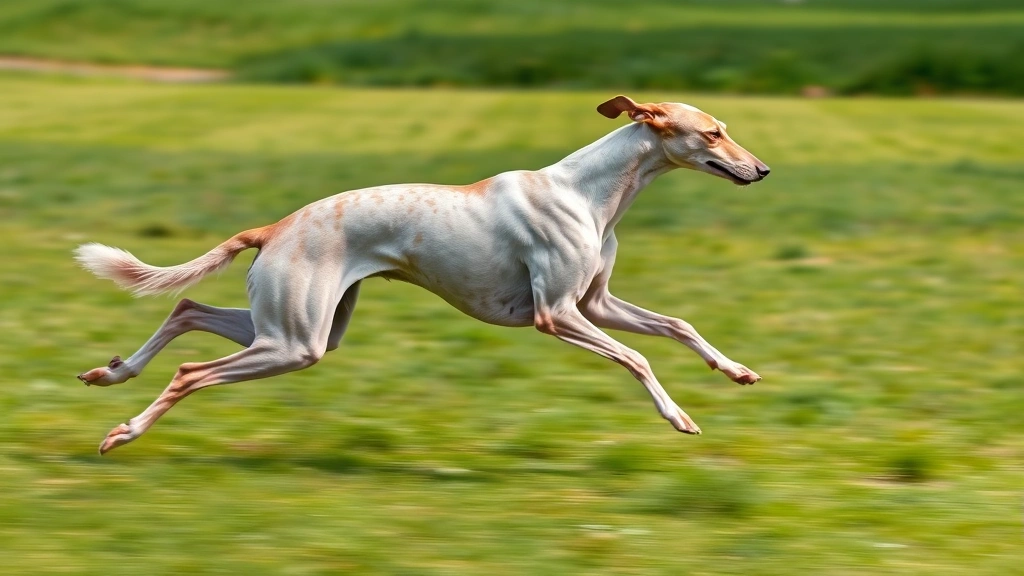
So you’re wondering what is the fastest dog in the world? Well, buckle up, because we’re about to introduce you to a canine speed demon that’ll make your family road trip look like a tortoise convention.
Table of Contents
- The Greyhound: The Undisputed Speed Champion
- How Fast Can Other Speedy Breeds Go?
- Why Do We Care About Dog Speed Anyway?
- The Science Behind Canine Velocity
- Greyhound Racing: The Controversial Sport
- Training and Exercising Your Speed Demon
- Health Considerations for Fast Breeds
- Other Notable Fast Breeds Worth Mentioning
- The World Record Holder: Reaching Peak Canine Speed
- Choosing a Fast Breed: What You Need to Know
- Frequently Asked Questions
- Conclusion: Celebrating Canine Speed
The Greyhound: The Undisputed Speed Champion
The Greyhound takes the crown as the fastest dog breed on the planet, reaching speeds of up to 45 miles per hour (72 km/h). These sleek, elegant dogs were bred for hunting and racing, and boy, does it show. With their long legs, narrow bodies, and aerodynamic frames, Greyhounds are basically the Formula 1 cars of the dog world.
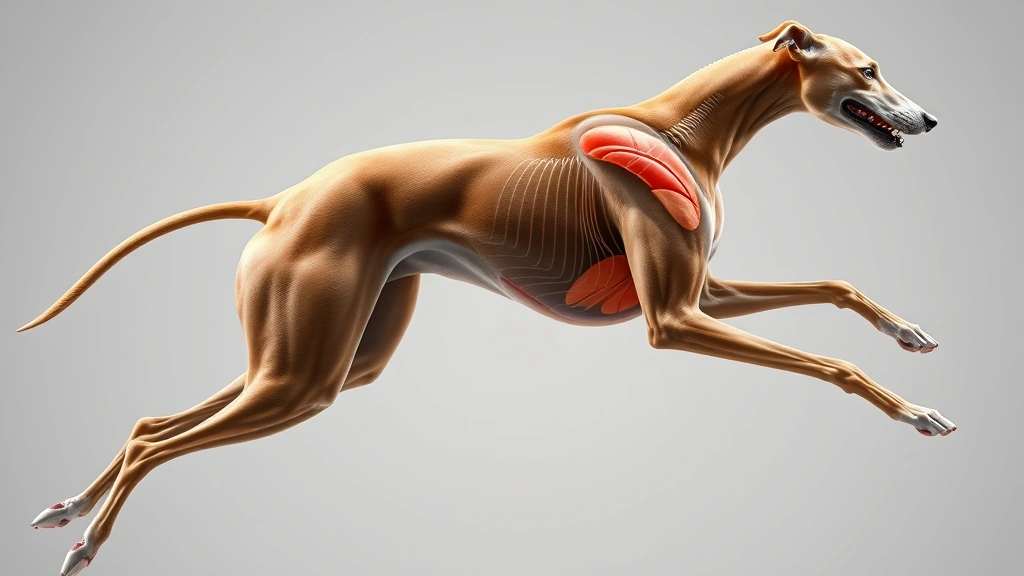
What makes Greyhounds so ridiculously fast? It’s all about their anatomy. They have incredibly flexible spines, powerful hindquarters, and a high stride length. Plus, their lightweight build—usually between 60-70 pounds—means they’re built like sprinters, not sumo wrestlers. If you’re looking for a low energy dog breeds comparison, Greyhounds are actually surprisingly chill indoors despite their racing heritage.
How Fast Can Other Speedy Breeds Go?
While Greyhounds reign supreme, they’re not alone in the speed department. The Saluki, an ancient Egyptian breed, can hit speeds of 42 mph, making it a close second. Then there’s the Vizsla, often called the “velcro dog” because it sticks to its owners like glue—except when it’s zooming around at 40 mph.
The Weimaraner, with its sleek gray coat and athletic build, can reach 35 mph. Afghan Hounds, despite their flowing hair that looks like they just stepped out of a shampoo commercial, can sprint at 40 mph. Even the Rhodesian Ridgeback, a massive African hunting dog, can hit 30 mph. These breeds share common traits: long legs, deep chests, and muscles that would make a personal trainer weep with joy.
Why Do We Care About Dog Speed Anyway?
Beyond just being cool party facts, understanding canine speed matters for dog owners and enthusiasts. Knowing your dog’s natural athletic ability helps you provide appropriate exercise, prevent boredom, and keep them mentally stimulated. A Greyhound stuck in a tiny apartment with no outlet for its speed is like putting a sports car in a garage and never driving it—tragic.
Speed also tells us about a dog’s original purpose. Greyhounds were sighthounds, meaning they hunted by sight and speed. Their incredible velocity was essential for catching rabbits and hares. Understanding these instincts helps modern dog owners appreciate why their pups might chase the neighbor’s cat or bolt after a squirrel like their life depends on it.
The Science Behind Canine Velocity
Dogs reach their top speeds through a combination of factors that would make a biomechanist jealous. First, there’s stride length—the distance covered with each step. Greyhounds have exceptionally long strides relative to their body size. Second, there’s stride frequency, or how many steps they take per second. Fast dogs combine both elements perfectly.
Their muscle composition also plays a role. Fast dog breeds have a higher percentage of fast-twitch muscle fibers, which are designed for explosive, quick movements. Compare this to lazy dog breeds like Bulldogs or Basset Hounds, which have more slow-twitch fibers built for endurance at a leisurely pace.
The spine flexibility of sighthounds is another secret weapon. When a Greyhound runs, its spine compresses and extends with each stride, adding extra length to their movement. It’s like having a built-in spring system that converts potential energy into forward momentum.
Greyhound Racing: The Controversial Sport
Greyhounds became famous partly due to their racing heritage. Greyhound racing was hugely popular in the 20th century, with people betting serious money on these speed machines. However, the industry has faced significant ethical concerns regarding animal welfare, including injuries, inadequate care, and the fate of retired racing dogs.
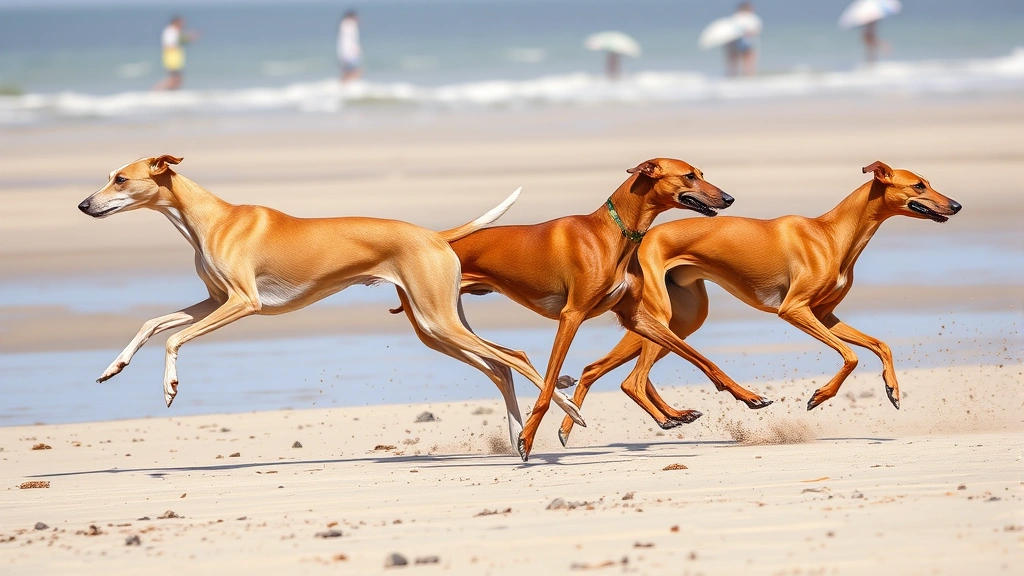
Today, many countries and states have banned or heavily restricted greyhound racing. The good news? Thousands of retired racing Greyhounds have found loving homes through adoption programs. These dogs, despite their racing background, often make wonderful, gentle companions. They’re surprisingly low-energy indoors and get along great with families, though they do need regular exercise to stay happy.
Training and Exercising Your Speed Demon
If you own a fast breed, you need to understand their exercise needs. These dogs require regular, vigorous activity to prevent destructive behaviors and anxiety. A simple walk around the block won’t cut it—they need to run, sprint, and really stretch their legs.
The best exercise for speedy breeds includes off-leash running in secure areas, lure coursing (a sport that mimics hunting), or participating in dog sports like agility or flyball. Many fast breeds also excel at dock diving, where they jump off a dock into water. It’s like the canine version of the Olympics, and these dogs live for it.
Health Considerations for Fast Breeds
Speed comes with its own set of health considerations. Greyhounds and other sighthounds have unique medical needs. They’re prone to certain conditions like bloat (gastric dilatation-volvulus), which can be life-threatening. They also have sensitive skin and thin coats that require special care in cold weather.
Additionally, fast breeds are susceptible to injuries from their own exuberance. A Greyhound running full-speed into a fence or over uneven terrain can suffer serious injuries. It’s crucial to provide safe spaces for them to exercise and to monitor them closely during play. Regular veterinary check-ups are essential, and you should discuss breed-specific health screening with your vet.
Other Notable Fast Breeds Worth Mentioning
Beyond the usual suspects, several other breeds deserve recognition for their impressive speed. The Pointer, bred for hunting birds, can reach 35 mph. The German Shepherd, famous for police and military work, hits 30 mph. Even the Border Collie, often considered the smartest dog breed, can sprint at 30 mph.
The Siberian Husky, built for sledding in harsh Arctic conditions, can maintain speeds of 20 mph for extended distances—not as fast as a Greyhound, but impressive for endurance. The Jack Russell Terrier, despite being small, can reach 25 mph, proving that speed isn’t always about size. And if you’re curious about breed comparisons, check out information on the Mini Bernese Mountain Dog for a slower, stockier alternative.
The World Record Holder: Reaching Peak Canine Speed
While Greyhounds hold the breed record, individual dogs have achieved remarkable speeds. The fastest recorded dog speed was achieved by a Greyhound named “Shakey” who reached an astounding 45 mph in a controlled test. Some sources claim certain Greyhounds have hit speeds close to 50 mph in ideal conditions, though these claims are harder to verify.
Speed records in dogs are typically measured during racing events or controlled trials using electronic timing systems. The conditions matter immensely—surface type, weather, the dog’s age and fitness level, and even motivation all affect performance. A young, healthy Greyhound in peak condition on a perfect day will outrun an older dog or one that’s not properly conditioned.
Choosing a Fast Breed: What You Need to Know
If you’re considering adopting a speed breed, understand what you’re getting into. These dogs aren’t just fast; they’re often high-energy, prey-driven, and require experienced owners. They need consistent exercise, mental stimulation, and proper training.
Fast breeds also tend to have high prey drives, meaning they’ll chase anything that moves—squirrels, cats, small dogs, you name it. They need secure fencing (at least 5-6 feet high) and should always be on a leash during walks unless in a completely enclosed area. Training is essential, though some of these breeds can be independent thinkers and stubborn about following commands when they’ve spotted something interesting.
Frequently Asked Questions
Can any dog breed reach 45 mph?
No, only certain breeds with specific anatomical features can reach these speeds. Greyhounds, Salukis, and a few other sighthounds are the only breeds capable of hitting 45 mph or close to it. Most other dog breeds max out at 25-35 mph.
Is it healthy for dogs to run at top speed regularly?
Yes, it’s actually healthy for fast breeds to run at top speed regularly, as long as they’re properly conditioned and exercised appropriately. These dogs were bred for speed and need outlets for their natural abilities. However, they should have proper warm-up and cool-down periods, and exercise should be age-appropriate.
What’s the difference between a Greyhound and a Whippet?
Whippets are smaller versions of Greyhounds, weighing 25-40 pounds compared to a Greyhound’s 60-70 pounds. Whippets can reach speeds of 35 mph, making them incredibly fast for their size. They’re often called “poor man’s Greyhounds” and make excellent family pets.
Do fast dog breeds make good family pets?
Yes, many fast breeds make wonderful family pets, especially Greyhounds and Whippets. They’re often gentle, affectionate, and surprisingly lazy indoors. However, they do require regular exercise and shouldn’t be left unsupervised with small children or other small pets due to their prey drive.
What breed is fastest after Greyhounds?
The Saluki holds the second-place title, reaching speeds of 42 mph. This ancient breed is even older than the Greyhound and was revered in Egypt and the Middle East. Vizslas and Afghan Hounds are close contenders as well.
Conclusion: Celebrating Canine Speed
So, what is the fastest dog in the world? It’s the magnificent Greyhound, capable of reaching speeds up to 45 mph. These incredible athletes represent the pinnacle of canine speed, thanks to their specialized anatomy, powerful muscles, and incredible breeding history.
Whether you’re fascinated by the science behind their speed, considering adopting one, or just impressed by their athletic prowess, Greyhounds and other fast breeds deserve our respect and appreciation. They’re living proof that dogs come in all varieties—from couch potatoes to Olympic sprinters—and each has its own special place in our hearts and homes.
If you’re thinking about bringing a fast breed into your life, make sure you’re prepared for the commitment. These dogs need exercise, mental stimulation, and owners who understand their unique needs. But if you’re up for the challenge, you’ll have a loyal, loving, and absolutely lightning-fast companion.





