
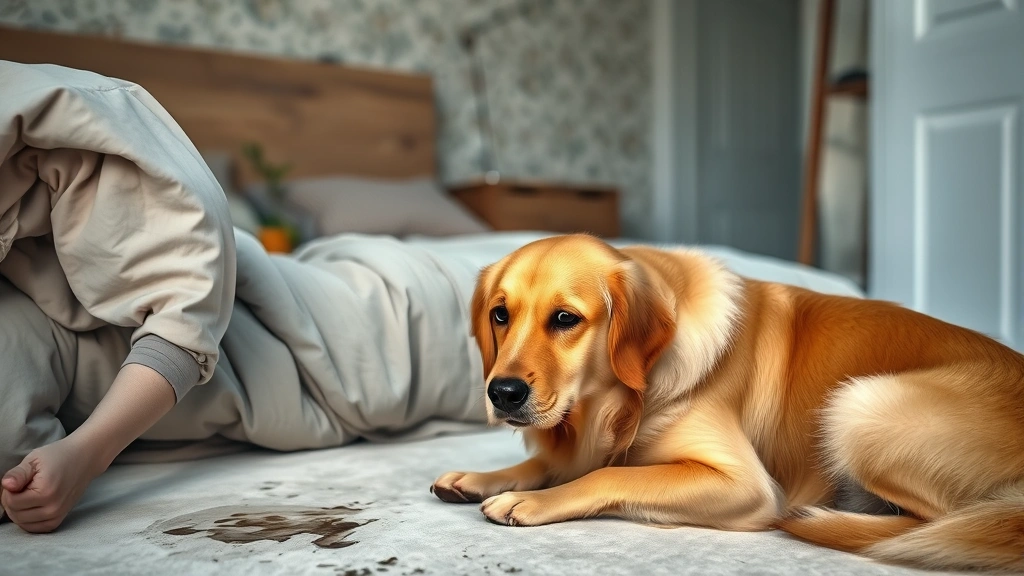
So you woke up to a wet spot on your favorite sheets, and your furry best friend is looking at you like nothing happened. If you’re wondering why did my dog pee in my bed, trust me—you’re not alone. This is one of the most frustrating (and gross) situations pet parents face, but here’s the good news: it’s almost always fixable once you understand what’s really going on.
Table of Contents
- 1. Urinary Tract Infections and Medical Issues
- 2. Incomplete Housebreaking or Regression
- 3. Separation Anxiety and Stress
- 4. Marking Territory or Dominance Issues
- 5. Age-Related Incontinence and Cognitive Decline
- How to Clean and Prevent Future Accidents
- When to Call the Vet
- Training Tips for Stubborn Cases
- Breed-Specific Considerations
- Managing Anxiety and Stress Triggers
- Frequently Asked Questions
- The Bottom Line
Your dog isn’t being spiteful or trying to ruin your morning. Dogs don’t pee in beds to get revenge—that’s a human concept they simply don’t understand. Instead, there’s almost always a legitimate reason behind this behavior, whether it’s medical, behavioral, or environmental. In this guide, we’ll break down the five most common causes and give you practical solutions to stop this annoying habit for good.
1. Urinary Tract Infections and Medical Issues
The most common culprit behind unexpected bed-wetting is a urinary tract infection (UTI). When your dog has a UTI, they lose control over their bladder and may feel an urgent, uncontrollable need to pee—even when they’re lying next to you in bed.
UTIs are more common in female dogs than males, and certain breeds are more susceptible. Signs of a UTI include:
- Frequent urination in small amounts
- Straining while peeing
- Blood or cloudiness in urine
- Excessive licking of the genital area
- Accidents in the house (especially at night)
Other medical conditions that cause incontinence include diabetes, kidney disease, and hormonal imbalances. If your dog is older or has suddenly started having accidents, a vet visit is non-negotiable. Your veterinarian can run a urinalysis to rule out infections and other health problems. Check out our guide on lethargic dog symptoms to see if your pup shows other signs of illness.
2. Incomplete Housebreaking or Regression
If your dog is still a puppy or relatively young, they may simply not be fully housetrained yet. Some dogs take longer to develop bladder control, especially small breeds. But here’s the tricky part: even an adult dog can regress in their housebreaking if something disrupts their routine.
Common triggers for housebreaking regression include:
- Moving to a new home
- Changes in family structure (new baby, new pet)
- Inconsistent potty schedules
- Lack of supervision
- Too much time in a crate or confined space
The solution is to go back to basics: establish a consistent potty schedule, take your dog outside frequently (especially before bed), reward them heavily for outdoor elimination, and supervise closely when they’re indoors. Never punish accidents—this creates anxiety and makes the problem worse.
3. Separation Anxiety and Stress
Dogs with separation anxiety or general anxiety may pee in bed as a stress response. This is especially common when you’re away or when your dog senses you’re about to leave. Some anxious dogs will also pee on your bed specifically because it smells like you—it’s a self-soothing behavior.
Signs of anxiety-related incontinence include:
- Peeing only when alone or at night
- Destructive behavior
- Excessive panting or drooling
- Whining or barking
- Restlessness
If anxiety is the issue, you’ll need to work on desensitization and counterconditioning. Start by leaving your dog alone for short periods and gradually increase the time. Create a safe space with their crate or a designated room. Consider calming supplements, anxiety wraps, or talking to your vet about anti-anxiety medication if the behavior is severe.
4. Marking Territory or Dominance Issues
Adult dogs, especially males, sometimes pee on beds as a way to mark territory. This is more common if there’s been a recent change in the household (new pet, new person) or if your dog senses a shift in the pack hierarchy. It’s not actually about dominance in the traditional sense—it’s about claiming resources and establishing comfort zones.
Territory marking looks different from regular incontinence:
- Small amounts of urine (not full bladder emptying)
- Happens on specific items (your bed, the couch)
- Often occurs when other dogs or people visit
- Your dog may sniff and circle before marking
The fix involves neutering or spaying (if not already done), limiting access to your bed, and using enzymatic cleaners to completely remove all urine scent. Your dog will keep marking the same spots if they can still smell their previous pee.
5. Age-Related Incontinence and Cognitive Decline
Senior dogs often develop incontinence as their muscles weaken and their cognitive function declines. This is especially true for large breed dogs over age 10. Age-related incontinence is involuntary—your dog isn’t doing it on purpose.
Senior incontinence signs include:
- Leaking urine while sleeping
- Loss of bladder control during the day
- Confusion or disorientation
- Difficulty waking up or responding to commands
- Changes in sleep patterns
Management strategies for senior dogs include more frequent potty breaks, waterproof bed covers, medications like phenylpropanolamine (PPA), and supplements that support bladder health. Talk to your vet about options—there are actually several medications and dietary adjustments that can help.
How to Clean and Prevent Future Accidents
Once you’ve identified the cause, here’s how to prevent it from happening again:
Complete enzymatic cleaning is essential. Regular cleaners won’t work because dogs can still smell the urine residue. Use a quality enzymatic cleaner like Nature’s Miracle or Rocco & Roxie on the affected area. Let it sit for at least 10-15 minutes before blotting. You may need to repeat this process multiple times.
Next, restrict bed access temporarily. Keep your dog off the bed until the problem is solved. Use a crate, dog bed, or separate room for sleeping. This prevents reinforcement of the behavior and protects your furniture.
Establish a consistent routine. Take your dog out first thing in the morning, before bed, after meals, and every 4-6 hours during the day. Consistency is key to reestablishing good habits.
Finally, use protective covers. Waterproof mattress protectors and washable bed covers give you peace of mind while you’re working through the problem. Some dog owners also use absorbent pee pads on their beds temporarily.
When to Call the Vet
You should schedule a vet appointment if:
- Your dog has suddenly started having accidents after being housetrained
- There’s blood in the urine
- Your dog is straining or seems to be in pain while urinating
- The accidents are happening frequently (more than once a day)
- Your dog is drinking excessive water
- Your dog is older or showing other signs of illness
Your vet can perform a urinalysis, urine culture, and physical exam to rule out UTIs, diabetes, kidney disease, and other medical conditions. PetMD’s guide to dog incontinence provides excellent information on what to expect during a vet visit.
Training Tips for Stubborn Cases
If your dog continues to have accidents despite medical clearance, consider these training strategies:
Reward outdoor elimination heavily. Use high-value treats and enthusiastic praise every single time your dog pees outside. Make it the best thing that’s ever happened to them.
Catch them in the act (if possible). If you see your dog starting to pee indoors, calmly interrupt them with a “no” and take them outside immediately. Reward if they finish outside. Never yell or punish after the fact—they won’t understand.
Use crate training effectively. Dogs naturally avoid soiling their sleeping area. A properly sized crate can help reinforce bladder control. Never use the crate as punishment.
Consider professional help. A certified professional dog trainer or veterinary behaviorist can assess your specific situation and create a customized plan.
Breed-Specific Considerations
Some breeds are more prone to incontinence than others. Small breeds like Chihuahuas and Yorkshire Terriers often take longer to housetrain. Spayed female dogs of any breed are more susceptible to hormonal incontinence. Large breeds develop age-related incontinence earlier than small breeds. If you have a breed-specific issue, ask your vet for breed-appropriate advice.
Managing Anxiety and Stress Triggers
If stress is the culprit, you’ll need to address the underlying anxiety. Environmental stressors like extreme heat can contribute to overall stress levels. Create a calm environment by using white noise, keeping a consistent schedule, and providing plenty of exercise. A tired dog is a well-behaved dog.

Calming supplements like L-theanine, CBD (where legal), or prescription anxiety medication may help. Work with your vet to find the right solution for your dog’s anxiety level.
Frequently Asked Questions
Why does my dog pee on my bed specifically?
Dogs often target beds because they smell like their owner. For anxious dogs, this is comforting. For territorial dogs, it’s a way to claim a high-value resource. Medical issues also cause accidents in the place where your dog spends the most time.
Can stress cause my dog to pee in bed?
Absolutely. Anxiety and stress are common causes of incontinence, especially in sensitive dogs. If your dog only has accidents when you’re away or during stressful situations, anxiety is likely the culprit. Addressing the underlying stress will resolve the behavior.
Is bed-wetting a sign of a serious health problem?
It can be. While sometimes it’s just incomplete housebreaking, sudden onset bed-wetting in an adult dog warrants a vet visit to rule out UTIs, diabetes, kidney disease, and other conditions. Don’t assume it’s behavioral without medical clearance.
How long does it take to fix this problem?
It depends on the cause. Medical issues can improve within days to weeks once treated. Behavioral issues may take 4-8 weeks of consistent training. Senior incontinence is ongoing and requires management rather than a cure.
Should I punish my dog for peeing in bed?
Never. Punishment creates fear and anxiety, which often makes the problem worse. Dogs don’t understand delayed punishment, so they’ll just learn to fear you. Focus on positive reinforcement for outdoor elimination instead.
What’s the best enzymatic cleaner for dog urine?
Nature’s Miracle, Rocco & Roxie, and Rocco & Roxie are highly rated. The key is to use enough cleaner, let it sit long enough, and sometimes repeat the process. Enzymatic cleaners break down the uric acid crystals that make urine smell.
The Bottom Line
When your dog pees in your bed, it’s frustrating—but it’s almost always fixable. Start with a vet visit to rule out medical issues like UTIs, diabetes, or incontinence. If your dog gets a clean bill of health, focus on behavioral solutions: consistent potty schedules, positive reinforcement, crate training, and managing stress or anxiety.
Remember that your dog isn’t trying to annoy you. They’re communicating something—whether it’s a health issue, anxiety, incomplete training, or age-related changes. Once you understand the root cause, you can address it effectively and get back to enjoying a dry bed and a happy relationship with your pup.
Be patient, stay consistent, and don’t hesitate to call your vet or a professional trainer if you need help. Most cases of bed-wetting resolve with the right approach and timeline.





