

Why Do Dogs Eat Their Puppies? Understanding This Disturbing Behavior
One of the most unsettling questions pet owners can ask is why a mother dog would consume her own offspring. It’s a topic that makes most people uncomfortable, yet it’s a real phenomenon that occurs in the canine world. Understanding this behavior isn’t about judgment—it’s about recognizing the biological, psychological, and environmental factors that drive dogs to make decisions that seem incomprehensible to us humans.
The truth is, infanticide in dogs isn’t random cruelty or a sign of pure evil. Rather, it’s a complex interplay of survival instincts, health concerns, stress responses, and sometimes tragic medical circumstances. By exploring the science behind this behavior, we can better protect our furry friends and their litters.
This comprehensive guide will walk you through the legitimate reasons why this happens, how to recognize warning signs, and most importantly, how to prevent it from occurring in your own dogs.
Survival Instincts and Resource Management
At the core of canine behavior lies an ancient survival mechanism that predates domestication by thousands of years. In the wild, a mother dog (or wolf) must make difficult calculations about resource allocation. When a litter is larger than she can adequately support, or when environmental conditions are dire, some mothers will reduce litter size to ensure the survival of the strongest offspring.
This isn’t malice—it’s mathematics. A mother dog instinctively understands that five healthy puppies have better survival odds than ten malnourished, weak ones. By focusing her limited milk supply and energy on fewer pups, she maximizes the chances that at least some of her genetic line will survive to reproductive age.
This behavior is particularly common in first-time mothers who may not have fully developed maternal instincts, or in situations where the mother feels her resources are critically depleted. Understanding this evolutionary perspective doesn’t make the behavior acceptable in a domestic setting, but it does help us recognize it as a biological phenomenon rather than a character flaw.
When considering the broader picture of canine nutrition and development, it’s worth noting that why dogs eat poop sometimes relates to nutritional deficiencies, which can also contribute to stressed maternal behavior in lactating females.

Health Concerns and Defective Puppies
Perhaps the most scientifically supported reason for maternal cannibalism in dogs relates to health assessment. Mother dogs possess an instinctive ability to recognize when a puppy is stillborn, severely deformed, or unlikely to survive. In these cases, consuming the puppy serves multiple biological purposes.
First, it eliminates a source of infection or disease that could spread to healthy littermates. A dead or dying puppy can quickly become a breeding ground for bacteria, and the mother’s consumption prevents this contamination. Second, the act recycles nutrients back into the mother’s system, which she can then redirect toward nursing healthy puppies. Third, it removes evidence that might attract predators to the den.
According to research from the American Kennel Club, mothers can detect genetic abnormalities, cardiac defects, and neurological issues that humans might not immediately recognize. A puppy born with a cleft palate, for instance, cannot nurse effectively, and the mother may instinctively recognize this incompatibility with survival.
Additionally, some puppies are born with conditions that cause them to be rejected by the mother. The mother’s behavior in these instances is actually a form of natural selection—a harsh but efficient mechanism that has allowed canines to thrive for millennia.
Environmental Stress and Anxiety
The environment surrounding birth and the early postpartum period plays a crucial role in maternal behavior. Dogs are sensitive creatures, and excessive stress during labor and immediately after can trigger problematic responses, including cannibalistic behavior.
Common stressors include:
- Excessive human interference: Too many people handling puppies, loud noises, or constant disturbances in the whelping area
- Inadequate nesting space: A whelping box that’s too small, uncomfortable, or exposed to the elements
- Temperature fluctuations: Puppies that are too cold or too hot create stress for the mother
- Lack of privacy: Dogs need a secure, den-like space to feel safe with their litter
- Predator presence: Even perceived threats from other animals can trigger defensive cannibalism
- Social isolation: Some mothers become anxious when separated from their human family
Understanding how long dog labor lasts is important because extended or complicated labor can exhaust a mother, leaving her physically depleted and psychologically stressed during the critical postpartum period.
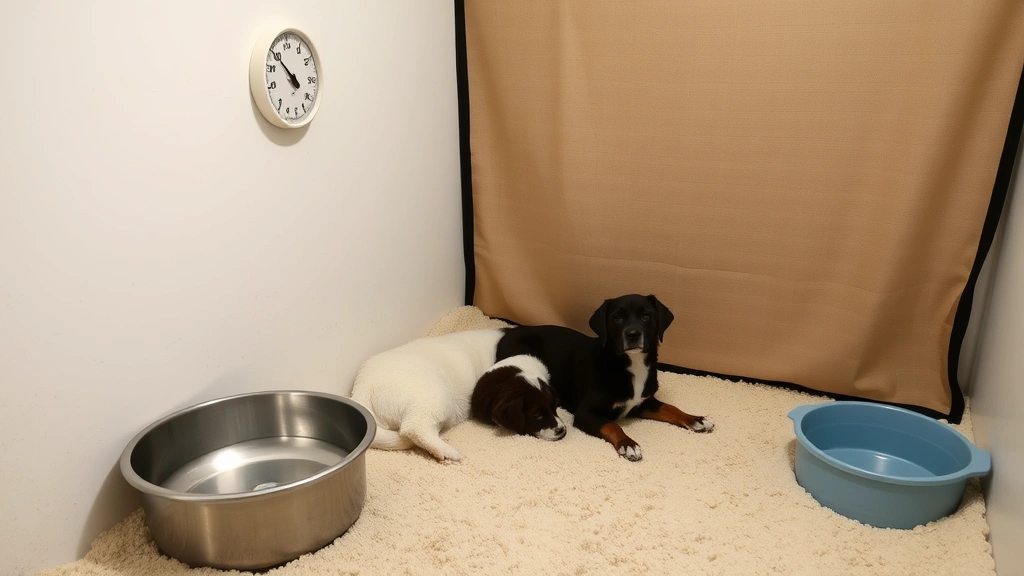
Research published in veterinary behavioral journals indicates that anxious mothers are significantly more likely to harm their puppies than calm, confident mothers. Creating an optimal environment—quiet, warm, secure, and comfortable—can substantially reduce the risk of this behavior occurring.
Maternal Health Problems
Several medical conditions can predispose a mother dog to consume her puppies. These aren’t behavioral issues but rather health crises that manifest through seemingly aberrant maternal behavior.
Mastitis and Lactation Issues: When a mother’s mammary glands become infected (mastitis), nursing becomes extremely painful. In her distress and pain, she may lash out at puppies attempting to nurse, and in severe cases, may consume them.
Eclampsia (Milk Fever): This dangerous metabolic condition occurs when calcium levels drop critically low during lactation. Affected mothers become confused, anxious, and unpredictable—sometimes harming their puppies in their distressed state.
Hormonal Imbalances: Fluctuations in oxytocin, prolactin, and other hormones critical to maternal behavior can disrupt normal mothering instincts. This is why spaying and neutering recommendations should consider reproductive health timelines.
Postpartum Infections: Uterine infections or other postpartum complications can cause systemic illness that impairs judgment and maternal instinct.
It’s worth considering that whether dogs understand death may relate to how they process the loss of puppies—sometimes their behavior reflects grief or confusion rather than predatory instinct.
Veterinary intervention is critical in these cases. The ASPCA recommends immediate veterinary evaluation if a mother dog shows signs of illness during the nursing period, as early treatment can save both mother and litter.
Prevention and Protection Strategies
While we cannot eliminate all biological drives, responsible breeding and careful management can dramatically reduce the likelihood of a mother harming her puppies.
Pre-Breeding Health Screening: Ensure the mother is in optimal health before breeding. Screen for genetic conditions, hormonal abnormalities, and any predisposing health issues.
Create the Perfect Whelping Environment: Design a quiet, temperature-controlled whelping space that provides security and comfort. The area should be dark enough to feel den-like but bright enough for you to monitor safely. Maintain temperatures between 85-90°F for newborn puppies.
Minimize Stress During Labor: Limit human contact during labor unless complications arise. Allow the mother to labor in a quiet, private space with only essential monitoring.
Monitor Postpartum Health: Check the mother daily for signs of infection, pain, or illness. Watch for fever, discharge, reduced appetite, or behavioral changes that might indicate medical problems.
Ensure Adequate Nutrition: Lactating mothers require significantly more calories and nutrients. Provide high-quality puppy food (which is more nutrient-dense than adult food) and ensure constant access to fresh water.
Support Bonding: Spend time with the mother and puppies in calm, quiet interactions. A relaxed, confident mother is less likely to harm her litter than an anxious one.
Screen Puppies at Birth: Examine each puppy immediately after birth to identify any with severe defects or complications. Puppies that cannot nurse effectively or have life-threatening conditions may need to be hand-reared or humanely euthanized.
Interestingly, some health issues like what causes parvo in dogs can affect nursing mothers and puppies, making pre-breeding vaccination and health protocols essential.
Warning Signs to Watch For
Vigilant observation during the first weeks after birth can help you intervene before tragedy strikes.
Behavioral Red Flags:
- Excessive growling or snarling at puppies
- Refusing to nurse or pushing puppies away
- Panting excessively or showing signs of distress
- Attempting to move puppies away from the whelping area repeatedly
- Showing aggression when puppies approach for feeding
- Neglecting to clean puppies after birth
Physical Red Flags in the Mother:
- Fever or discharge from the vulva
- Swollen, red, or painful mammary glands
- Reduced appetite or refusal to eat
- Lethargy or unusual inactivity
- Tremors or muscle rigidity (possible eclampsia)
Puppy Red Flags:
- Unexplained deaths with bite marks or injuries
- Puppies appearing weak or malnourished
- Missing puppies with no explanation
- Signs of infection or injury on surviving puppies
If you observe any of these signs, contact your veterinarian immediately. Early intervention can mean the difference between a thriving litter and tragedy.
Some behavioral concerns like why dogs lick their paws can sometimes indicate stress or anxiety in mothers, which might precede more serious behavioral issues.
Understanding whether dogs can have abortions is also relevant for breeders, as medical termination might be appropriate in certain high-risk pregnancies.
Frequently Asked Questions
Is a dog that eats her puppies dangerous to humans?
Not necessarily. Maternal cannibalism is a reproductive behavior driven by specific triggers related to pregnancy, lactation, and offspring care. It doesn’t typically indicate aggression toward humans. However, a stressed or hormonally imbalanced mother should be handled carefully, and professional behavioral guidance is recommended.
Can this behavior be prevented with training?
Training cannot override biological drives, but environmental management and stress reduction can be very effective. The key is prevention through proper breeding practices, health screening, and optimal postpartum care—not correction after the fact.
Should I separate the mother from her puppies if I’m concerned?
Separation should only be done under veterinary guidance. Premature separation can cause additional stress and health complications for both mother and puppies. If you have concerns, consult your vet about appropriate monitoring and intervention strategies.
Is this behavior more common in certain breeds?
Some research suggests that certain breeds may be predisposed to higher stress levels during breeding, but infanticide occurs across all breeds. First-time mothers, young mothers, and mothers under stress are at higher risk regardless of breed.
What should I do if I witness this behavior?
Remain calm and contact your veterinarian immediately. Do not punish the mother, as this increases stress. Focus on identifying any medical issues and separating puppies if necessary for their safety. Your vet can provide guidance on whether hand-rearing is appropriate.
Can this happen with bottle-fed puppies?
No. Once puppies are being bottle-fed and are no longer nursing, the maternal behavior associated with lactation ceases, and the risk is eliminated. Hand-rearing may be necessary in cases where maternal care cannot be provided safely.
Is there a genetic component to this behavior?
While predisposition to anxiety or poor maternal instinct may have some genetic basis, the behavior itself is primarily triggered by environmental, health, and hormonal factors. This is why responsible breeding practices that prioritize temperament and health are so important.





