

The piercing wail of a siren cuts through the air, and suddenly your peaceful dog transforms into a vocal virtuoso, throwing back their head and howling with surprising intensity. This common canine behavior has puzzled dog owners for generations, leaving many wondering if their pet is in distress, trying to communicate, or simply joining what they perceive as a community sing-along.
Understanding why dogs howl at sirens requires diving deep into canine psychology, evolutionary biology, and the fascinating world of acoustic communication. This behavior isn’t random or problematic—it’s actually a natural response rooted in thousands of years of genetic programming and social instincts that connect our domesticated companions to their wild ancestors.
The Evolutionary Roots of Howling
To understand why dogs howl at sirens, we must first examine their ancestral connection to wolves. Dogs evolved from wolves approximately 15,000 to 40,000 years ago, and despite thousands of years of domestication, many of their fundamental behaviors remain unchanged. Howling is one of the most primitive and deeply ingrained forms of canine communication.
In the wild, wolves use howling as a sophisticated communication system. Pack members howl to locate each other across vast territories, coordinate hunting activities, and maintain social bonds. According to research from the National Park Service, wolf howls can travel up to six miles in forested areas and up to ten miles in open terrain, making it an incredibly effective long-distance communication tool.
When your domestic dog hears a siren, their ancient genetic programming may interpret this sound as a distant pack member calling out. The instinctual response is to howl back, essentially saying “I’m here” or “I hear you.” This behavior demonstrates how strongly evolutionary traits persist even in our modern, pampered pets.
Interestingly, this same instinctual response explains other common dog behaviors. Just as dogs might howl at sirens, they exhibit other ancestral behaviors in response to various stimuli. For instance, understanding why do dogs pant reveals another evolutionary adaptation for temperature regulation that persists in domestic dogs.

Acoustic Similarities Between Sirens and Wolf Calls
The acoustic properties of emergency sirens share remarkable similarities with wolf howls, which helps explain why dogs respond so consistently to these sounds. Both sirens and wolf howls typically fall within the frequency range of 150 to 780 Hz, with most energy concentrated between 300 and 600 Hz.
Emergency vehicle sirens are designed to be attention-grabbing and carry over long distances, much like natural wolf howls. The rising and falling pitch patterns of many sirens mimic the melodic quality of wolf vocalizations. Fire truck horns, ambulance wails, and police sirens all share these characteristics, though some trigger stronger responses than others.
Research conducted by animal behaviorists has shown that dogs are most likely to howl in response to sounds that closely match the fundamental frequency and harmonic structure of wolf calls. The American Kennel Club notes that dogs have evolved to be particularly sensitive to these specific frequency ranges, making sirens almost irresistible triggers for howling behavior.
The duration and intensity of the siren also play crucial roles. Short, abrupt sounds are less likely to trigger howling than sustained, melodic tones. This explains why some dogs ignore car horns but immediately respond to the extended wail of an ambulance siren.
Howling as Social Communication
For dogs, howling serves multiple social functions that extend far beyond simple noise-making. When a dog howls at a siren, they may be attempting to communicate their location, acknowledge the “call” they’ve heard, or even invite other dogs in the area to join the vocal exchange.
Multi-dog households often demonstrate this social aspect clearly. When one dog begins howling at a siren, others frequently join in, creating a chorus that can last well beyond the original trigger sound. This group howling reinforces pack bonds and provides a sense of unity and shared purpose.
The social nature of howling also explains why some dogs seem to “enjoy” the experience. Their body language during howling episodes often appears relaxed and engaged rather than stressed or anxious. Many dogs will seek eye contact with their owners during howling, almost as if inviting them to participate in this ancient form of communication.
Dogs are complex emotional beings, and their vocalizations can express various states. While howling at sirens is typically instinctual rather than emotional, dogs do have other ways of expressing distress. Pet owners often wonder about other behavioral indicators, such as whether do dogs cry when experiencing different emotions.
Dogs’ Sensitivity to Sound Frequencies
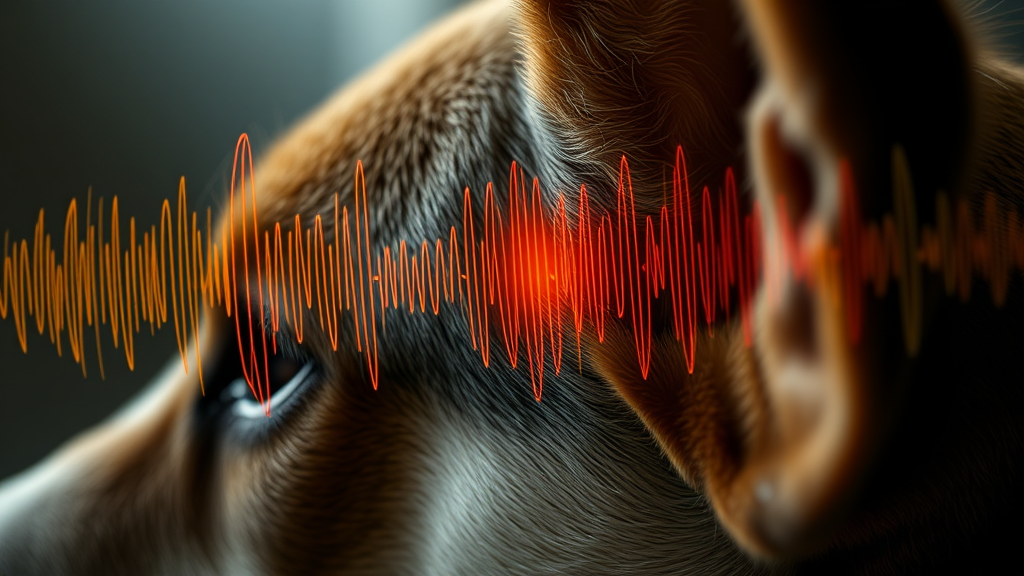
Dogs possess significantly more acute hearing than humans, with the ability to detect sounds at frequencies up to 65,000 Hz compared to our maximum of about 20,000 Hz. This enhanced auditory sensitivity means that dogs not only hear sirens more clearly than we do, but they may also detect harmonic overtones and subtle frequency variations that escape human perception.
The canine ear structure, with its mobile pinnae and specialized inner ear anatomy, allows dogs to pinpoint sound sources with remarkable accuracy. When a siren passes by, dogs can track its movement and distance changes through subtle acoustic cues. This heightened awareness may intensify their instinctual response to howl.
According to veterinary research published by the American Veterinary Medical Association, certain frequency ranges are particularly stimulating to dogs. The frequencies used in emergency sirens fall squarely within these ranges, explaining why sirens are such consistent triggers for howling behavior across different breeds and individual dogs.
Individual dogs may show varying sensitivity levels to different siren types. Some respond primarily to fire truck horns, while others are more reactive to ambulance sirens or police vehicles. This variation often relates to the specific frequency characteristics of each siren type and the individual dog’s hearing sensitivity profile.
Breed Differences in Howling Behavior
Not all dog breeds exhibit the same tendency to howl at sirens, and these differences reflect their genetic heritage and original breeding purposes. Breeds with closer genetic ties to wolves, such as Siberian Huskies, Alaskan Malamutes, and German Shepherds, typically show stronger howling responses to sirens and other triggering sounds.
Hound breeds, originally developed for hunting and tracking, are among the most vocal when it comes to howling. Beagles, Bloodhounds, and Coonhounds were specifically bred to use their voices to communicate with hunters over long distances. These breeds often show intense and prolonged howling responses to sirens, sometimes continuing long after the sound has faded.
Conversely, breeds developed for different purposes may show less interest in howling at sirens. Many toy breeds, lap dogs, and breeds selected primarily for companionship may bark at sirens instead of howling, or they may ignore the sounds entirely. This doesn’t mean they lack the ability to howl—rather, their genetic programming emphasizes different behavioral responses.
Working breeds present an interesting middle ground. Dogs like Golden Retrievers and Labrador Retrievers may occasionally howl at sirens, but they’re more likely to show alert behavior without vocalization. Their breeding history emphasized cooperation with humans rather than long-distance vocal communication.
Other Triggers That Cause Dogs to Howl
While sirens are among the most common triggers for canine howling, many other sounds and situations can elicit this ancient behavior. Understanding these additional triggers helps pet owners recognize the full scope of their dog’s vocal communication repertoire.
Musical instruments, particularly those that produce sustained tones, often trigger howling responses. Harmonicas, flutes, and even singing can cause some dogs to join in with enthusiastic howling. High-pitched musical notes seem especially effective at triggering this behavior, likely because they fall within the same frequency ranges as wolf howls and sirens.
Other dogs howling, whether in person or through audio recordings, frequently trigger responsive howling. This demonstrates the social and communicative nature of the behavior. Many dogs will also howl in response to certain television shows, particularly those featuring wolves or other howling dogs.
Environmental factors can also play a role. Some dogs howl more frequently during certain weather conditions, times of day, or when experiencing anxiety or excitement. Dogs experiencing physical discomfort might also increase their vocalization, though this typically manifests as whining or barking rather than howling.
It’s worth noting that dogs exhibit many behaviors that might seem puzzling but have logical explanations rooted in their biology and evolution. For example, understanding why do dogs sleep so much or why do dogs lick their paws reveals similar connections between instinctual behaviors and practical needs.
Managing and Training Around Howling Behavior
For most dogs, howling at sirens is a normal, harmless behavior that doesn’t require intervention. However, excessive howling can become problematic in apartment living situations or neighborhoods with noise restrictions. Fortunately, several management strategies can help reduce unwanted howling while respecting your dog’s natural instincts.
Distraction techniques work well for many dogs. When you hear an approaching siren, redirect your dog’s attention with treats, toys, or training commands before they begin howling. Positive reinforcement for quiet behavior during siren events can gradually reduce the howling response over time.
Desensitization training involves gradually exposing dogs to recorded siren sounds at low volumes while rewarding calm behavior. Over multiple sessions, the volume can be slowly increased while maintaining the reward structure. This method requires patience and consistency but can be highly effective for persistent howlers.
Environmental management also helps. Moving dogs to interior rooms during peak siren activity times, using white noise machines, or playing calming music can reduce their awareness of triggering sounds. The Humane Society provides additional guidance on helping dogs cope with loud environmental sounds.
It’s important to avoid punishment-based training methods when addressing howling behavior. Yelling at a howling dog often increases their vocalization, as they may interpret your raised voice as joining their “song.” Instead, focus on positive reinforcement and patience to achieve lasting behavioral changes.
When Howling Becomes a Concern
While howling at sirens is typically normal behavior, certain situations warrant professional attention. Excessive howling that occurs without obvious triggers, sudden changes in howling patterns, or howling accompanied by signs of distress may indicate underlying health or behavioral issues.
Dogs that begin howling excessively at sounds that never bothered them before might be experiencing hearing changes, cognitive decline, or anxiety disorders. Senior dogs, in particular, may develop age-related conditions that affect their response to environmental sounds.
Separation anxiety can manifest as excessive howling, though this typically occurs when owners leave rather than in response to sirens. Dogs with separation anxiety may howl continuously during alone time, often accompanied by destructive behavior or house soiling.
If howling is accompanied by other concerning behaviors such as excessive panting, trembling, or changes in appetite or sleep patterns, veterinary consultation is recommended. Sometimes dogs exhibit multiple stress responses simultaneously, and understanding why is my dog shaking alongside howling can provide important diagnostic clues.
Physical discomfort or pain can also cause increased vocalization. While pain-related howling typically sounds different from siren-triggered howling, pet owners should remain alert to changes in their dog’s vocal patterns and overall behavior.
Frequently Asked Questions
Why do some dogs howl at sirens while others don’t?
Individual dogs vary in their howling responses due to genetic factors, breed characteristics, hearing sensitivity, and learned behaviors. Breeds with closer ties to wolves and those originally bred for vocal communication are more likely to howl at sirens. Additionally, some dogs may have learned through experience that howling gets attention, while others may have been inadvertently discouraged from the behavior.
Is it harmful to let my dog howl at sirens?
Howling at sirens is generally harmless and represents natural canine behavior. However, excessive howling can strain vocal cords if it becomes obsessive, and it may create noise issues with neighbors. Most occasional howling poses no health risks and can actually provide dogs with a form of vocal exercise and emotional expression.
Can I train my dog to stop howling at sirens completely?
While it’s possible to reduce howling behavior through consistent training, completely eliminating this instinctual response can be challenging and may not be necessary. Focus on management strategies and positive reinforcement for quiet behavior rather than attempting to suppress all howling. Remember that howling is a natural form of communication for dogs.
Do indoor dogs howl at sirens as much as outdoor dogs?
Indoor dogs may howl less frequently at sirens simply because they hear fewer sirens due to sound insulation from walls and windows. However, when they do hear sirens clearly, indoor dogs are just as likely to respond with howling as their outdoor counterparts. The response is based on hearing the sound rather than the dog’s living environment.
Why does my dog only howl at certain types of sirens?
Different sirens produce different frequency patterns, and individual dogs may be more sensitive to specific frequency ranges. Fire truck horns, ambulance sirens, and police sirens each have unique acoustic characteristics. Your dog’s selective howling likely reflects their individual hearing sensitivity and which siren types most closely match the frequency ranges that trigger their instinctual response.
Should I join in when my dog howls at sirens?
Joining your dog’s howling can strengthen your bond and provide them with social reinforcement for the behavior. If you don’t mind the howling and your neighbors aren’t bothered, participating can be fun and enriching for your dog. However, if you’re trying to reduce howling behavior, joining in will likely encourage more frequent vocalization.
Do puppies howl at sirens the same way adult dogs do?
Puppies may show less consistent howling responses to sirens than adult dogs, as their hearing is still developing and they haven’t fully learned all instinctual behaviors. Some puppies begin howling at sirens as early as 8-10 weeks old, while others may not develop this behavior until they’re several months old. The response typically becomes more consistent as dogs mature and their hearing fully develops.





