

Have you ever wondered why your furry friend goes absolutely bonkers over that squeaky rubber duck or stuffed animal? The moment they hear that familiar squeak, their ears perk up, their tail starts wagging, and suddenly they’re in full play mode. This fascinating behavior has puzzled dog owners for generations, but the answer lies deep within your dog’s evolutionary history and natural instincts.
Understanding why dogs are so attracted to squeaky toys reveals incredible insights into canine psychology, hunting instincts, and the complex ways our pets interact with their environment. From ancient wolf ancestors to modern-day companions, the appeal of squeaky toys connects to fundamental drives that have shaped dog behavior for thousands of years.
The Evolutionary Origins of Squeaky Toy Obsession
To understand why dogs love squeaky toys, we must first examine their evolutionary heritage. Dogs descended from wolves, and despite thousands of years of domestication, many of their ancestral behaviors remain intact. In the wild, wolves and other canids hunt small prey animals like rodents, rabbits, and birds – creatures that often emit high-pitched sounds when distressed or injured.
The squeaking sound produced by toys closely mimics the vocalizations of wounded or frightened prey animals. This similarity triggers an immediate response in dogs, activating the same neural pathways that would have helped their ancestors successfully hunt for survival. The American Kennel Club recognizes that this prey drive varies among different breeds, but it remains a fundamental aspect of canine nature.
Research conducted by animal behaviorists has shown that the frequency range of most squeaky toys (between 1,000 and 4,000 Hz) closely matches the distress calls of small mammals. This isn’t coincidental – it’s an evolutionary adaptation that has been preserved through generations of selective breeding and natural selection.
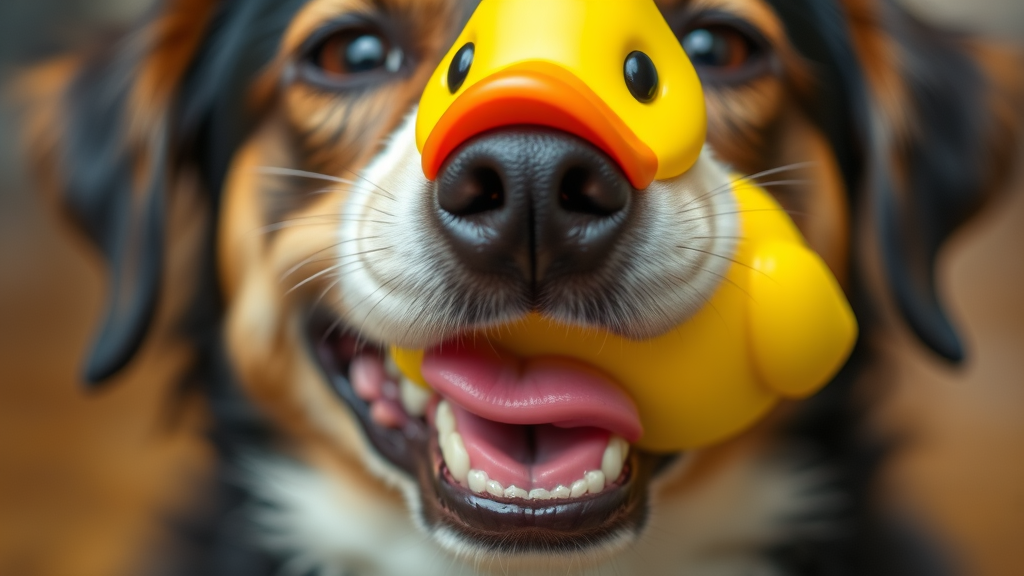
Hunting Instincts and Prey Drive
The connection between squeaky toys and hunting behavior becomes even more apparent when you observe how dogs interact with these toys. Watch your dog play with a squeaky toy, and you’ll likely notice behaviors that mirror hunting sequences: stalking, pouncing, shaking, and “killing” the toy by making it stop squeaking.
This sequence, known as the predatory motor pattern, includes several distinct phases: orient, eye, stalk, chase, grab-bite, kill-bite, and dissect. Squeaky toys allow dogs to practice and satisfy these instinctual behaviors in a safe, controlled environment. The satisfaction dogs derive from successfully “silencing” their squeaky prey provides a sense of accomplishment similar to what their wild ancestors experienced.
Different breeds exhibit varying intensities of prey drive, which explains why some dogs are more obsessed with squeaky toys than others. Terriers, for example, were bred specifically to hunt small vermin, so they often show intense interest in squeaky toys. Similarly, many dogs that exhibit behaviors like howling at sirens are responding to auditory triggers in their environment.
The University of California’s animal behavior studies have documented that dogs with higher prey drives tend to be more motivated by squeaky toys and will often play with them for extended periods. This research helps explain why some dogs will obsessively carry their squeaky toys everywhere, while others show minimal interest.
The Science of Sound and Auditory Stimulation
Dogs possess remarkable hearing abilities that far exceed human capabilities. They can detect sounds at frequencies up to 65,000 Hz, compared to humans who typically hear up to 20,000 Hz. This enhanced auditory sensitivity makes the sounds produced by squeaky toys particularly stimulating and engaging for dogs.
The unpredictable nature of squeaky toy sounds also plays a crucial role in their appeal. Unlike consistent sounds that dogs might ignore over time, the intermittent squeaking created during play maintains their attention and interest. This variable reinforcement schedule – where the reward (the squeak) comes at unpredictable intervals – is one of the most powerful motivators in animal behavior psychology.
Neurological studies using brain imaging technology have shown that squeaky sounds activate the auditory cortex and reward centers in dogs’ brains simultaneously. This dual activation creates a pleasurable experience that encourages repeated play behavior. The American Veterinary Medical Association notes that this type of auditory stimulation can be particularly beneficial for dogs’ mental health and cognitive function.
Just as dogs have specific preferences for different activities, such as enjoying belly rubs, individual dogs may show preferences for certain squeaky toy sounds based on their unique hearing sensitivity and past experiences.
Psychological Benefits and Mental Stimulation
Beyond satisfying hunting instincts, squeaky toys provide significant psychological benefits for domestic dogs. These toys offer mental stimulation that helps prevent boredom and associated behavioral problems. Dogs that don’t receive adequate mental enrichment may develop destructive behaviors, excessive barking, or other unwanted habits.
The interactive nature of squeaky toys engages multiple senses simultaneously – hearing, touch, and sometimes sight if the toy moves unpredictably. This multi-sensory experience provides comprehensive mental exercise that can be especially valuable for high-energy breeds or dogs with limited outdoor access.
Squeaky toys also serve as effective stress relievers for many dogs. The repetitive action of biting and releasing the toy can have a calming effect, similar to how humans might use stress balls or fidget toys. This self-soothing behavior can be particularly beneficial during periods of anxiety, such as when owners are away or during thunderstorms.
Research published in animal behavior journals indicates that dogs who regularly play with interactive toys, including squeaky varieties, show improved problem-solving abilities and better overall mental health. The cognitive stimulation provided by these toys helps maintain neural pathways and can even slow cognitive decline in aging dogs.

Breed-Specific Differences in Squeaky Toy Preferences
Not all dogs show equal enthusiasm for squeaky toys, and these differences often correlate with breed-specific traits developed through centuries of selective breeding. Understanding these variations can help owners choose appropriate toys and set realistic expectations for their pets’ play preferences.
Herding breeds like Border Collies and Australian Shepherds often show intense interest in squeaky toys because their breeding emphasized responsiveness to high-pitched whistles and commands. These dogs may treat squeaky toys as “sheep” to be managed and controlled, often carrying them around and positioning them in specific locations.
Hunting breeds, including retrievers, pointers, and spaniels, typically demonstrate strong attraction to squeaky toys that mimic bird calls. Their breeding history focused on locating and retrieving game birds, making them naturally responsive to similar sounds. However, their training also emphasized gentle mouth control, so they may be less likely to destroy their squeaky toys compared to other breeds.
Terrier breeds, originally bred for vermin control, often show the most intense and destructive play with squeaky toys. Their goal is typically to “kill” the toy by removing the squeaker, which aligns with their historical purpose. Similarly, dogs that engage in other instinctual behaviors like eating dirt are often responding to deeply ingrained drives.
The Humane Society provides guidance on selecting appropriate toys based on breed characteristics and individual temperament, emphasizing the importance of matching toy types to specific dog needs and play styles.
Safety Considerations and Choosing the Right Toys
While squeaky toys provide numerous benefits, safety should always be the primary concern when selecting and monitoring your dog’s play. Not all squeaky toys are created equal, and understanding potential hazards can prevent serious health problems.
The most significant risk associated with squeaky toys is the potential for dogs to swallow the squeaker mechanism. These small plastic or metal devices can cause intestinal blockages if ingested, requiring emergency veterinary intervention. Always supervise play sessions and remove toys that show signs of damage or wear.
Size appropriateness is crucial when selecting squeaky toys. Toys that are too small pose choking hazards, while toys that are too large may be difficult for dogs to manipulate effectively. The general rule is that toys should be large enough that they cannot be swallowed whole, but small enough for comfortable play.
Material quality varies significantly among squeaky toys. Look for products made from non-toxic materials that can withstand your dog’s play style. Avoid toys with small parts that could break off, and regularly inspect toys for wear and tear. The U.S. Food and Drug Administration provides guidelines for pet toy safety that can help guide purchasing decisions.
Some dogs may develop obsessive behaviors around squeaky toys, similar to how they might exhibit compulsive behaviors like excessive paw chewing. If your dog shows signs of toy guarding, inability to stop playing, or distress when toys are unavailable, consult with a veterinary behaviorist.
Using Squeaky Toys in Training and Behavior Modification
Squeaky toys can be powerful tools in dog training and behavior modification when used correctly. Their high-value nature makes them excellent motivators for many dogs, often rivaling food rewards in effectiveness. Understanding how to leverage this motivation can significantly improve training outcomes.
In basic obedience training, squeaky toys can serve as both rewards and attention-getting devices. The sound can redirect a dog’s focus during distracting situations, making it easier to regain control and reinforce desired behaviors. Many professional trainers use squeaky toys to maintain engagement during training sessions, particularly with dogs who are less food-motivated.
For dogs with behavioral issues, squeaky toys can provide appropriate outlets for natural instincts that might otherwise manifest as problem behaviors. Dogs that tend to chase cars, small animals, or exhibit predatory behaviors toward other pets can redirect these impulses toward squeaky toys in controlled play sessions.
Recall training often benefits from squeaky toy motivation, as the distinctive sound can capture a dog’s attention from considerable distances. The Certification Council for Professional Dog Trainers recognizes squeaky toys as valuable training aids when used as part of a comprehensive positive reinforcement program.
However, it’s important to establish rules around squeaky toy play to prevent resource guarding or overstimulation. Teaching dogs to “drop it” and “leave it” commands with squeaky toys helps maintain control and ensures that play remains safe and structured. Some dogs may need breaks from squeaky toy play if they become overly excited or unable to settle down afterward.
Interactive play with squeaky toys can also strengthen the human-dog bond, similar to other positive interactions like understanding why dogs lick their owners. This shared playtime creates positive associations and can improve overall relationship quality.
Frequently Asked Questions
Why does my dog destroy squeaky toys so quickly?
Dogs often destroy squeaky toys because their instinct drives them to “kill” the prey by silencing it. This behavior is completely normal and reflects their natural hunting sequence. Breeds with higher prey drives, particularly terriers, tend to be more destructive with squeaky toys. To extend toy life, consider rotating toys, supervising play sessions, and choosing more durable options designed for heavy chewers.
Are squeaky toys bad for dogs’ hearing?
Generally, squeaky toys are not harmful to dogs’ hearing when used appropriately. Dogs have much better hearing than humans and can safely process the sounds these toys produce. However, extremely loud or damaged squeakers might cause discomfort. If you notice your dog avoiding a particular toy or showing signs of ear discomfort, discontinue use and consult your veterinarian.
Can squeaky toys make dogs more aggressive?
Squeaky toys themselves don’t create aggression, but they can trigger prey drive and excitement that might appear aggressive to some observers. Dogs may growl, shake, or “attack” their toys during play, which is normal hunting behavior. However, if your dog shows true aggression toward people or other animals over toys, or cannot calm down after play, consult a professional dog trainer or behaviorist.
Why doesn’t my dog like squeaky toys?
Not all dogs are attracted to squeaky toys, and this preference can vary based on breed, individual temperament, and past experiences. Some dogs may be sound-sensitive or simply prefer other types of play. Dogs might also lose interest if they associate squeaky sounds with negative experiences. Try different types of toys to discover your dog’s preferences, such as tennis balls or rope toys.
Is it safe to leave squeaky toys with my dog unsupervised?
It’s generally not recommended to leave squeaky toys with dogs unsupervised, especially if your dog is a heavy chewer or has a history of destroying toys. The squeaker mechanism poses a choking hazard and potential intestinal blockage if swallowed. Reserve squeaky toys for supervised play sessions and remove them when you can’t monitor your dog’s activity.
How often should I replace my dog’s squeaky toys?
Replace squeaky toys immediately if they show signs of damage, such as tears, loose parts, or exposed squeakers. Even if the toy appears intact, regularly inspect it for wear and replace it periodically based on your dog’s play intensity. Heavy chewers may need new toys weekly, while gentler dogs might keep toys for months. Always prioritize safety over cost considerations.
Can squeaky toys help with separation anxiety?
Squeaky toys can provide some comfort and distraction for dogs with mild separation anxiety, but they’re not a complete solution for this complex behavioral issue. The mental stimulation and self-soothing aspects of toy play can help some dogs cope with alone time. However, severe separation anxiety requires comprehensive behavior modification techniques and possibly professional intervention. Just as dogs may exhibit various stress responses like unusual eating behaviors, separation anxiety manifests differently in each individual and requires tailored approaches.





