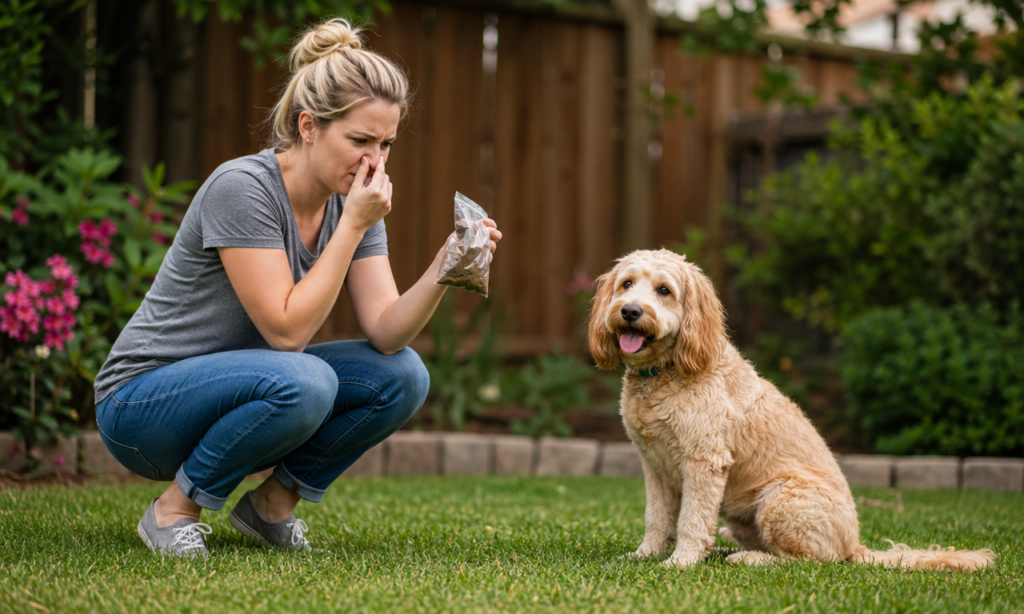
Learning to train a puppy to poop outside is one of the first real tests of dog ownership, and the difference between three weeks and three months of accidents is almost entirely about method. Puppies aren’t difficult — they’re just predictable in ways most owners don’t take advantage of. This guide covers the five best steps to train a puppy to poop outside, a realistic age-based timeline, how crate training fits in, and the mistakes that drag the whole process out.
Why Puppies Need a System (Not Just Patience)
Puppies have small bladders, immature bowel control, and no concept that indoors and outdoors are different. They’ll go where they feel comfortable going — which, by default, is wherever they happened to be when the urge hit. Successful potty training works by stacking the deck so the puppy is always outside when the urge hits, and rewarding the behavior so it becomes automatic. The five steps below build that system.
5 Best Steps to Train a Puppy to Poop Outside
Step 1: Set a Predictable Schedule
A puppy needs to go out:
- First thing in the morning
- After every meal (within 10-20 minutes)
- After every nap
- After every play session
- Before bed
- Every 1-2 hours during active waking time for puppies under 12 weeks
Feed at the same times every day. What goes in on a schedule comes out on a schedule. This is the single biggest predictor of how fast you’ll train a puppy to poop outside.
Step 2: Use a Cue Word
Pick a phrase — “go potty,” “do your business,” whatever — and say it the moment your puppy starts to squat outside. Don’t say it before they go; say it as they’re going. Within a couple of weeks, the cue will start to trigger the behavior, which is enormously useful on rainy mornings and during travel.
Step 3: Supervise Like a Hawk Indoors
Accidents happen when puppies are out of sight for even two minutes. When your puppy is loose in the house, they should be in the same room as you, ideally in eyeline. Watch for the pre-poop signs: sniffing, circling, sudden distraction from play, heading toward a previous accident spot. The instant you see it, pick them up and get outside.
If you can’t supervise, the puppy goes in the crate or pen. This isn’t punishment — it’s prevention. A puppy that never has an indoor accident learns much faster than one that has fifteen.
Step 4: Reward Immediately and Heavily
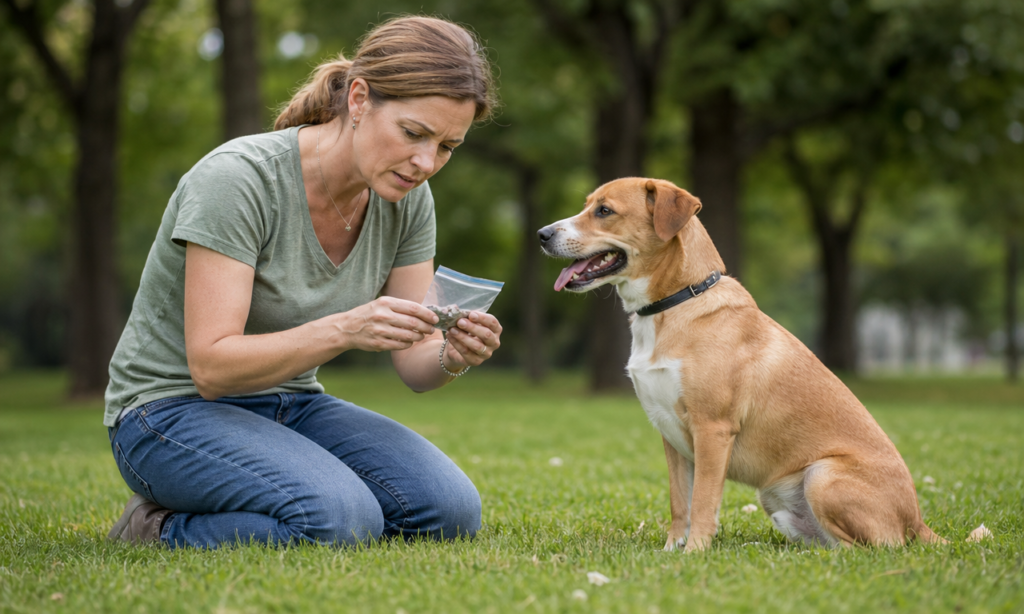
The reward has to come the second the puppy finishes — not when you get back inside. Treat in your pocket, ready to go. Praise enthusiastically. Some trainers recommend a “potty jackpot” of three or four small treats in a row for the first couple weeks. The puppy needs to learn: outside = good things happen.
Never punish indoor accidents. Rubbing a puppy’s nose in it, yelling, or any version of “showing them what they did” teaches the puppy to hide pooping from you, which makes training harder. Clean it up with an enzyme cleaner (so the smell doesn’t trigger a repeat) and move on.
Step 5: Stay Consistent for at Least 4 Weeks
Consistency beats brilliance every time. Same door, same spot in the yard, same cue word, same reward, same schedule. Every adult in the household needs to follow the same protocol. The puppy isn’t slow — mixed signals are.
Realistic Timeline by Age
| Age | What to Expect | Hold Time |
|---|---|---|
| 8-12 weeks | Frequent accidents, very short bladder control, needs out every 1-2 hours | 1-2 hours |
| 3-4 months | Catching on to cues, fewer accidents, can start to ask | 3-4 hours |
| 4-6 months | Mostly reliable in the house, may still slip with new environments | 4-6 hours |
| 6+ months | Should be largely accident-free with a normal schedule | 6-8 hours |
A general guideline: a puppy can hold their bladder roughly one hour per month of age, plus one — but bowel control develops on its own timeline. For an overview of normal hold times across ages, see our guide on how long a dog can hold its poop.
How Crate Training Fits In
Crate training works hand-in-hand with potty training because dogs naturally don’t want to soil where they sleep. A correctly sized crate (just big enough for the puppy to stand, turn, and lie down — not bigger) gives the puppy a reason to hold it until you let them out.
Use the crate when:
- You can’t supervise
- You’re sleeping
- You’re out for a short period (no more than the puppy’s hold time)
Never use the crate as punishment, and never leave a puppy in the crate longer than they can hold it — that teaches them to soil the crate, which is hard to reverse.
Common Mistakes That Slow Training
- Treating after coming back inside. The reward needs to happen at the spot, the moment after pooping.
- Free feeding. Scheduled meals create scheduled poops. Free feeding makes timing impossible.
- Skipping the cue word. The cue is what lets you eventually direct the behavior on demand.
- Punishing accidents. Teaches secrecy, not bladder control.
- Inconsistent door. Always use the same exit. The puppy will eventually go to that door to signal.
- Not cleaning thoroughly. Regular cleaner leaves enzymes behind. Use an enzymatic cleaner specifically.
- Giving up too fast on cold/rainy days. If the puppy comes back inside without going, crate for 15 minutes and try again. Don’t let them off the hook.
When Something Else Is Going On
If your puppy was progressing and suddenly starts having accidents, or strains without producing anything, that’s worth checking. Look at our guide on why is my dog straining to poop for the difference between training regression and a possible medical issue. The AKC’s puppy potty training guide also has solid backup protocols.
If your puppy is reliably going outside but the stool quality is off — loose, mucus-y, or strange-colored — check dog diarrhea causes and when to call the vet. Training and health are linked: a puppy with GI upset can’t be expected to hold it.
The Bottom Line
To train a puppy to poop outside, you need a schedule, a cue, tight supervision, immediate rewards, and four weeks of consistency. Most puppies are largely reliable by 4-6 months when the protocol is followed. The age-based timeline is a guide, not a guarantee — some dogs click at 12 weeks, some take until 8 months. Stick with the system, skip the punishment, and trust the schedule. The dog catches up.
This article is general information, not veterinary advice. If your dog is showing symptoms that concern you, contact your veterinarian.
To summarize the practical reality of train puppy to poop outside: most cases resolve at home with the steps above, but train puppy to poop outside cases involving the red-flag signs in the triage list above deserve a same-day vet call. When in doubt, the phone triage line at your vet’s office is free.
Why train puppy to poop outside as early as possible
The biggest reason to train puppy to poop outside early: every accident indoors makes the habit harder to break later. When you train puppy to poop outside in week 1, the success compounds. Skip the first 2 weeks and you’re undoing reflexes. Train puppy to poop outside before the puppy is 12 weeks old if at all possible.
One last thing to remember when you train puppy to poop outside: regression is normal. A puppy that has learned to train puppy to poop outside for 3 weeks may have an off day. Don’t panic, don’t scold, just resume the routine. Train puppy to poop outside takes 30 days for most puppies and 60+ for some breeds.