Spotting something suspicious in the yard during cleanup is one of the more unsettling parts of dog ownership. Worms in dog poop are one of the most common signs of intestinal parasites — and unfortunately also one of the most frequently misidentified. Some “worms” people see are real parasites; others are old grass, undigested food, or perfectly normal mucus.
This guide walks through the seven worm types you might actually see (with what each one looks like), what they do to your dog, how the vet diagnoses each one, and exactly what treatment costs. We’ve cleaned up enough yards to know which sightings are panic-worthy and which are not.
Why Worms Show Up in Dog Poop
Dogs pick up intestinal parasites in a few main ways: ingesting infected feces (their own or another animal’s), eating fleas during grooming, drinking from puddles or streams, eating dead wildlife, mosquito bites, or being passed parasites at birth from their mother. Most adult dogs encounter parasites at some point in their lives — the question is whether your dog’s immune system clears them or they take hold.
The good news: nearly all common dog parasites are highly treatable, often with a single dose of dewormer. The trick is identifying WHICH worm you’re dealing with, because treatment varies.
The 7 Worms You Might Find in Dog Poop
1. Roundworms
Roundworms are the most common parasite found in puppies and one of the most likely worms you’ll spot. They look like spaghetti — long, white, round, and several inches long. You may see them in vomit as well as stool.
Symptoms: pot-bellied appearance in puppies, dull coat, weight loss despite normal eating, diarrhea, occasional vomiting. Severe infections can cause intestinal blockage in young pups.
Treatment: oral dewormer (pyrantel pamoate is most common, sold under brand names like Nemex). Most puppies are dewormed at 2, 4, 6, and 8 weeks as a routine. Treatment cost: $15-30. The Companion Animal Parasite Council recommends year-round broad-spectrum prevention for adult dogs too.
2. Tapeworms
Tapeworms are the easiest to identify because their segments break off into the stool and look like grains of rice — small, white, flat, sometimes still wriggling slightly when fresh. You may also find dried segments stuck to the fur around your dog’s rear or in their bedding.
Tapeworms are unique because dogs catch them by ingesting infected fleas, not by direct stool contact. So a tapeworm diagnosis means you also have a flea problem to address.
Treatment: praziquantel (Droncit) is the gold standard — single oral dose. Plus flea control to prevent reinfection. Cost: $20-40 for the dewormer plus $20-50/month for ongoing flea prevention.
3. Hookworms
Hookworms are usually too small to see in stool with the naked eye — but you might notice their effects: tarry black stool (digested blood from the dog’s intestinal lining), pale gums, weakness, and weight loss. They’re more common in warm, humid climates and dirt/grass yards.
Hookworms are zoonotic — they can infect humans, especially through bare feet on contaminated soil. Pick up dog waste daily if you have hookworm-positive dogs in the household.
Treatment: pyrantel or fenbendazole. Multiple doses over 2-3 weeks usually needed. Cost: $30-60. Severe anemia cases sometimes need iron supplementation or transfusions.
4. Whipworms
Whipworms get their name from their whip-like shape: a thin “whip” body with a thick handle end. They’re rarely visible in stool because they live deeper in the colon, but a fecal float at the vet picks up their eggs. Whipworms are especially hardy — their eggs can survive in soil for years, making yard reinfection common.
Symptoms: chronic, intermittent diarrhea (often with mucus or blood streaks), weight loss, dehydration. Whipworm cases often look like IBD until the vet runs a fecal test.
Treatment: fenbendazole (Panacur) — three-day course, repeated at 3 weeks and 3 months because of how stubborn whipworm reinfection is. Cost: $40-80 for a full treatment course.
5. Giardia
Giardia is technically a single-celled protozoan, not a worm — but it’s by far the most common cause of “I see something weird in my dog’s poop” calls. Giardia produces watery, greasy, foul-smelling diarrhea, often with mucus. You won’t see giardia itself; the vet diagnoses it by fecal antigen test.
Dogs catch giardia by drinking contaminated water (puddles, streams, communal water bowls) or licking surfaces in dog parks. It’s contagious between dogs and occasionally to humans.
Treatment: metronidazole or fenbendazole, 5-10 day course. Cost: $40-100. Bathing the dog at the end of treatment helps prevent reinfection from cysts on the fur.
6. Coccidia
Coccidia is another protozoan parasite (not a true worm), most common in puppies and stressed adult dogs. Symptoms: watery diarrhea, sometimes bloody, dehydration, lethargy. Especially dangerous in young pups because of fluid loss.
Treatment: sulfadimethoxine (Albon) — usually 5-10 day course. Cost: $30-70. Severe cases need IV fluids and supportive care.
7. Heartworm (Indirect)
Heartworm doesn’t show up in dog poop directly because it lives in the heart and lungs, not the GI tract. But heartworm-positive dogs sometimes pass tiny worm-like fragments of dead larvae in stool when on treatment. The much bigger reason to mention heartworm here: it’s the deadliest parasite on this list, and it’s prevented by the same monthly chewable that knocks out roundworm and hookworm in many products (Heartgard Plus, Sentinel, Trifexis).
Treatment cost if infected: $400-1,500+ for a full melarsomine protocol (immiticide injections + restricted activity for months). Prevention cost: $7-15/month. The math is obvious — never skip heartworm prevention.
What’s NOT a Worm (Common Misidentifications)
Before panicking, check whether what you saw might actually be one of these:
- Undigested grass — long thin strands that look stringy. Common after dogs graze on lawns.
- Mucus or fibrin strings — slimy, translucent, often associated with mild colitis. Not parasites.
- Hair — long-haired dogs sometimes pass swallowed fur, especially during shedding season.
- Plant material — pine needles, fibrous roots, mulch fibers can all look worm-ish.
- Old food fibers — celery, green bean, lettuce strings can look like flat worms.
The give-away: real worms move (when fresh) and have distinct shapes (rice-grain segments for tapeworm, spaghetti for roundworm). Undigested grass and food don’t move and look more random.
How to Get a Diagnosis
If you suspect worms, the easiest path is:
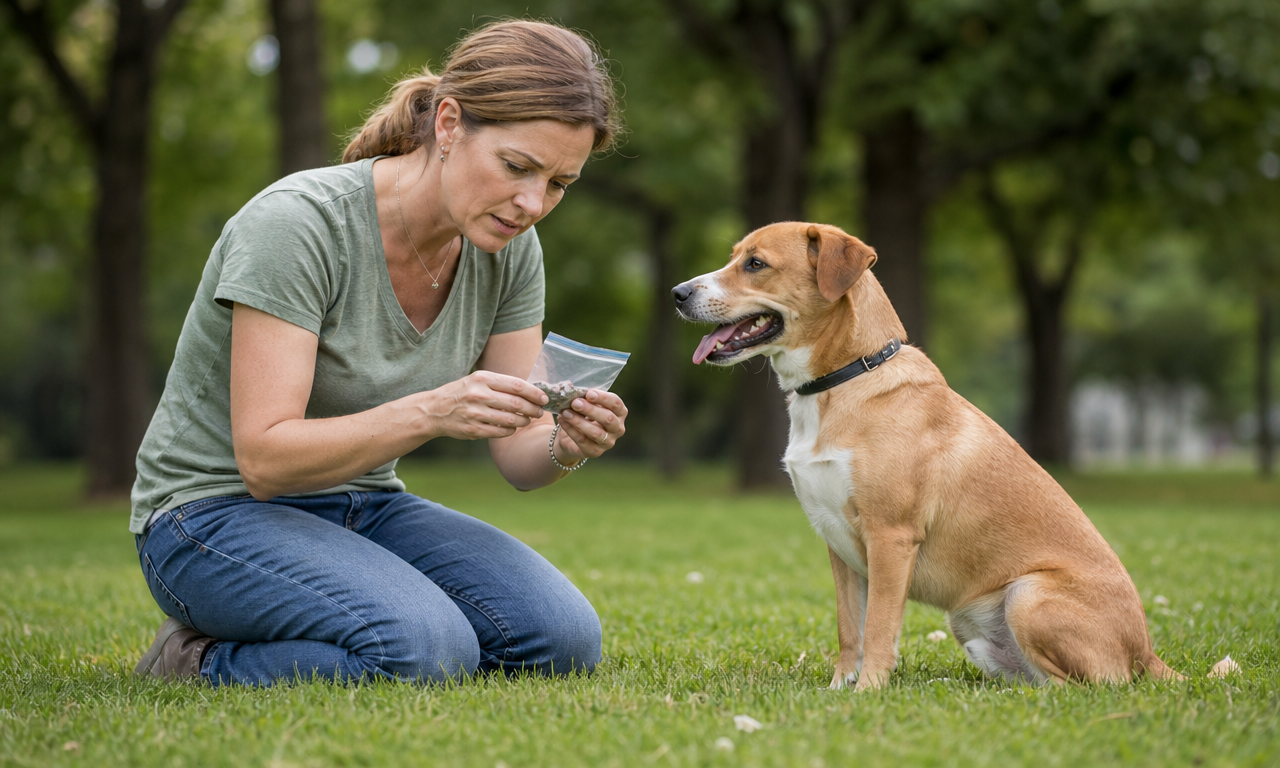
- Collect a fresh sample (under 4 hours old) in a sealed bag — even a teaspoon’s worth is plenty.
- Refrigerate if you can’t get to the vet immediately.
- Drop off at your vet for a fecal float ($25-50). You don’t always need an appointment for this.
- Results in 24-48 hours, and the vet calls in the right dewormer based on what they find.
If you spotted live worms in stool, take a photo before disposal — vets often appreciate the visual ID confirmation.
Prevention: How to Avoid Worms in Dog Poop
- Year-round broad-spectrum prevention — products like Heartgard Plus or Sentinel cover heartworm, roundworm, hookworm, and whipworm in one monthly chewable.
- Flea control — knocks out the tapeworm transmission route.
- Daily yard cleanup — gets infectious eggs out of the environment before they spread. This is one of the biggest hidden levers, and it’s literally what we do — our weekly cleanup service handles it for you.
- Avoid puddle drinking — bring water on walks; that’s the #1 giardia source.
- Annual fecal exam — one $30 test per year catches asymptomatic infections before they become problems.
- Wash hands after yard work — especially with kids around. Hookworms, roundworms, and giardia can all jump to humans.
When to See the Vet Immediately
Don’t wait if your dog has:
- Bloody or black tarry diarrhea
- Persistent vomiting paired with the worms
- Visible weakness, pale gums, or lethargy
- Pot-bellied appearance in a puppy
- Dehydration signs (sunken eyes, sticky gums, slow skin snap-back)
- Refusal to eat or drink
Heavy parasite loads can be life-threatening, especially in puppies and seniors. Same-day vet visit, every time.
Frequently Asked Questions
Can I treat dog worms at home with over-the-counter dewormer?
OTC dewormers (Nemex-2, PetArmor 7-Way) work for roundworms and hookworms in adult dogs, but you really need to know what you’re treating. A $30 fecal float identifies the parasite and avoids treating the wrong thing. Tapeworms and whipworms need prescription medications.
How long after treatment will worms stop appearing in poop?
You may see dead worms in stool for 3-7 days after treatment as they pass. After that the stool should clear. If worms keep appearing past 2 weeks, the dog needs another vet visit — could be reinfection or a more resistant parasite.
Are dog worms contagious to humans?
Several are. Hookworms penetrate human skin (especially through bare feet on contaminated soil), roundworm larvae can migrate in human tissue if eggs are accidentally ingested, and giardia jumps between dogs and people. Wash hands after yard work, especially with small children present.
Do worms always show up in dog poop?
No — heartworm, whipworm, hookworm, giardia, and coccidia often don’t show in visible stool. A negative “I don’t see anything” check is not a clean bill of health. Annual fecal floats catch the silent ones.
How much does a worm treatment cost overall?
Diagnostic fecal float: $25-50. Dewormer: $15-100 depending on parasite. Total for a single uncomplicated case: usually under $150. Severe cases (anemia, dehydration, hospitalization) can run $500-1,500.
Should I avoid letting my dog in the yard during treatment?
You don’t need to. But you SHOULD pick up every poop the moment it lands during treatment — eggs in stool can re-infect your dog and your other pets. A daily yard service makes this much less of a chore.
Pair This With Our Other Guides
For a fuller picture of dog digestion and what stool can tell you, pair this with:
- Dog Poop Color Chart — what brown, black, red, yellow, green, and gray stool mean.
- Dog Diarrhea: 12 Common Causes — pairs with worm-related diarrhea symptoms.
- How Often Should a Dog Poop? — frequency changes that signal parasite issues.
The Bottom Line
Spotting worms in dog poop is unsettling but rarely catastrophic. Most common parasites are diagnosed with a $30 fecal float and treated with a $20-60 dewormer. The hidden cost is environmental: parasite eggs in your yard can keep reinfecting your dog (and family) for years if you don’t pick them up daily.
If you’re falling behind on yard hygiene and worried about reinfection, our weekly cleanup service exists for exactly that reason. Reach out with your zip code to confirm coverage.