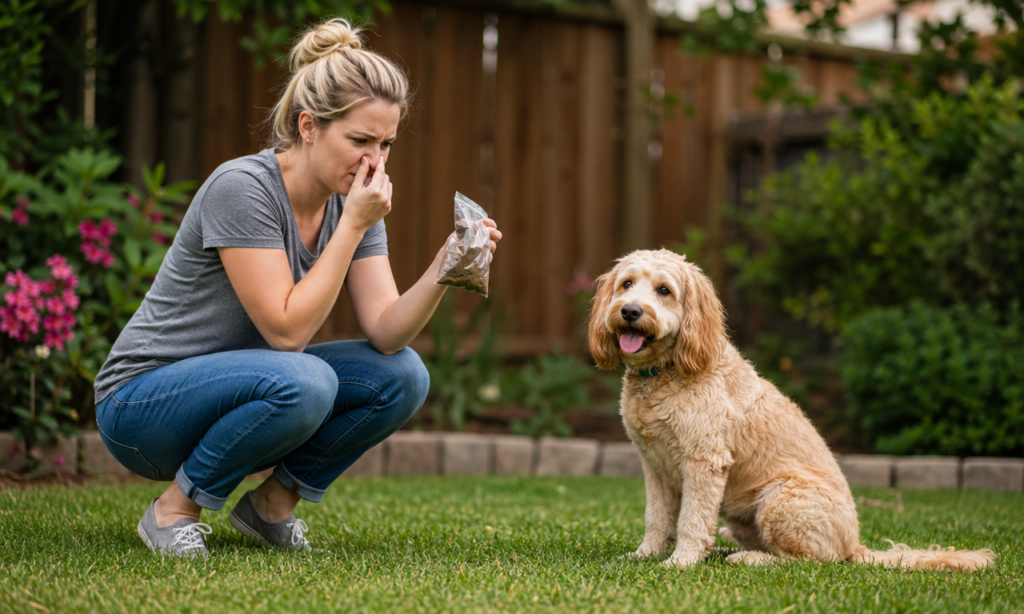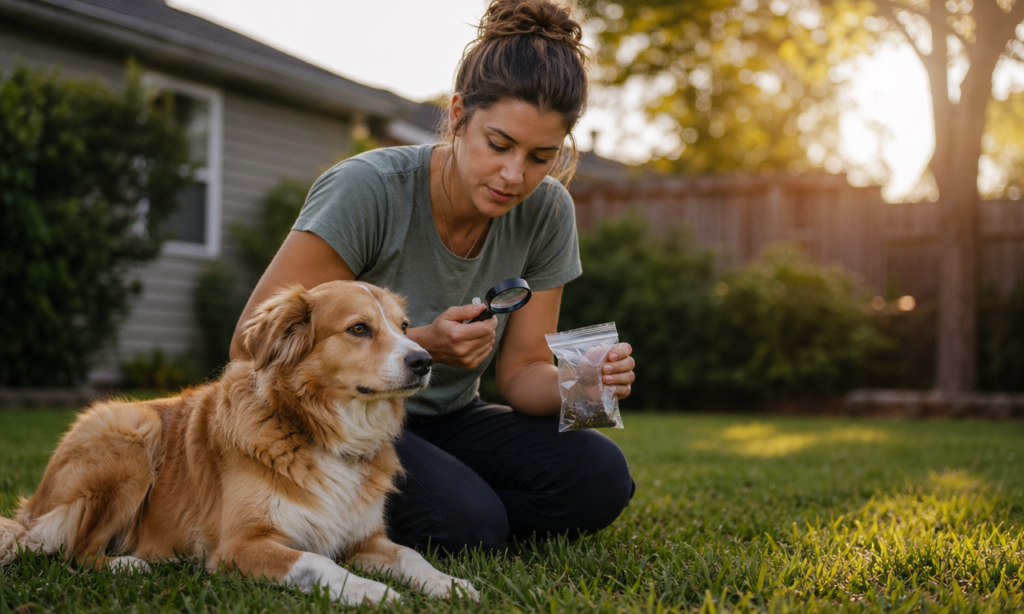
It’s the kind of question every dog owner ends up Googling at some point — usually after an unusual day in the yard. How often should a dog poop? The honest answer is: it depends, but probably less than you’d guess from social-media advice and more than zero.
This guide answers how often should a dog poop and breaks down what’s normal, what changes with age and breed, and the patterns that mean you should call your vet. We’ve watched a lot of yards get cleaned up — frequency really does matter when you’re tracking your dog’s health.
The Short Answer: How Often Should a Dog Poop?
Per the American Kennel Club, most healthy adult dogs poop 1 to 3 times per day. Puppies poop more often (up to 5 times). Senior dogs sometimes drop to once daily. The exact number is less important than your individual dog’s pattern. A dog who has gone twice a day for years suddenly going once a day, or four times a day, is the signal — not the absolute number.
Frequency by Life Stage
Puppies (0–6 months)
Puppies eat more meals (3-4 a day), digest faster, and have less bowel control. Expect 4-5 poops a day. Most pups poop within 5-30 minutes of eating — known as the gastrocolic reflex. That predictability is your friend during housetraining: feed at consistent times, take them out 15 minutes later, and they’ll catch on quickly.
Adolescent Dogs (6–18 months)
As puppies transition to two meals a day, frequency drops to 2-3 daily poops. Bowel control improves, and they can hold longer between bathroom breaks.
Adult Dogs (1–7 years)
The classic 1 to 3 poops per day range. A 60-pound Lab on a kibble diet typically goes twice; a 12-pound Yorkie on the same kibble might go once. Active dogs sometimes go more; couch dogs often go less.
Senior Dogs (7+ years)
Older dogs slow down. Decreased activity, slower metabolism, and reduced food intake mean some seniors drop to once a day or even every other day. As long as the stool is well-formed and your dog is comfortable, that’s fine. A senior who suddenly stops pooping for 48+ hours, or who strains without producing, needs a vet check — constipation is more serious in older dogs.
Factors That Change How Often a Dog Poops
Diet
Food quality and type affect frequency more than almost anything else. High-quality, highly digestible food produces less stool — more nutrients are absorbed, less waste comes out the other end. Cheap, fiber-heavy, or kibble-with-fillers food produces more stool. A switch from grocery-store kibble to a premium food can reduce daily poop volume by 30-50%.
Wet food, raw diets, and home-cooked meals each have their own effect. Raw-fed dogs typically produce smaller, drier, less frequent stools — many raw feeders see one daily poop max.
Number of Meals
Once-a-day feeders often produce one big poop in the morning. Twice-a-day feeders typically poop twice. Three meals a day (puppies, sick dogs, or some seniors) usually produce three.
Hydration
Under-hydrated dogs produce hard, infrequent stool. A well-hydrated dog has softer, more regular movements. If you notice frequency dropping, check the water bowl first.
Exercise
Movement stimulates the bowel. Dogs who get a daily walk usually poop more reliably than mostly-sedentary dogs. The morning walk-and-poop is a real biological pattern, not a coincidence.
Stress and Environment
New homes, boarding, travel, or schedule disruptions can throw off a dog’s bowel for days. So can mom-and-dad going on vacation. Most dogs return to baseline within 3-5 days of routine restoring.
Medications
Certain drugs change frequency: antibiotics often loosen stool and increase frequency, while some pain medications and iron supplements cause constipation. Always factor recent medications into your “is this normal?” assessment.
What Time of Day Should a Dog Poop?
Most adult dogs settle into 1-2 daily windows: morning (within an hour of waking and the first meal) and afternoon/evening. The morning poop is the most predictable thanks to the gastrocolic reflex.
Puppies aren’t on a schedule yet — expect post-meal, post-nap, and post-play poops. Aim to get them outside in those moments and the housetraining curve gets shorter fast.
When to Worry: Red Flags Around Frequency
Here’s where the question how often should a dog poop matters most — for catching problems early.
Pooping Too Often (Sudden Increase)
Going from twice a day to 5+ times a day, especially with loose stool, suggests:
- Diet change or food sensitivity
- Parasites (giardia, hookworms, whipworms)
- Bacterial or viral GI infection
- Stress (boarding, new pet, schedule change)
- Inflammatory bowel disease
- Eating something they shouldn’t have (garbage gut)
Increased frequency that lasts more than 48 hours, or that comes with vomiting, lethargy, or blood in the stool, is a vet visit.
Pooping Too Little (Sudden Decrease)
Dropping from 2-3 times a day to once every 2-3 days could mean:
- Constipation (low water, low fiber, low movement)
- Bowel obstruction (foreign body) — surgical emergency
- Megacolon
- Pain (especially anal gland issues, prostate, or hip pain)
- Severe dehydration
A dog straining without producing for more than 24 hours, especially with vomiting, distended belly, or lethargy, is an emergency. Don’t wait this one out.
Pooping Repeatedly Without Producing
Squatting, straining, walking a few steps, squatting again — but only producing tiny smears of mucus, blood, or nothing — is a colitis or partial-obstruction sign. Schedule a vet visit, today if other symptoms are present.
How to Track Your Dog’s Pattern
Tracking how often should a dog poop sounds tedious, but a 2-week log gives you a reliable baseline you can refer to later. Note:
- Time of each poop
- Approximate volume
- Color and consistency (the poop color chart is useful here)
- Anything unusual: straining, mucus, blood
Apps like PetDesk or even a simple notes file work. When something changes, you’ll have data instead of vague memory.
Frequently Asked Questions
Is it normal for a dog to poop only once a day?
Yes — especially seniors, dogs on high-quality food, or once-a-day eaters. The key is consistency. Your dog’s normal might just be once.
Why does my dog poop right after eating?
The gastrocolic reflex. Food in the stomach signals the colon to make room. It’s strongest in puppies and slows as dogs mature.
How long can a dog go without pooping?
Healthy adults can go 24-48 hours without concern, especially if missing a meal. Past 48 hours, contact your vet — especially if straining or visibly uncomfortable.
Should I be worried if my dog skips a day?
One missed day with otherwise normal behavior, eating, and drinking? Probably fine. Two missed days? Call the vet.
Why does my dog poop more on weekends?
More activity, often more food (treats, table scraps, training rewards), and looser routine. It’s usually fine. If weekend looseness becomes a chronic pattern with weekday firmness, you’ve identified a treat issue.
How do I keep up with daily cleanup?
Honestly — for many busy households, the answer is “we don’t, until it piles up.” That’s where we come in. Our weekly cleanup service takes the daily decision off your plate. Drop us a line with your zip code to confirm coverage.
The Bottom Line
The honest answer to how often should a dog poop is: 1-3 times a day for most healthy adults, more for puppies, less for seniors — and your dog’s normal is the only number that really matters. Watch for sudden changes, both up and down, and pair frequency observations with stool color, consistency, and your dog’s overall energy. Most dogs are pretty consistent once you know their pattern.
Bookmark this how often should a dog poop guide and pair it with our dog poop color chart guide — together they cover most of what you need to spot trouble early. And if the cleanup itself is the daily problem you’d like to outsource, we’re here.