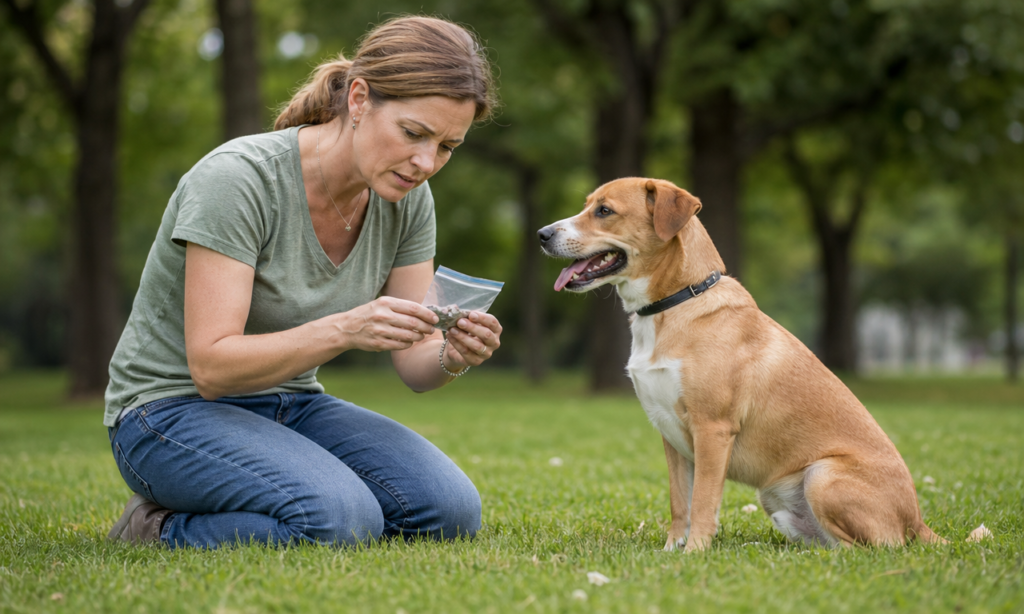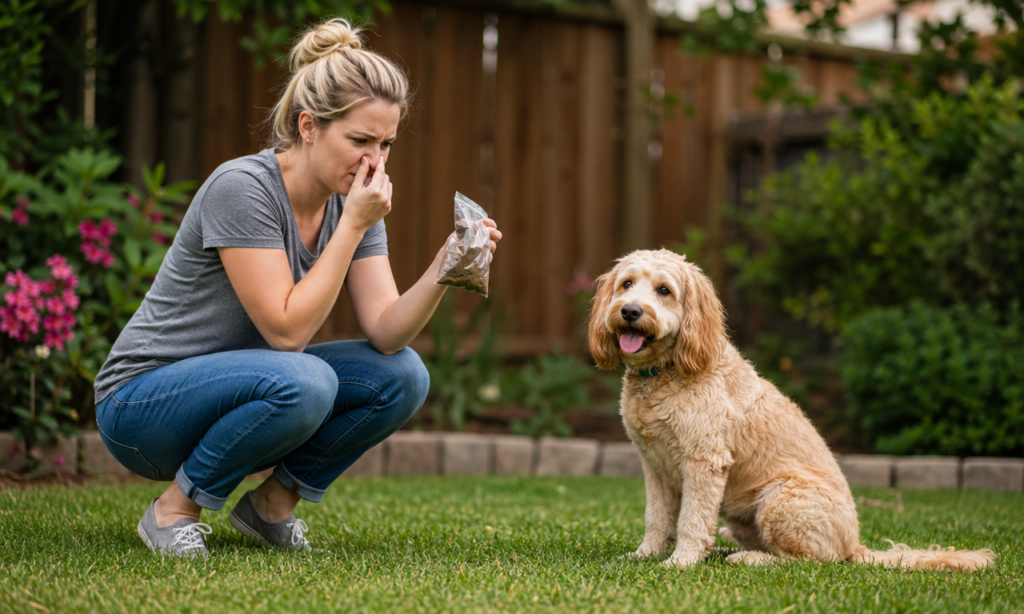
Caught your dog eating own poop and feeling grossed out — or worried? You’re not alone. Coprophagia (the technical term for dog eating own poop) is one of the most common behavioral issues in dogs, affecting roughly 1 in 6 dogs. The honest news: most cases are fixable with simple interventions. Here are the 5 best reasons dogs do it, vet-recommended fixes, and the gentle deterrents that actually work at home.

Is dog eating own poop a real problem?
Short answer: yes, for hygiene and behavioral reasons, but it’s rarely dangerous. The actual health risks:
- Parasite re-infection. If the dog has worms, eating stool resets the parasite cycle. See our worms guide.
- Bacterial exposure. Mostly transient but possible.
- Reinforced behavior. Once a dog establishes the habit, it’s harder to break later.
- Owner-dog relationship friction. The “yuck” reaction creates anxiety in some dogs.
None of these are emergencies. But the behavior is worth addressing for everyone’s quality of life.
The 5 best reasons for dog eating own poop
1. Nutritional deficiency or maldigestion (most common)
Dogs eating their own poop are often trying to extract nutrients they didn’t absorb the first time. Three sub-causes:
- Low-quality food. Cheap kibble with high filler content passes through with nutrients still attached.
- Digestive enzyme deficiency. Dog can’t break down food fully. See our undigested food guide for related signs.
- Parasites stealing nutrients. Dog eats more to compensate.
Fix: upgrade food quality, check for parasites, consider digestive enzymes. About 40% of cases resolve with diet changes alone.
2. Boredom or attention-seeking
Some dogs eat poop simply because they’re bored or because the owner’s strong reaction creates entertainment. Dogs that get more attention for “bad” behavior than for calm behavior learn to repeat the bad behavior.
Fix:
- Increase daily exercise (most undertrained dogs are under-exercised)
- Add mental stimulation: puzzle toys, training sessions, snuffle mats
- Stay calm when you see it — clean it up without dramatic reaction
- Reward calm behavior more than you scold “bad” behavior
3. Stress or anxiety
Stress eating happens in dogs too. Boarding, new home, household changes, recent vet visits — all can trigger temporary coprophagia. Usually self-resolves when the stressor passes.
If the dog also has loose stool from stress, see our diarrhea guide for the related GI side.
4. Mother-dog instinct (lingering)
Mother dogs eat puppy stool to keep dens clean. Some dogs retain this instinct into adulthood — especially female dogs who’ve had litters. Less common but worth knowing.
This version is harder to break because it’s hardwired. Management (pickup before the dog can access) works better than training.
5. Learned habit from another dog
Multi-dog households sometimes see one dog start the behavior and the second dog copy. Or rescued dogs from kennels where waste sat may have established the habit there. Pure learned behavior.
Fix: separate dogs at potty time during retraining, use deterrent supplements (below), and reward “leave it” cues consistently.
What to do about dog eating own poop — practical fixes
1. Pickup before the dog can access
The single most effective control. Walk the yard 2-3 times daily, pick up immediately after the dog poops, never leave waste on the ground for more than a few minutes.
This sounds obvious but it’s also what 90% of households who solve coprophagia do. See our pick-up-in-own-yard guide for the case for daily pickup.
2. Vet-recommended supplements
Several over-the-counter products make stool taste unpleasant to dogs:
- Forbid (oral supplement). Vet-prescribed. Active ingredient causes the dog’s own stool to taste bitter. Mix into food. Works on the EATER, not the producer (in multi-dog households, both dogs need it).
- NaturVet Coprophagia Deterrent. OTC, similar mechanism, includes parsley and yucca for breath. ~$15-20.
- Probiotics + digestive enzymes. Address the “nutritional gap” cause. Doesn’t directly stop the behavior but reduces the trigger.
Most effective when combined with pickup discipline. Supplements alone help maybe 40% of cases.
3. “Leave it” training
Solid recall and “leave it” cues are essential. Practice with low-value items first (kibble pieces), build up to high-value (other dogs’ toys), then practice on walks where stool might appear.
Reward heavily when the dog leaves stool alone. Make leaving stool MORE rewarding than the stool itself. High-value treats matter here — single-ingredient freeze-dried liver works well.
4. Address dietary causes
Steps to check:
- Switch to a higher-protein, higher-digestibility food. See our food picks.
- Add digestive enzymes if the dog has consistent undigested food in stool.
- Get a recent fecal test to rule out parasites.
- Avoid free-feeding — set meal times.
5. Stress management
If recent life changes triggered it: more exercise, more enrichment, calming chews or vet-prescribed anxiolytics for severe cases. Stress coprophagia often resolves within 2-4 weeks of stress reduction.
What NOT to do about dog eating own poop
Three things that backfire:
- Yelling or punishment. Increases anxiety, often makes the behavior worse. Dogs may also start hiding the behavior, which means you can’t intervene early.
- Rubbing the dog’s nose in it. Old-school discipline myth. Causes confusion, damages trust, doesn’t work.
- Hot sauce or pepper on stool. Internet remedy. Usually doesn’t work because the smell of the stool is the attractant, not the taste, and dogs with anosmia (smell-blunted dogs) won’t notice. Also gross to do daily.
The AKC overview of coprophagia covers the behavioral side in more depth — useful read if you want to understand the broader research.
When dog eating own poop signals something more
Six signs that warrant a vet visit beyond the basic interventions:
- Sudden onset in a previously well-behaved dog
- Weight loss despite eating
- Excessive hunger or thirst alongside
- Other behavioral changes (anxiety, energy drop)
- Visible parasites in stool
- Chronic GI issues — see our color chart for what to track
In rare cases, coprophagia can signal cushings, diabetes, or malabsorption disorders. Most cases aren’t this — but if your dog fits the pattern above, get a workup.
Does dog eating own poop go away on its own?
Sometimes — especially if it’s stress- or boredom-driven. Puppies often outgrow it by age 1-2. Adult-onset coprophagia tends to persist without intervention.
Don’t wait for it to resolve on its own past about 3-4 weeks. The habit reinforces itself the longer it continues.
Multi-dog households
If you have multiple dogs and one is the eater:
- Pick up after each dog separately so you know whose stool the eater is targeting
- Use Forbid or similar supplement on BOTH dogs (it makes the stool taste bad, so you treat the producer)
- Separate at potty time during retraining
- Watch for stress signals in the eater dog — multi-dog stress can trigger this
FAQ
Why does my puppy eat poop? Very common in puppies under 12 months. Usually outgrown by age 1-2 with consistent pickup and basic training.
Can dog eating own poop make my dog sick? Rarely directly — but yes if there are parasites or pathogens in the stool.
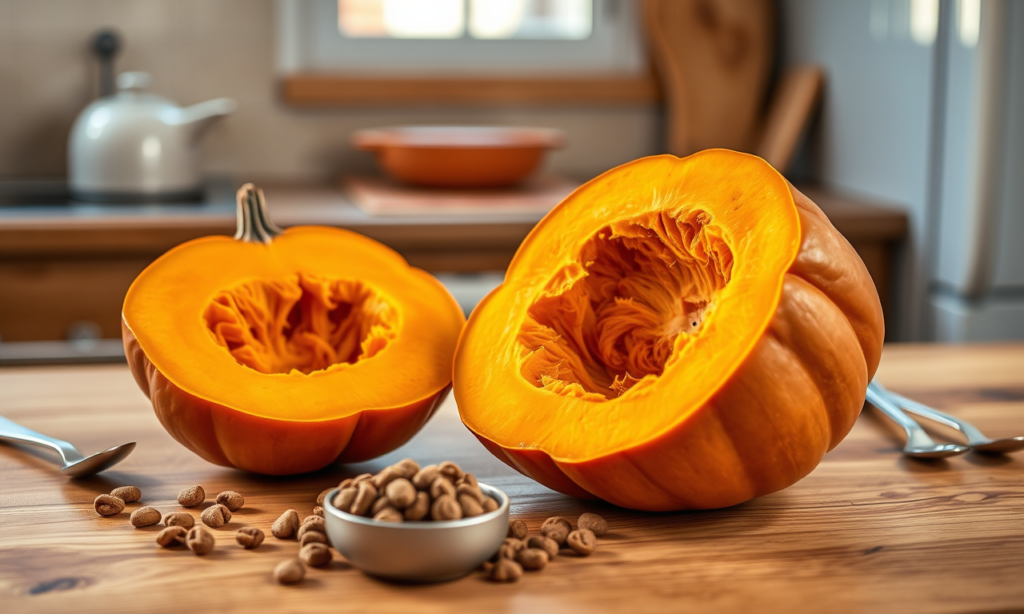
Is pumpkin a fix? Pumpkin can improve stool quality and reduce attractiveness slightly, but it’s not a primary fix for coprophagia.
What about hot sauce or chilis on stool? Internet remedy. Inconsistent results. Better methods exist.
Should I see a behaviorist? For severe, persistent coprophagia after 4+ weeks of interventions, yes. Veterinary behaviorists are specialists worth the visit.
Bottom line
Dog eating own poop is common (~17% of dogs) and almost always fixable. The 5 best causes: nutritional gaps, boredom, stress, mother-dog instinct, and learned habit. The 5 best fixes: immediate pickup discipline, vet-recommended supplements, “leave it” training, dietary upgrades, and stress management. Skip yelling, nose-rubbing, and hot sauce. Most cases resolve within 4-6 weeks of consistent intervention.
This article is general information, not veterinary advice. If your dog is sick, talk to your vet.