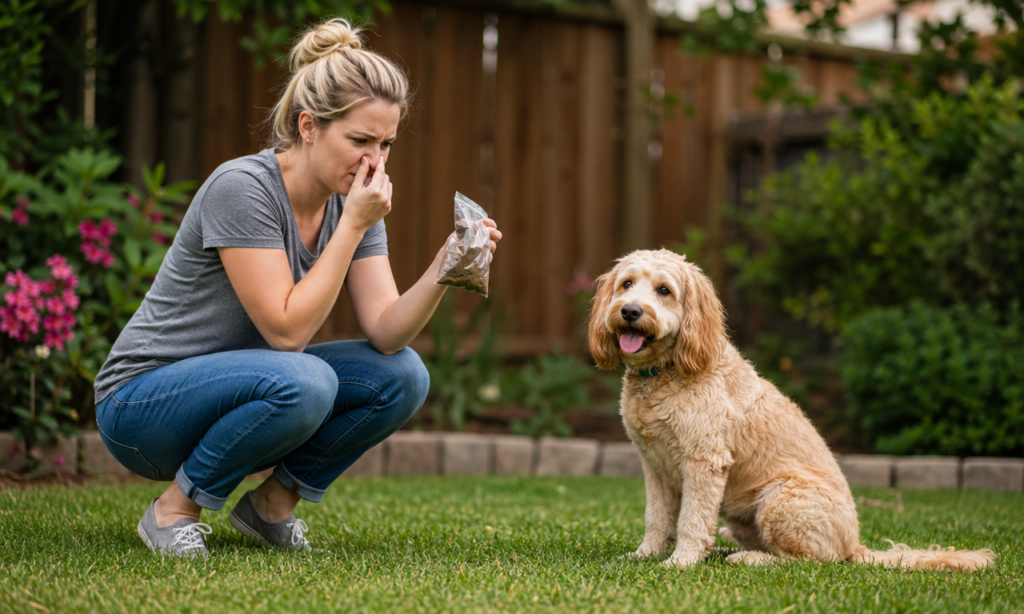
When your dog wont poop outside, it’s frustrating, messy, and often baffling — especially if your dog used to go outside without issue. A dog wont poop outside situation has 6 common causes, and most are fixable in 1–3 weeks. Here’s the practical breakdown.
When your dog wont poop outside, it’s frustrating in a way that’s hard to explain to people who haven’t lived it. You stand in the yard for twenty minutes, come back in, and ten minutes later there’s a pile in the hallway. The good news: this almost always has a specific cause, and once you identify it, it’s fixable. This guide covers the six most common reasons a dog wont poop outside, what to do for each, and when to bring in a vet or trainer.
Why It Matters to Diagnose, Not Just Push
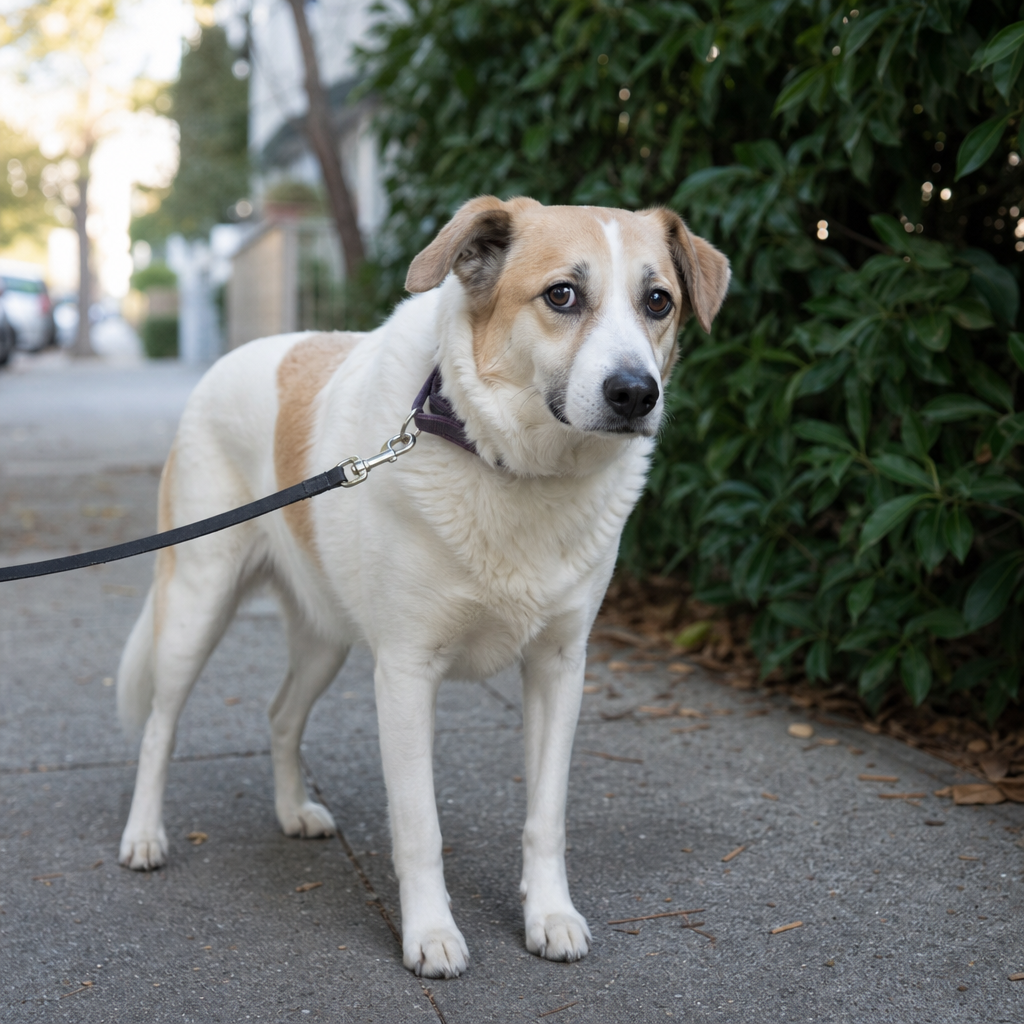
“Just take them out more” is the standard advice, and it works for some dogs. But if your dog wont poop outside despite being out plenty, more outdoor time alone won’t fix it. The dog has a reason — anxiety, surface aversion, discomfort, a learned habit — and addressing the cause works better than waiting it out. Let’s break down the six.
6 Best Causes a Dog Won’t Poop Outside
1. Anxiety in the Outdoor Environment
Some dogs are too on-edge outside to relax enough to poop. New environments, loud streets, other dogs nearby, unfamiliar smells, or a recent scary experience (a car backfiring, an aggressive dog encounter) can all make a dog hold it. Anxious dogs typically pee outside fine — peeing is faster and they can do it while moving — but pooping requires more vulnerability and stillness.
What helps: Quieter walks, going at off-peak times, finding a consistent low-traffic spot. Avoid pulling on the leash while they’re trying to settle. For dogs with significant anxiety, consult a vet about behavioral options.
2. Weather Aversion
Some dogs flat-out refuse rain, snow, or cold. Small breeds, short-coated breeds, and seniors are most affected. The dog goes outside, gets uncomfortable, comes back in, and goes indoors. Owners often don’t connect the indoor accidents with the weather.
What helps: Boots and a coat for cold-sensitive dogs. A covered potty spot or a tarp over part of the yard. For rain-averse dogs, an umbrella or a covered porch potty area. Don’t force a soaked walk — get them out, get them done, get them back in.
3. Leash Anxiety
Some dogs can’t poop while attached to a leash. They feel restrained, watched, or unsafe. This is especially common in rescue dogs or dogs that were leash-corrected harshly. They’ll hold it for the whole walk, then go the moment they’re off-leash inside.
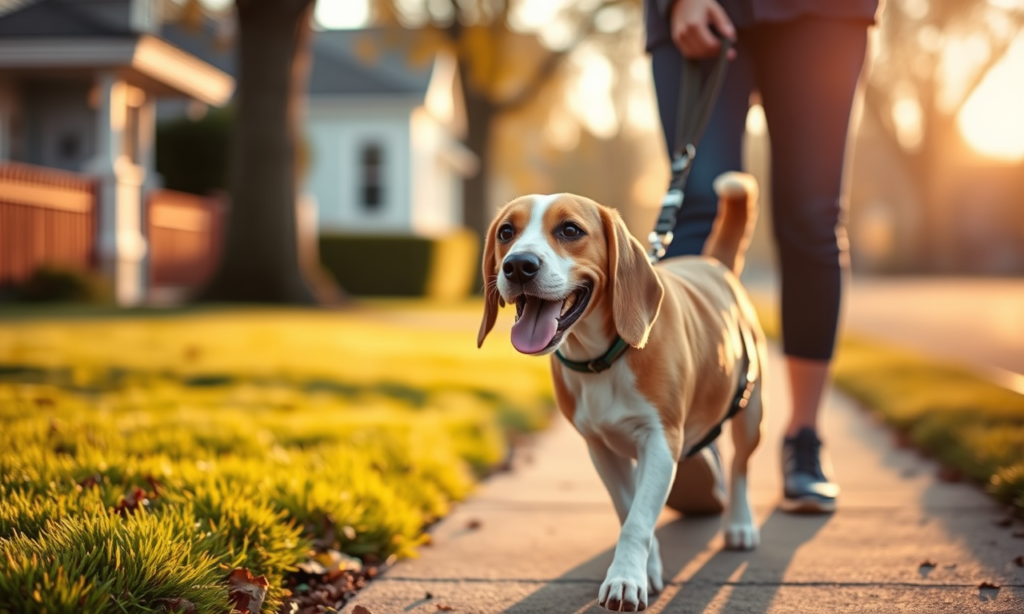
What helps: A long line (15-30 feet) in a safe area, giving the dog space to wander and settle. A consistent low-pressure potty spot. Looking away (not staring) while the dog circles. If you can’t go off-leash, drop the leash entirely when they start circling in a safe enclosed space.
4. Surface Preference
Dogs imprint on the surfaces they pottied on as puppies. If your dog learned to go on pee pads, newspaper, or specifically on concrete, grass may feel wrong. Likewise, a grass-trained dog may refuse gravel or pavement. This isn’t stubbornness — it’s a learned preference.
What helps: Start by bringing the preferred surface outside (a pee pad on the grass, for instance), then gradually shrink it down. Or build a small designated potty area with the surface they prefer. Patience matters more than correction.
5. Medical Issues
A dog that suddenly stops pooping outside, or strains and produces nothing, may have a medical problem. Constipation, anal gland issues, arthritis (especially in seniors who can’t comfortably squat), or rectal/anal problems can all make outdoor pooping painful or impossible. See our guides on dog constipation signs and home remedies and dog anal gland issues.
What helps: If the change is sudden and your dog is straining or refusing to squat fully, this is a vet visit, not a training problem. Older dogs that used to poop outside fine and now seem hesitant are often dealing with joint pain.
6. Schedule Disruption
Travel, daylight saving time, a new work schedule, a move, or a new family member can all throw off a dog’s bathroom rhythm. The dog isn’t sure when they’re “supposed” to go, holds it, then can’t anymore and has an indoor accident.
What helps: Re-establish a predictable schedule. Same wake-up time, same meal times, same outdoor potty times. Dogs are creatures of routine — most adjust within 1-2 weeks if the schedule is consistent.
Quick Diagnosis Table
| What You See | Likely Cause | First Move |
|---|---|---|
| Holds it on walks, goes inside | Anxiety or leash issue | Long line, quieter route |
| Won’t go in rain/snow | Weather aversion | Boots, coat, covered area |
| Strains and produces nothing | Medical issue | Vet visit |
| Sudden change in adult dog | Medical or schedule | Vet visit if persistent |
| Avoids grass, prefers concrete | Surface preference | Gradual surface transition |
| Started after a move or trip | Schedule disruption | Reset routine |
A Practical Retraining Plan
- Rule out medical first. If your dog is straining, scooting, or seems uncomfortable, see the vet before anything else. Read why is my dog straining to poop for what to look for.
- Establish a tight schedule. Same times every day for meals and outdoor breaks. Use a timer if you have to.
- Pick one quiet potty spot. Same spot every time. Familiar smells trigger the behavior.
- Stay longer than you think you need to. 15-20 minutes of calm, unrushed time. Don’t talk or distract.
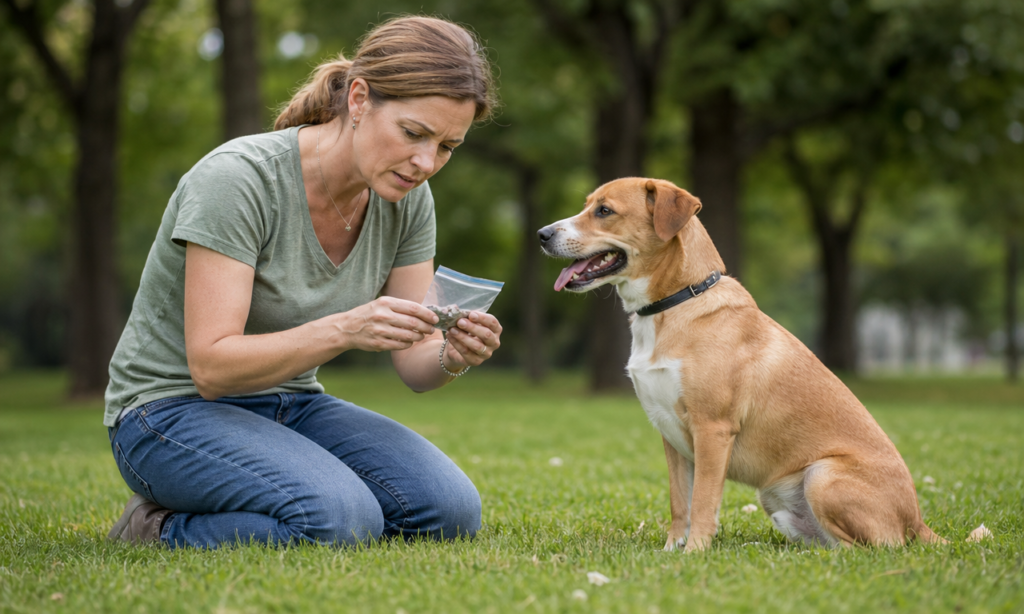
- Reward immediately at the spot. High-value treat, the moment they finish, before going back inside.
- Clean indoor accidents thoroughly with enzymatic cleaner so the smell doesn’t reinforce indoor spots.
- Limit indoor freedom until the habit is reset. Crate or pen when you can’t supervise.
When to Call the Vet vs a Trainer
Call the vet if:
- Your dog is straining outside but producing nothing
- Stool consistency is off (see diarrhea causes)
- Your dog has any signs of pain, scooting, or licking the rear excessively
- The change was sudden, especially in an older dog
- Your dog has gone more than 48-72 hours without a bowel movement
Call a trainer or behaviorist if:
- Anxiety, leash reactivity, or fear is the obvious cause
- Medical issues have been ruled out
- You’ve tried a consistent schedule for 2-3 weeks without progress
- The behavior is tied to a specific past event (trauma, scary encounter)
The AKC’s guide on housebreaking older dogs has additional retraining protocols worth reading if this is a regression in an adult.
The Bottom Line
When a dog wont poop outside, the issue is almost always anxiety, weather, leash discomfort, surface preference, medical, or schedule — not stubbornness. Identify which one fits, address it specifically, and most dogs reset within 1-3 weeks. Rule out medical first, especially in older dogs or with sudden changes. Then build a quiet, consistent, reward-based outdoor routine and stick with it.
This article is general information, not veterinary advice. If your dog is showing symptoms that concern you, contact your veterinarian.
To summarize the practical reality of dog wont poop outside: most cases resolve at home with the steps above, but dog wont poop outside cases involving the red-flag signs in the triage list above deserve a same-day vet call. When in doubt, the phone triage line at your vet’s office is free.
When dog wont poop outside the cause is medical, not behavioral
The most-missed cause of a dog wont poop outside situation is medical — pain, arthritis, anal gland discomfort, or a urinary issue. If your dog wont poop outside suddenly after weeks or months of going fine, treat it as a medical question first, behavioral second. A dog wont poop outside cluster of symptoms with appetite changes or whining warrants a same-day vet call.
To recap: if your dog wont poop outside, run the triage above to separate medical from behavioral. A dog wont poop outside long-term is almost never just stubbornness — there’s usually a fixable cause. The dog wont poop outside cluster of symptoms paired with appetite changes or lethargy gets the medical workup first.
One more practical note: a dog wont poop outside problem caused by leash tension is the most under-recognized version. If your dog wont poop outside specifically on a tight leash, try a longer leash and step away. Half of all ‘dog wont poop outside’ cases I’ve seen at the dog park are pure leash discomfort.