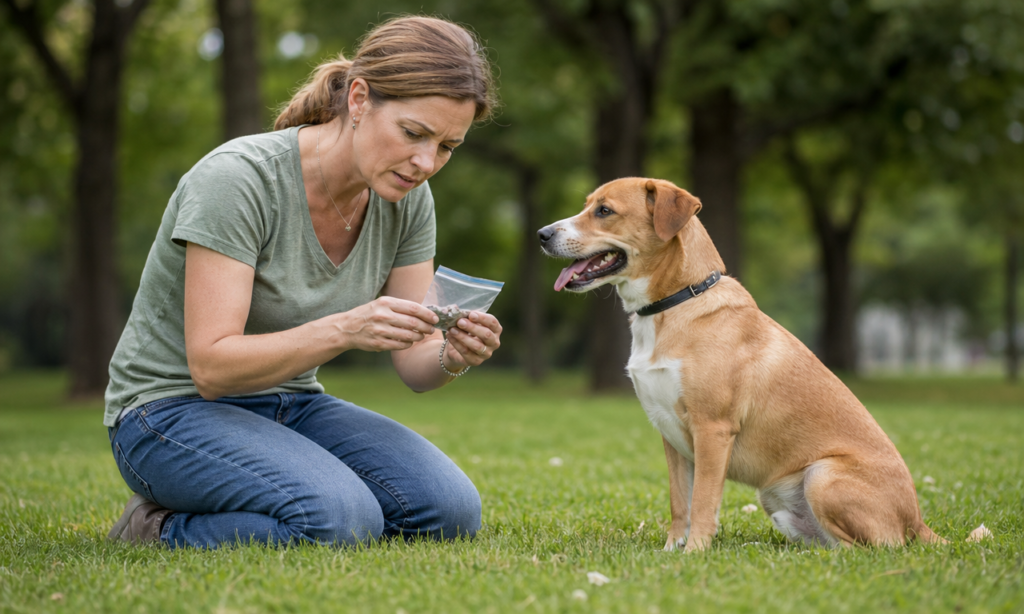
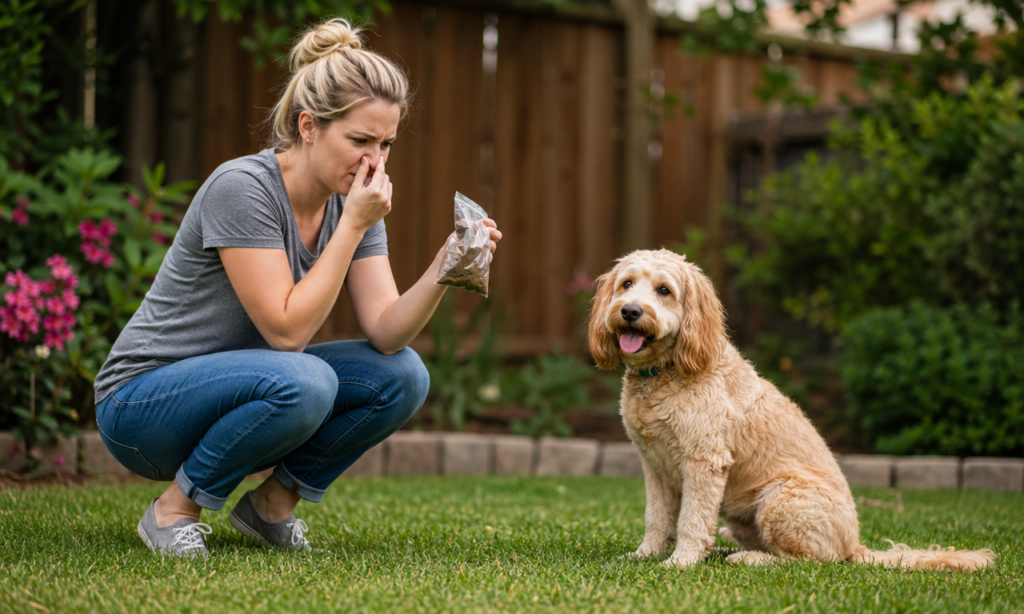
Talking to vet about dog poop feels awkward — but it’s one of the most useful health conversations you can have. Stool tells vets more than most owners realize. After 8 years of vet visits and dozens of stool-focused consults, here are the 7 best questions to ask when talking to vet about dog poop, plus what photos to bring and what NOT to say.

Why talking to vet about dog poop matters
Three reasons stool is a diagnostic goldmine:
- Changes show early. Many GI, liver, and pancreatic issues show in stool weeks before other symptoms.
- Vets rarely see the poop. They rely on your descriptions. Better descriptions = better diagnosis.
- Photos beat memory. Owners forget details 2 days later. Photos preserve exact color, texture, coating.
Show up unprepared and the vet asks 12 questions you can’t answer. Show up prepared and you get a diagnostic plan in 15 minutes.
What to bring when talking to vet about dog poop
Four items make the visit 3x more productive:
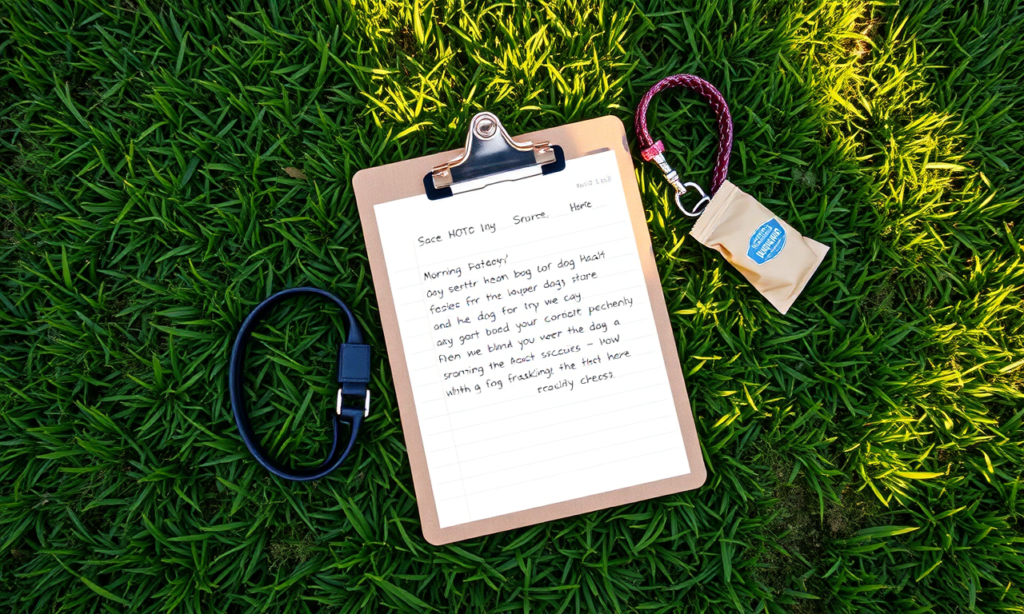
- Photos of the last 3-5 stool samples. Well-lit, close-up. Include a reference for size (a coin or ruler).
- Frequency log. When your dog poops, roughly what time, how often per day.
- Fresh sample if possible. Sealed in a small plastic bag or container. Best if within 4 hours of collection. See our collection guide for details.
- Diet log for last 7 days. What food, treats, table scraps, foreign object risks.
Total prep time: 10-15 minutes the day before. Payoff: much better exam.
The 7 best questions when talking to vet about dog poop
1. “Is this color and consistency in normal range?”
Ask about specifics. Vets use the Bristol/Waltham 7-point scoring system. Show your photos + ask where each falls on the scale.
Follow-up: “What score do you want to see us aim for?”
2. “Does this pattern suggest food intolerance vs. infection vs. something else?”
Broad diagnostic question. Forces vet to walk through differentials openly. Great for understanding what they’re ruling in or out.
3. “Should we do a fecal test?”
Standard tests: fecal float (parasites), giardia snap test, culture. Ask specifically what each looks for + cost.
See our fecal occult blood test guide for the deeper diagnostic option.
4. “What dietary changes should we test first?”
Before jumping to medication, most stool issues are diet-driven. Ask what to change first: protein source, fiber level, treat elimination.
5. “When should I call you back if this doesn’t improve?”
Get a clear timeline. “48 hours if no change” or “1 week check-in” — specific triggers to escalate.
6. “What symptoms would make this urgent?”
Ask for the red flag list: blood, black tar consistency, refusal to eat, vomiting, lethargy. Write it down.
7. “Is this related to anything we saw last visit?”
Vet has records you might not remember. Prompts them to check for patterns across visits.
What to say — and NOT say — when talking to vet about dog poop
Say:
- “Consistency has been [firm / soft / watery] for [X] days.”
- “Color shifted from [X] to [Y] around [when].”
- “I have photos and a frequency log.”
- “Diet has been [specific brand + amount] for [X] weeks.”
Don’t say:
- “His poop is just… off.” (No detail. Vet can’t diagnose vague.)
- “I read online that…” (Vets appreciate research but frame as a question, not a diagnosis.)
- “He’s fine otherwise.” (May be true, but let vet ask that.)
- “Can we just get antibiotics?” (Overuse creates resistant infections. Trust the diagnostic process.)
Photo tips for talking to vet about dog poop
Five rules for useful stool photos:
- Natural light. Take outside on grass or paper. Never indoor flash — distorts color.
- Include size reference. Coin, ruler, or leash next to the sample.
- Multiple angles. Top-down and side view.
- Note the time. Phone timestamp already does this — mention when reviewing with vet.
- Take 3-5 samples over days. Single photos miss patterns. Vets want trends.
Some vets also appreciate videos of the dog straining if that’s part of the issue. See our color chart as a reference when comparing to your photos.
What causes vets to book urgent visits when talking to vet about dog poop
| Sign | Urgency |
|---|---|
| Fresh red blood, small amount | Book within 48 hrs |
| Fresh red blood, large amount | Emergency — same day |
| Black tarry stool (melena) | Emergency — same day |
| Persistent diarrhea 3+ days | Book within 24-48 hrs |
| No poop 48+ hrs | Book within 24 hrs |
| Gray/chalky stool | Book within 48 hrs |
| Rice-like segments visible | Book within 1 week — tapeworm |
Also see diarrhea when-to-call-vet guide for more detail.
Common mistakes when talking to vet about dog poop
- Skipping the photos. Verbal description alone loses 60% of diagnostic detail.
- Waiting too long. “It’ll pass” is fine 1-2 days. Not 5-7 days.
- Bringing week-old samples. Bacterial degradation makes samples useless after 24 hrs. Fresh only.
- Talking only about diarrhea. Constipation, straining, color changes all matter equally.
- Not asking about diet. Most stool issues resolve with diet tweaks before meds. Ask.
How to prepare a frequency log for talking to vet about dog poop
Simple format:
- Date + time of each bowel movement
- Consistency (firm / soft / watery)
- Color (brown, yellow, black, red-streaked)
- Any coating (mucus, blood)
- Any signs of straining or discomfort
Track for 5-7 days before visit. Print or save on phone. Vet reads it in 30 seconds — gives them what they need.
The AVMA gastroenteritis guide covers what vets look for in stool + broader GI presentation.
Cost expectations when talking to vet about dog poop
- Basic exam. $50-100.
- Fecal float test. $25-50.
- Culture or PCR test. $100-200.
- Bloodwork (if GI issue suspected). $100-300.
- Ultrasound if internal issue). $300-600.
Ask up front what the diagnostic plan will cost. Vets are happy to itemize.
FAQ
Should I fast my dog before the vet visit? Not usually. Ask specifically — some tests require fasting, most stool exams don’t.
Can I text photos to the vet? Some practices accept text/email. Ask when booking. Great for follow-up check-ins.
What if my vet dismisses my concerns? Ask for a specific test or reference. If still dismissed, seek a second opinion — GI issues can escalate quickly.
Should I mention over-the-counter meds I gave? Yes, always. Some interfere with tests or contraindicate treatments.
How often should routine stool checks happen? Annually for adult dogs. Every 6 months for seniors + puppies.
Bottom line
Talking to vet about dog poop is far more productive when you show up with photos, a frequency log, and 7 specific questions ready. Skip vague descriptions. Bring fresh samples if the vet requests them. Track color, consistency, coating, straining — these four data points cover 80% of what the vet needs. Preparation turns a 30-minute stumbling exam into a 15-minute focused diagnosis. If you’re seeing repeated issues, also cross-reference with our constipation guide.
This article is general information, not veterinary advice. If your dog is sick, talk to your vet.