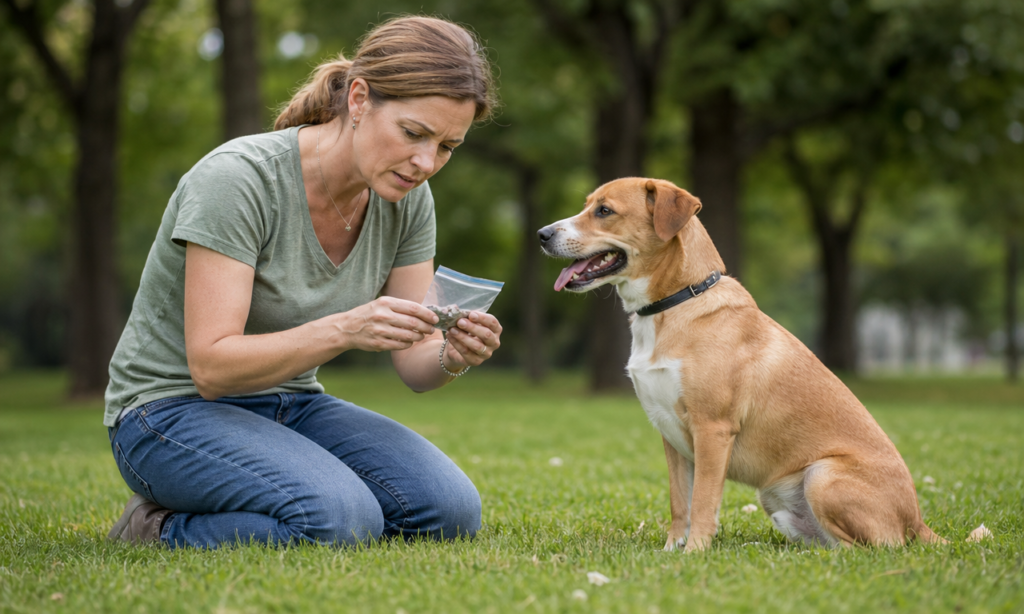
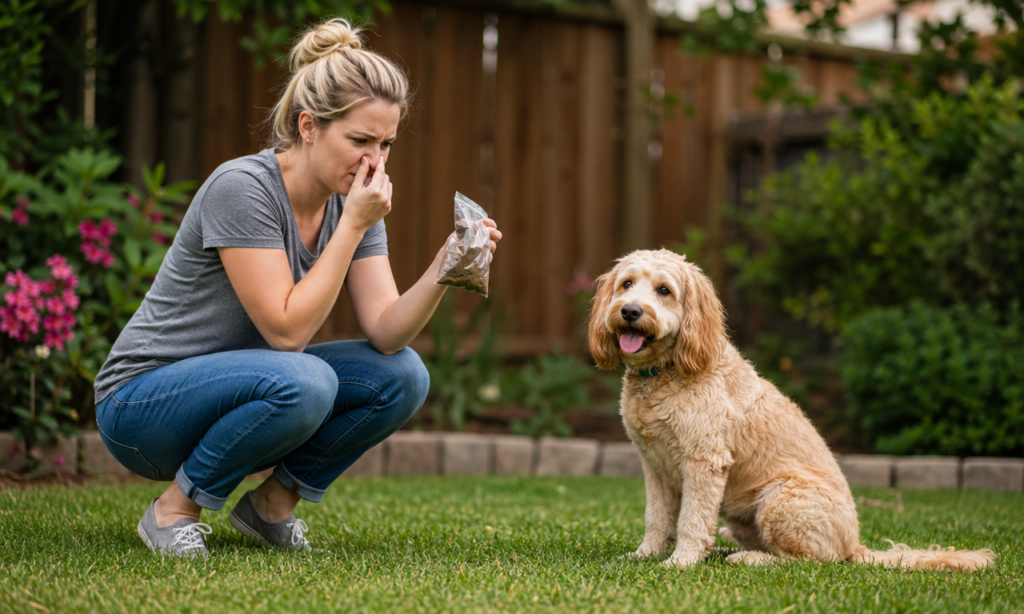
Dog poop grass damage is the single most common lawn complaint dog owners have, and most of the “fixes” you’ll find online don’t actually work. After years of watching neighbors try every supplement, spray, and lawn-replacement strategy, the practical truth comes down to this: dog poop grass damage is caused by stool sitting on grass too long, not by any specific component of dog stool itself. Here’s the real breakdown and what actually fixes the brown spots.
What actually causes dog poop grass damage
Two mechanisms, in order of importance:
- Physical shading and bacterial decomposition. Dog stool sitting on grass for 24+ hours blocks sunlight, traps moisture against the blade, and supports bacterial breakdown that releases ammonia near the root zone. This kills grass in a small ring around where the stool sat, almost regardless of what was IN the stool.
- Concentrated nitrogen burn (minor factor). Dog poop contains nitrogen — but at much lower concentrations than dog urine. The brown circle around old stool is mostly mechanical damage, not chemical burn.
This is why dog poop grass damage on YOUR lawn looks identical regardless of whether you switch foods, brands, or supplements. The food doesn’t matter much. The timing does.
The single best fix for dog poop grass damage
Pick up the stool within 24 hours. That’s it. Lawns recover from brief shading; they don’t recover from a week of stool sitting in one spot. Every other “fix” is downstream of this one.
If you can’t pick up daily — traveling, multiple dogs, large yard — then:
- Pick up every 48 hours minimum during growing season (April-October in most US zones)
- Pick up every 72 hours during winter dormancy (grass is dormant anyway; less recoverable damage)
- Use a long-handled scoop (no bending) so the chore doesn’t get skipped
For broader cleanup strategy and tool comparisons see our winter pickup guide and best dog poop bags comparison.
What doesn’t actually fix dog poop grass damage
Be skeptical of these heavily marketed “fixes”:
- “Grass Saver” supplements (DL-methionine, yucca, etc.). Marketed to reduce nitrogen content in stool. Research is thin and the effect on grass damage is marginal at best. The American Kennel Club has a good overview of canine supplements — most of these are not evidence-backed for lawn protection specifically.
- Watering the spot after the dog goes. Helps with dog urine burns; does almost nothing for stool damage since the issue is the physical presence of stool, not the chemistry seeping into soil.
- Gypsum or lime soil amendments. Sometimes recommended; the studies don’t support meaningful improvement for stool damage.
- “Dog-safe” lawn fertilizers. These don’t undo damage that already happened. They might help thicker grass resist future damage but won’t fix existing brown spots.
- Specialized “high-fiber” foods. Marketed to reduce stool acidity. Real effect on grass: negligible. (See our broader best dog food for firm stool writeup — that’s the legitimate use case for fiber, not lawn protection.)
What actually works for repairing damaged spots
For existing brown spots (assume stool has been removed):
- Rake the dead grass out down to bare soil with a hand rake. Don’t skip this — new seed can’t establish on top of mat.
- Topdress with 1/4 inch of compost or topsoil. Bare-soil reseeding without a soil base usually fails.
- Reseed with the same grass species already on your lawn. Mismatched species creates patchy color contrast.
- Water lightly 2x per day for 2 weeks until germination, then 1x per day for another 2 weeks.
- Keep the dog off the patch for 4-6 weeks. Fence with a temporary garden border if needed.
Most damaged spots heal in 4-8 weeks during growing season.
Long-term strategies for dog poop grass damage prevention
- Train your dog to a designated potty zone. Mulch beds, gravel corners, or a small dedicated grass strip. You sacrifice that small area in exchange for protecting the rest. Most dogs can be trained in 2-3 weeks with consistent reward at the chosen spot — see our puppy potty training guide; same principles apply to adult dogs.
- Rotate where you toss tennis balls / play. The grass damage on play paths usually outweighs poop damage. Rotate to spread the load.
- Choose more resilient turf species for new lawns. Tall fescue and Kentucky bluegrass tolerate dog use better than ryegrass or Bermuda. Native and low-mow alternatives (clover, microclover) handle dogs especially well.
- Increase mowing height. Taller grass (3-4 inches) has deeper roots and recovers from damage faster than short-cut lawn.
When dog poop grass damage signals a dog-health issue
If grass damage suddenly worsens, look at the dog:
- More frequent stool than usual? See our dog diarrhea guide or frequency norms.
- Larger volumes? Often a sign of a fiber-heavy or low-digestibility food. Diet change is the lever.
- Watery stool sitting in puddles? See our watery dog poop guide — that’s a different problem than typical grass damage.
FAQ
Does dog poop fertilize grass like cow manure? No. Cow manure is composted before use. Fresh dog stool is acidic, full of pathogens, and the wrong nitrogen-to-carbon ratio. Don’t compost dog waste in your veggie garden either — the EPA classifies pet waste as similar to human waste for safety.
How long does it take dog poop to “decompose” if I leave it? 9-12 months in most climates. That’s not fast enough to avoid grass damage and it spreads parasites/pathogens in the meantime.
Will neutering reduce dog poop grass damage? No connection.
Bottom line
Dog poop grass damage is a timing problem, not a chemistry problem. Pick up daily, repair damaged spots with rake + topsoil + reseed, and skip the supplement aisle. The marketed “grass saver” pills work mostly as a tax on hopeful dog owners.
This article is general information, not veterinary advice. If your dog is sick, talk to your vet.