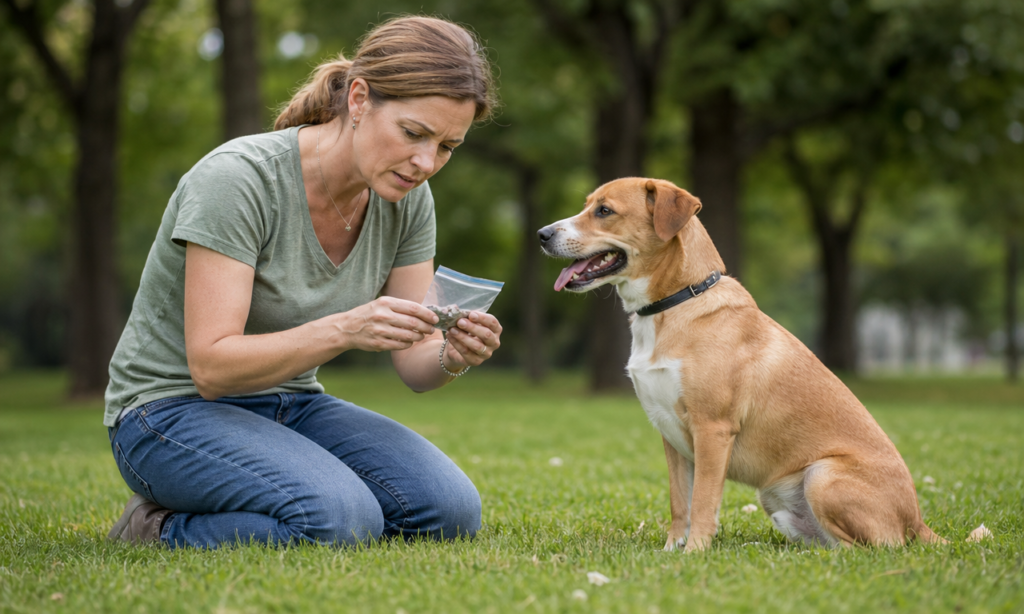
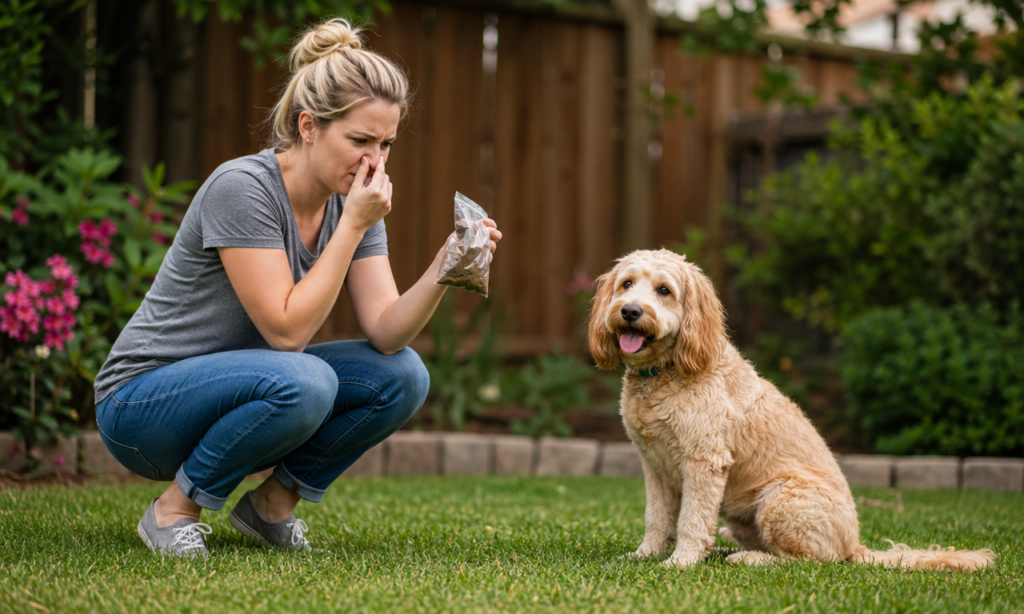
White dog poop almost always means one of four things, and knowing which one matters because three are manageable and one needs treatment. The classic chalky-white stool from a raw-fed dog looks very different from the white rice-grain-like specks of tapeworm or the milky discharge of a parasitic infection. This guide breaks down the four most common causes of white dog poop, how to identify each, and when to stop investigating at home and call the vet.
What White Dog Poop Tells You
Normal stool is brown because of bile. When poop turns white — fully, partially, or in flecks — something has either replaced or covered that brown pigment. The cause is usually one of: too much calcium in the diet, stool that’s been sitting outside drying in the sun, parasite segments hitching a ride, or unusual discharge from infection. Each looks slightly different. For a broader color overview, see our dog poop color chart.
4 Best Causes of White Dog Poop
1. High Calcium Diet (Especially Raw Bones)
This is by far the most common cause of white dog poop in healthy dogs. If you feed raw, especially raw meaty bones, the undigested calcium passes through and turns stool chalky white or pale gray. The stool is usually firm, sometimes hard or crumbly, and may break apart easily. This is also why old-school dogs that scavenged bones often left behind those bleached-white stools you’d find in backyards.
Is it harmful? Not in moderation. But too much bone in the diet can cause constipation and hard, painful stools. If your raw-fed dog is straining, our guide on why is my dog straining to poop is worth reading. The fix is usually to reduce the bone content and increase muscle meat and moisture.
How to Identify
- Stool is uniformly chalky white or pale gray
- Firm, sometimes crumbly
- Dog is on a raw, BARF, or bone-heavy diet
- Dog is otherwise healthy and acting normal
2. Dried Out, Aged Stool
Sometimes white dog poop isn’t white when it comes out — it just turns white sitting in the yard. Sun, heat, and time bleach old stool pale gray or white. If you only find white poop on yard cleanup day and not fresh, this is almost certainly what’s happening. It’s harmless in the sense that the stool was probably normal when fresh, but it does mean the poop has been there long enough to mineralize.
How to Identify
- White stool found only on old, weathered piles
- Fresh stool from the same dog is normal brown
- Stool is dry, cracked, or sun-bleached
- Yard hasn’t been cleaned in days or weeks
3. Tapeworm Segments
This is the cause owners miss most often, because the white isn’t the whole stool — it’s tiny rice-grain-like segments on the surface or stuck around the dog’s rear. Tapeworm segments look like flat, white-to-cream colored pieces of cooked rice. When fresh, they may even wiggle slightly. As they dry, they look more like sesame seeds.
Tapeworms come most commonly from swallowing fleas, so dogs with current or recent flea problems are at highest risk. They need prescription deworming — over-the-counter dewormers usually don’t touch tapeworms. Read our full guide on worms in dog poop and treatment for identification photos and treatment options.
How to Identify
- White rice-like or sesame-seed-like specks on stool or around the anus
- Dog scoots, licks rear excessively, or chews tail base
- History of fleas, even resolved
- Stool itself may otherwise look normal
4. Milky or Mucus Discharge from Infection
Less common, but worth knowing: some bacterial or parasitic infections (and severe inflammation) can produce a milky-white or mucus-coated stool. This usually comes with diarrhea, straining, or visible discomfort. The white may be mucus from the colon lining, which the body produces in excess when irritated. Our breakdown of mucus in dog poop causes covers this in detail.
How to Identify
- White is gelatinous, slimy, or coating-like
- Often accompanies diarrhea or soft stool
- Dog may strain, scoot, or seem uncomfortable
- May be accompanied by appetite loss or lethargy
Quick Identification Table
| What You See | Likely Cause | Action |
|---|---|---|
| Chalky white firm stool, raw diet | High calcium | Adjust diet |
| White only on old yard piles | Aged stool | Clean yard more often |
| Rice-like white specks | Tapeworms | Vet for prescription dewormer |
| Milky/slimy white coating | Infection or inflammation | Vet visit |
What to Do at Home
- Look at fresh stool, not old. Pick up promptly and check color the same day.
- Check around the anus and bedding for rice-grain segments. Tapeworm segments often crawl out separately.
- Note the diet. If raw or bone-heavy, calcium is the likely culprit.
- Bring a sample to the vet if you suspect parasites. Fresh is best, but a sealed bag in the fridge is acceptable for up to 24 hours.
- Treat fleas alongside tapeworms — without flea control, tapeworms keep coming back.
When to Call the Vet
Most white dog poop isn’t an emergency, but it does warrant a vet visit in these situations:
- Rice-grain segments anywhere on stool or dog (tapeworm treatment is prescription-only)
- White stool combined with diarrhea, vomiting, or lethargy
- White stool persisting more than a week with no diet explanation
- Pale or clay-colored stool (this can indicate liver or gallbladder issues, not the same as calcium-white)
- White stool in a puppy
- Visible weight loss alongside white stool
If you’re seeing pale stool with yellow tinting, jaundice, or vomiting, that’s a different situation — possibly a liver issue — and warrants a same-day call. The American Kennel Club’s stool color guide distinguishes calcium-white from pathology-pale fairly clearly.
The Bottom Line
Most white dog poop in otherwise healthy dogs is either dietary (calcium from bones), environmental (sun-bleached old stool), or parasitic (tapeworms). The first two are manageable at home. The third needs a prescription dewormer plus flea control. The rarer mucus-discharge cases tend to come with other symptoms that make the vet call obvious. Look at fresh stool, check for rice-grain segments, and consider the diet before assuming the worst.
This article is general information, not veterinary advice. If your dog is showing symptoms that concern you, contact your veterinarian.