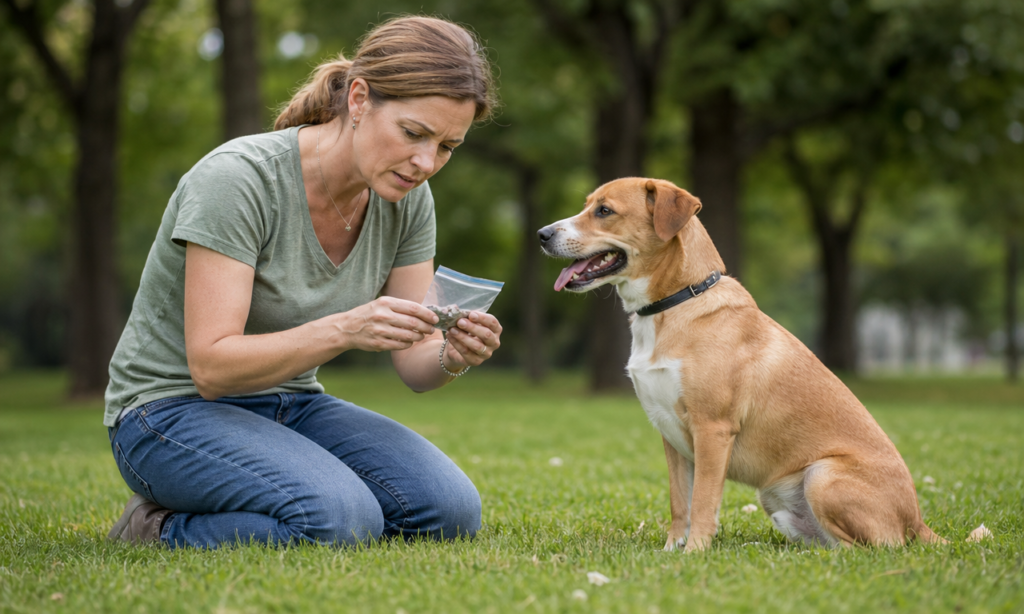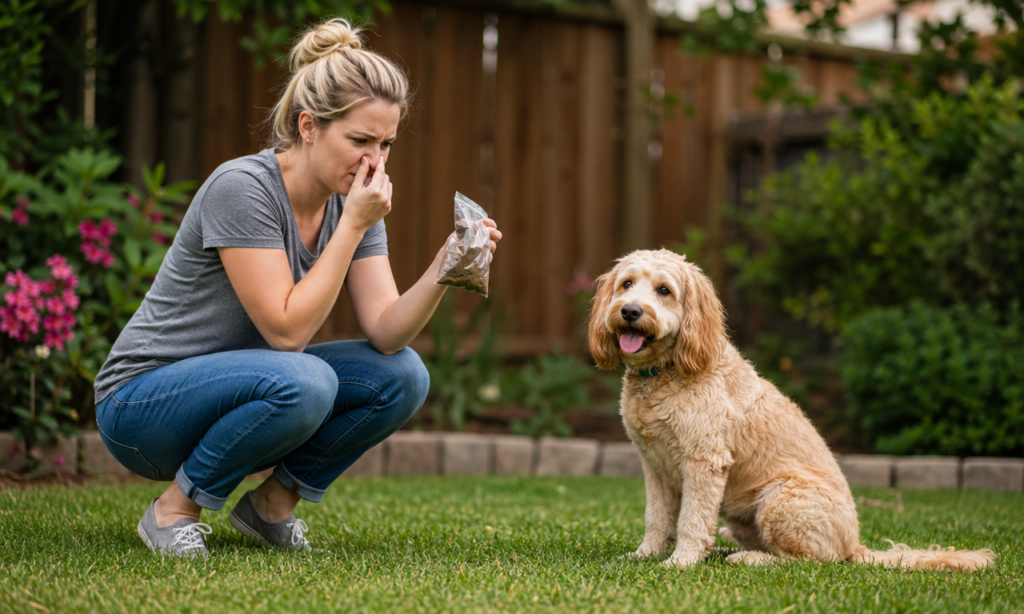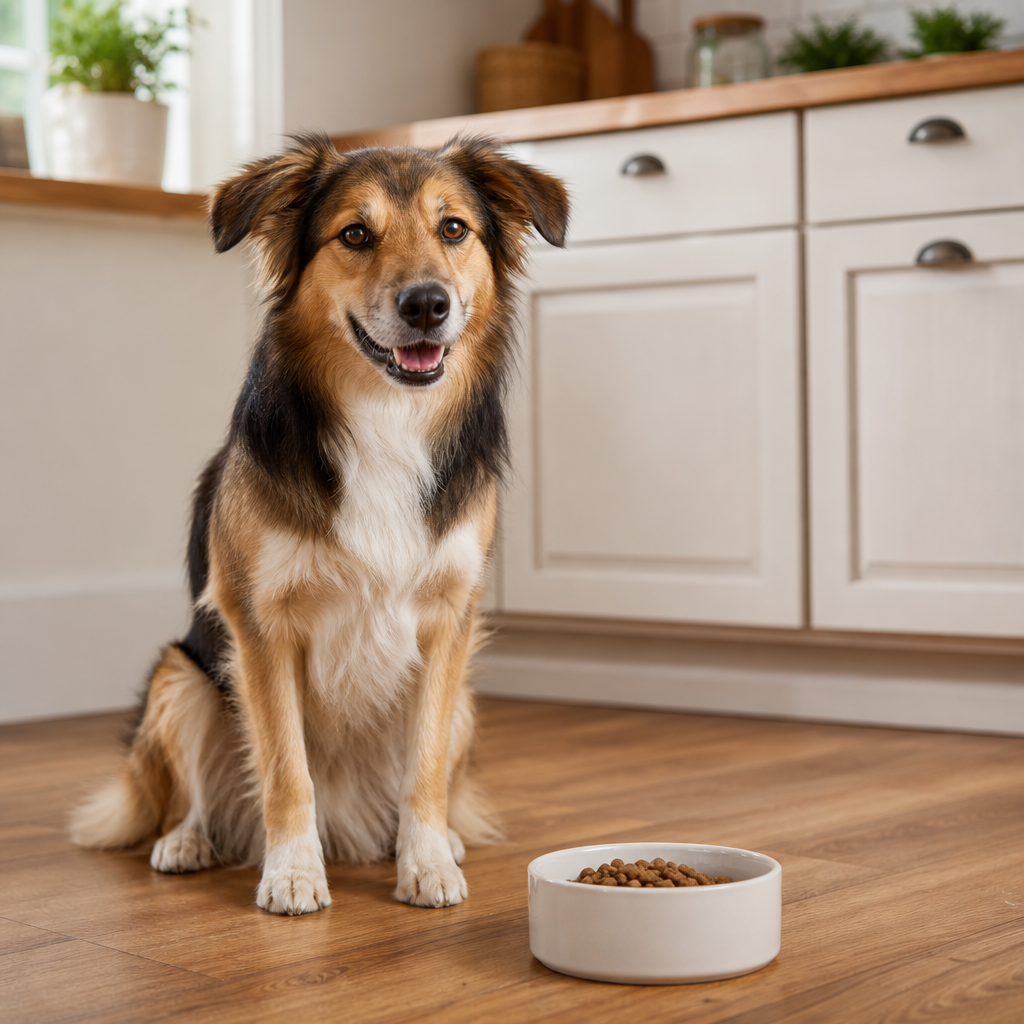
Noticing undigested food in dog poop and wondering whether it’s normal or a sign something’s wrong? The honest answer: it’s usually one of five common causes — most of them easy to fix at home. Here are the 5 best reasons for undigested food in dog poop, when it’s harmless vs concerning, and the practical fixes that resolve most cases within a week.

What undigested food in dog poop actually means
Dogs are designed to process most foods completely in the stomach and small intestine. When chunks of recognizable food show up in stool, one of three things is happening:
- Food passed through too fast — the gut didn’t have time to break it down.
- The food wasn’t chewable — dogs that scarf kibble whole skip mechanical breakdown.
- Digestive enzymes aren’t doing their job — less common but more serious.
Most cases are the first two. The third (malabsorption) shows up alongside other symptoms — weight loss, chronic loose stool, low energy.
The 5 best reasons for undigested food in dog poop
1. Fast eating (most common)
Dogs that inhale their kibble in under 60 seconds often pass partially-chewed pieces straight through. The food gets swallowed whole, the stomach acid can’t break it down completely, and the chunks show up in stool 8-24 hours later.
Easy fix:
- Slow-feeder bowl ($10-20). Maze-style bowls force dogs to work for each piece. Reduces eating time from 60 seconds to 10-15 minutes.
- Mat-style feeders or snuffle mats. Scatter kibble across a textured surface. Engages mental work alongside eating.
- Frozen meal cubes. Wet food frozen in muffin tins or Kong toys. Slows eating significantly.
This is the fix for 60-70% of “undigested food in dog poop” cases. Slow feeder bowls are the single best investment for fast-eating dogs.
2. Fiber-heavy or high-residue ingredients
Certain foods pass through largely intact regardless of chewing or transit time:
- Corn kernels (skin is hard to break down)
- Peas (whole skin often passes intact)
- Carrots (raw chunks especially)
- Sweet potato skins
- Some commercial kibble shapes that have hard outer coatings
This is normal and not concerning. Cook vegetables fully if you home-prep, or accept that some ingredients will show up undigested.
3. GI transit too fast
If food moves through the gut faster than usual, less of it gets digested. Common triggers:
- Stress or anxiety (boarding, vet visits, new home)
- Recent food change
- Infection or mild GI inflammation
- Eating something irritating (table scraps, grass)
Usually self-resolves in 2-5 days. If your dog has loose stool plus undigested food, see our diarrhea guide for when to involve the vet.
4. Inappropriate or low-quality food
Some commercial foods include fillers and ingredients dogs can’t fully break down:
- Cellulose powder (often listed as “powdered cellulose” or “wood pulp”)
- Soy hulls
- Low-quality grain fragments
If you’re seeing undigested food consistently and your dog’s on a budget kibble, upgrading to a higher-digestibility food often fixes it. See our best food for firm stool writeup for picks with high-digestibility ingredients.
5. Malabsorption or enzyme deficiency (less common, more serious)
Three conditions where the dog physically can’t digest food properly:
- Exocrine pancreatic insufficiency (EPI). Pancreas doesn’t release enough digestive enzymes. Signs: chronic undigested food in stool, weight loss despite eating, large-volume greasy stool.
- Inflammatory bowel disease (IBD). Chronic gut inflammation reduces absorption. Often paired with mucus in stool — see mucus guide.
- Severe parasite load. Worms steal nutrients before the dog absorbs them. See worms guide.
These need vet diagnostics (fecal tests, bloodwork, sometimes imaging). If you’re seeing undigested food in dog poop alongside weight loss, low energy, or chronic diarrhea, schedule a vet visit.
When undigested food in dog poop is NORMAL
Five signs it’s harmless:
- Dog eats fast (under 2 minutes per meal)
- Otherwise acts normal — good energy, normal weight, no diarrhea
- Recognizable chunks are mostly carrots, peas, corn, or specific hard-to-break-down items
- Stool is normal consistency otherwise (firm log shape)
- It happens occasionally, not every poop
These cases respond well to a slow-feeder bowl plus maybe a small food upgrade. No vet needed.
When undigested food in dog poop is CONCERNING
Six signs that warrant vet attention:
- Weight loss despite eating normally. Strong sign of malabsorption.
- Chronic for 2+ weeks. Not just an occasional thing.
- Stool is also loose, mucus-y, or unusually colored. See our color chart.
- Greasy or oily appearance to the stool. Hallmark of fat malabsorption.
- Dog is excessively hungry or drinking water unusually. Often paired with EPI or diabetes.
- Energy or coat quality decline. Nutrients aren’t getting where they need to go.
Practical fixes for undigested food in dog poop
If your dog fits the “normal” profile, try these in order:
- Slow feeder bowl. Single highest-impact fix. $10-20.
- Split into more meals. 2 large meals → 3 smaller meals. Reduces speed-eating urgency.
- Add a splash of warm water to dry kibble. Softens the food so it breaks down faster in the stomach. Wait 5 min before serving.
- Try a higher-digestibility food. Limited-ingredient or fresh foods often improve outcomes.
- Add digestive enzymes. Pet-store enzyme supplements ($15-25) help dogs with mild absorption issues.
Most “normal” undigested-food cases resolve with steps 1-2 alone. If it persists past 2 weeks of doing those, talk to the vet.
How long do food fragments take to show up in stool?
Typical adult dog GI transit time: 12-24 hours. So undigested food you see today was likely eaten yesterday. This helps you trace what triggered an unusual stool — look back 12-24 hours at what your dog ate.
Faster transit times mean less digestion. If you noticed undigested food after a stressful day or recent diet change, transit speed is the likely culprit.
The AKC overview of dog digestion has more on normal GI function and what affects transit time.
Specific foods and what to expect
| Food | Likely to appear undigested? |
|---|---|
| Corn kernels | Yes — totally normal |
| Peas | Often — normal |
| Carrot chunks (raw) | Often — cook to reduce |
| Sweet potato skin | Sometimes |
| Rice (white) | Rarely — usually fully digested |
| Chicken / muscle meat | Rarely |
| Bones (if fed) | Sometimes; concerning if large pieces |
If your dog’s “undigested food” is mostly carrots and peas, that’s fine. If it’s chicken or rice showing up undigested, that points more strongly to transit speed or absorption issues.
FAQ
Can puppies have undigested food in stool more often? Yes — puppies eat faster and have less mature GI systems. Slow feeders help puppies too.
Should I switch foods immediately? No. Try the slow feeder + smaller meal approach for 1-2 weeks first. Food changes can themselves cause stool variation.
Are digestive enzyme supplements safe? Generally yes, but check with vet for chronic cases. Different enzymes target different deficiencies.
What if it’s only happening with one specific food? Strong food intolerance signal. Switch proteins or consult vet about elimination diets.
How long until I should see improvement after starting a slow feeder? 3-5 days for the eating-speed cases. If no improvement after 2 weeks, look at food quality or possible absorption issues.
Bottom line
Undigested food in dog poop is most often a fast-eating problem (60-70% of cases) — a $15 slow-feeder bowl fixes it. The other common causes: fiber-heavy ingredients (normal), fast GI transit (usually self-resolves), low-quality food (upgrade), or malabsorption (vet workup). Watch for weight loss, chronic diarrhea, or low energy as red flags. Most cases resolve in 1-2 weeks with simple home changes.
This article is general information, not veterinary advice. If your dog is sick, talk to your vet.