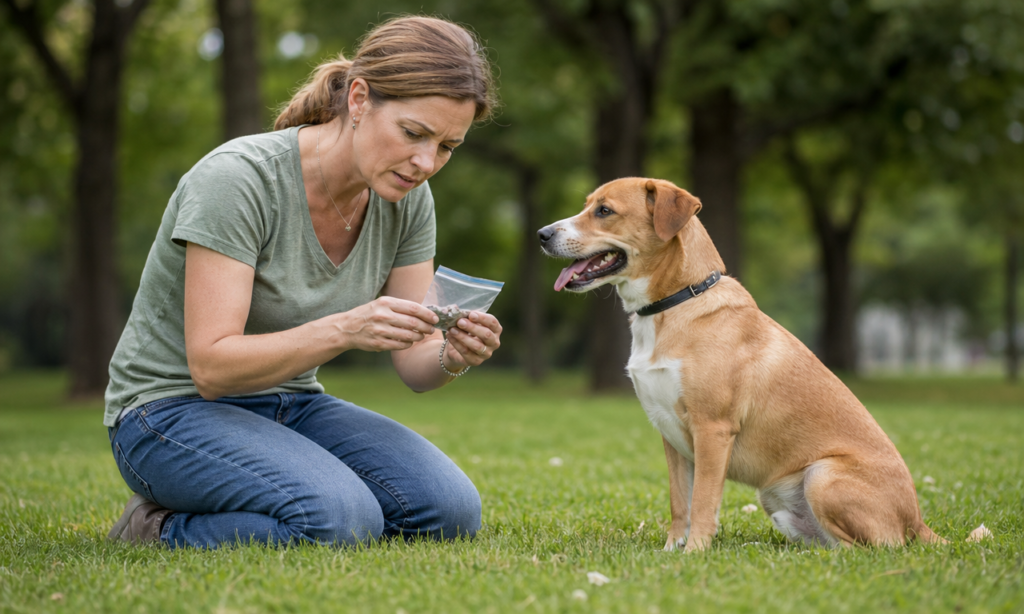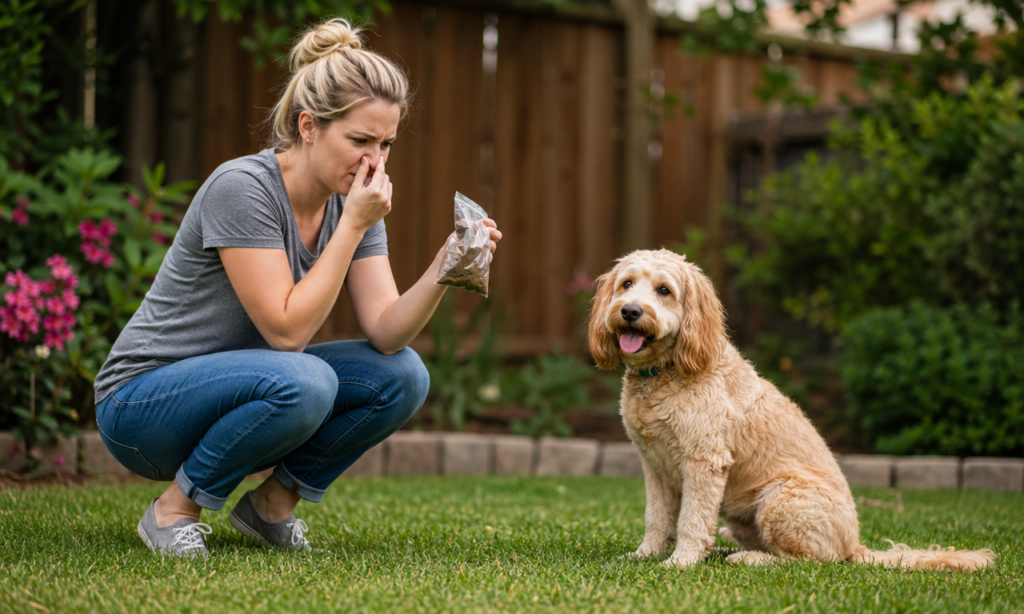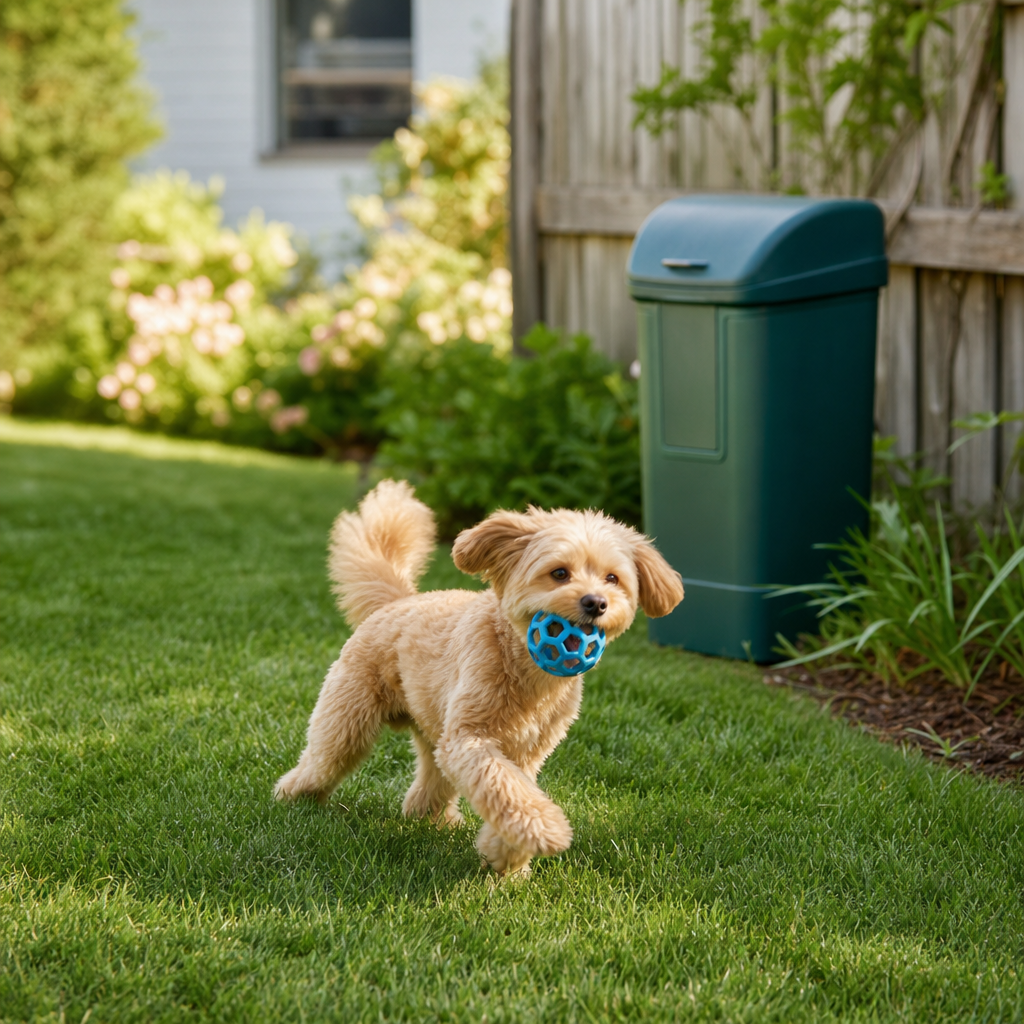
If you’ve noticed a swarm of dog poop flies in your yard this summer, you’re seeing one of the most reliable insect attractors known to entomology — fresh dog stool. Dog poop flies aren’t just a nuisance; they’re a real health risk and they spread fast. Here are the 5 best ways to stop dog poop flies in your yard, why they appear so quickly, and what NOT to use that wastes money.

Why dog poop flies show up so fast
Three things make dog stool a fly magnet:
- Strong volatile organic compound (VOC) signal. House flies and blowflies detect fresh stool from up to a half-mile away. A new stool announces itself fast.
- Ideal egg-laying medium. Female flies lay 75-150 eggs per cluster directly on stool. Eggs hatch in 8-20 hours in warm weather.
- Maggot-to-fly cycle is 1-2 weeks in summer. One unattended stool can produce hundreds of new flies in a week.
This is why one stool sitting two days in July generates a noticeable fly problem. Five stools sitting four days = a serious infestation.
The 5 best ways to stop dog poop flies
1. Pick up stool within 4-12 hours (the only real prevention)
The single most effective control. Flies need time to find, land, and lay eggs. Stool removed within 4-12 hours never becomes a breeding site. Most fly problems trace back to one pattern: pickup once a week or less.
Hot weather makes this critical. Summer pickup needs to be daily or even twice-daily during active hatches. Cooler weather (under 60°F) gives you more leeway — 24-36 hour pickup windows are usually fine.
See our pick-up-in-own-yard guide for the full case for daily pickup. Frequency is the foundation everything else builds on.
2. Use a dedicated outdoor sealed waste bin
Even after pickup, bagged stool sitting in an open trash can attracts flies. Solutions:
- Closed-lid outdoor pet waste bin. $30-60 for a 13-gallon model with sealing lid. Use heavy-duty bags inside.
- In-ground composter (Doggie Dooley). Permits waste to digest underground; flies can’t access. $50-100. Best for households with steady waste volume.
- Empty trash daily during summer. Even a sealed bin smells enough to attract flies if it sits a week.
Don’t toss stool in your house trash unless it goes to the curb within 24 hours. Even sealed, the smell builds.
3. Fly traps positioned away from the dog area
Once a fly population is established, you need traps to reduce the breeding adults. Three types that work:
- Pheromone disposable bag traps (Rescue, Fly Bait Bag). $5-8 each, last 2-4 weeks. Hang 10-15 feet downwind from where the dog poops. Smells terrible — don’t put near the patio.
- UV electric fly zappers. $30-80, plug-in. Best for screened porches.
- Sticky fly strips. Cheap ($1-3), unsightly. Useful indoors near garage doors.
Position matters: traps work by catching flies BEFORE they reach the stool source. Place them on the upwind side of the yard, away from kid play areas.
4. Biological control — beneficial nematodes
Nematodes are microscopic worms that prey on fly larvae in soil. Apply to areas where dog stool has been sitting for a while. They knock out the larvae lifecycle without affecting pets, kids, or plants.
Cost: ~$25-40 for enough nematodes to treat a typical yard. Apply once at the start of summer; reapplication in mid-summer if fly pressure is high. Available from garden supply stores or Amazon (“beneficial nematodes for fly control”).
This is the underrated option most dog owners haven’t heard of. Combined with daily pickup, it ends fly problems.
5. Spray-down / sanitization of stool zones
After picking up, spray the area where stool sat with a diluted enzyme cleaner or vinegar-water mix. Two reasons:
- Breaks down residual VOCs that continue attracting flies even after pickup
- Reduces bacterial buildup in grass that flies are also attracted to
Dilution: 1 cup white vinegar to 1 gallon water in a garden sprayer. Spray, let dry. Once weekly during summer in high-use zones. See our cleanup techniques guide for the indoor equivalent for accidents.
What NOT to use against dog poop flies
Three popular but ineffective approaches:
- Ultrasonic fly repellers. Marketed heavily, mostly ineffective. Flies don’t respond to ultrasonic frequencies the way some pests do.
- Citronella candles. Designed for mosquitoes, minimal effect on house flies and blowflies (which target dog stool).
- Bleach on grass. Kills grass without solving the fly problem. Don’t.
- Heavy chemical insecticide sprays. Kills beneficial insects, may harm pets. Overkill for a problem that solves itself with pickup frequency.
The fly industry sells a lot of products that don’t work. Pickup frequency + nematodes + traps positioned correctly does 95% of the work.
Are dog poop flies a health concern?
Yes — beyond annoyance. House flies and blowflies mechanically transfer pathogens from stool to anywhere they land next:
- Salmonella, E. coli, Campylobacter
- Helminth eggs from worms in stool — see our worms guide
- Giardia cysts
If flies are visiting your patio table, kitchen door, or kid play area after visiting the stool, you have a contamination route. The CDC overview of pet waste health risks covers this in clinical detail.
This is why “dog poop flies” isn’t a cosmetic problem. It’s a sanitation problem with real public health implications.
Seasonal timing of dog poop flies
| Season | Fly activity | Pickup target |
|---|---|---|
| Spring (50-70°F) | Early breeding, low pressure | Every 24-36 hours |
| Summer (70°F+) | Peak activity, fast hatches | Daily, ideally same-day |
| Late summer (90°F+) | Extreme breeding pressure | Twice daily if possible |
| Fall (cooling) | Population declines | Every 24-48 hours |
| Winter (under 50°F) | Dormant adults | Every 2-3 days OK |
The pickup schedule needs to scale to the season. Winter slack is fine; summer demands daily attention.
If you already have a fly infestation
Three-step rescue protocol:
- Big initial cleanup. Walk the yard with a long-handled scoop. Get everything. Don’t leave a single stool. Wear gloves and consider a mask for old piles.
- Apply nematodes the same day. Within 24 hours of cleanup — kills any existing maggots before they hatch.
- Set 2-3 traps downwind. Catch the adult flies that already hatched. Trap population usually crashes within 7-10 days.
Then maintain daily pickup. Most infestations resolve in 2-3 weeks with this approach.
FAQ
How fast do dog poop flies multiply? One stool can produce 75-150 flies per cluster, and the cycle is 1-2 weeks. Unchecked, one unattended stool becomes hundreds of flies within two weeks.
Are there fly-repellent stool products? Some “deodorizer” sprays repel a bit but don’t replace pickup. Skip.
Do flies signal a health problem in my dog? No — fresh dog stool attracts flies regardless of dog health. If your dog has unusual stool (mucus, blood, color shifts), see our color chart for those concerns separately.
Can I compost dog waste to avoid flies? Only with a sealed in-ground system. Open composting will attract more flies, not fewer.
What about lawn services or pickup services? Weekly service alone won’t stop summer fly problems — even 6 days between visits is too long in July. Add daily mini-pickups yourself between service visits.
Bottom line
Dog poop flies show up fast because stool is the perfect breeding medium. The 5 best controls: same-day pickup (the foundation), sealed outdoor waste bin, downwind fly traps, beneficial nematodes for soil treatment, and post-pickup sanitization spray. Skip ultrasonic repellers, citronella candles, and bleach. Daily pickup in summer is non-negotiable. If you already have a swarm, big initial cleanup + nematodes + traps fixes most infestations in 2-3 weeks.
This article is general information, not veterinary advice. If your dog is sick, talk to your vet.