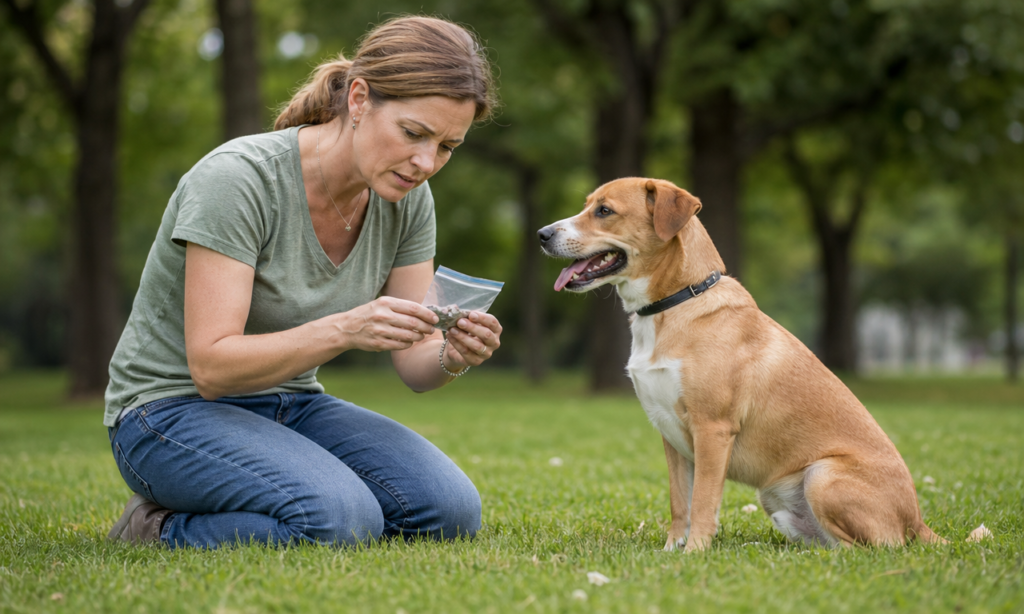
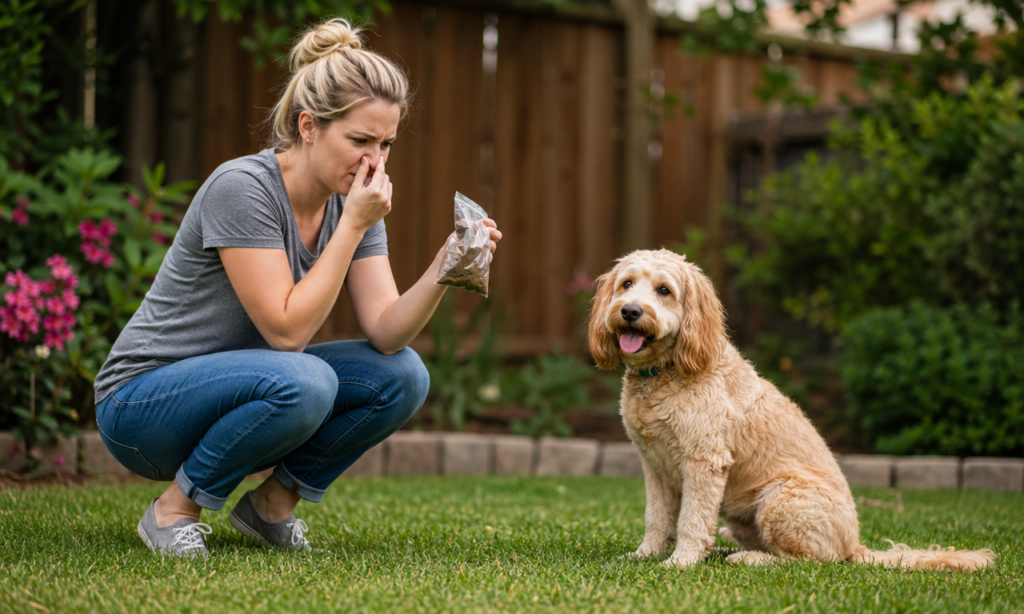
Probiotics for dog diarrhea have become the default suggestion in vet offices and online forums alike — and for good reason. The right strain at the right dose can turn around mild loose stool in 2-3 days. But not every “probiotic” sold for dogs is worth your money, and probiotics for dog diarrhea isn’t the right fix for every loose-stool scenario. Here are the 5 best options, dosing, when yogurt works, and the critical “skip probiotics” red flags.
How probiotics for dog diarrhea actually work
Probiotics introduce live beneficial bacteria into your dog’s gut. When diarrhea is caused by a temporarily disrupted microbiome — stress, antibiotic course, food change, mild dietary indiscretion — flooding the gut with helpful bacteria crowds out the bad and restores balance.
Where they don’t help: parasites, foreign bodies, pancreatitis, or infections that need targeted antibiotics. If you’re not sure what’s causing the loose stool, work through our dog diarrhea causes guide first to identify the type before grabbing a probiotic.
The 5 best probiotics for dog diarrhea
1. Purina FortiFlora (the vet office standard)
The most-prescribed probiotic in US vet practice. Single sachet contains Enterococcus faecium SF68, the strain with the strongest peer-reviewed evidence for resolving canine diarrhea. Comes as a flavored powder you sprinkle on food. Most dogs eat it without complaint.
Dosage: 1 sachet daily for 7-14 days. For dogs over 50 lbs, vets sometimes recommend 2 sachets/day for the first 3 days.
Cost: ~$30 for a box of 30. Premium-priced but the strain has actual research behind it.
2. Visbiome Vet (high-strain-count alternative)
Visbiome contains 8 different bacterial strains at very high CFU counts. Great for dogs with chronic mild GI issues or post-antibiotic recovery. Stronger than FortiFlora for stubborn cases but more expensive.
Dosage: Per the package — usually 1/2 sachet for small dogs, 1 sachet for medium, 2 for large. Daily, for 14-21 days.
3. Plain unsweetened yogurt (the cheap option)
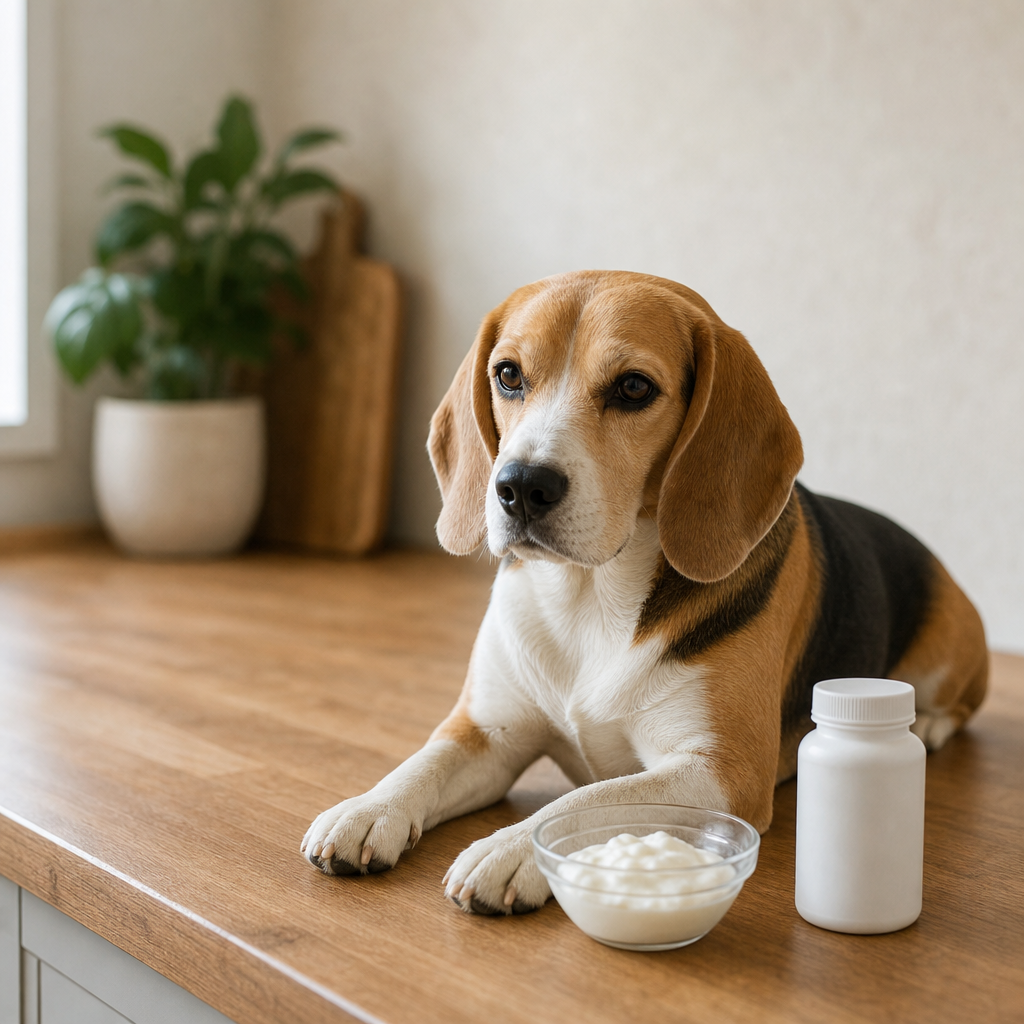
Yes — plain yogurt is one of the simplest probiotics for dog diarrhea. Look for “live and active cultures” on the label. Greek yogurt works fine. Avoid: flavored, sweetened, or anything containing xylitol (xylitol is toxic to dogs).
Dosage: 1 tsp per 10 lbs body weight, mixed into food, once or twice daily for 5-7 days. A 50 lb dog gets ~5 tsp daily.
Honest limitation: yogurt strains aren’t optimized for canine gut. They help, but FortiFlora’s targeted strain works better for moderate cases. Use yogurt for mild stuff or when you can’t get to a pet store same-day.
4. Kefir (better than yogurt for many dogs)
Plain unsweetened kefir is a stronger probiotic than yogurt — more strains, higher CFU count. Some dogs tolerate it better than yogurt because it’s slightly more digestible. Especially useful for senior dogs.
Dosage: 1 tsp per 10 lbs body weight, once daily. Start with half this for the first 2 days.
5. Multi-strain dog probiotics (Zesty Paws, PetUltimates, Pet Honesty)
Tablet or chew-form supplements available without prescription. Quality varies wildly — read the label for specific strain names and CFU counts. Avoid generic “probiotic chews” that don’t list strains.
Dosage: Per the package — usually 1 chew/tablet per 25 lbs body weight.
Worth it if your dog won’t take powder or yogurt. Skip the cheapest options — the per-tablet CFU often drops below therapeutic dose.
When probiotics for dog diarrhea WON’T fix the problem
Probiotics are for mild, food-related, or stress-related diarrhea. They are NOT the right move for:
- Bloody or black tarry stool. See our melena guide — fresh blood or digested blood needs a vet visit before any supplement.
- Severe watery diarrhea with vomiting. Possible parvovirus, pancreatitis, or toxin. Vet today.
- Diarrhea lasting more than 48-72 hours despite probiotic use. Something else is going on.
- Mucus-heavy stool or strain. See mucus in dog poop for what mucus usually signals.
- Worms in stool. Visible worms need deworming, not probiotics.
If you’re staring at sudden severe symptoms, skip the supplements and call the vet. Probiotics are for the “mild and recent” lane.
Probiotics for dog diarrhea: the right way to start
Four rules from working with hundreds of dog owners on this:
- Start at lower-than-package dose for day 1. Some dogs get briefly gassy as the gut adjusts. Half-dose day one, full-dose from day two.
- Combine with a bland diet. Boiled chicken + plain rice (50/50) for the first 2-3 days. Probiotics work faster when the GI tract isn’t also processing a normal complex meal.
- Give it 48-72 hours before judging. Probiotics aren’t immediate. Day 2-3 is when most dogs show clear improvement.
- Continue for 7-14 days even if stool firms up by day 3. Stopping early is the #1 reason diarrhea bounces back.
The AKC probiotics overview goes deeper on strain selection if you want to compare specific strains across brands.
Common questions about probiotics for dog diarrhea
Can my dog take human probiotics? Some yes, some no. Plain yogurt and kefir work. Pill-form human probiotics often have inappropriate strains or additives. Stick to canine-specific probiotics for daily use.
How long can a dog stay on probiotics? For diarrhea recovery: 7-14 days. For chronic gut support: indefinitely, at maintenance dose. Most dogs don’t need permanent supplementation.
Will probiotics make my dog gassy? Briefly, yes — especially the first 2-3 days. Gas usually settles by day 5. If it persists past a week, dose may be too high.
Are probiotics safe for puppies? Yes, at lower doses. Half the package dose for puppies under 4 months. Vet approval recommended for puppies under 8 weeks.
What if my dog refuses to eat the probiotic? Mix into a small amount of wet food, plain yogurt, or peanut butter (xylitol-free). Most dogs accept FortiFlora flavoring without complaint — it’s chicken-liver flavored. For chronic refusers, switch to chew-form supplements.
Why some probiotics for dog diarrhea fail entirely
Three failure modes worth knowing:
- Dead bacteria. Cheap probiotics often have low live CFU counts by the time you buy them — heat damage during shipping kills the bacteria. Buy from reputable suppliers with refrigerated shipping when possible.
- Wrong strain for the issue. Generic “probiotic blend” without listed strains is a red flag. Specific strains do specific things.
- Underdosing. Many cheap chews advertise probiotic content but the actual CFU per chew is below the threshold needed for clinical effect (usually 1-2 billion CFU minimum for dogs).
If you’re not seeing improvement in 5 days, the probiotic likely isn’t the issue — the underlying problem might not be probiotic-responsive. Check our poop color chart for clues on what to look for next.
Bottom line
Probiotics for dog diarrhea are one of the cheapest, safest tools in everyday dog care — when matched to the right situation. Start with FortiFlora if you can get it; plain yogurt is fine for mild same-day cases. Skip probiotics entirely for bloody stool, prolonged vomiting, or symptoms lasting past 72 hours. Match the strain to the symptom, dose correctly, and continue for the full 1-2 weeks even after stool firms up.
This article is general information, not veterinary advice. If your dog is sick, talk to your vet.